A Cabin Aboard a Phinisi: Sailing the Komodo Archipelago with Silolona Sojourns
There is a particular kind of silence that arrives on a wooden ship at anchor. The engine stops, the sails are furled, and suddenly the world narrows to the sound of water lapping against a teak hull and the distant call of a sea eagle circling above a ridge of sun-scorched hills.
In the Komodo Archipelago, that silence is the point.
Scattered across the Lesser Sunda Islands of eastern Indonesia, the islands of Komodo form one of the most visually dramatic seascapes in the region: a landscape of jagged volcanic ridges dropping into turquoise bays, rimmed with beaches that range from white to an unlikely, genuinely pink. Below the surface, the waters hold some of the most diverse coral reef systems found anywhere in the world.
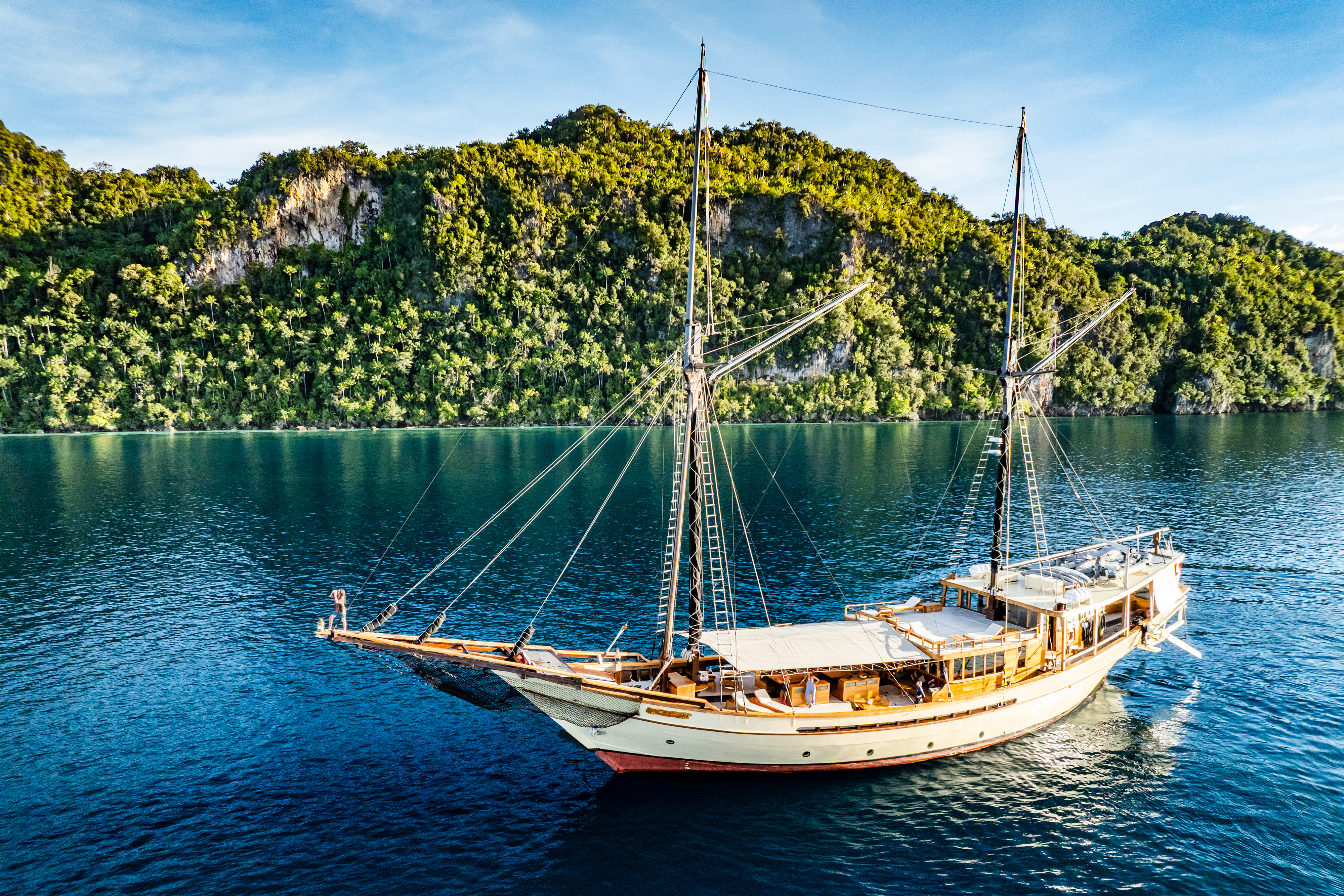
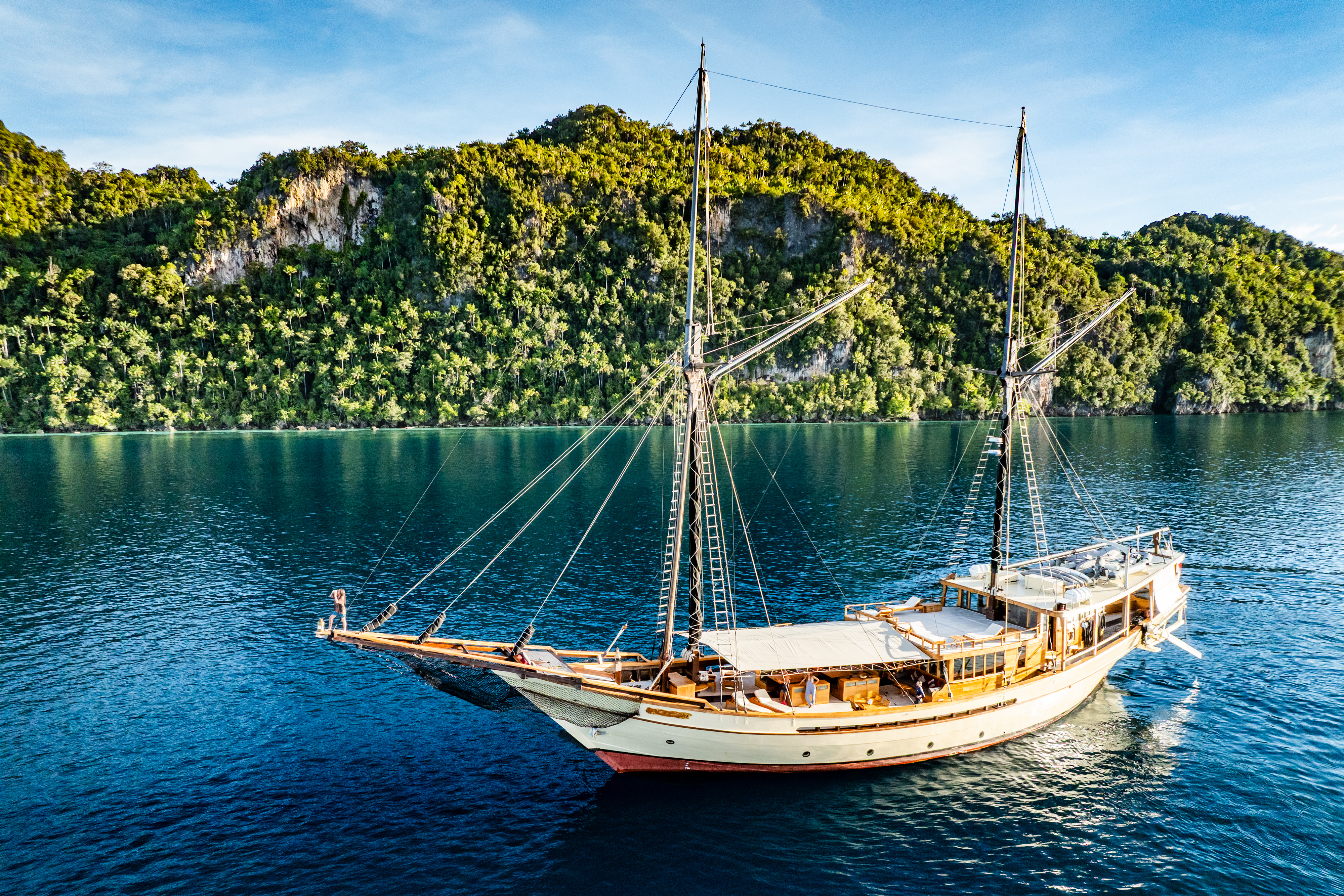


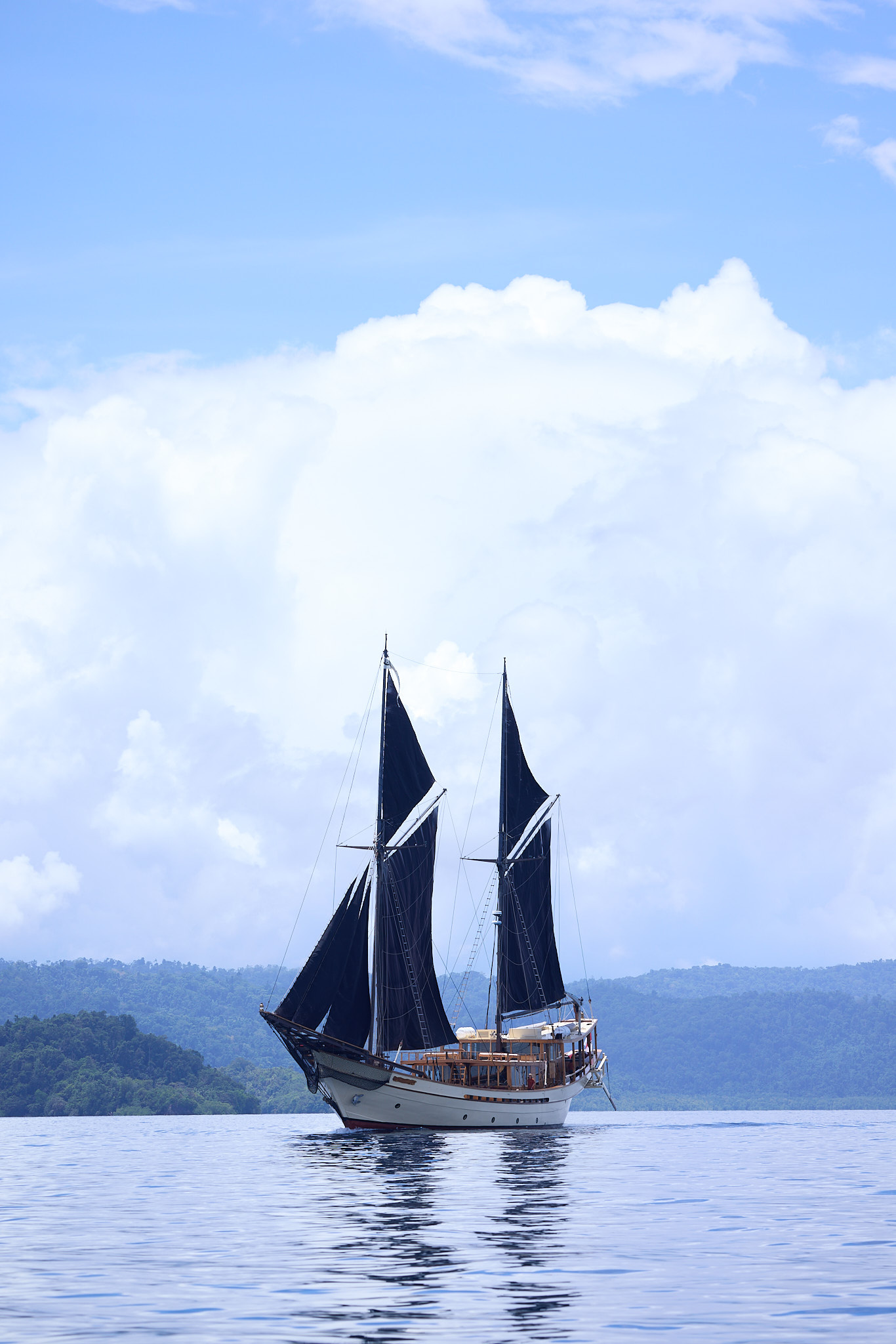
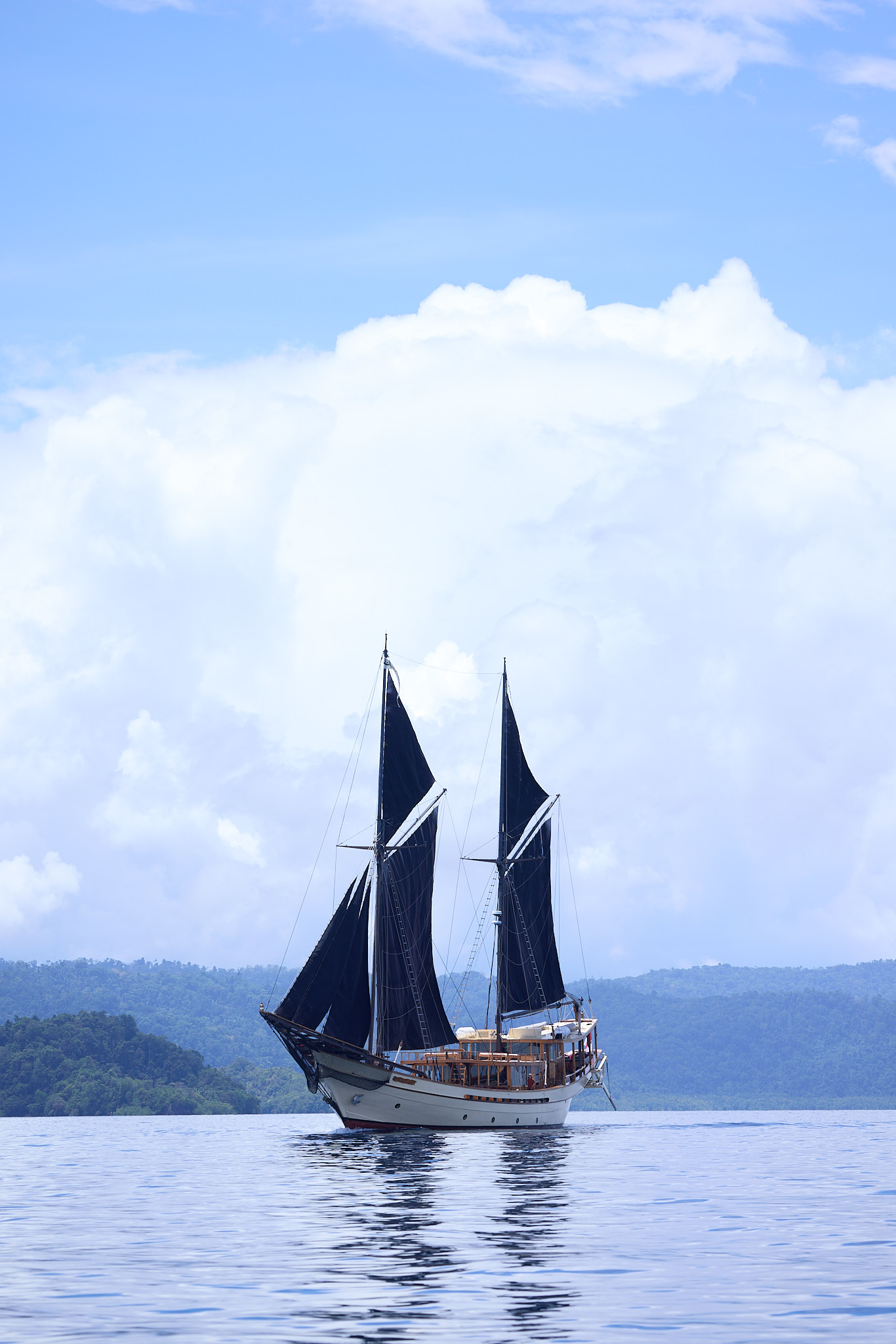
For a small number of travelers each year, this is the backdrop for a cabin expedition aboard Silolona, a traditionally built Indonesian phinisi schooner operated by Silolona Sojourns. And for a scheduled six-night departure leaving Labuhan Bajo on September 29, 2026, Silolona is opening its departure to individual cabin reservations, allowing travelers to join a curated expedition without needing to charter the entire vessel.
What Is a Cabin Expedition, and Why It Matters
Most luxury sailing experiences in Indonesia operate on a full-charter model: one group, one vessel, one price. For families and close-knit groups, that model works well. But for solo travelers, couples, or small groups who want the intimacy of a private expedition vessel without the full-charter commitment, options have historically been limited.
Silolona's cabin expedition model addresses this directly. On selected scheduled departures, individual cabins aboard Silolona are made available to book independently. Each cabin carries its own rate, its own berths, and its own full access to every onboard resource: from the English-speaking expedition leader to the onboard spa therapist, the full water sports inventory, and the alfresco dining prepared fresh on the teak main deck.
This is not a liveaboard dive boat. It is not a shared group tour. It sits in a category of its own: a small-ship expedition with a private-charter service ethos, shared across a maximum of five cabins and up to ten guests.
The minimum required bookings for a guaranteed departure is three cabins. At full capacity, you are sharing this vessel with at most nine other people.
The Vessel: Silolona
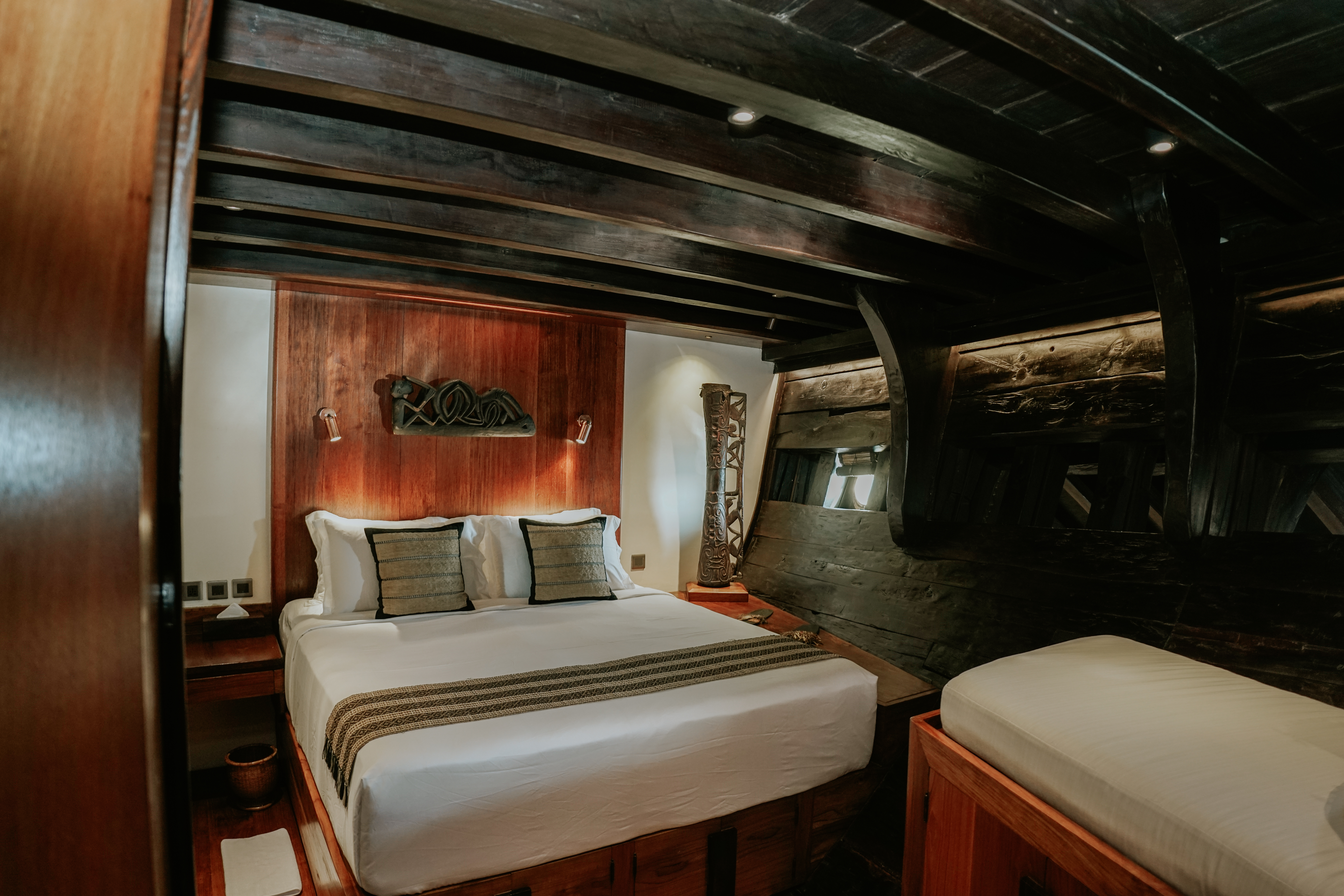
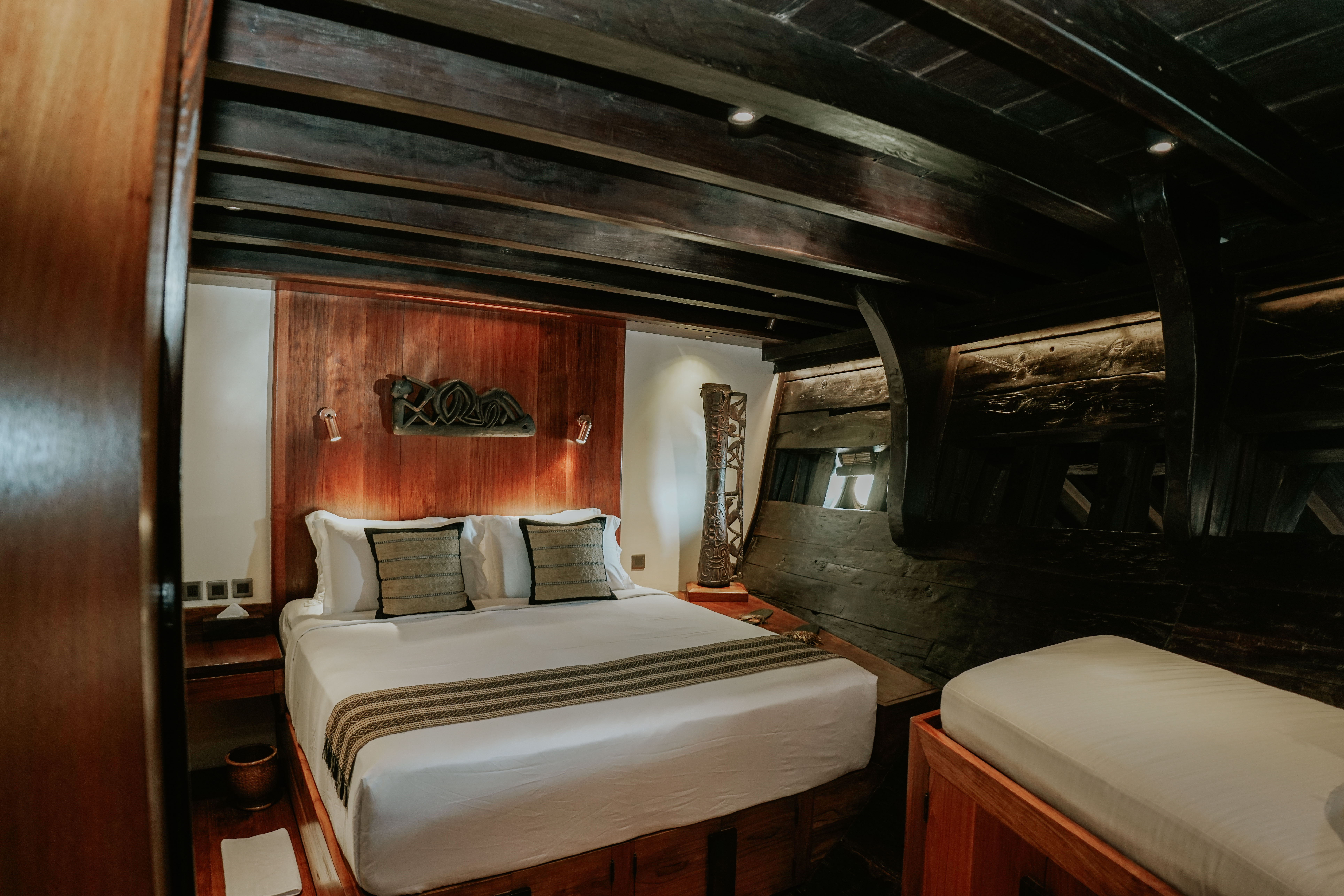
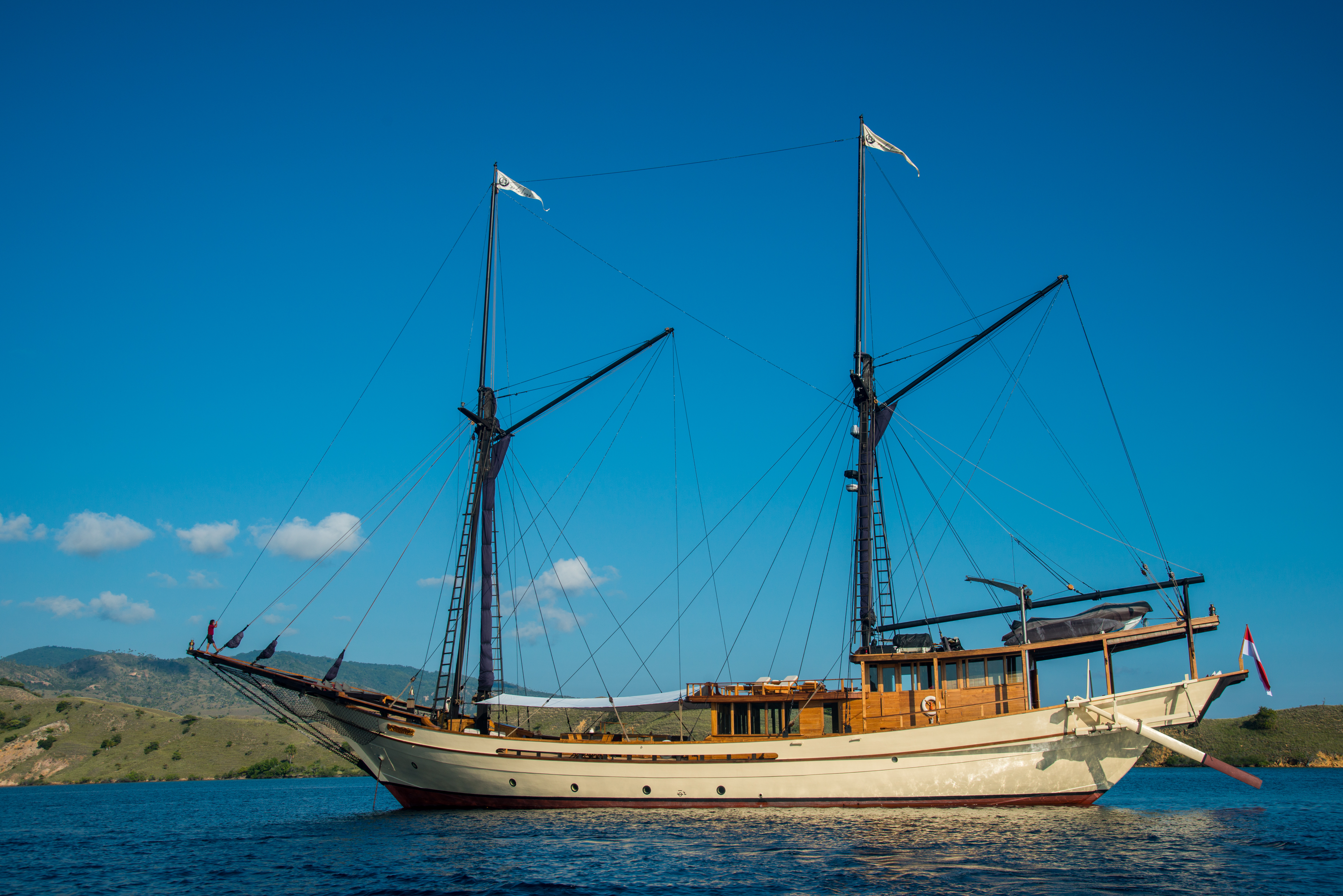
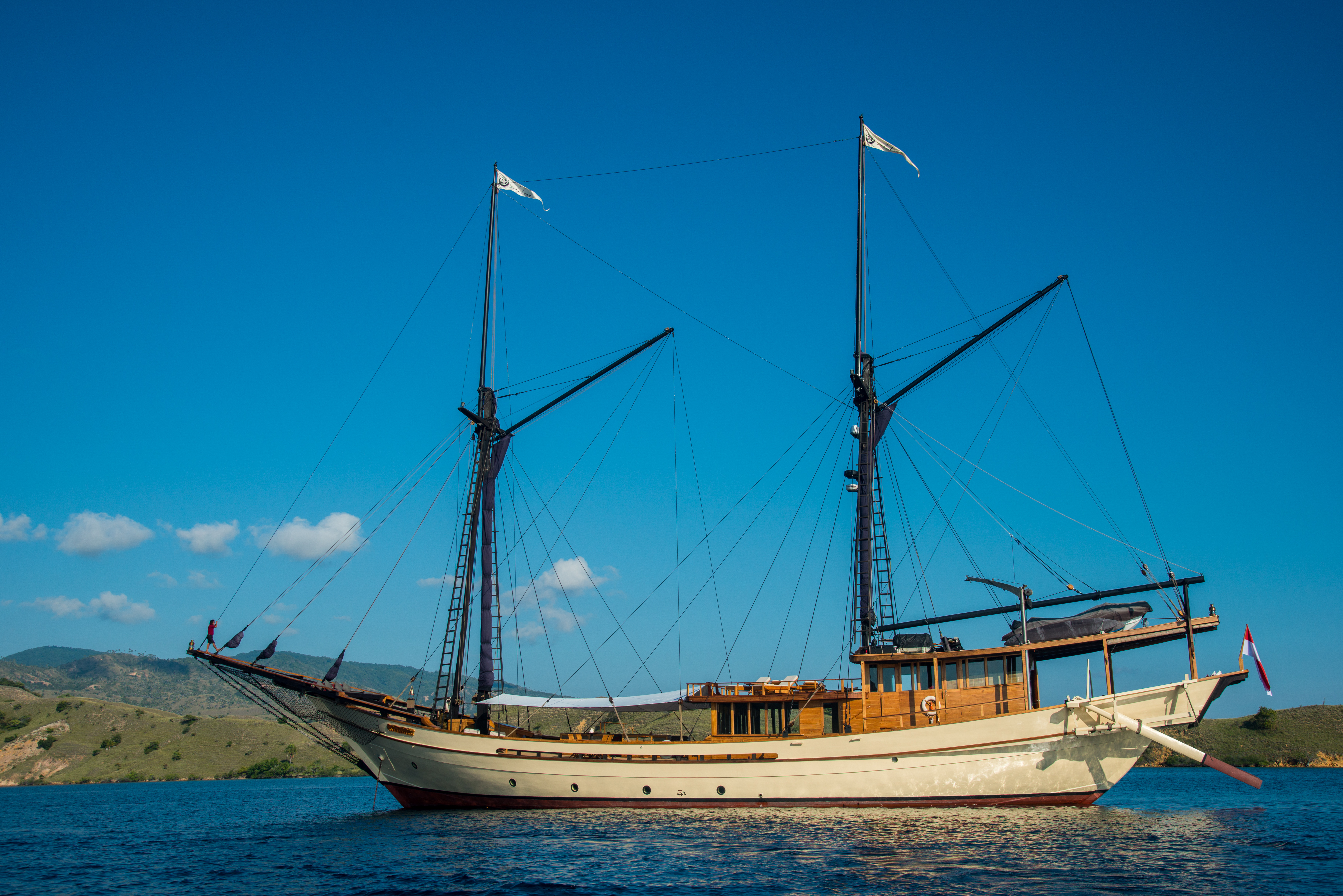
Silolona is a traditionally constructed Indonesian phinisi, a two-masted wooden schooner whose design traces its origins to the master shipbuilders of South Sulawesi. The vessel carries five cabins: three master suites named Bali, Java, and Asmat, and two double cabins named Sumba and Borneo. Each cabin accommodates up to two guests.
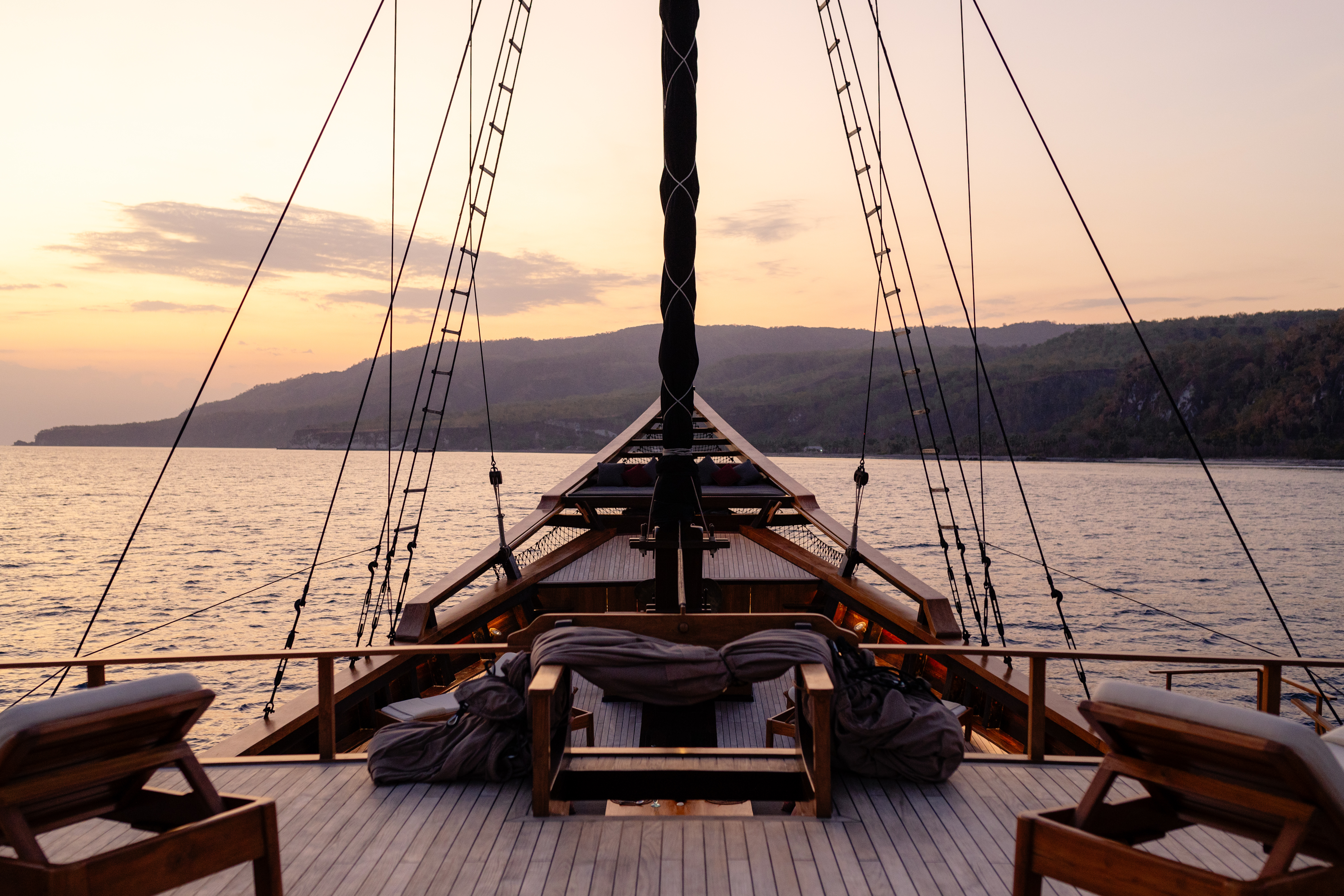
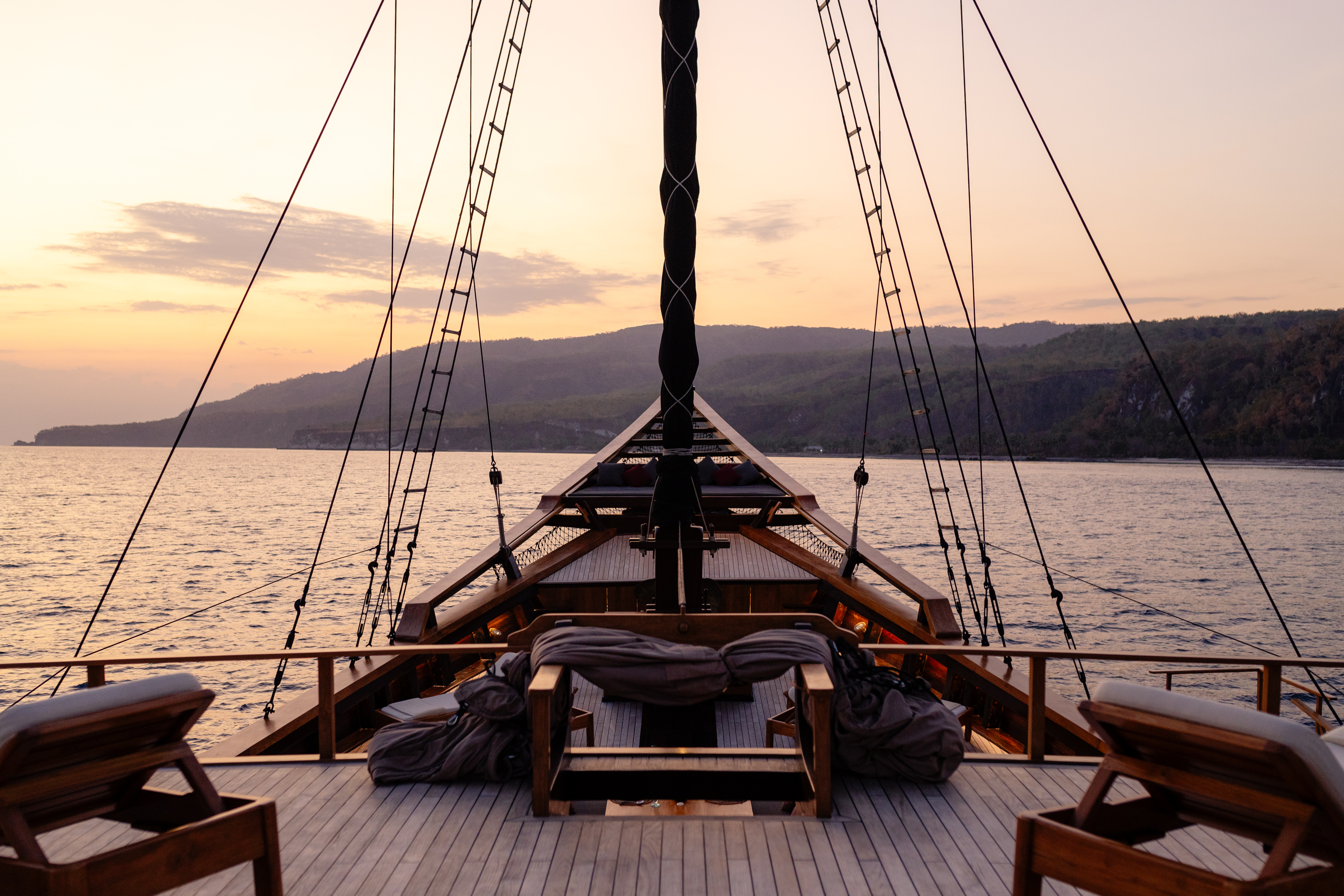
On deck, the layout includes a forward lounge where seat pods convert to day beds, a shaded alfresco dining area, a main deck lounge and library, and an aft lounge. Below, a PADI dive center is fully equipped for certified divers.
The water sports inventory is comprehensive: sea kayaks, water skis, wakeboards, SUP boards, snorkel gear, dive equipment and wetsuits for certified divers, a donut tube, and fishing gear. High-speed maritime Starlink internet at 250GB per seven nights is available throughout the voyage. All meals are prepared onboard and served alfresco on the main teak deck. A spa therapist is available for massages throughout the voyage.
The Komodo Archipelago: An Overview
The islands of the Komodo Archipelago range from large and inhabited to small, nameless, and entirely deserted. What they share is a visual intensity that photographs rarely capture fully: a quality of light and landscape shaped by volcanic geology, exceptionally clear water, and the sheer density of life both above and below the surface.
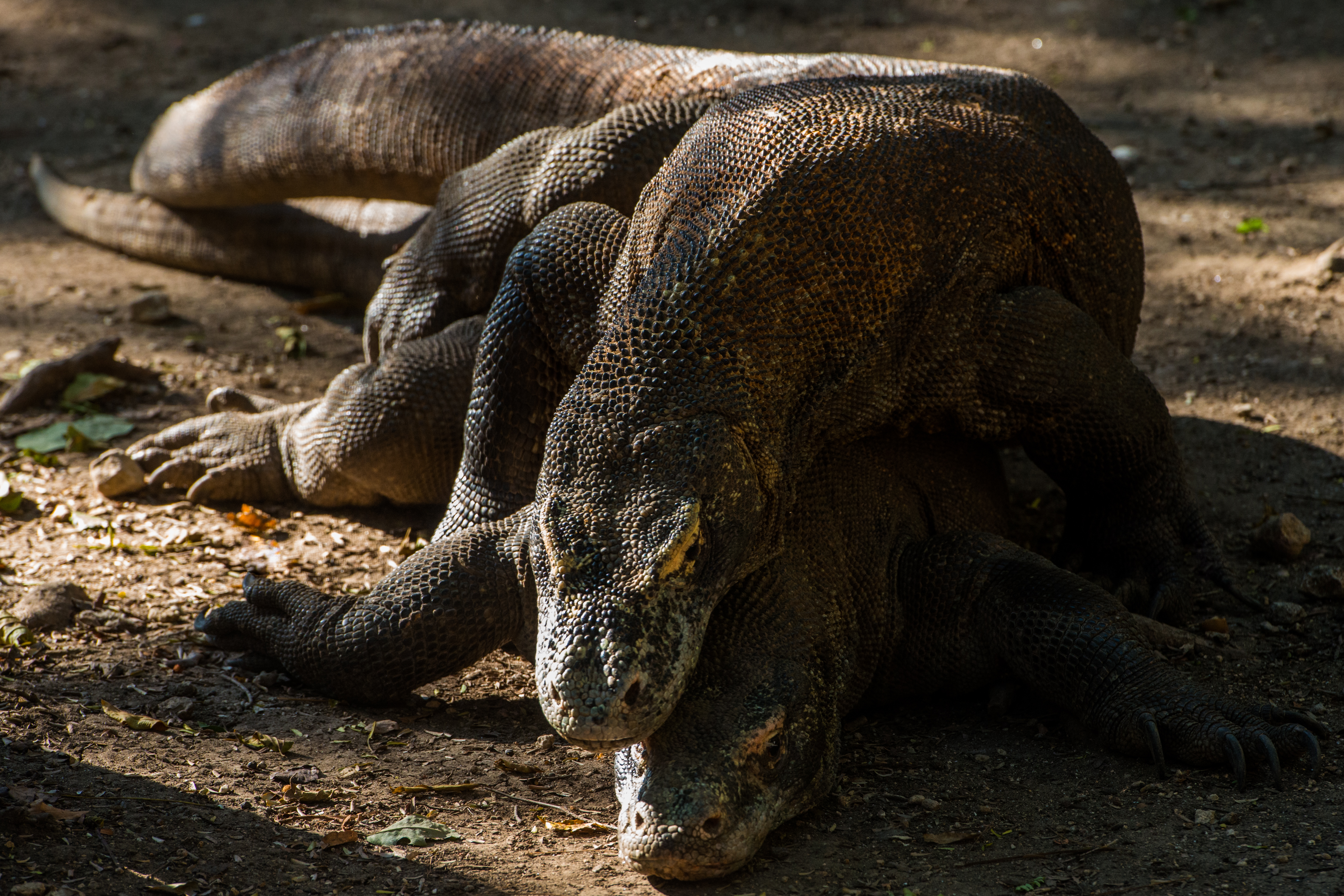
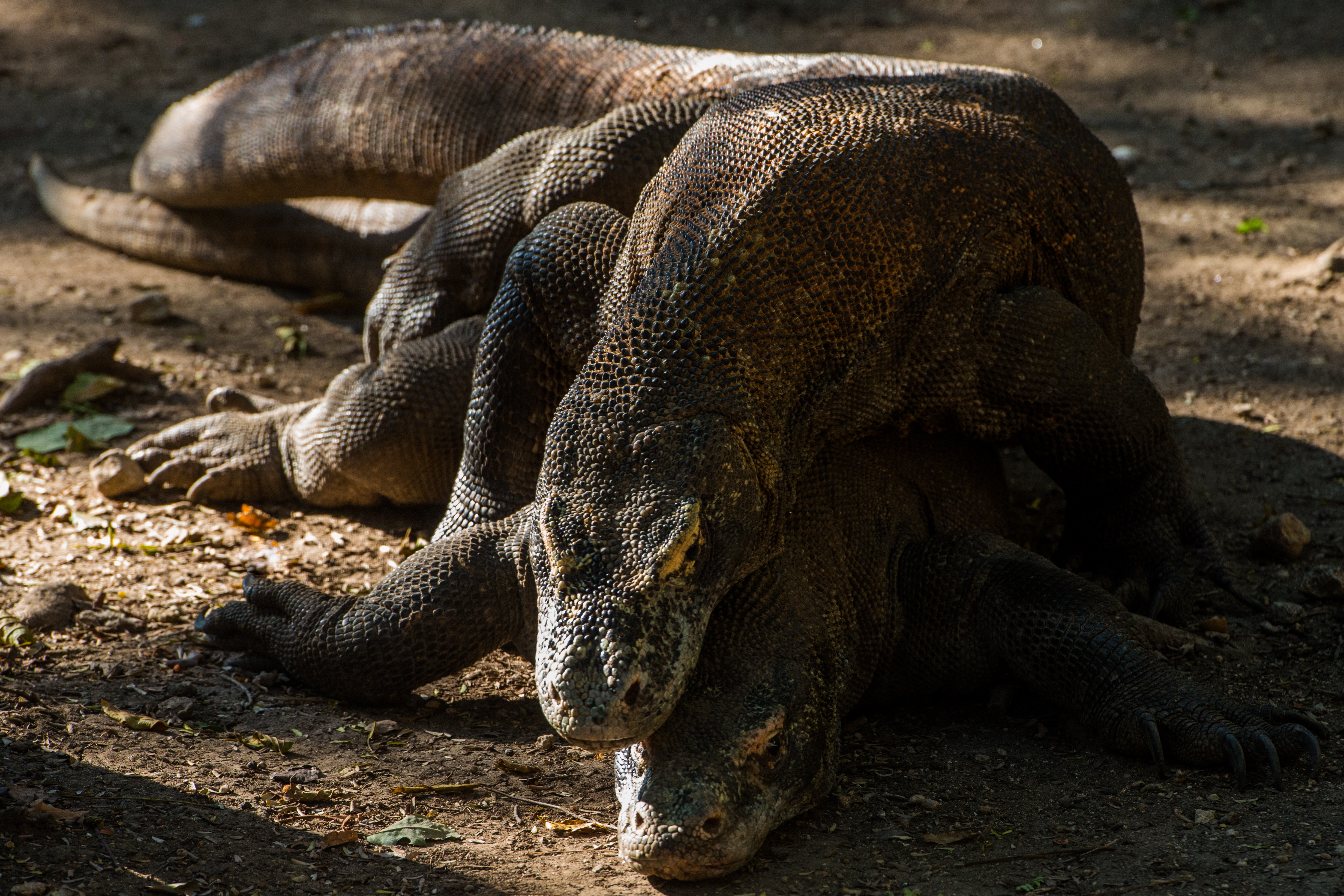
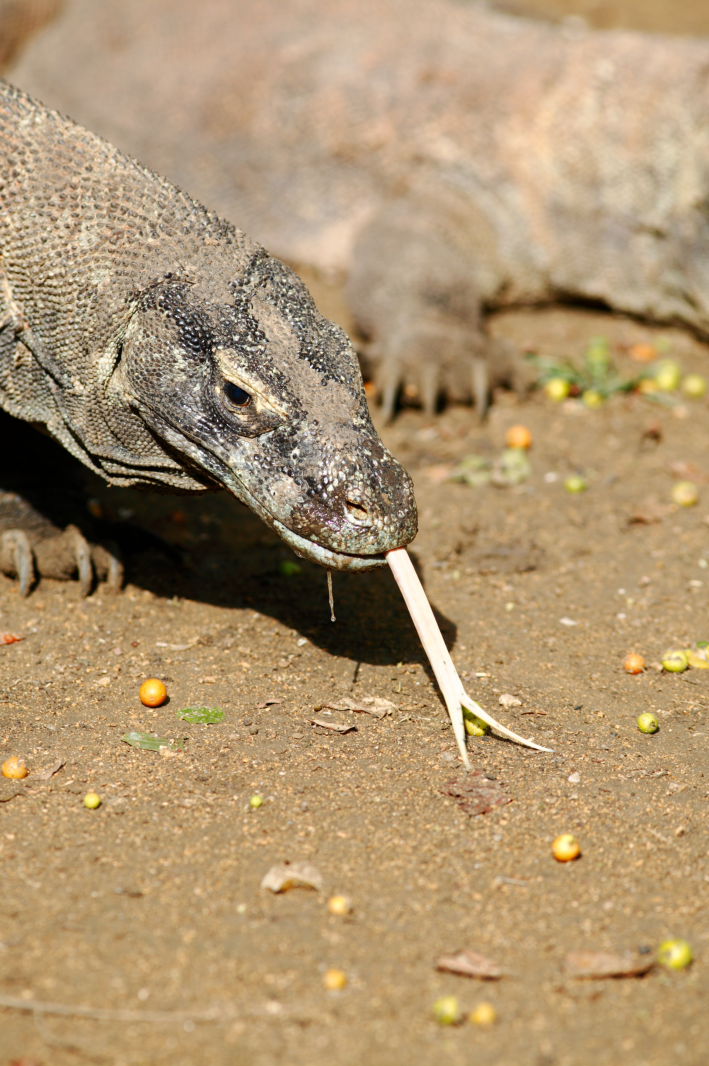
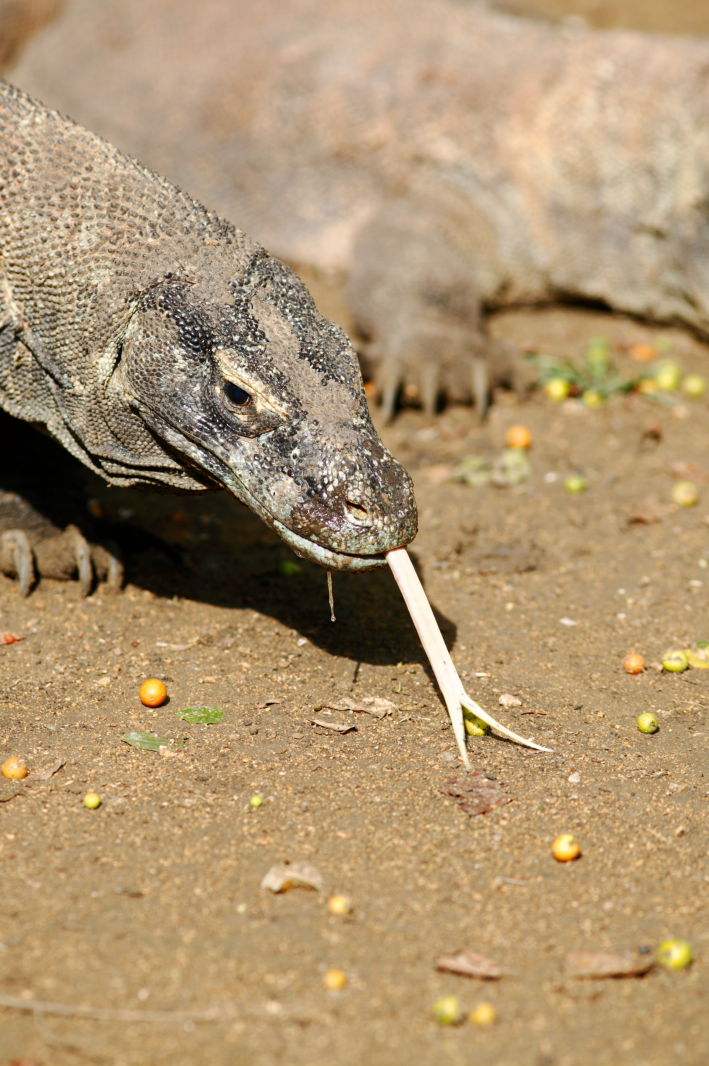
The archipelago is perhaps best known internationally for a single resident: the Varanus komodoensis, or Komodo dragon, the world's largest living lizard species. These animals are found on Komodo Island, Rinca Island, and a handful of smaller islands within the national park boundary. An encounter with them in their native habitat, guided by national park rangers who carry deep ecological knowledge of the region, is one of the defining experiences that draws expedition travelers to this part of Indonesia.
But the dragons are only one layer of what the archipelago offers.
Pantai Merah, known in English as Pink Beach, is a stretch of shoreline on Komodo Island whose sand takes on a distinctly rose-coloured hue due to fragments of red coral mixed into the sediment. It is, as the Silolona Sojourns itinerary notes, world-famous for its pink sand and excellent snorkeling and diving. The waters directly offshore are clear and well-populated with reef fish and coral formations.
Padar Island, located in the southern section of the national park, offers something different: a hike to a ridgeline that looks out over several bays simultaneously, each one a different shade of blue or green depending on depth and angle of light. It is one of the most recognizable viewpoints in eastern Indonesia. The island also supports sea kayaking, water skiing, beachcombing, and bird watching.
Beyond the national park's southern boundary, Banta Island holds its own appeal. The island is noted for its population of giant sea turtles and manta rays, and its numerous finger-like bays and crescent-shaped beaches offer excellent conditions for diving and snorkeling.
Inside the Six-Night Expedition: What Silolona Sojourns Does Differently
The September 29 to October 5, 2026 departure begins in Labuhan Bajo, the port town on the western tip of Flores that serves as the primary gateway to the Komodo Archipelago. After embarkation, the vessel sails north up the eastern coast of Komodo Island, reaching Sabolon Island within the first few hours. The first swim of the voyage can happen the same afternoon.
From that point, the expedition moves through the archipelago at a pace that prioritizes depth over distance. Each anchoring point is chosen for the quality of what it offers, whether that is a dive site, a walk, a wildlife encounter, or simply a bay that happens to be extraordinary.
On Komodo Island, the vessel's English-speaking expedition leader coordinates with national park rangers for a guided morning trek. The ranger guides carry detailed ecological knowledge of the park's wildlife, including the Komodo dragons, wild boars, monkeys, wild water buffalos, and the many bird species that inhabit the island. The walk takes place in an unmodified natural environment, and the rangers are the authority on the ground.
At Pantai Merah, the afternoon is spent at one of the more genuinely unusual beaches in the region. The pink sand is not a marketing invention but a geological reality, and the snorkeling directly offshore is among the more accessible and visually rewarding in the park.
Padar Island offers options in every direction: sea kayaking in the bays below, a hike to the ridgeline above, water skiing off the stern, or drifting in the shallows with a mask and snorkel. The view from the top of Padar is, by any reasonable standard, one of the more striking vantage points in eastern Indonesia.
The waters around Gili Lawah Darat and Gili Lawah Laut offer snorkeling and diving conditions where sea turtles, dolphins, and manta rays have been seen. As with any wildlife encounter of this kind, the presence of specific animals cannot be guaranteed. A 360-degree panorama over the Komodo National Park opens up from the hilltop above the anchorage, with Silolona resting calmly in the turquoise bay below.
Batu Muncul's crescent-shaped beaches and clear water offer full use of the vessel's water sports inventory. Banta Island, on the final evening, provides the setting for a beach barbecue under skies free from light pollution.
On the final morning, early risers have time for a last swim at Pulau Sebayor before the vessel navigates back to Labuhan Bajo for disembarkation. Charter and commercial flights connect Labuhan Bajo to Bali for onward international connections.
What the Cabin Rate Covers
There is a version of this voyage that could be assembled from parts: the flights, the accommodations, the dive operators, the permits, the transfers, the meals, the guides. In practice, assembling those parts is the full-time work of an expedition planner, and the result rarely holds together the way a single, purpose-built itinerary does.
The cabin rate is structured to cover the full breadth of the experience from the moment you step aboard. All meals, snacks, bottled water, and non-alcoholic refreshments are included, prepared onboard and served alfresco on the teak main deck. The 250GB maritime Starlink internet, the services of the English-speaking expedition leader, full crew service, personal laundry, and massage with the onboard spa therapist are all part of the rate. Diving for certified divers is included, as is the complete water sports inventory: dive equipment, wetsuits, sea kayaks, water skis, wakeboards, SUP boards, snorkel gear, fishing gear, and more. Entrance fees and permits at seasonal home ports, beach activities, and airport transfers to and from the vessel are covered.
Alcoholic beverages, international and domestic airfare, PADI certification courses, end-of-trip crew gratuities, and government taxes fall outside the cabin rate.
What cannot be covered by any rate is the particular quality of being one of very few people in a very specific place, anchored overnight in a bay where no other vessel is visible, with a sky above that does not look anything like the sky above the places most people live.
A Note on Who This Voyage Is For
Silolona is a wooden vessel, and it moves as wooden vessels do. It is not a steel expedition yacht. The onboard atmosphere is quiet and intimate rather than social or resort-style. The diving tempo is thoughtful and exploratory rather than maximum-dives-per-day. The connectivity, while supported by maritime Starlink, is not the same as a fully-wired modern vessel.
For guests who value cultural and natural depth, privacy, personalised service, and the particular quality of experience that comes from a handcrafted vessel with an experienced crew, this expedition is well-suited. For guests who prioritise high-volume technical diving, constant connectivity, or an active social atmosphere, Silolona's own positioning acknowledges that other vessels may be a better match.
The cabin expedition model exists for the traveler who wants a genuine small-ship expedition experience without needing an entire vessel to themselves. That window, for the Komodo Archipelago in 2026, opens on September 29.
Reserve a Cabin
The question most serious travelers eventually ask about a voyage like this is not what it costs. It is whether the experience, once it has passed, is the kind that happens again.
The Komodo Archipelago cabin expedition aboard Silolona departs once in 2026: September 29 to October 5, sailing from Labuhan Bajo. Five cabins. Six nights. Three master suites and two double cabins, each for up to two guests.
Reservations can be made by email, via the website contact form at silolona.com. FFull payment is due 90 days before departure. Given the proximity of this departure to that payment window, early enquiries are encouraged.
Silolona Sojourns also offers fully bespoke, custom-built itineraries outside the scheduled routes, available upon specific request.
All itineraries are subject to weather conditions. Reserve your cabin now!