

Beyond the Dragons: A Cultural and Heritage Journey Through Komodo
For years, Komodo has been framed as a place you visit—tick the dragon sighting, snap a photo at Pink Beach, sail away. But if you slow down, if you arrive by sea and stay long enough to listen, you’ll realize Komodo is not a checklist destination at all. It is a living cultural landscape, shaped by people, belief systems, and rhythms that predate modern tourism.
This is where a Komodo luxury itinerary becomes something else entirely: not about how many spots you see, but how deeply you understand them. And this is where a Komodo cultural cruise reveals its real value—when the journey itself becomes the story.
Komodo Is More Than Dragons—It’s a Cultural Seascape
The dragons are extraordinary, but they are not the whole narrative. Long before Komodo National Park gained global fame, these islands were home to coastal communities whose lives were intertwined with the sea, the land, and ancestral cosmologies.
UNESCO itself frames Komodo as a cultural landscape, not merely a wildlife reserve—where human presence, traditional practices, and ecology evolve together rather than in isolation. Research in heritage tourism consistently shows that destinations retain meaning—and sustainability—when culture is treated as integral, not ornamental (Mitchell et al., Journal of Sustainable Tourism, 2018).
When you approach Komodo by yacht, you see this immediately. Villages hug the shoreline. Wooden boats rest low in the water. Life unfolds with a pace that feels untouched by urgency.


Inside Komodo Villages: Life Shaped by Sea and Ancestry
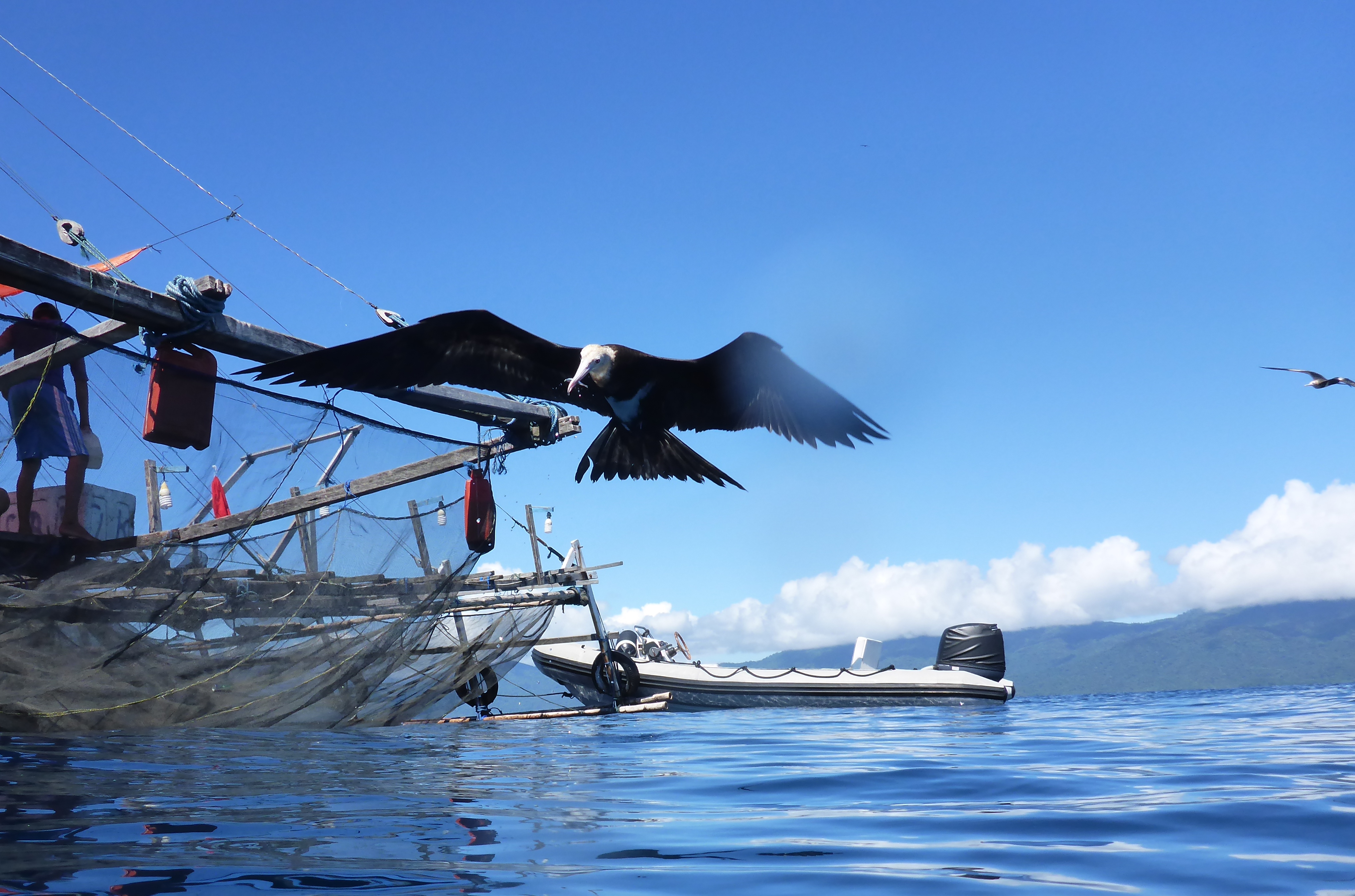
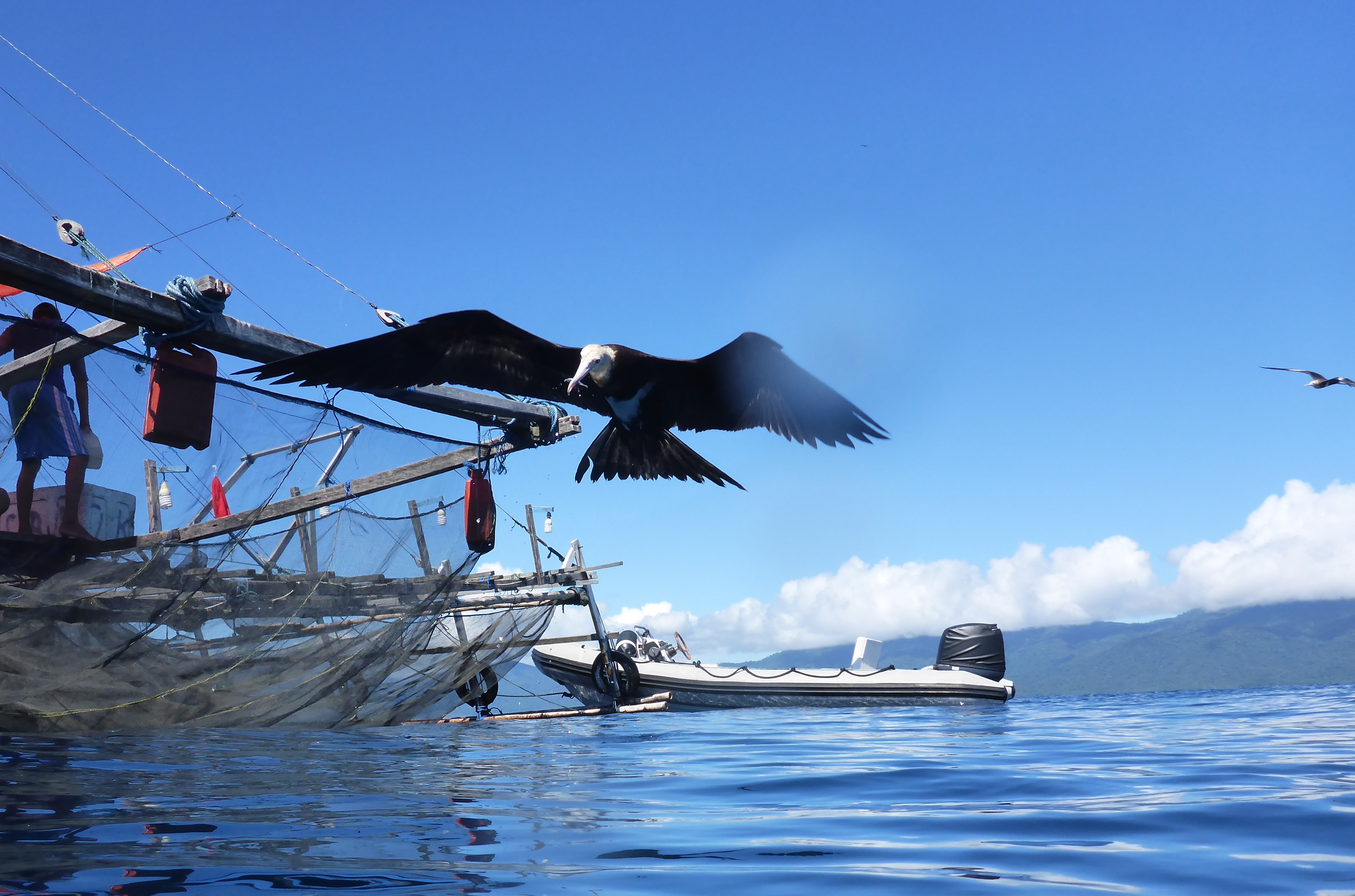
A cultural cruise through Komodo introduces you to villages where fishing is not an occupation—it is identity.
Local fishermen still rely on generational knowledge: reading currents, lunar cycles, and reef behavior. Nets are repaired by hand. Stories are passed orally, often tied to sacred sites, ancestor spirits, and taboos that regulate how nature is treated.
Anthropological studies of eastern Indonesian maritime societies show that these belief systems function as informal conservation mechanisms, long before modern environmental policies existed (Fox & Sen, Human Ecology, 2015). When you sit with villagers, you begin to understand Komodo not as “protected,” but as respected.
This is the difference between seeing a place and being invited into its worldview.
Pink Beach, Reframed: Not Just a Photo, But a Place With Meaning
Yes, Pink Beach is visually stunning. But its context matters.
The pink hue comes from microscopic foraminifera—marine organisms that signal a healthy reef system. For local communities, beaches like this are not attractions; they are thresholds between land, sea, and spirit. Certain stretches are used for rituals, others avoided entirely.
A Komodo luxury itinerary that includes cultural interpretation transforms Pink Beach from a backdrop into a conversation about reef health, traditional marine ethics, and why some sites are approached with reverence rather than recreation.
Luxury, in this sense, is not excess—it is understanding.


Silolona-Style Pacing: Why Time Is the Ultimate Luxury
One of the most common mistakes travelers make in Komodo is rushing. Two days. Three days. Constant movement.
But research on experiential travel shows that cultural comprehension requires temporal immersion—time to observe, reflect, and connect (Pine & Gilmore, Harvard Business Review, 2011).
A Silolona-style journey emphasizes pacing:
Fewer anchor points
Longer stays
Unscripted encounters
Instead of hopping between highlights, you linger. You return to the same bay at different times of day. You witness how light, tide, and human activity reshape the same landscape.
This is how Komodo reveals itself—not all at once, but layer by layer.
Komodo is often encountered as a sequence of highlights—distinct, beautiful, and efficiently consumed. But places like this were never meant to be understood in fragments.
When travel allows space for stories, for people, and for the slower rhythms of island life, Komodo begins to reveal its coherence. Landscapes connect to livelihoods. Rituals explain restraint. Heritage feels present, not preserved behind glass.
For travelers who value depth as much as beauty, context becomes the quiet luxury—one that lingers long after the journey ends.


Experience Komodo the Way It Was Meant to Be Seen
If you’re seeking more than a sightseeing loop—if you want Komodo revealed through its people, traditions, and living heritage—then your journey needs the right vessel and the right philosophy.
Silolona’s cultural-led yacht journeys are designed for travelers who value context over crowds and meaning over movement. With unrushed pacing, deep local connections, and an approach that treats Komodo as a living cultural landscape, each voyage invites you to experience the archipelago with intention and respect.
This is not about ticking destinations.
It’s about understanding where you are—and why it matters.
Discover a Komodo luxury itinerary that moves at the rhythm of the islands, not the clock.
Your cultural journey through Komodo begins at sea.


References
Mitchell, C. J. A., Atkinson, R., & Clark, A. (2018). Cultural landscapes and sustainable tourism. Journal of Sustainable Tourism, 26(7), 1102–1118. https://doi.org/10.1080/09669582.2017.1423325
Fox, J. J., & Sen, S. (2015). Maritime cultures and ecological knowledge in eastern Indonesia. Human Ecology, 43(2), 219–230. https://doi.org/10.1007/s10745-015-9724-9
Pine, B. J., & Gilmore, J. H. (2011). The experience economy. Harvard Business Review Press.