

Indonesian Sea Ceremonies: Spiritual Traditions Witnessed from the Water
Three days before the full moon in February, along the southern coast of Sumba, the priests the islanders call Rato begin watching the tide line for a particular sea worm, the nyale, a marine worm that rises to spawn in the shallows only once a year. When the nyale surface, spawning in the shallows on a night the lunar calendar has been counting toward all year, the date for Pasola is set, and hundreds of horsemen from rival clans will meet on the fields above the beach to hurl blunt wooden spears at one another. It is not a show. Blood spilled is meant to feed the earth and settle a debt with the ancestors, and no one performs it for an audience. If your journey happens to place you offshore in that week, you are witnessing one of the oldest living rituals in the archipelago, on its own terms and its own calendar. This is the heart of Indonesian sea ceremonies and why spiritual travel in Indonesia by yacht reaches something the resort traveller almost never touches.
The distinction that matters here is between the ceremony staged for visitors and the ceremony that would happen whether or not anyone came. Silolona sails toward the second kind, and approaches it the only responsible way: quietly, from the water, as a guest rather than a spectator.
Most travellers only ever see the performance, and they rarely know it
Walk into a resort lobby anywhere in Bali, and a dance will be waiting for you at seven, timed to dinner, shortened for comfort, repeated nightly. It is skilled, often beautiful, and entirely built for the room. There is nothing wrong with it, but it is a performance in the theatrical sense, and the traveller who sees only this leaves believing they have met the spiritual life of a place they have in fact only watched a curated version of.
The real thing runs on a different clock. A boat blessing happens when a family launches a new vessel, not when a tour bus arrives. A sea purification takes place before a religious new year, at dawn, because that is when the rite requires it. These events answer to lunar calendars, harvest cycles, tides, and deaths in a community, none of which consult a booking system. To be present for one, you have to already be in the right water at the right time, moving slowly enough to notice. That is precisely what a private vessel makes possible and a fixed hotel cannot.
The ceremonies, and roughly when the sea permits them
Silolona's two sailing windows shape which spiritual traditions come within reach. From October to April, the eastern routes through Raja Ampat, Banda, and the wider Maluku sea open onto a world of marine ritual. From May to September, the Komodo, Flores, Alor, and Sumba routes carry their own ceremonial calendar. These are guides, not guarantees, because the events themselves refuse to be scheduled.
In Maluku and across Raja Ampat, the tradition to understand is Sasi. A stretch of reef or a fishing ground is closed by customary law, marked with a woven strip of young coconut leaf, and left untouched for months or years so the sea can recover.When it is reopened, the community holds Buka Sasi: prayers led by a customary leader or a village raja, a call to the ancestors for an abundant harvest, and then divers entering the water to gather sea cucumbers or fish that have been left in peace to grow. It is conservation and worship in the same act, and it is one of the few places on earth where you can watch a community's spiritual law and its ecological survival turn out to be the same thing.
In Bali, which many journeys pass on the way east or west, the sea is where purification happens. Before Nyepi, the island's day of silence, villages carry their temple relics down to the shore for Melasti, wading into the surf to cleanse them and themselves. From a quiet anchorage offshore, you may see a long procession of white and gold moving across a black-sand beach at first light, gamelan carrying over the water, and understand that you are watching a rite of renewal that has nothing to do with you and everything to do with the turning of their year.
And on Sumba, in February and March, Pasola. The full-moon timing, the nyale worms, the horsemen, the blood given to the harvest.An honest note belongs here: Sumba sits at the edge of the seasonal calendar and its exact Pasola dates are announced only weeks ahead, so aligning a journey with it takes flexibility and some luck. When it works, few travellers on earth have seen anything like it.
Why witnessing from the water changes the ethics of it
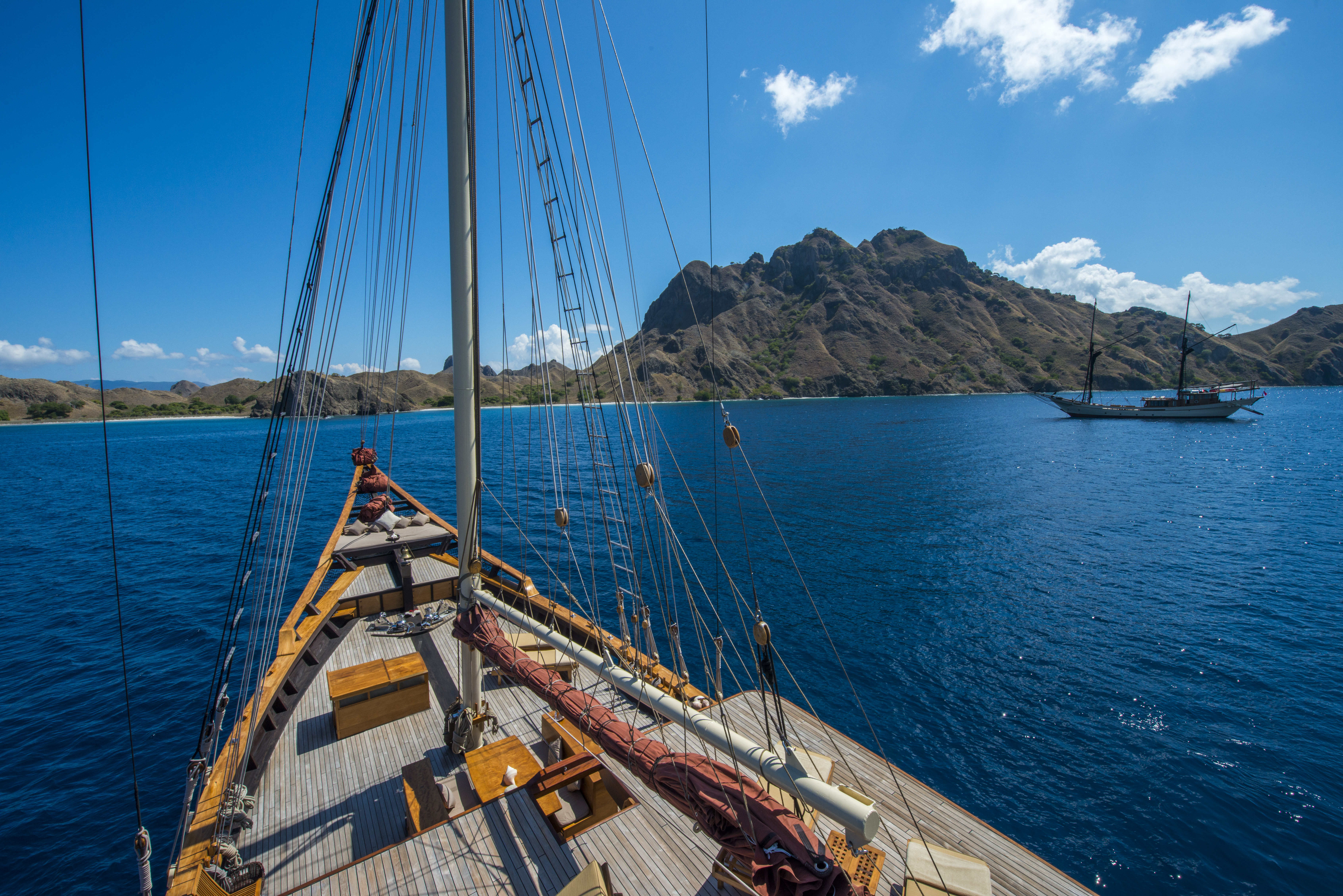
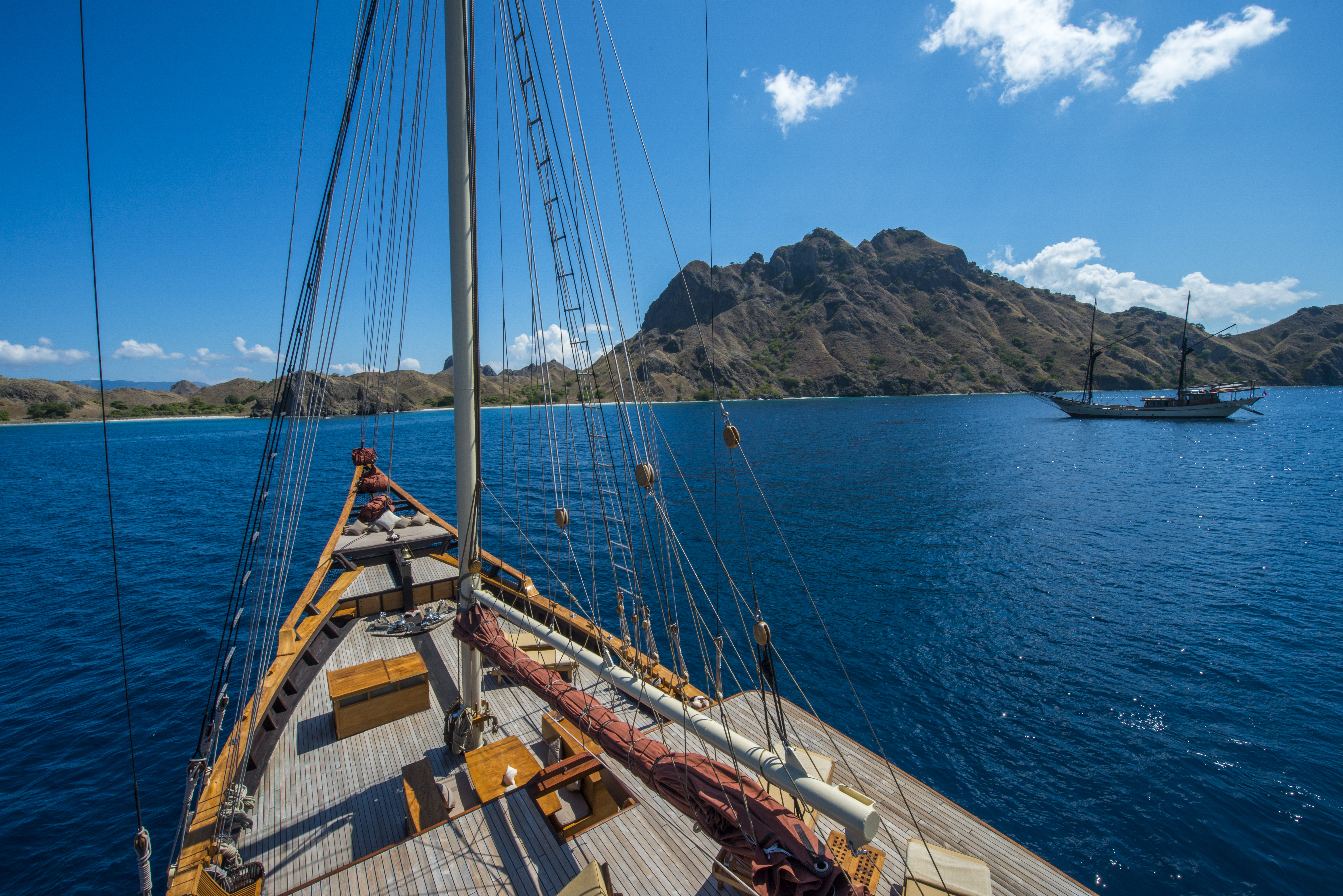
There is a real hazard in cultural tourism, which is that the presence of outsiders slowly bends a sacred act toward the audience until it becomes a product. Anthropologists have long warned that heritage, once it becomes a commodity for visitors, risks losing the very authenticity that drew people to it. A yacht approaching from the sea sidesteps the worst of this by staying small, staying back, and never becoming the reason the ceremony happens.
On Silolona, the crew are the reason this works. Goris, the trip leader from Flores, and Ketut, the chef from Bali, are not neutral outsiders; they are Indonesians reading their own cultures, and they know when a moment is open to respectful witness and when it is closed. The expedition leader speaks with village elders before anyone goes ashore, and the answer is sometimes that this is not for guests to see. That refusal is part of the value. A journey that can say no to you is a journey that is telling the truth about everything else it shows you.
What you actually take home
Guests come back from these encounters changed in a way the beach-club version cannot touch, and it is worth being clear about why. You did not consume a tradition. You were briefly, carefully allowed near one that was never about you, and you left it exactly as you found it. That is a rarer souvenir than any photograph, and the people who travel this way know it. They are not collecting sights. They are collecting the memory of having been quietly, respectfully present at something real.
With Silolona Sojourns, a journey through the archipelago can be shaped around this deeper current rather than a checklist of stops. Whether you sail east to Raja Ampat and the Banda spice islands between October and April, where Sasi and the Maluku sea traditions live, or west toward Komodo and the Sumba coast from May to September, the same principle guides the crew of Silolona and Si Datu Bua: approach as witnesses, never as an audience. To plan a voyage attentive to the spiritual calendar of the sea, you are warmly invited to enquire.
References
Coral Triangle Center. Sasi ceremony in the Lease Islands: strengthening local wisdom to protect marine ecosystems. 2020. Available from: https://www.coraltrianglecenter.org/2020/02/22/sasi-ceremony-in-lease-islands-strengthening-local-wisdom-to-protect-the-marine-ecosystems/
Vel JAC. Tribal battle in a remote island: crisis and violence in Sumba (eastern Indonesia). Indonesia. 2001;(72):141-158. doi:10.2307/3351484
Cole S. Cultural tourism, community participation and empowerment. In: Smith MK, Robinson M, editors. Cultural Tourism in a Changing World. Clevedon: Channel View Publications; 2006. p. 89-103. doi:10.21832/9781845410452-009