

Indonesia's Maritime Soul: The Bugis Seafarers Who Built a Civilization on the Ocean
In the carpentry yards of Ara, on the southern tip of Sulawesi, a man named Nasir reads a hull the way other people read a face. He helped build Silolona there, shaping tropical hardwood by eye and hand, following measurements that live in memory rather than on paper. Watch him work and you understand something the brochures of the charter world miss entirely: the boat under your feet is the surviving edge of one of the great seafaring traditions on earth, carried forward by the descendants of the people who created it. The Bugis maritime culture that produced him belongs to no museum. It is still afloat, and you can sail inside it.
Most travelers arrive in Indonesia thinking of it as a string of beaches and dive sites. The deeper truth is that this is the homeland of Southeast Asia's most consequential sailors, a people whose Indonesian seafaring heritage reached from the coast of Africa to the top of Australia centuries before European charts caught up. To board a phinisi here is to step into a living lineage rather than to rent a yacht. Understanding that lineage changes what the voyage means.
The Bugis sailed an ocean while Europe was still hugging the coast
The Bugis come from the lowlands and river deltas of South Sulawesi, where communities oriented toward the sea flourished as early as the seventh century.¹ From that base they became the most far-ranging maritime people in the region, and the geography of their reach is genuinely startling. Bugis and Makassar sailors worked the routes between Singapore and New Guinea, between the southern Philippines and the northern coast of Australia, and they pushed west across the Indian Ocean toward Madagascar.¹ Austronesian seafarers from Sulawesi and Kalimantan had in fact settled Madagascar between the fifth and seventh centuries, seeding the Malagasy language and people with elements that survive today, an ocean crossing of roughly four thousand miles undertaken in wooden boats.²
The connection to Australia is the most documented and the most quietly astonishing. From at least the 1500s, sailors from South Sulawesi, mostly Bugis and Makassarese grouped under the label "Macassan," were making the long seasonal voyage to Arnhem Land and the Kimberley to harvest trepang, the sea cucumber prized by Chinese markets.³ They processed it on Australian beaches and sailed north again to sell into a trade network that stretched to southern China. This was Australia's first sustained contact with the outside world, a regular commercial relationship with Aboriginal communities that ran for centuries before the British arrived.³ The people who built and crewed those boats were the same boatbuilding communities whose tradition Silolona carries today.
You travel differently once you hold this in your head. The water you are crossing is not empty scenery. It is a highway that was busy when much of the European fleet still preferred to keep land in sight.


Their navigation was a literature, not just a skill
It is tempting to imagine pre-modern sailors as brave improvisers. The Bugis were something more rigorous. Their seafaring knowledge was encoded, transmitted, and treated as sacred text. The clearest proof is the I La Galigo, the Bugis creation epic composed in the classical Bugis language and written in the Lontara script. At roughly 300,000 lines, it is reckoned among the longest literary works ever produced, longer than the Mahabharata, and UNESCO inscribed it on the Memory of the World Register in 2011.⁴ Rooted in oral tradition dating back to at least the fourteenth century, it functioned as more than myth. It carried cosmology, social law, ritual, and a worldview built around the relationship between people, the heavens, and the sea.⁴
That worldview was practical at sea. Bugis navigators read stars, swells, bird behavior, cloud formations, and the color and feel of the water, holding the position of islands and the timing of monsoon winds in trained memory. The annual rhythm of the trade itself depended on reading the seasons with precision: sail south on one monsoon, return on the next, and miss the window at your peril. Knowledge of this kind was not written on a chart you could buy. It lived in people, passed from one generation of sailors to the next, the way Nasir holds the lines of a hull. When you sail with a Bugis-descended crew through waters they have known their whole lives, you are benefiting from a navigational culture that took centuries to refine and that no instrument fully replaces.
The Konjo built the boats, and they build them still
Within Bugis and Makassar society, the specialists who built the great ships were the Konjo of South Sulawesi, the boatbuilding communities centered on villages like Ara and Tanah Beru on the Bulukumba coast. Their craft is the phinisi, the rig that became the signature of the region: a wooden hulled vessel carrying multiple sails, built to cross deep water for trade.
In 2017 UNESCO recognized this tradition, the art of phinisi boatbuilding in South Sulawesi, on its Representative List of the Intangible Cultural Heritage of Humanity. The point of the inscription is exactly the point worth grasping as a traveler: the knowledge is alive, still practiced, still handed down through apprenticeship rather than blueprint.
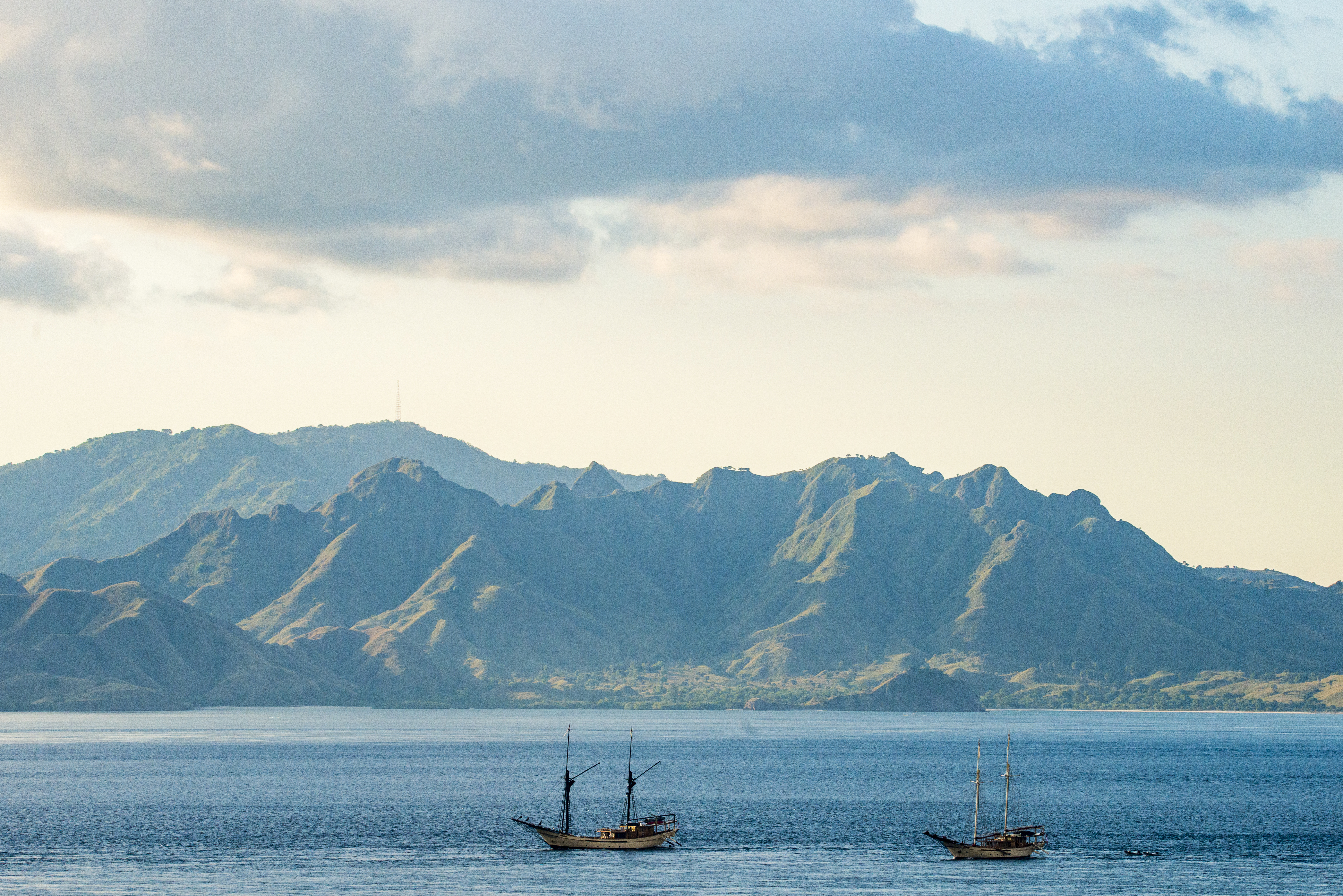
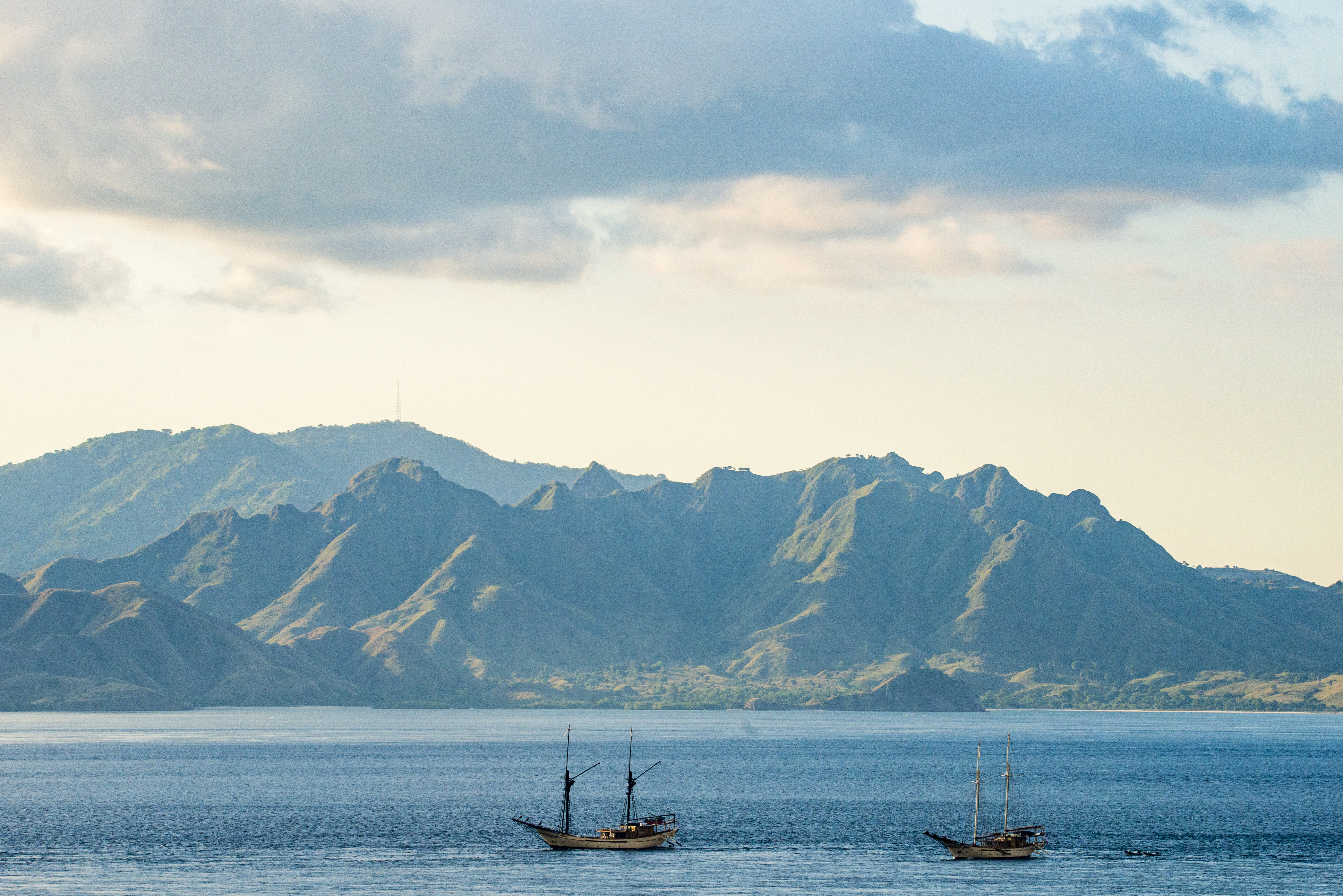
This matters because of what Silolona actually is. She is a 50 metre vessel, hand built in 2004 from tropical hardwoods to German Lloyds specifications by Master Konjo boat builders of Sulawesi. Her smaller companion, Si Datu Bua, "Beloved Princess," was crafted by the same Konjo community to a Seery Yacht Design. These were not assembled in a factory and finished to look traditional. They were built by the inheritors of the tradition, using methods that descend in an unbroken line from the boats that once carried trepang to Arnhem Land and spices across the archipelago. The head carpenter who shaped Silolona, Nasir, came from Ara. The trip leader (long time dive instructor earlier)Goris Atawuwur, from Flores, was part of the original build team. The continuity is not a marketing story.
Sailing Silolona means traveling inside a civilization, not past it
Here is what the lineage buys you in practice. A great many vessels can take you to a reef. Very few can take you into the culture that made the vessel. Silolona's crew of seventeen, and Si Datu Bua's fifteen, are drawn largely from the maritime communities of eastern Indonesia, Java, Bali, Flores, and Sulawesi among them. Captain Bambang and Captain Kamto carry deep working knowledge of these waters. The expedition leaders, dive instructors, engineers, and chefs are not staff hired to perform hospitality. Many are people for whom the sea is inheritance.
The Bugis built their society on a concept they call siri, a sense of honor and dignity that has to be protected at all costs, woven through their social life for centuries.¹ You feel a version of that ethic in how a long tenured crew treats a guest and treats the boat: nothing careless, nothing hurried, a quiet pride in doing the thing properly. That is the texture of sailing with people who descend from a seafaring civilization rather than from a tourism industry. The food follows the same logic, cooked to the place you are in, Bandanese flavors in the Spice Islands, Manadonese in northern Sulawesi, bread and pastry made fresh on board.
When you cross from Komodo toward the Coral Triangle, or trace the old nutmeg route through the Banda Islands, you are not merely visiting a destination. You are moving along the same sea roads the Bugis worked for half a millennium, in a boat their cousins built, crewed by people who still read the water the way their ancestors did. That is the difference between seeing Indonesia and entering it.


Why this is the most honest way to understand the archipelago
Indonesia is the largest archipelagic nation on earth, and you cannot understand it from the land. Its history, its trade, its religions, its languages, and its conflicts all arrived and departed by sea. The Bugis are the clearest expression of that maritime identity, the people who turned the ocean from a barrier into a homeland. Their reach shaped genetics in Madagascar, introduced commerce and, some argue, the first Islam to northern Australia,³ and produced a body of seafaring knowledge substantial enough to be recognized as world heritage twice over, once for the epic and once for the boats.
To sail a Konjo-built phinisi through these waters is to take that history seriously without turning it into a costume. It asks nothing exotic of you. It simply puts you, for a week or two, inside a tradition that is still working, still skilled, and still proud. Most ways of traveling here keep that world at arm's length. This one lets you live in it.
With Silolona Sojourns, the voyage is built around exactly this continuity: Konjo craftsmanship beneath your feet, a long tenured crew at your side, and routes that follow the archipelago's oldest sea roads. Sail the Komodo waters where the Flores Sea opens toward the Coral Triangle, trace the reefs of Raja Ampat, or follow the spice route through the Banda Islands aboard Silolona and Si Datu Bua, the two phinisi that carry this lineage forward. When you are ready to travel inside a living civilization rather than alongside it, enquire and let the planning begin.
References
Friendly Borders. The Bugis people of South Sulawesi. Available from: https://www.friendlyborders.org/news/the-bugis-people-of-south-sulawesi/
Wikipedia. Indonesian diaspora. Available from: https://en.wikipedia.org/wiki/Indonesian_diaspora
Bourke P. An historical reassessment of the maritime Southeast Asian forest and marine commodities trade and its implications for archaeological investigations of Asian contact in northern Australia. Aust Archaeol. 2023;89(2). doi:10.1080/03122417.2023.2208795
Mustolehudin. Manuskrip La Galigo dalam Tradisi Massure' di Wajo-Sulawesi Selatan. J Lekt Keagamaan. 2021;19(1):207-238. doi:10.31291/jlka.v19i1.906