

Phinisi vs Steel Expedition Yacht: Which Vessel Is Right for Indonesia?
Every year, well-traveled guests arrive at this question with a browser full of spec sheets and a growing suspicion that the answer is not actually in the specs. They are right. Choosing between a traditional phinisi and a modern steel expedition yacht for sailing Indonesia is not a hardware decision. It is a decision about what kind of experience you are actually after, and those two things can look identical from the outside while feeling entirely different from the inside.
This guide exists to give you the honest answer. Not the answer that sells the most charters. The answer that routes the right guest to the right vessel, because when that match is wrong, no amount of beautiful teak or gleaming steel saves the experience.
Two Categories, Not Two Products
The confusion starts with language. The charter industry calls both vessel types luxury yachts, and both deserve that label on their own terms. But calling them the same thing is like calling a private safari camp and a five-star Nairobi hotel the same thing because both offer exceptional hospitality. The experience architecture is fundamentally different.
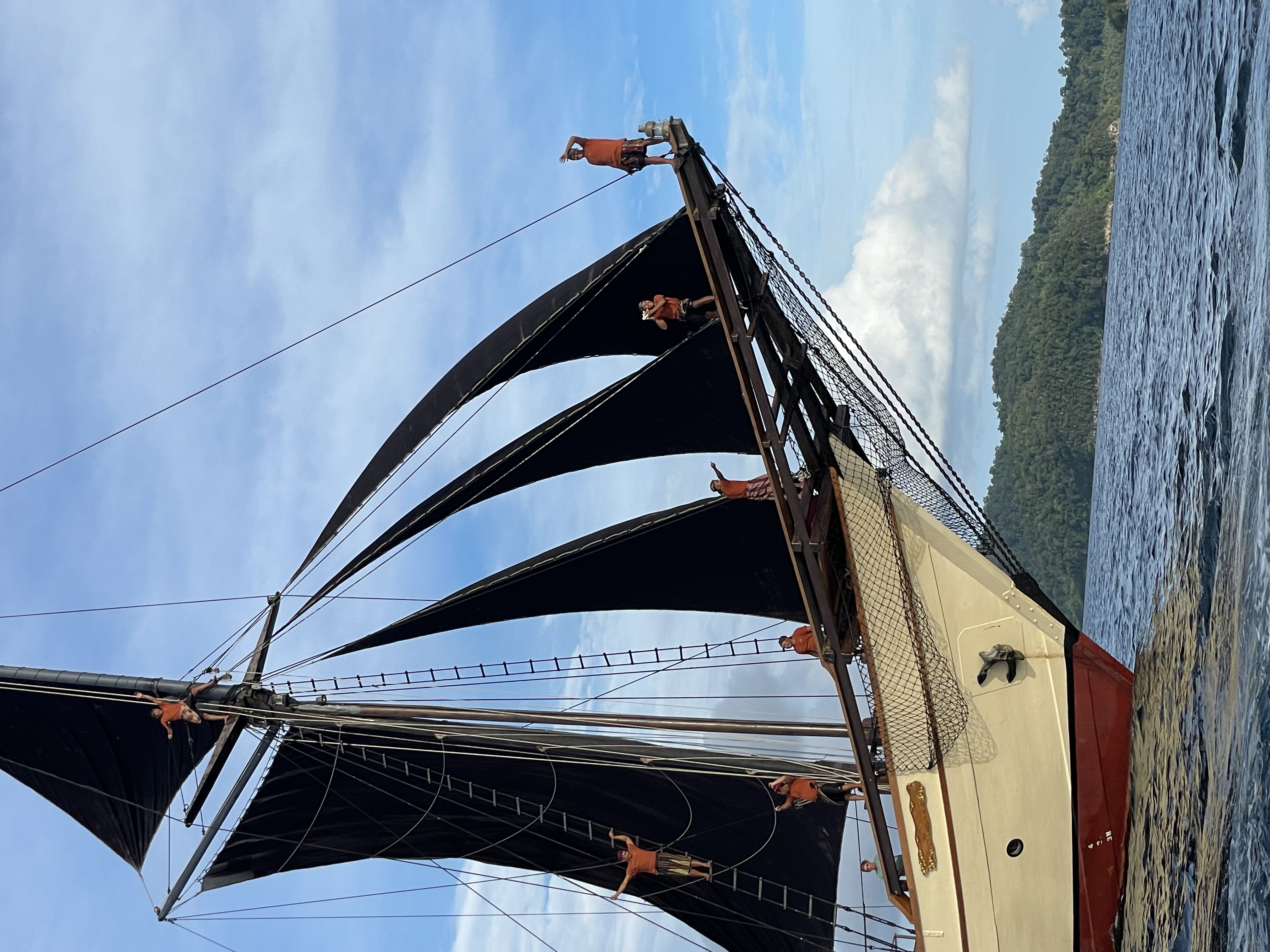
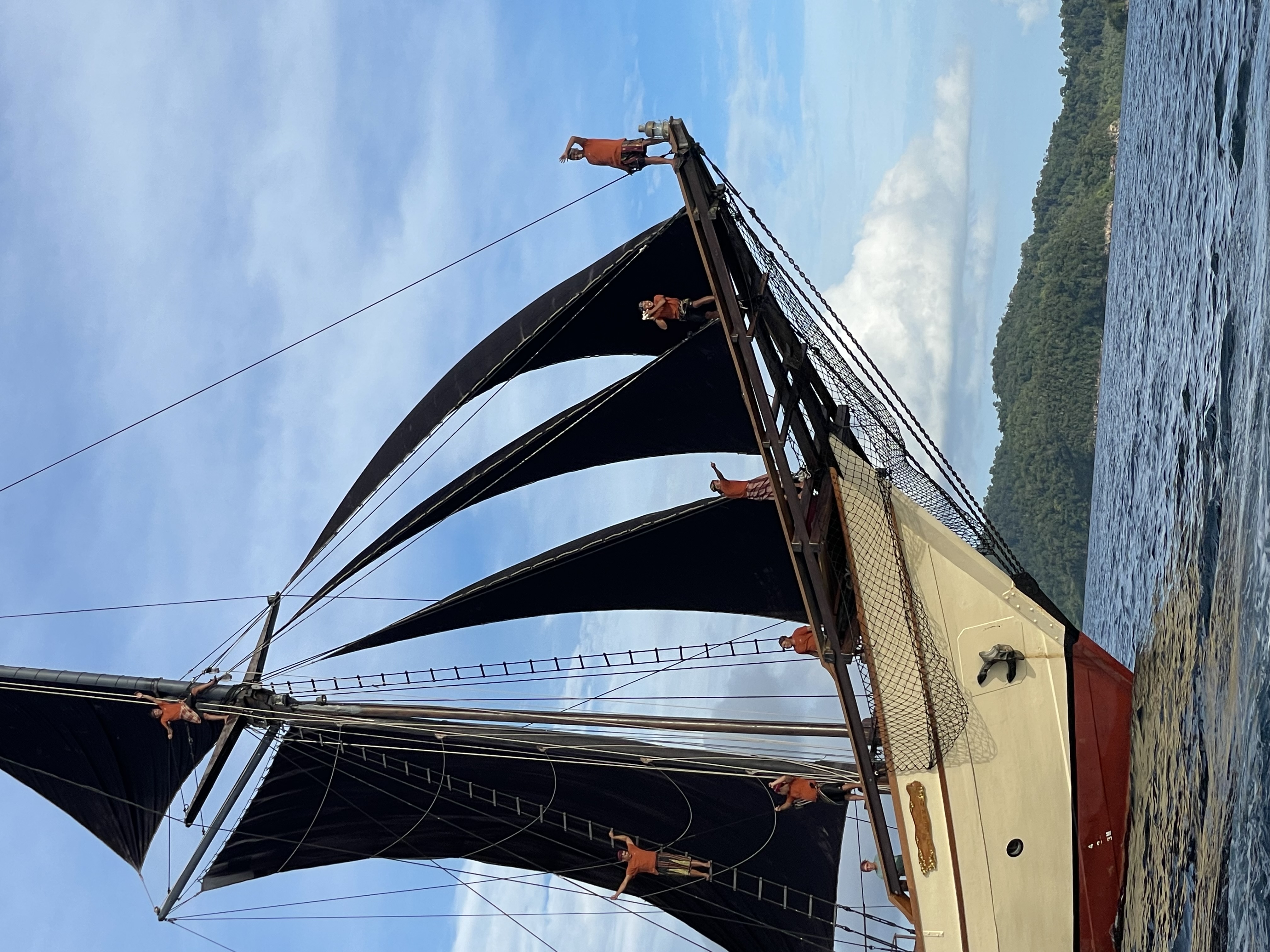
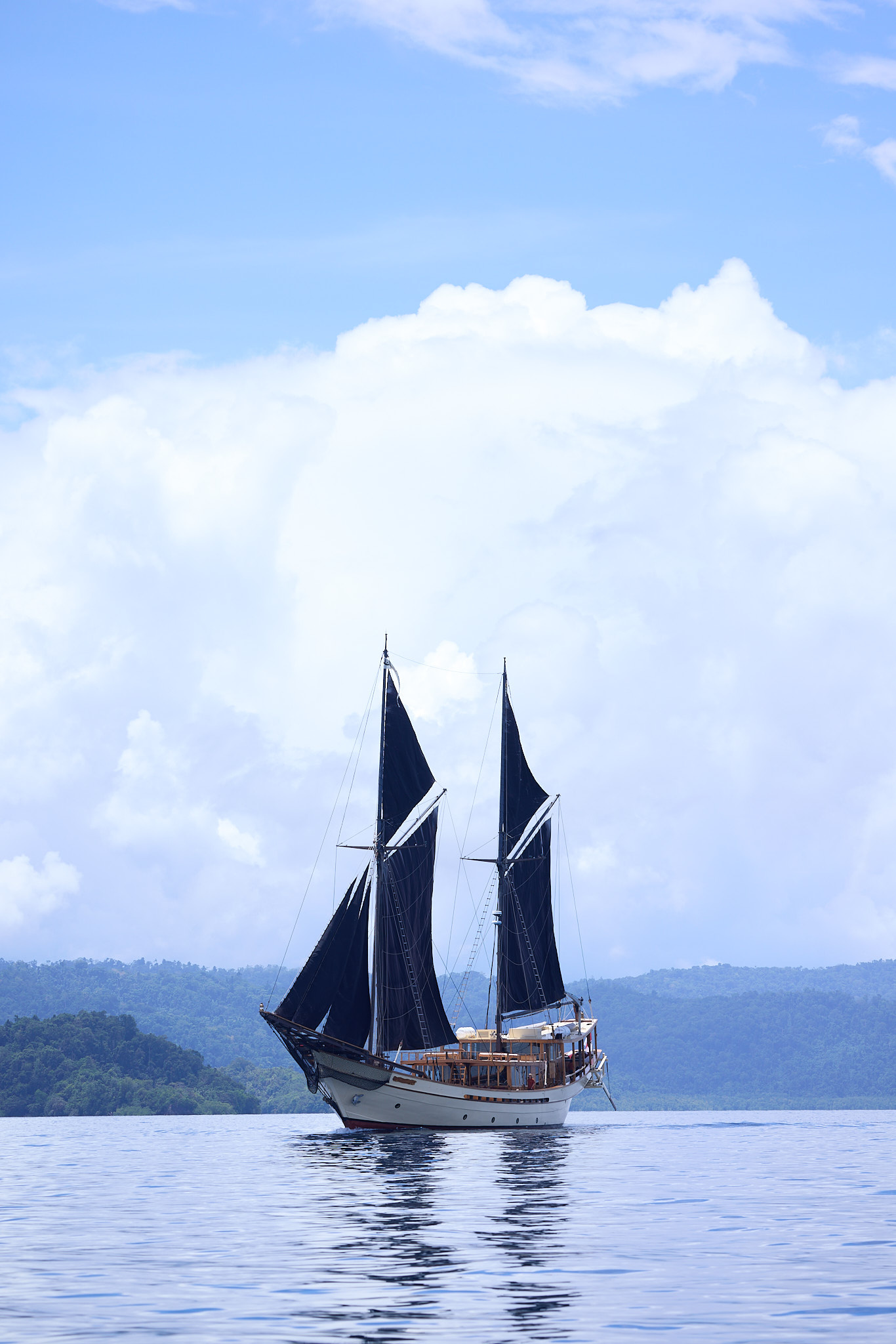
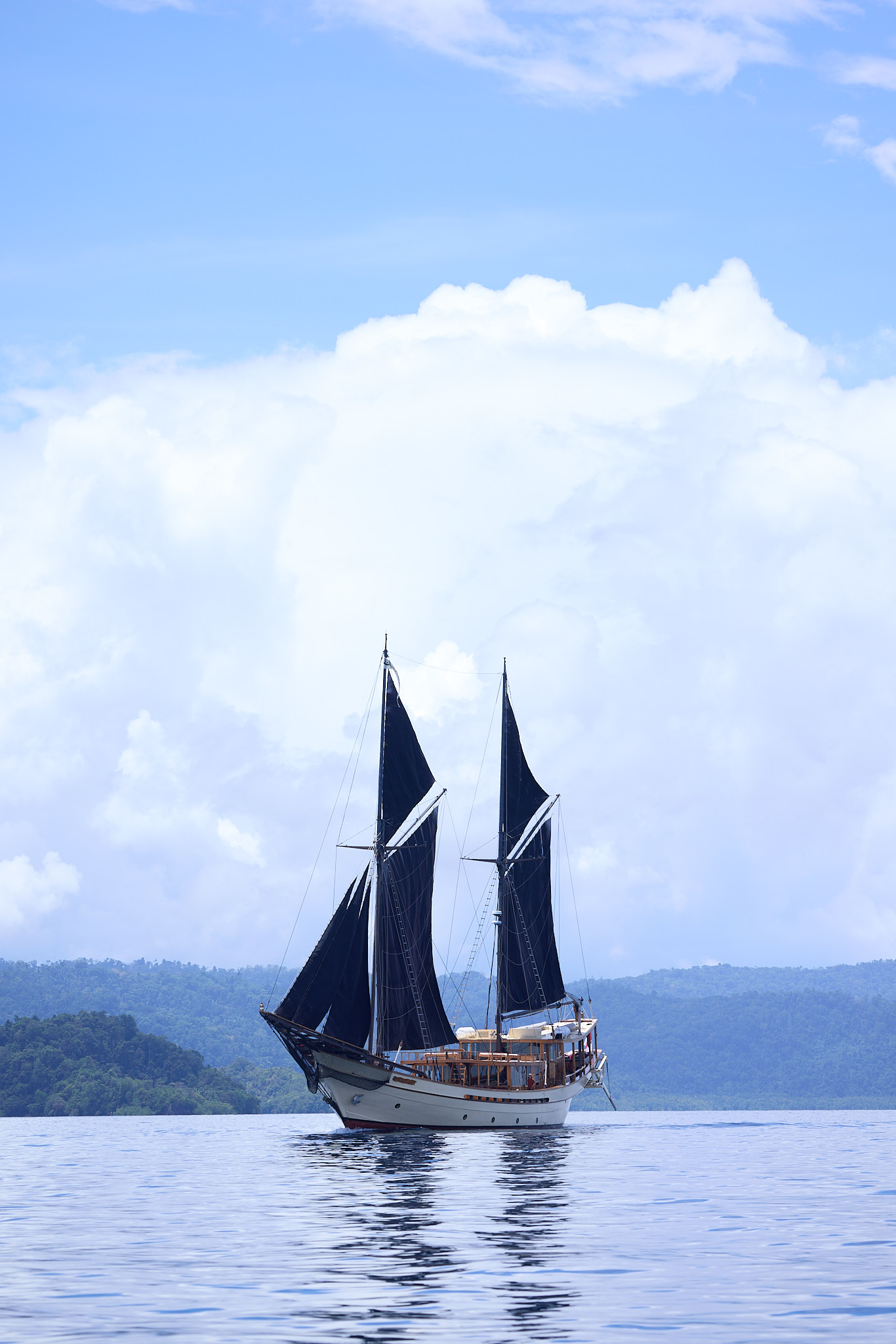
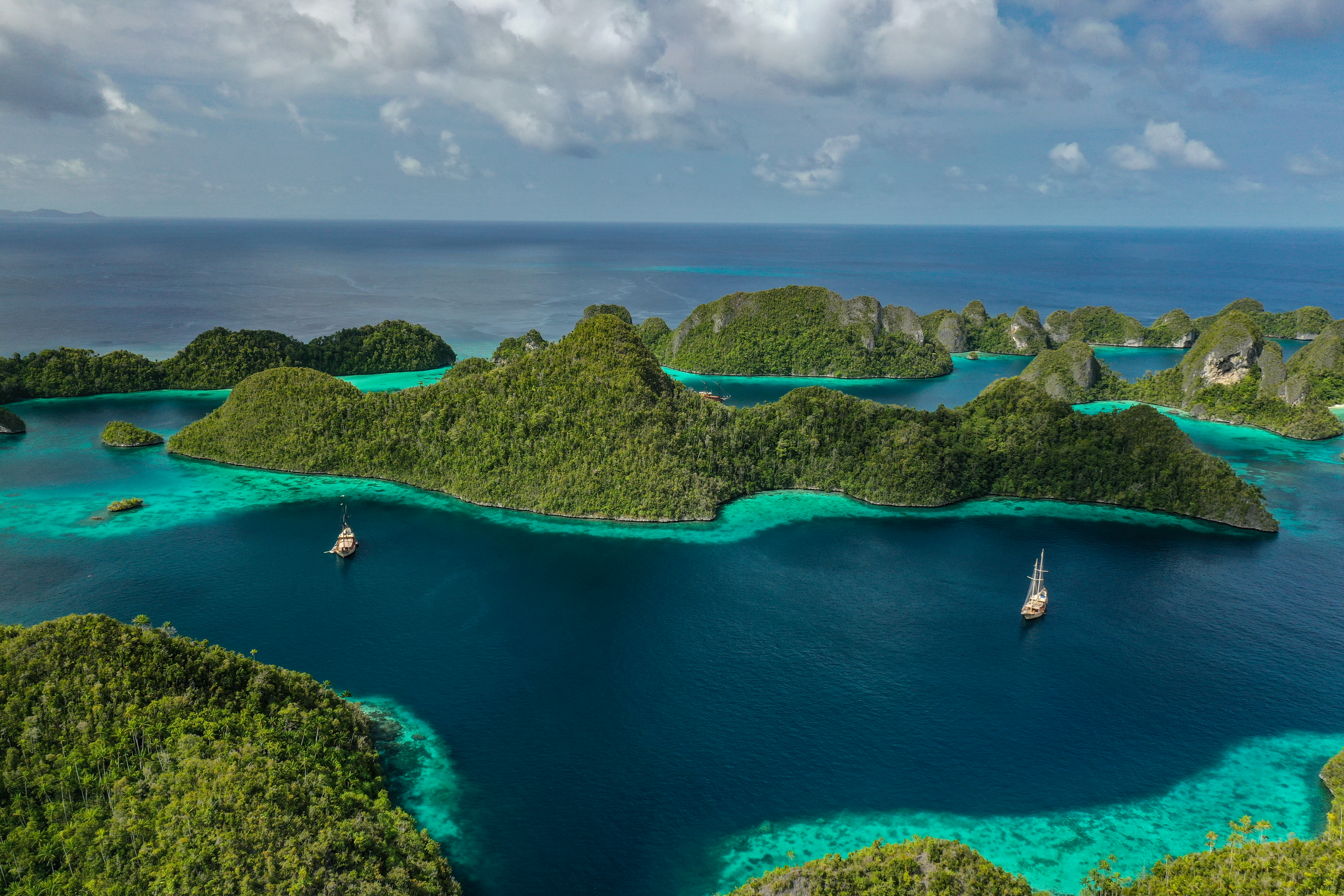
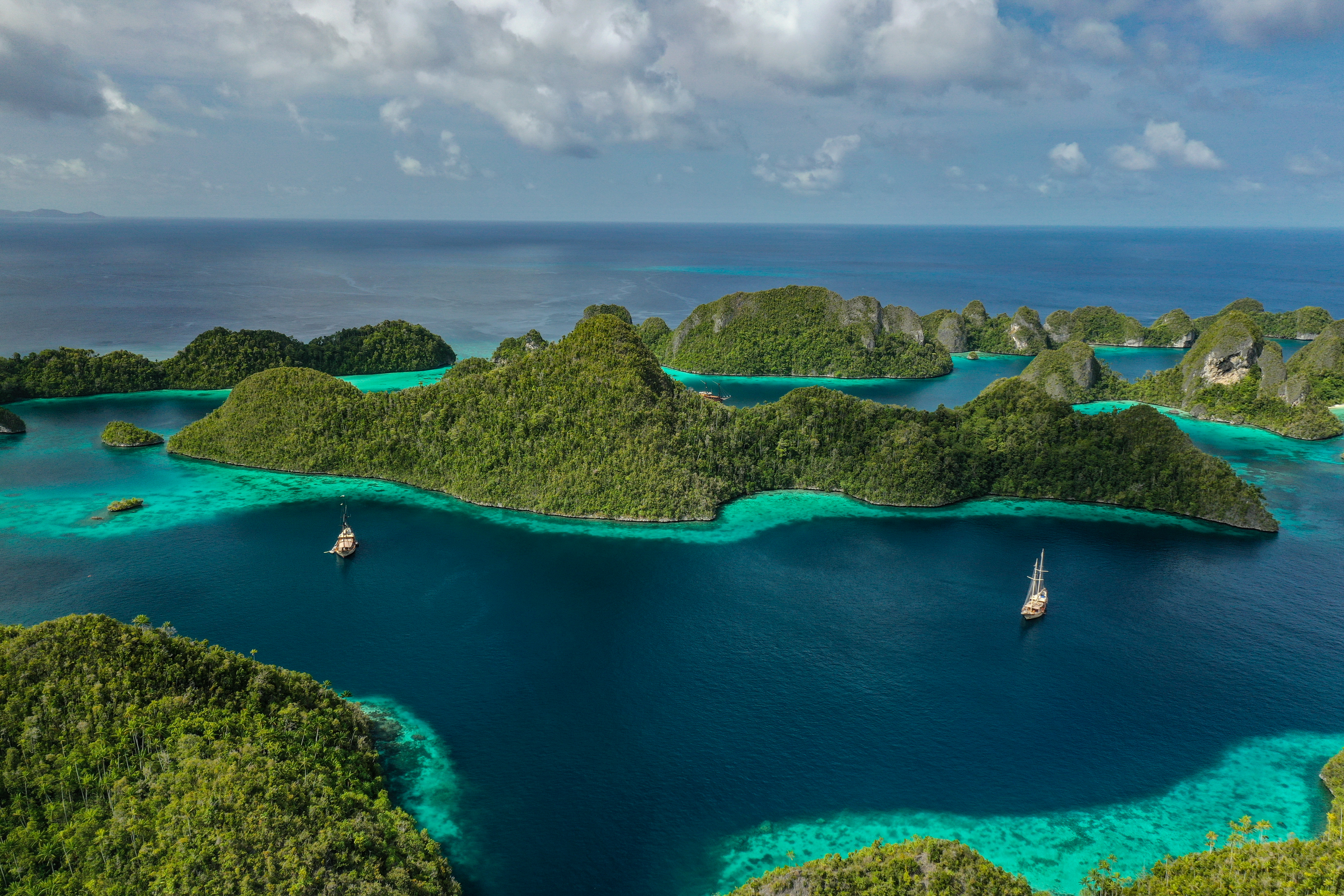
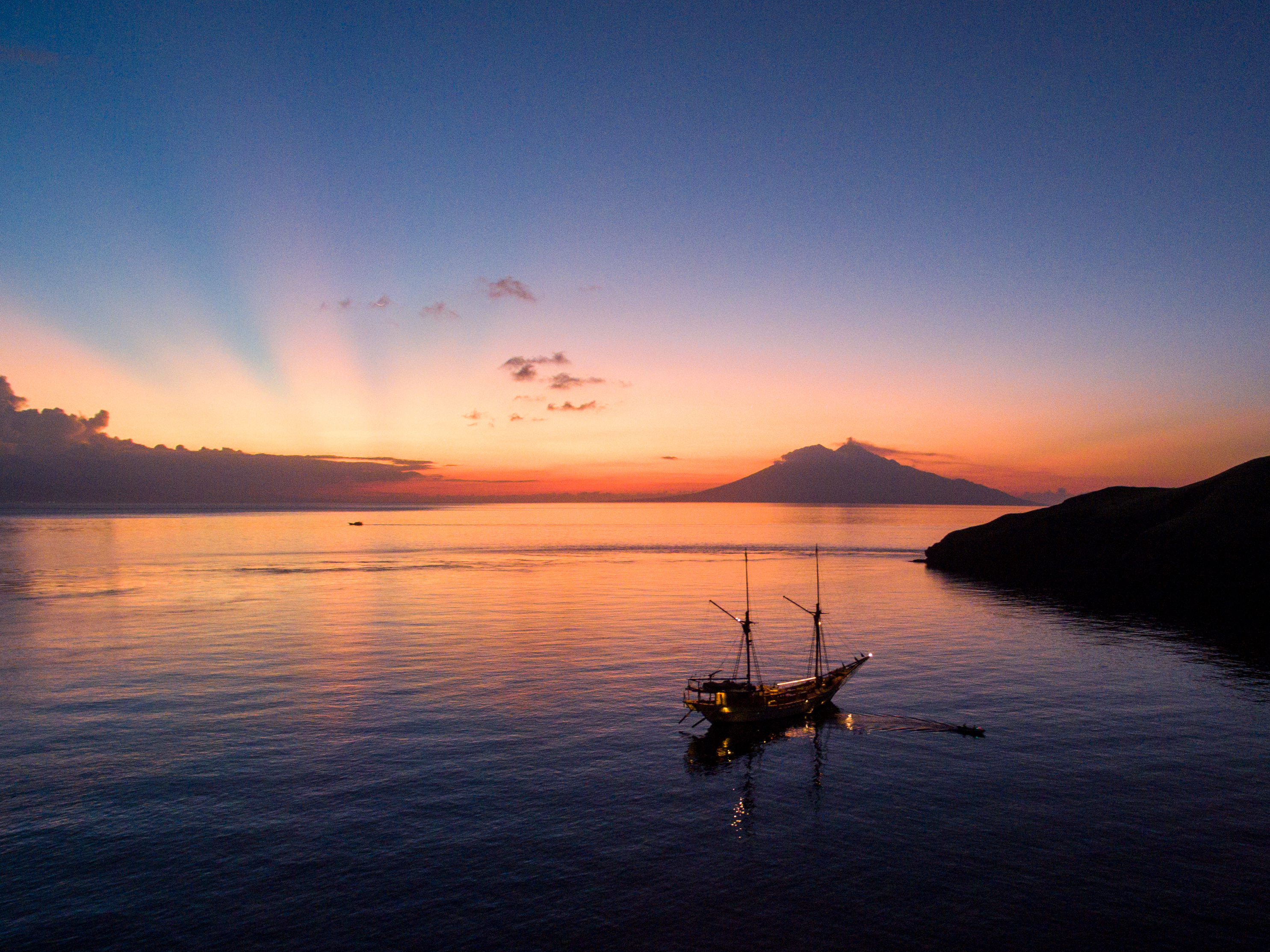
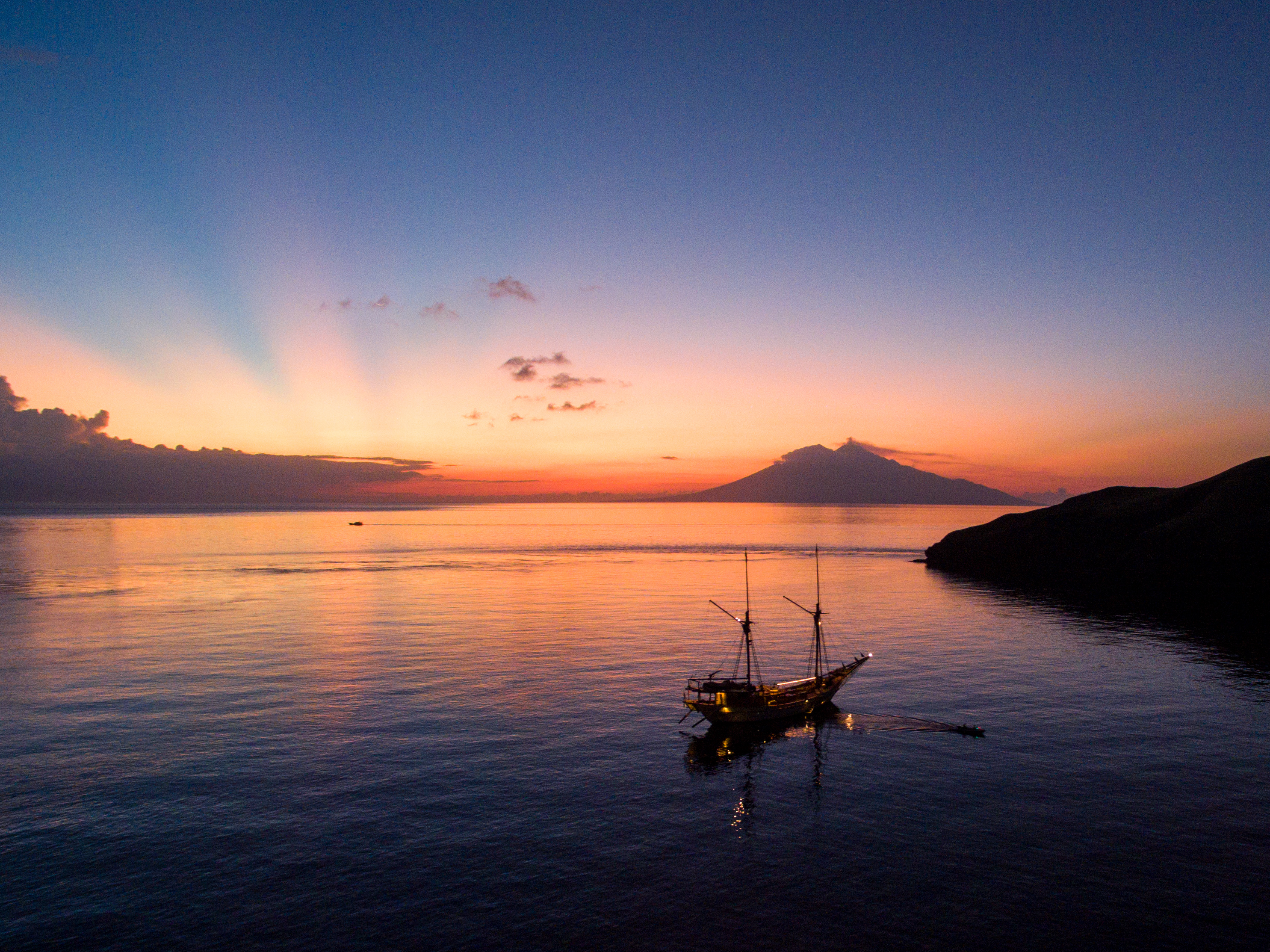
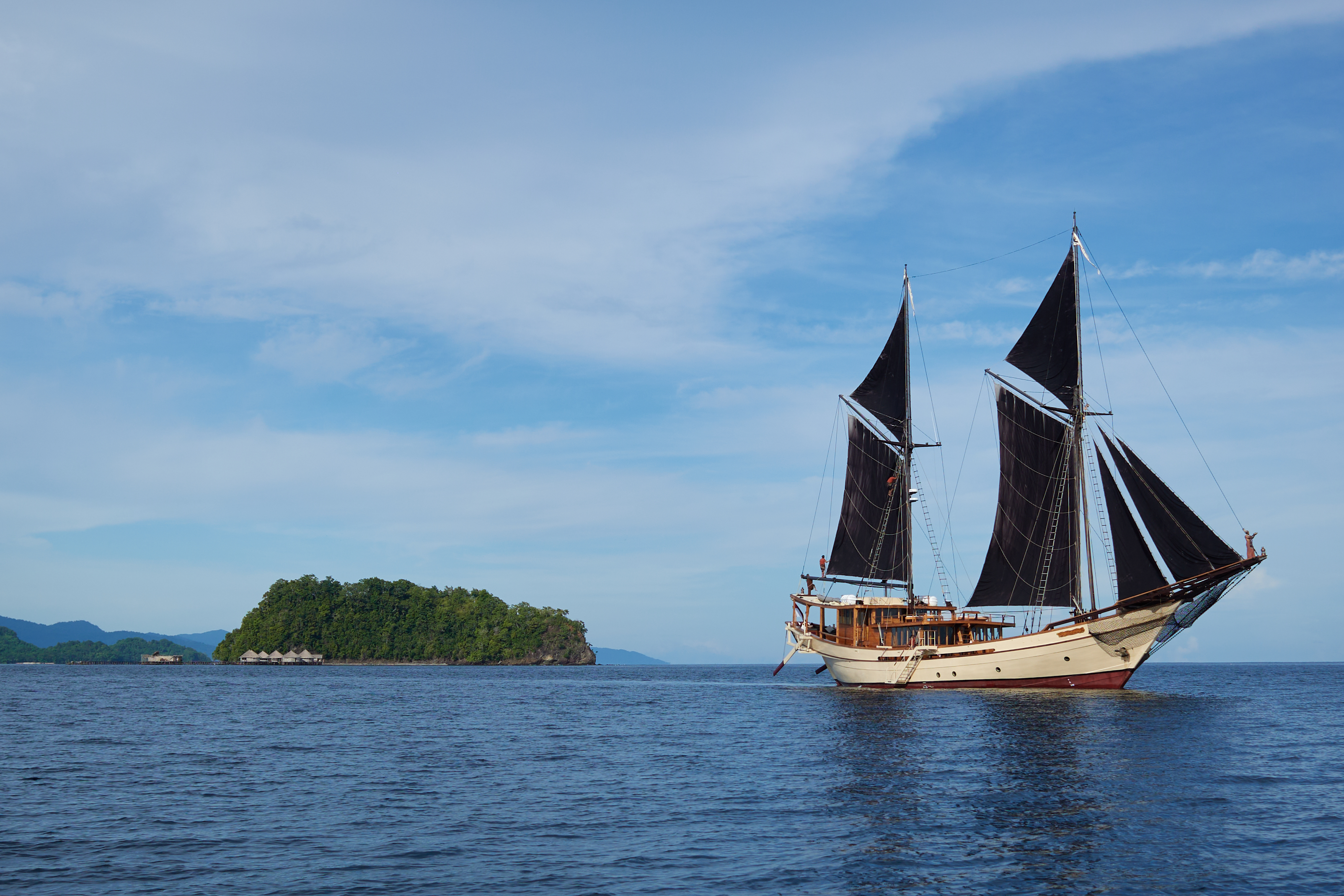
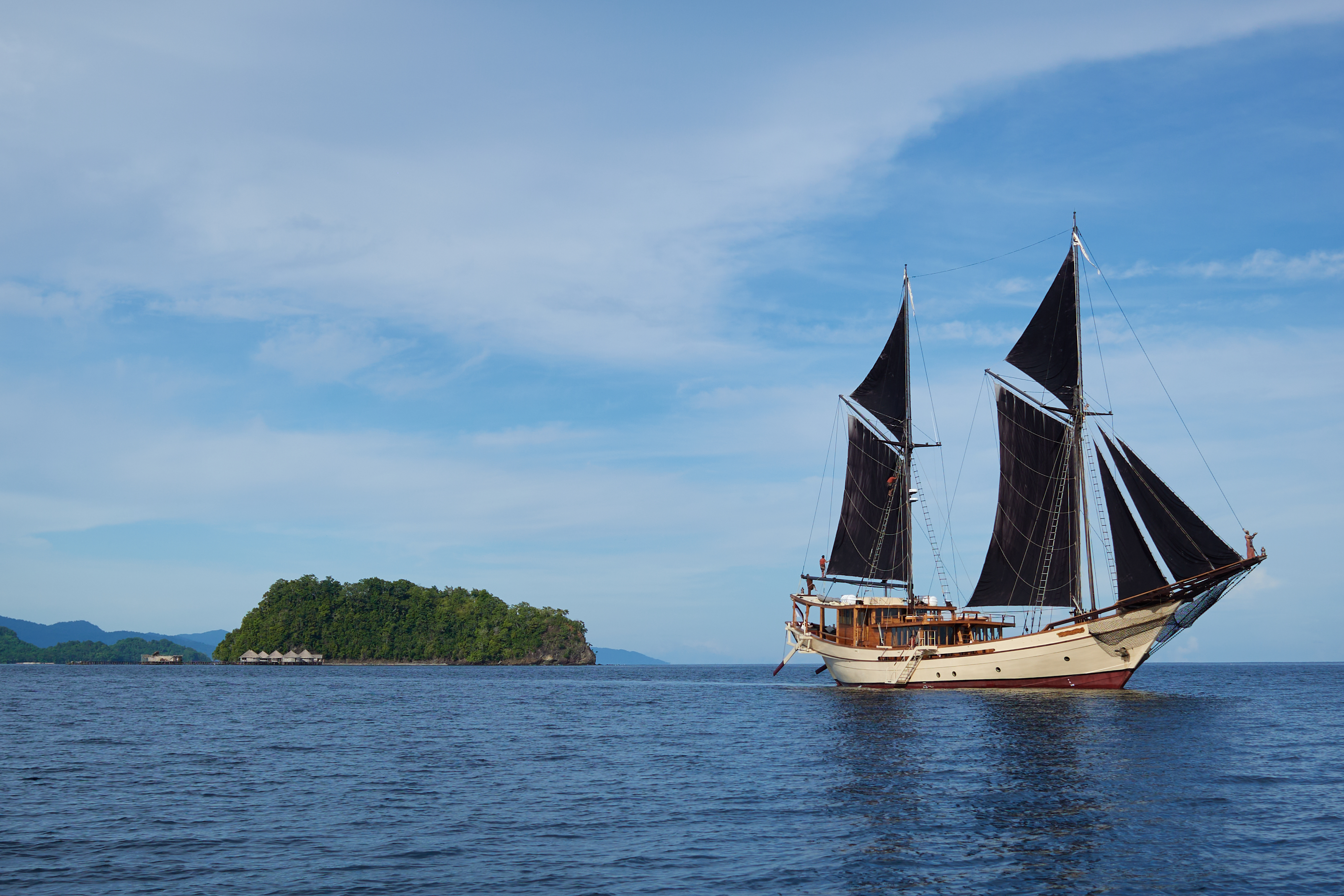
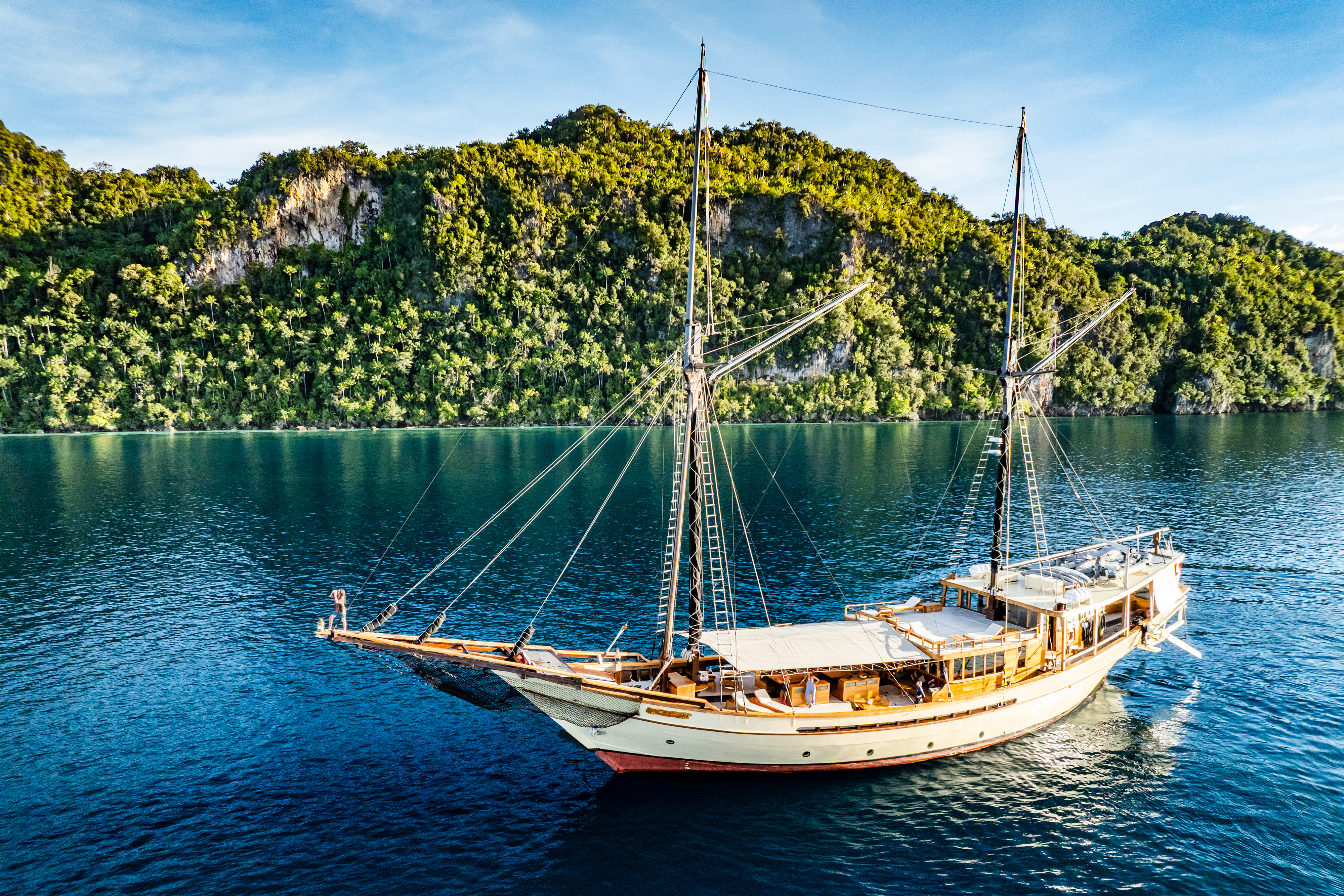
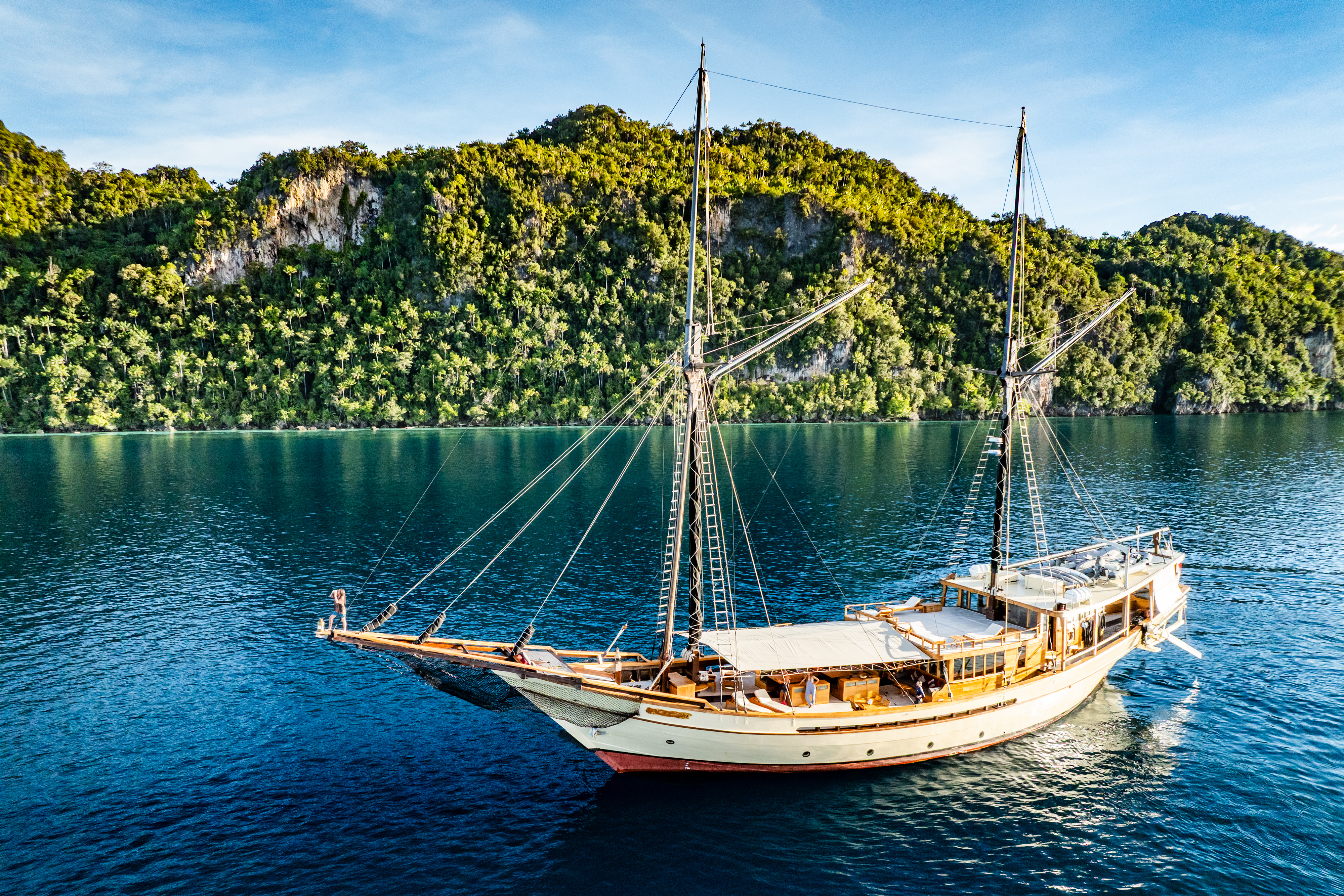
A traditional phinisi, built by hand in the boatyards of Sulawesi, is what you might call a heritage expedition yacht. It is a vessel that carries cultural authority. Its silhouette has sailed these waters for centuries. When it drops anchor in a remote Komodo village or slips into the shallows of a Misool bay, it arrives as something the local world recognises, not as an intrusion but as a familiar presence. The intimacy of the vessel, its wooden construction, its shallow draft and its unhurried rhythms, all of these are not limitations of an older technology. They are deliberate design choices that produce a specific kind of access.
A steel expedition yacht, on the other hand, is what the industry sometimes calls a floating expedition hotel. It brings modern engineering to bear: stabilisers that dramatically reduce motion in open sea, higher cruising speeds, fixed camera stations for underwater photography, robust connectivity, and a layout that accommodates guests with limited mobility far more comfortably. These are genuine advantages, and they matter enormously to specific types of traveler.
The first question to ask is not which vessel is better. It is which category of experience you are actually seeking.
The Two Guest Profiles
Three decades of operating in Indonesian waters has given Silolona Sojourns a fairly precise picture of who belongs on a phinisi and who will be better served by a steel vessel. Here is the honest breakdown.
The Phinisi Traveler | The Steel Yacht Traveler |
Drawn to depth of experience over volume of activity | Wants maximum dives per day, technically demanding sites |
Values cultural access and community encounters | Prioritises stability and speed over intimacy |
Comfortable with deliberate pace and natural rhythms | Requires robust connectivity throughout the journey |
Travels with family across ages and interests | Serious underwater photographer needing fixed camera station |
Conservation and legacy matter as much as the view | Anxious about wooden-hull motion in open sea crossings |
Neither profile is more sophisticated than the other. The distinction is entirely about fit. A serious underwater photographer who needs 90 minutes of bottom time daily across technical sites in strong currents will be frustrated on a phinisi and thrilled on a vessel equipped for exactly that. A multigenerational family seeking cultural immersion, unhurried anchorages and the kind of service where the crew remembers how everyone takes their coffee will find a steel yacht feels somewhat clinical by comparison.
When Steel Genuinely Wins
Intellectual honesty matters here. There are contexts in which a modern steel expedition yacht is the objectively better choice, and pretending otherwise serves no one.
Hardcore Dive Programmes
If diving is the central purpose of your trip rather than one element of a broader expedition, a purpose-built steel dive vessel delivers a meaningfully superior experience. Dedicated camera stations with individual rinse tanks, onboard compressors capable of running multiple fills simultaneously, managed briefings timed around the optimal current windows, and the ability to run six to eight dives per day without fatigue: these are structural advantages that a phinisi, with its more moderate dive tempo of two to four guided dives daily, cannot replicate. Research on recreational diving satisfaction consistently finds that dive-specific infrastructure significantly affects guest experience quality when diving is the primary activity.1
Rough Open-Sea Crossings
Indonesian waters are not universally calm. Certain seasonal crossings, particularly in the Banda Sea during transitional monsoon periods, can produce conditions that create significant motion on a wooden hull. Steel expedition yachts, equipped with active stabilisers, manage open-sea swell in a way that makes a real difference for guests who are motion-sensitive. A phinisi moves with the ocean. That rhythm is part of its character, and many guests find it deeply connecting. Others find it challenging. This is worth understanding before you book.
Guests with Significant Mobility Limitations
The traditional design of a wooden phinisi includes multi-deck stair configurations, higher freeboard on tender boarding, and in some cases, less forgiving access between spaces. Guests with serious mobility challenges will find a purpose-designed steel vessel with accessible layouts considerably more practical. This is not a failure of the phinisi concept. It is simply a geometric reality of traditional construction.
When Phinisi Wins
The contexts in which a traditional wooden phinisi produces an experience that a steel yacht simply cannot replicate are equally specific and arguably more significant for the kind of traveler that Indonesia, at its deepest level, is actually designed for.
Cultural Access That Cannot Be Purchased
This is the central and most important advantage, and it operates through a mechanism that is easy to underestimate. Studies of community-based tourism in Indonesia's eastern archipelago have found that vessel type and crew cultural affiliation are significant determinants of the quality of authentic community engagement available to charter guests.2 A phinisi is not a foreign object in these waters. It is a vessel that local communities have a generational relationship with. The crew of a long-established operation like Silolona Sojourns carry relationships with coastal communities built over decades of return visits. When you go ashore, you go ashore with people who are known, trusted and welcomed. That access is not available on a charter itinerary alone. It accumulates over years of respectful presence.
Shallow Draft and Hidden Geography
A traditional phinisi draws considerably less water than a comparable steel expedition vessel. In practice, this means access to anchorages, bays and passages that are simply not navigable by larger or deeper-keeled steel yachts. The unmarked coves of the Banda archipelago, the inner passages of Misool in Raja Ampat, the hidden beaches of Alor: these are not on the standard charter circuit because most vessels cannot reach them. A wooden phinisi can, and that difference translates directly into anchorages where you may be, genuinely and completely, alone.
Sensory and Material Intelligence
The experience of living aboard a phinisi for a week engages the senses in ways that a well-appointed steel interior cannot. Tropical ironwood from Kalimantan, hand-carved details from the Konjo boatbuilding tradition, ikat textiles sourced from the islands you sail through, the smell and sound and gentle movement of a wooden vessel at anchor: these are not amenities. They are a different grammar of luxury, one that operates through material honesty rather than material perfection. For a certain kind of traveler, this is not just preferable. It is irreplaceable.
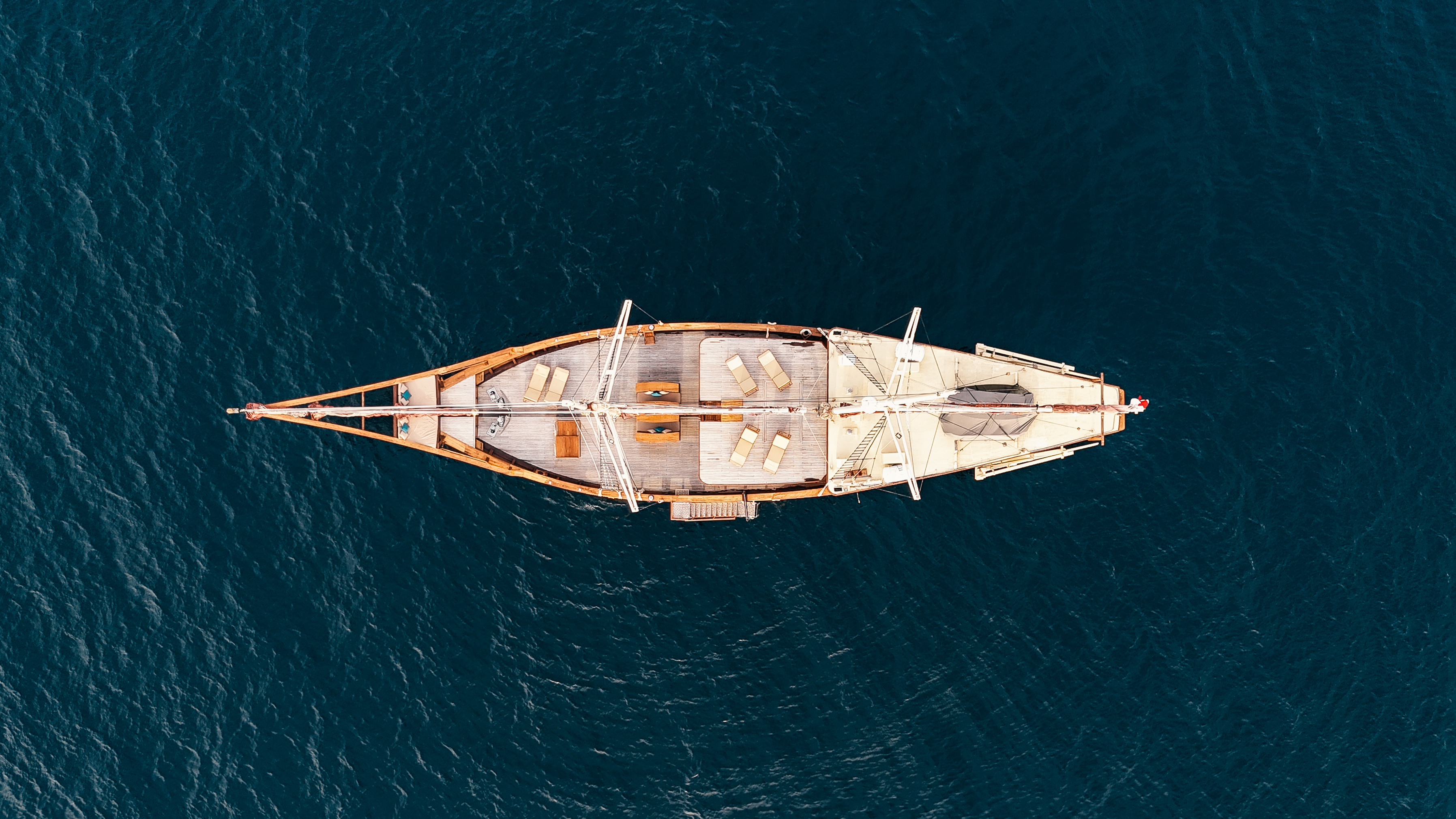
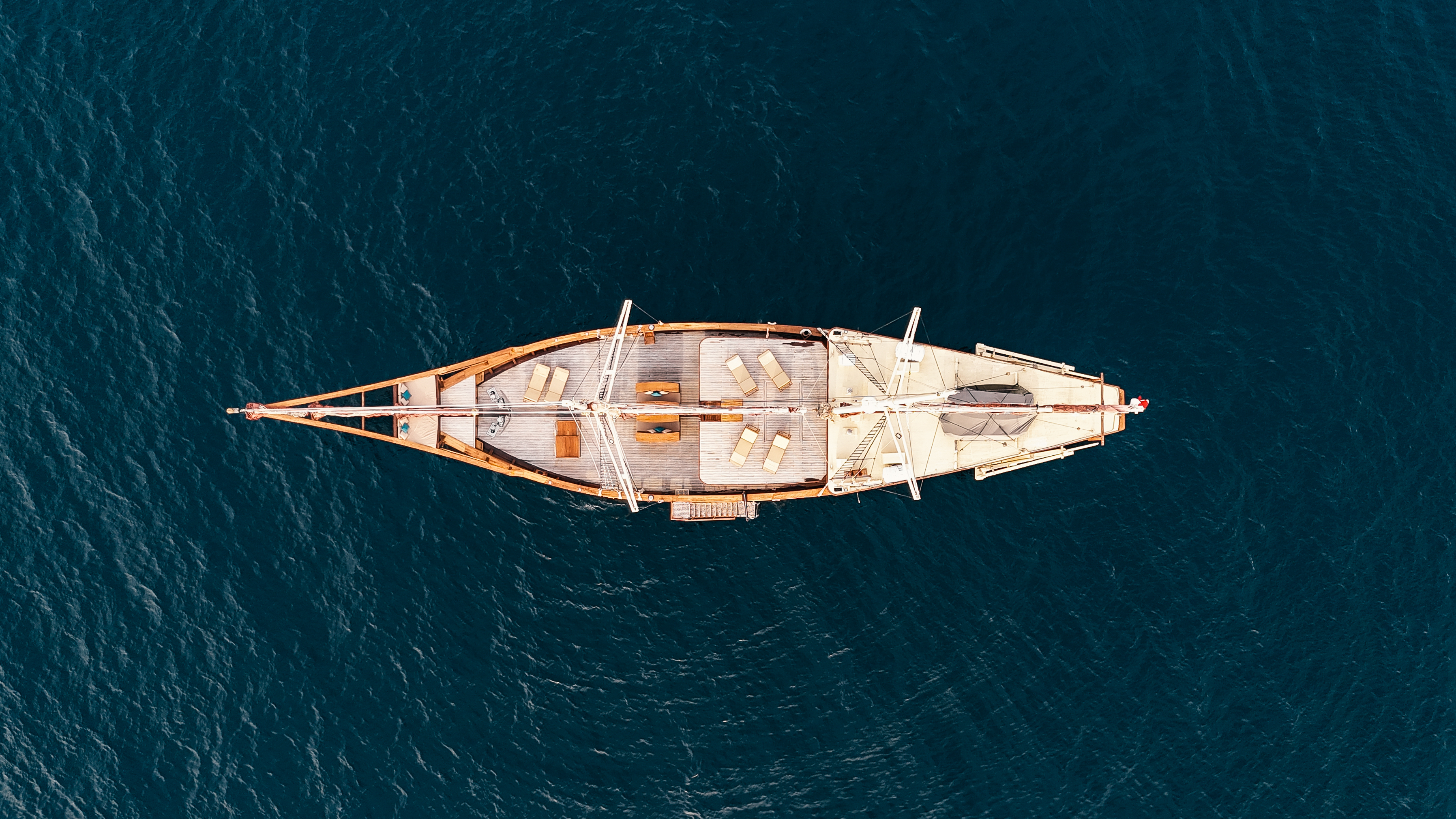
The Silolona Standard MSV Silolona and Si Datu Bua were built by the master Konjo boatbuilders of Sulawesi to German Lloyd's specifications. They carry the cultural authority of traditional Indonesian maritime craft and the safety infrastructure of a professionally certified expedition vessel. The constraints of the phinisi form are preserved because they are what makes the experience possible, not despite that fact. |
Multigenerational and Mixed-Interest Groups
A phinisi with the right crew ratio, Silolona runs 17 crew for 10 guests, can run genuinely parallel programmes. While experienced divers are in the water, non-divers snorkel from the tender, kayak a mangrove channel or join the cook for an impromptu lesson. While grandparents read on the upper deck, children are in a tide pool with the naturalist guide. This capacity for simultaneous, different experiences within the same intimate space is a structural feature of the high crew-to-guest model. Steel expedition vessels with fewer crew relative to guest count find this flexibility harder to deliver.
Conservation Depth That Predates the Trend
The word sustainability has become so thoroughly co-opted by marketing that most discerning travelers apply appropriate scepticism. Silolona's conservation partnerships, including scientific research vessel time donated to marine biology teams, collaboration with the Misool Manta Project, and support for Women in Ocean Science initiatives, predate the current era of eco-branding by years. Research on the relationship between tourism vessel operations and marine ecosystem health consistently finds that operational history, crew training standards and genuine NGO partnerships produce measurably better conservation outcomes than newer operators with louder claims.3 The phinisi model, at its best, creates the conditions for this depth of relationship because it operates within the community fabric rather than above it.
The Honest Verdict at a Glance
If you are still weighing both options, this summary may clarify the decision.
Criterion | Phinisi Wins | Steel Wins |
|---|---|---|
Cultural access | Vessel silhouette earns community trust | No advantage |
Shallow anchorages | Draws shallower, enters hidden bays | Limited by draft |
Dive intensity | Moderate, 2-4 guided dives daily | 8+ dives, dedicated stations |
Open-sea stability | Traditional motion, feels the ocean | Superior in rough conditions |
Sensory experience | Hardwood, ikat, slow rhythm | Modern hardware, controlled climate |
Family / mixed groups | Parallel programmes, no compromises | Better for mobility-limited guests |
Connectivity | Intermittent; encourages disconnection | High-speed throughout |
Conservation credibility | Decades of documented partnerships | Newer entrants claiming eco status |


The Structural Difference Is Experience, Not Specification
The most important thing this guide can offer is this: do not make this decision based on a list of features. Both vessel types offer exceptional standards within their respective categories. The question is which category produces the experience you are actually looking for.
A steel expedition yacht optimises for performance, coverage, comfort and control. It is an exceptional platform for guests who want to maximise activity volume, maintain digital continuity and experience Indonesia at pace, moving efficiently between headline destinations with the confidence of modern engineering beneath them.
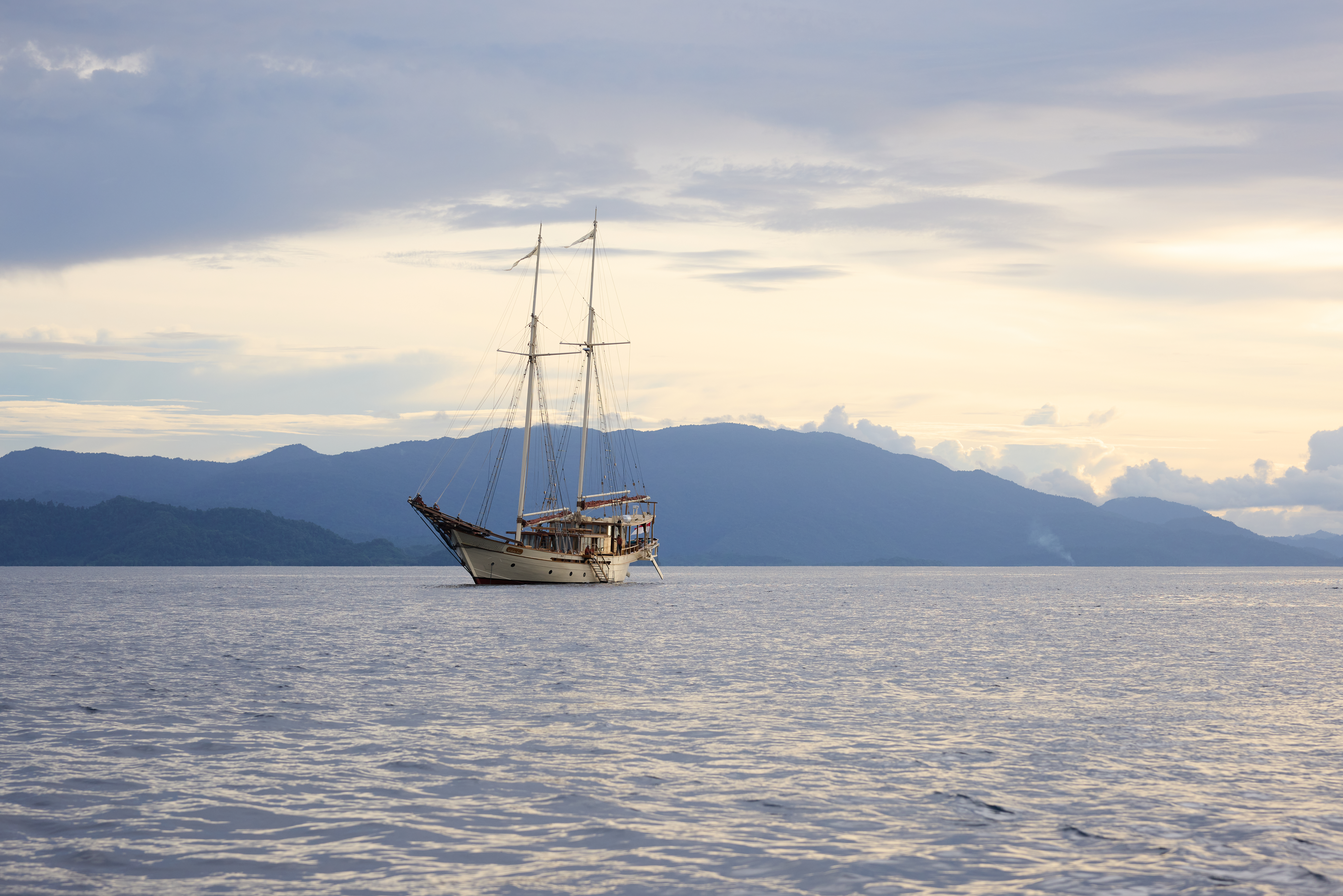
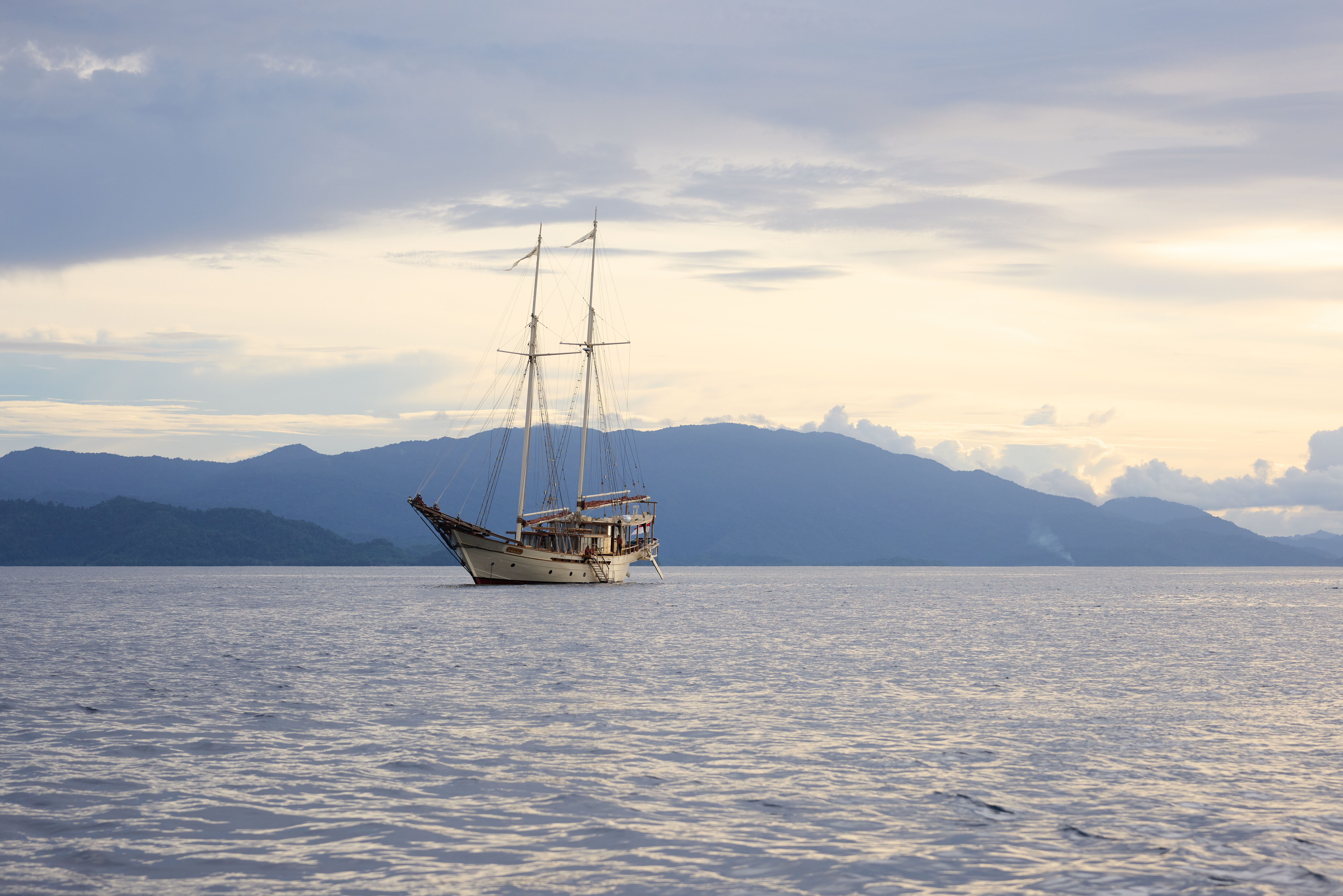
A traditional phinisi optimises for depth, intimacy, cultural access and meaning. It is a vessel that slows down in exactly the right moments, that earns entrance to places and communities that faster, deeper-keeled vessels cannot reach, and that delivers a quality of presence, in the places, with the crew, through the material character of the vessel itself, that is genuinely unavailable elsewhere.
These are not competing philosophies in the sense that one is superior. They are genuinely different answers to the question of what Indonesia means to you. The traveler who leaves a phinisi voyage changed is not the same traveler who spends two weeks on a steel expedition vessel. Both leave satisfied. They are satisfied by different things.
The Right Answer for You
If you have read this far and something in the phinisi column resonates, you probably already know the answer. The traveler who wants to arrive as a guest of the water rather than a conqueror of it, who measures the success of a journey by what it opened rather than how many sites it covered, who wants their children or their parents or their oldest friends to encounter something they will spend years describing: that traveler belongs on a phinisi.
Silolona Sojourns operates two extraordinary vessels across the Indonesian archipelago and Southeast Asia. The team has spent thirty years understanding which itinerary, which route, which pace and which vessel configuration serves each guest best. They will tell you if this is not the right fit. And if it is, they will build something around you that exceeds what you arrived imagining.
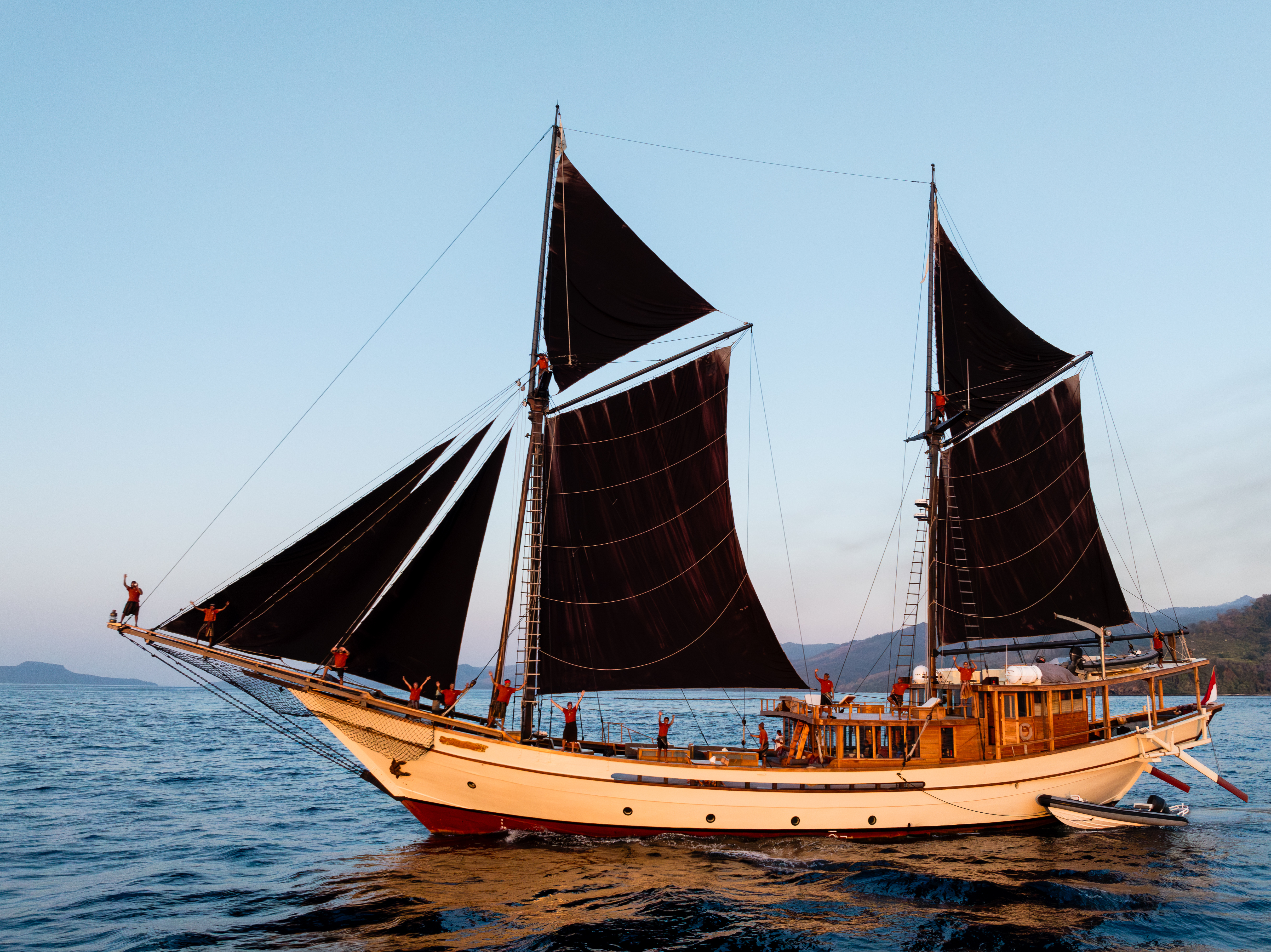
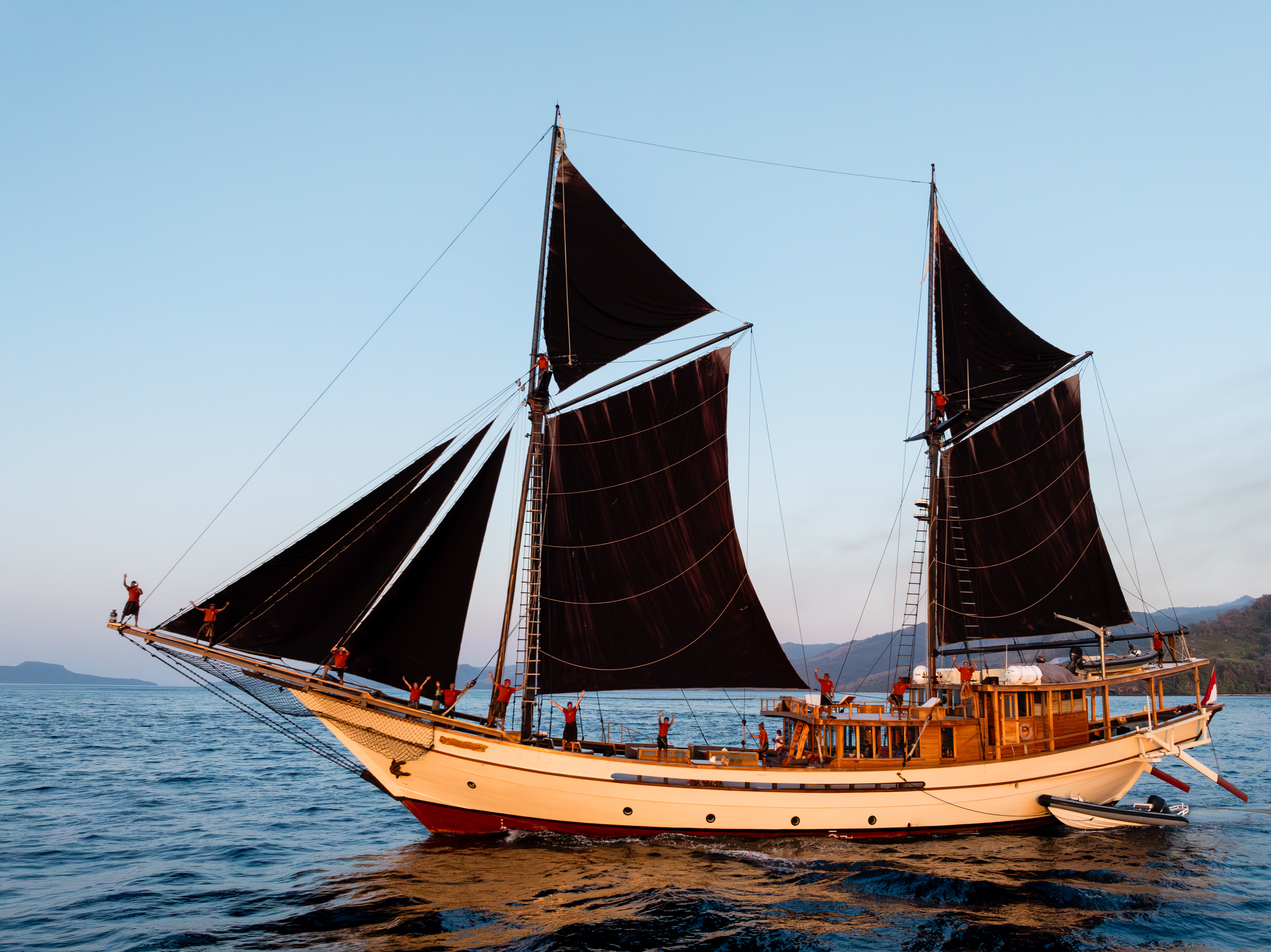
Already Know the Answer? If something in this guide has clarified which vessel belongs in your future, the conversation starts at Silolona Sojourns. Thirty years of these waters. Two extraordinary phinisi. One team that will tell you the truth about whether this is the right fit, and then build something around you that exceeds what you imagined. |
References
1. Musa G, Dimmock K. Scuba diving tourism: introduction to the special issue. Tourism in Marine Environments. 2012;8(1-2):1-5. DOI: 10.3727/154427312X13262430524621
2. Stroma Cole S. Information and empowerment: the keys to achieving sustainable tourism. Journal of Sustainable Tourism. 2006;14(6):629-644. DOI: 10.2167/jost607.0
3. Lamb JB, Willis BL, Fiorenza EA, et al. Plastic waste associated with disease on coral reefs. Science. 2018;359(6374):460-462. DOI: 10.1126/science.aar3320