

Private Yacht Charter Indonesia: The Definitive Guide to Sailing the Archipelago By Silolona Sojourns
There is a map that most travelers never see. It sits just beyond the edge of the brochures, past the resort pools and the curated Instagram feeds, somewhere in the blue space between 17,508 islands. Indonesia is not a destination. It is an ocean civilization, and moving through it the way it was always meant to be explored means a private yacht.
Why Indonesia Is Simply Different
You have sailed the Mediterranean. You have spent a week in the British Virgin Islands. But Indonesia operates on a different scale, physically, culturally, and experientially, that those oceans cannot match.
The archipelago stretches 5,000 kilometers from west to east across three time zones. Within the Coral Triangle, that convergence of the Indian and Pacific Oceans anchored in Indonesia's eastern waters, scientists have identified over 76% of all known coral species and more than 3,000 species of reef fish.¹ You are not visiting a reef. You are visiting the ocean's library.
The most important difference, though, is this: Indonesia has not been flattened into a commodity. The cultures you encounter when your phinisi drops anchor in a remote bay are not performing for you. They are simply living, and you have been invited in. That invitation, accepted with the right kind of grace and knowledge, is precisely what a private yacht charter Indonesia experience, done well, delivers.
What a Private Yacht Charter in Indonesia Actually Means
The industry uses identical language for experiences that are fundamentally different. Here is what you need to know.
Whole-Vessel Charter
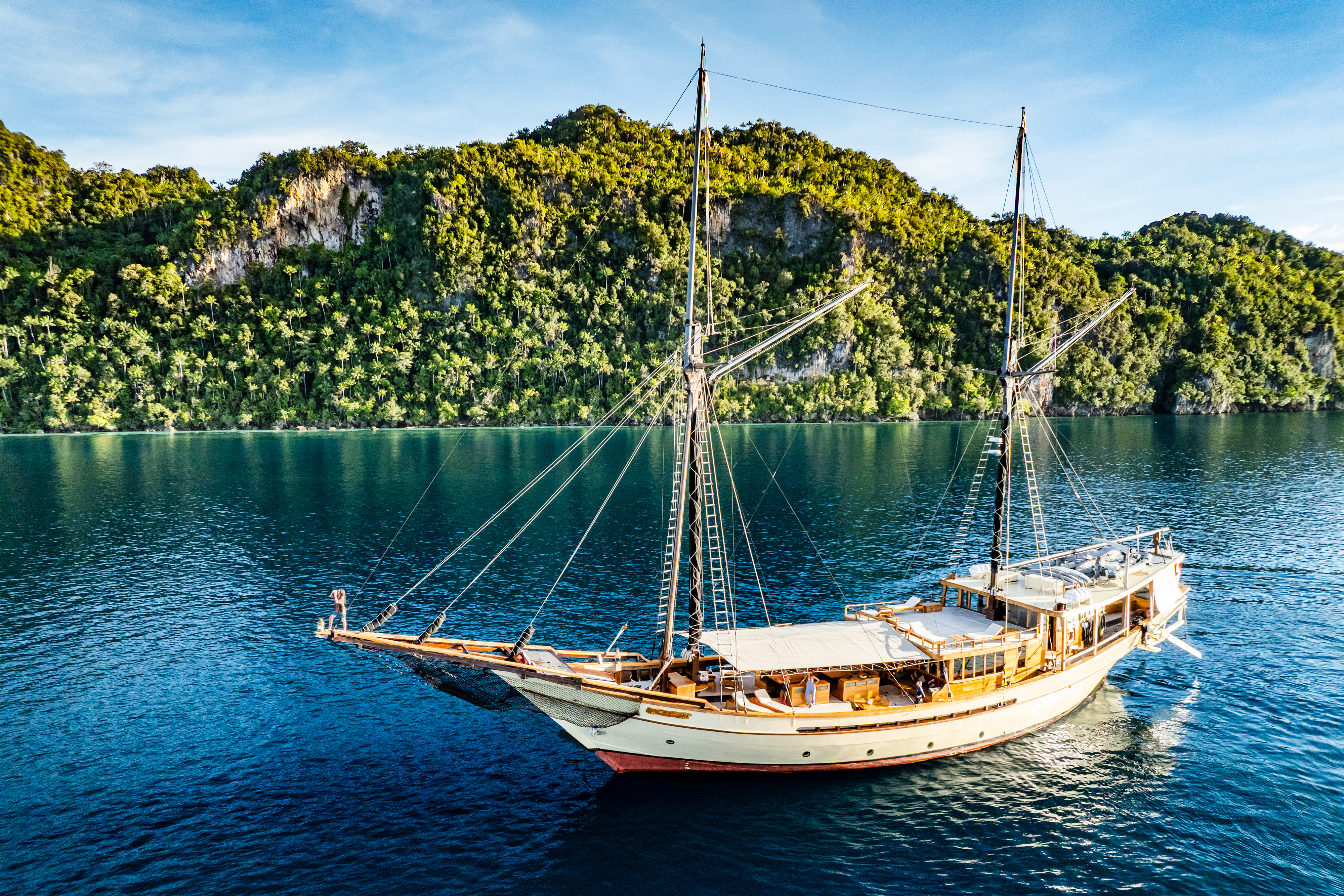
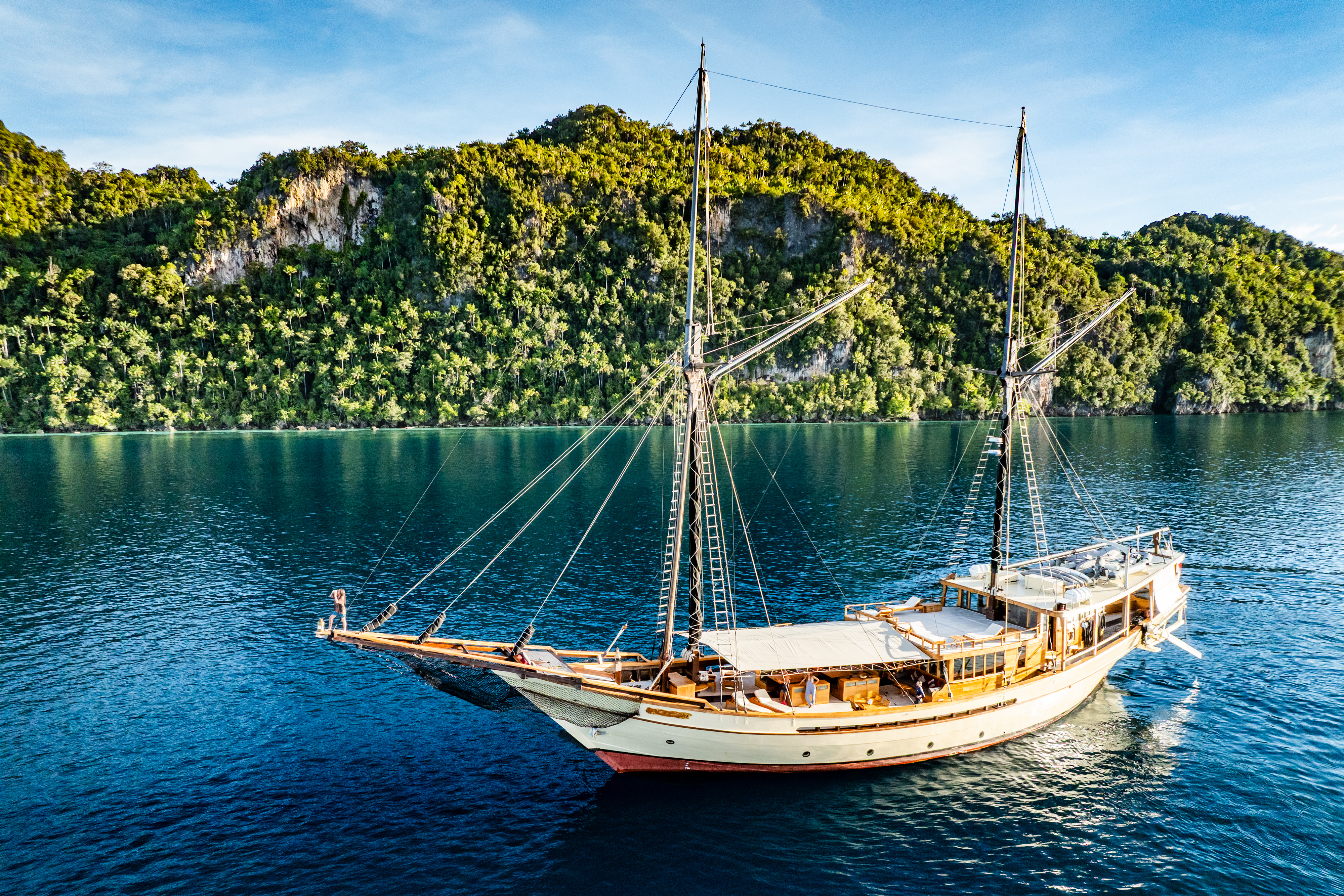
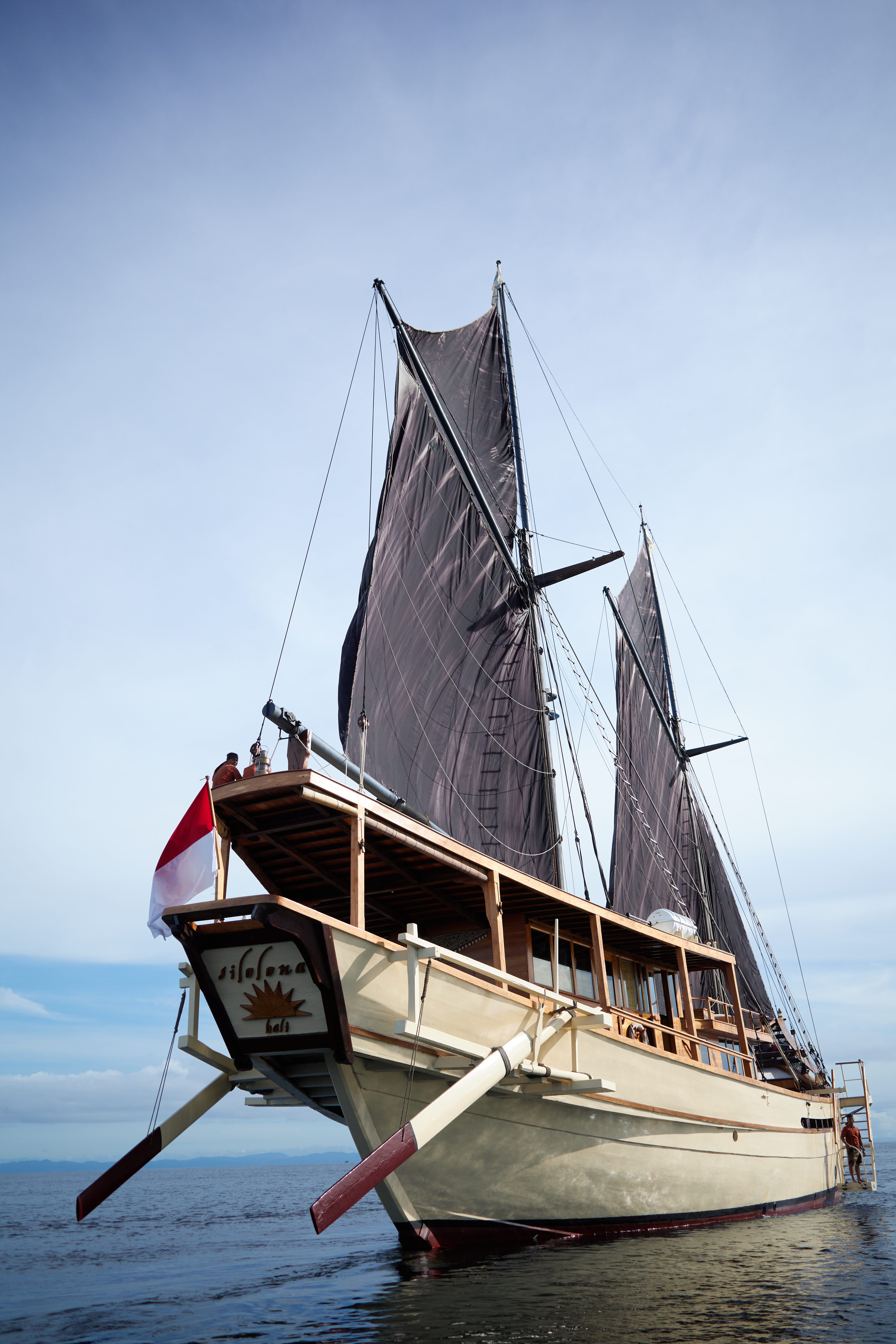
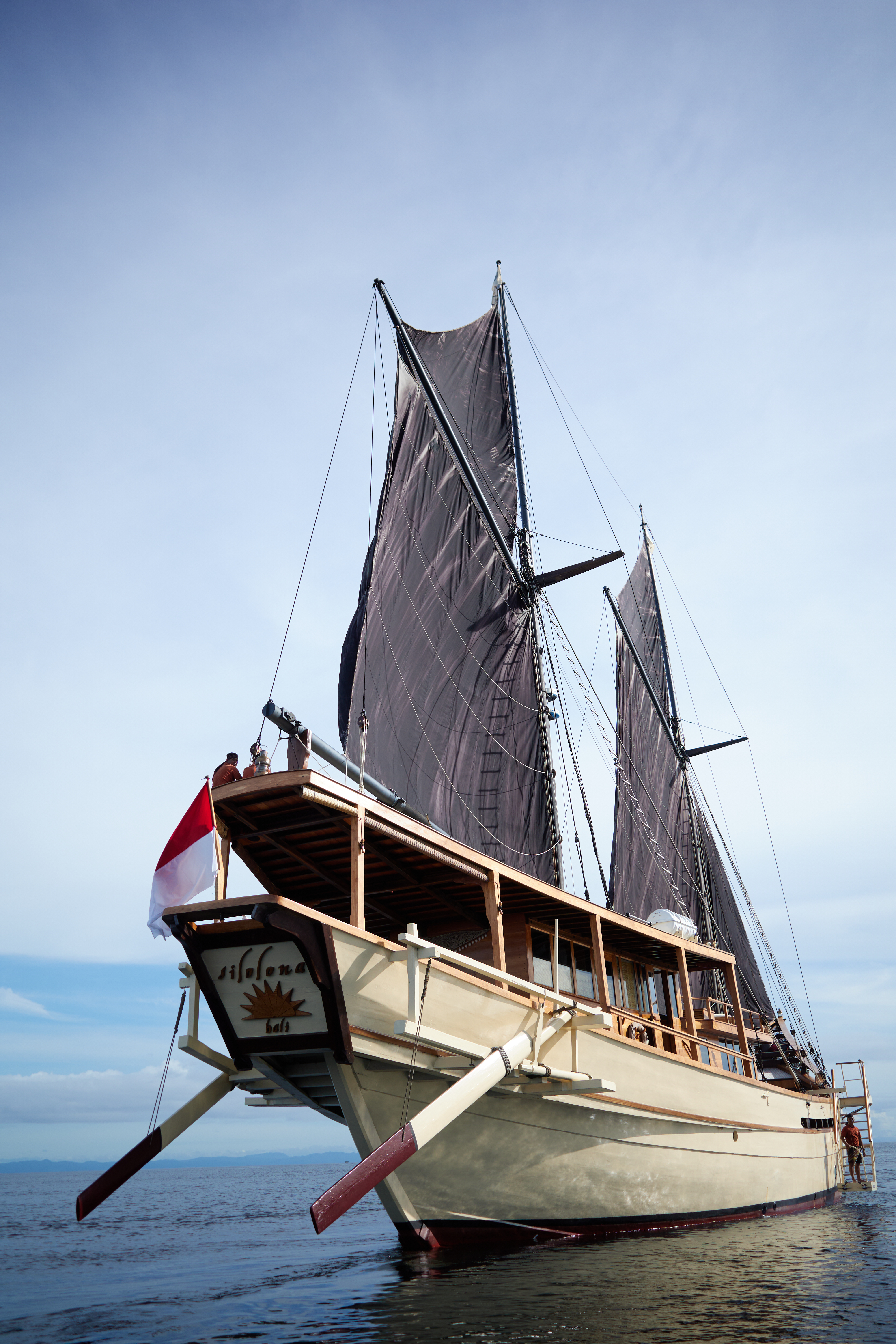
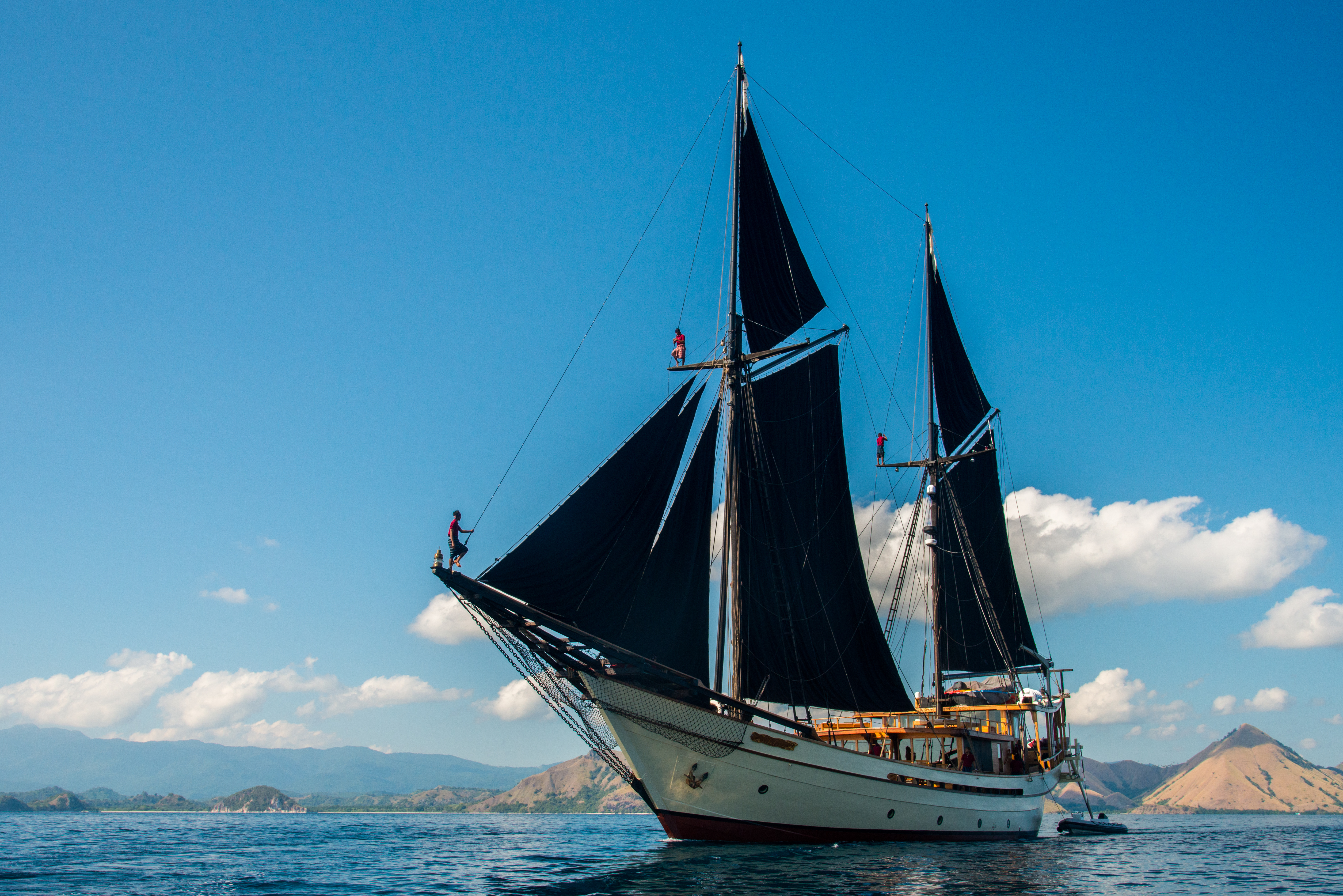
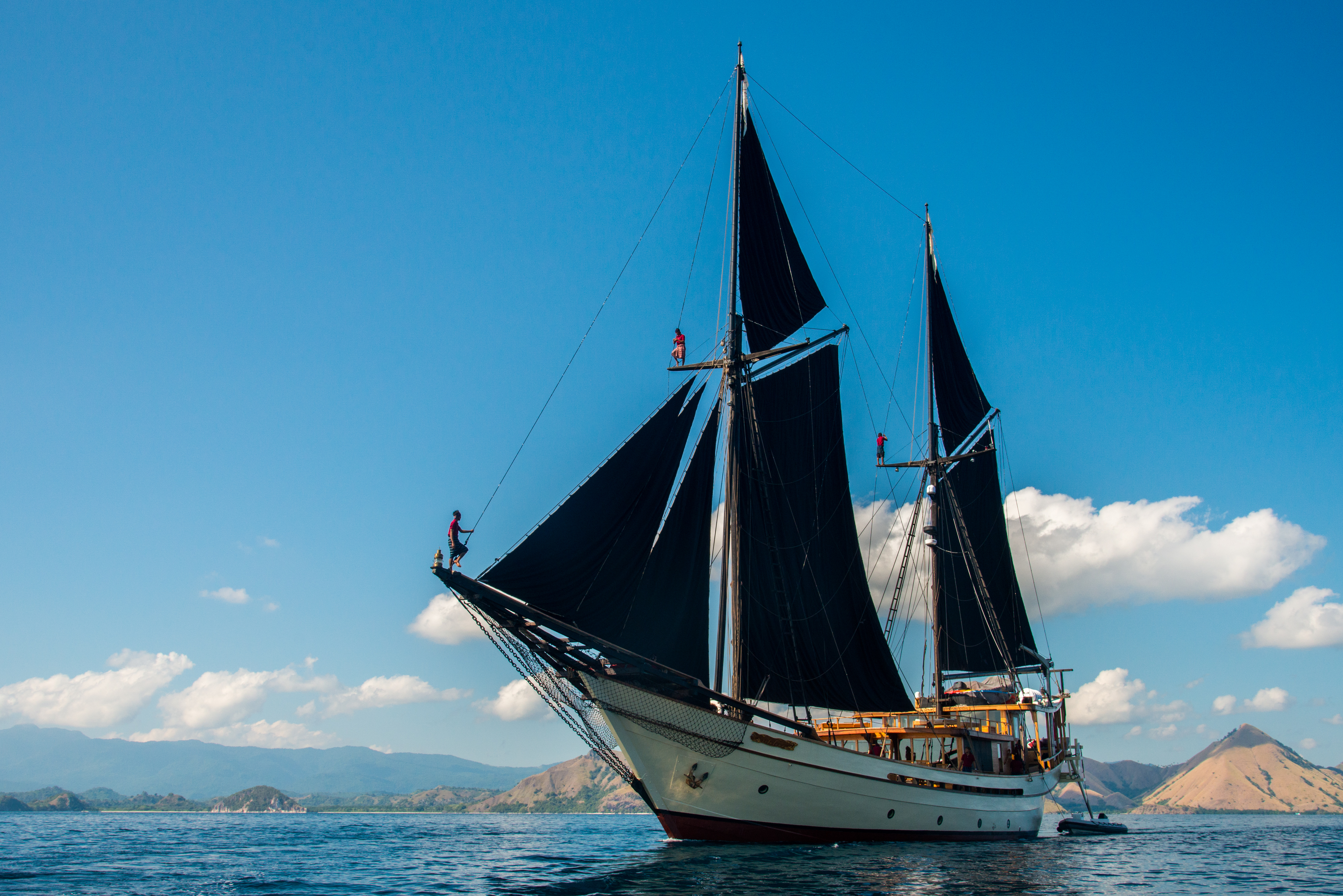
You, your family, your closest friends, and the entire vessel, no shared dining rooms, no strangers at your sunset table. The itinerary is entirely yours. On Silolona, the flagship 50-meter phinisi, up to 10 guests fill five elegantly appointed cabins, attended by a crew of 17. That ratio is not simply a feature; it reflects a philosophy: when attentiveness reaches this level, service feels intuitive, seamless, and quietly present at every moment. On Si Datu Bua, the more intimate vessel carrying just 6 guests in 3 suites, the ratio shifts to 14 crew. Three couples, one direction decided together each morning.
Cabin Expedition Departures
Silolona also offers individual cabin sailings on curated departure schedules, the ideal entry point for solo travelers, couples, or safari-lodge regulars curious about what a phinisi voyage actually feels like.
What Is Included
All accommodations, all meals from Chef Ketut's Balinese-influenced kitchen, snorkeling excursions, guided kayaking, and all supporting equipment together with the intricate logistics of navigating Indonesia's territorial waters are included. National park fees, specialist dive courses, and certain beverage upgrades sit outside that. A reputable operator tells you exactly what is included and what remains separate before you board.
Why Wooden Phinisi Beats Steel
Modern steel expedition yachts have real advantages: stability in rough conditions, higher speeds, dedicated camera stations for underwater photographers. If you want to run eight dives a day in technical conditions, a steel vessel serves those needs well.
But if you want the Indonesia that requires a human relationship to enter, wood is the answer.
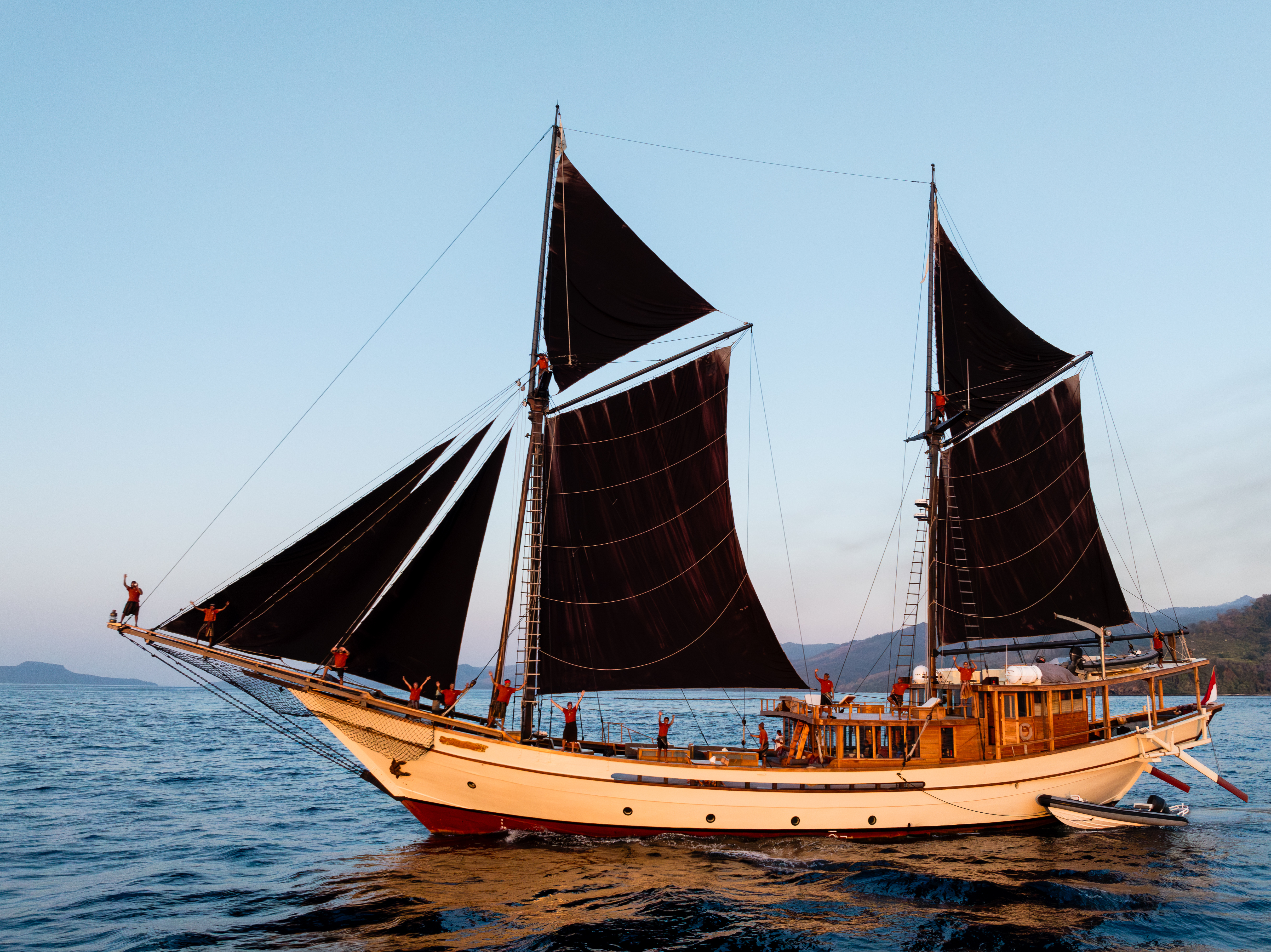
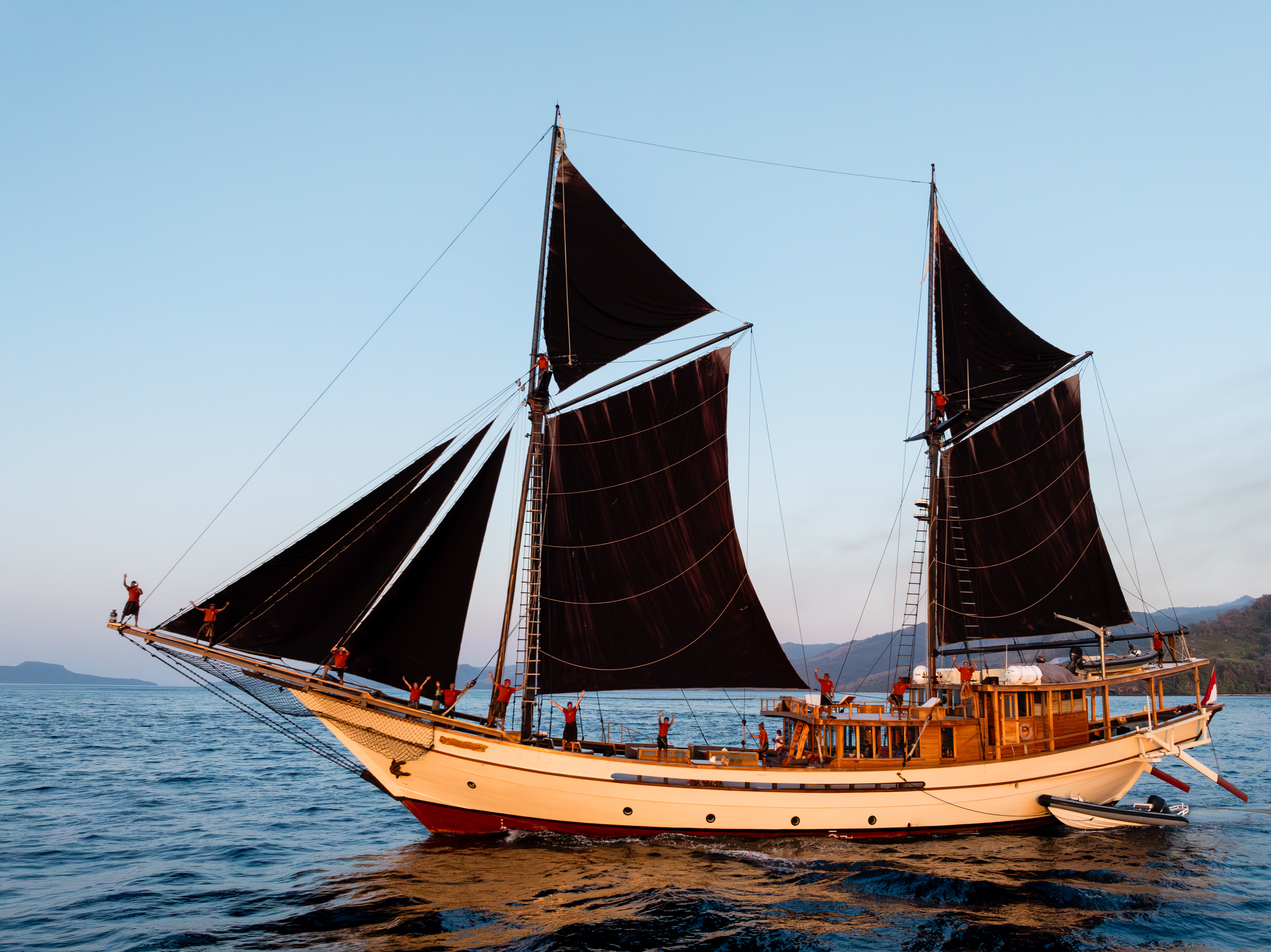


The Cultural Access Advantage A traditional phinisi has a silhouette that has sailed these waters for centuries. When you anchor in a Komodo village in a vessel that local fishermen recognize as a cousin of their own boats, you are not an expedition. You are a neighbor. The crew carry relationships with communities built over years of return visits. The vessel itself opens doors that no steel hull can. |
The phinisi also draws shallower. The hidden bays of Misool in Raja Ampat, the intimate anchorages in the Banda archipelago, the unmarked beaches of Alor: these are places a large steel yacht simply cannot reach. A wooden phinisi slips into coves that exist, for practical purposes, beyond the rest of the charter world.
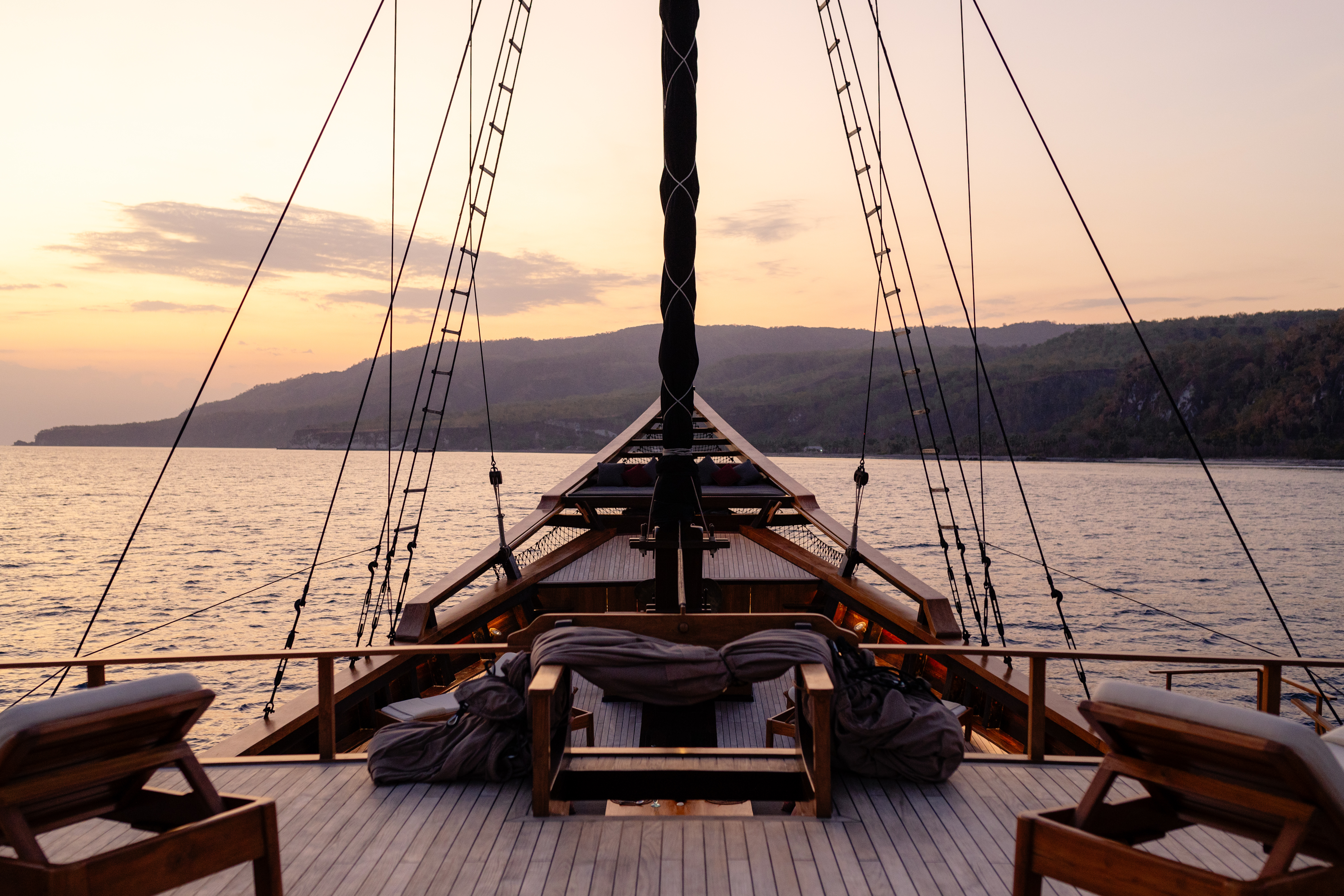
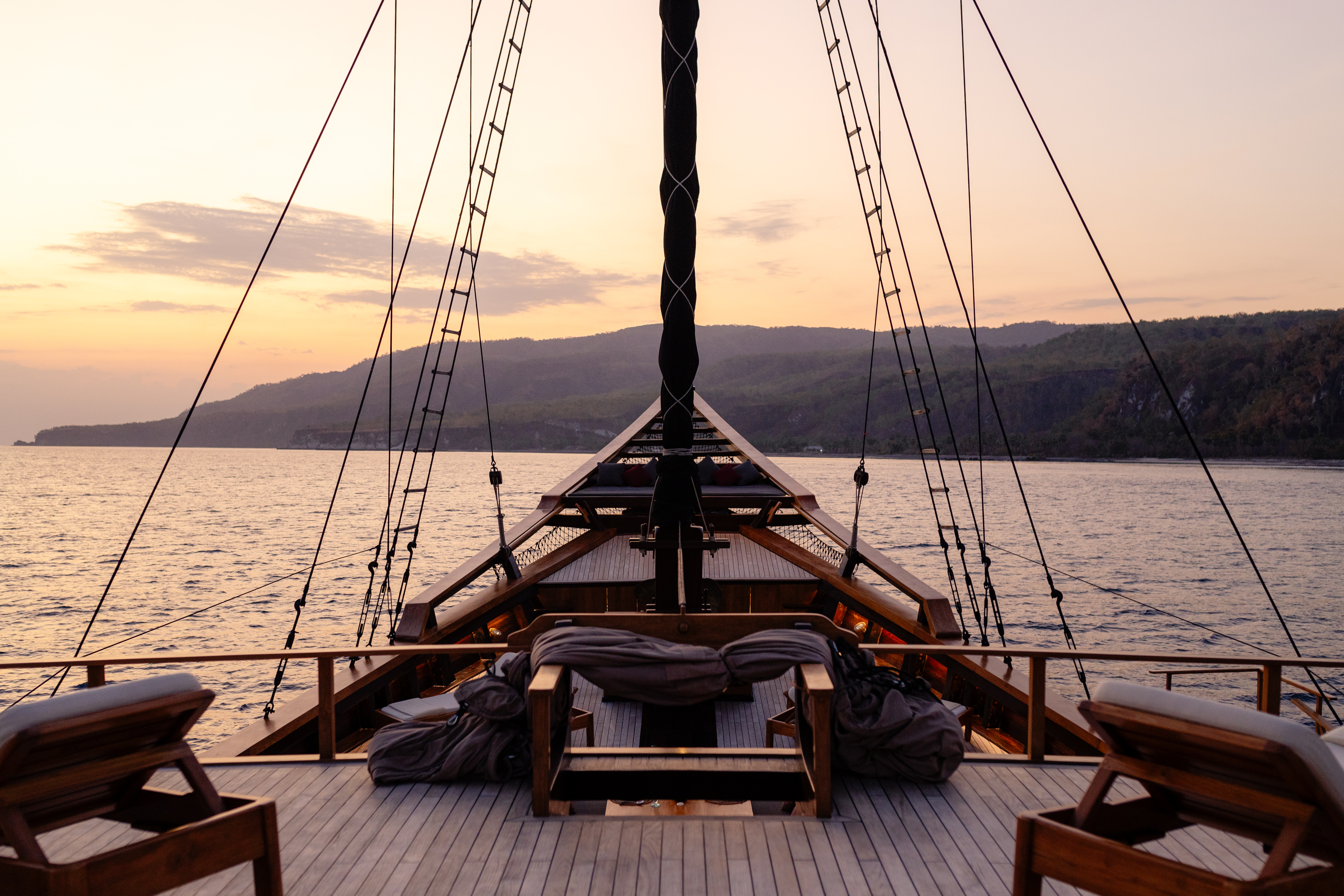
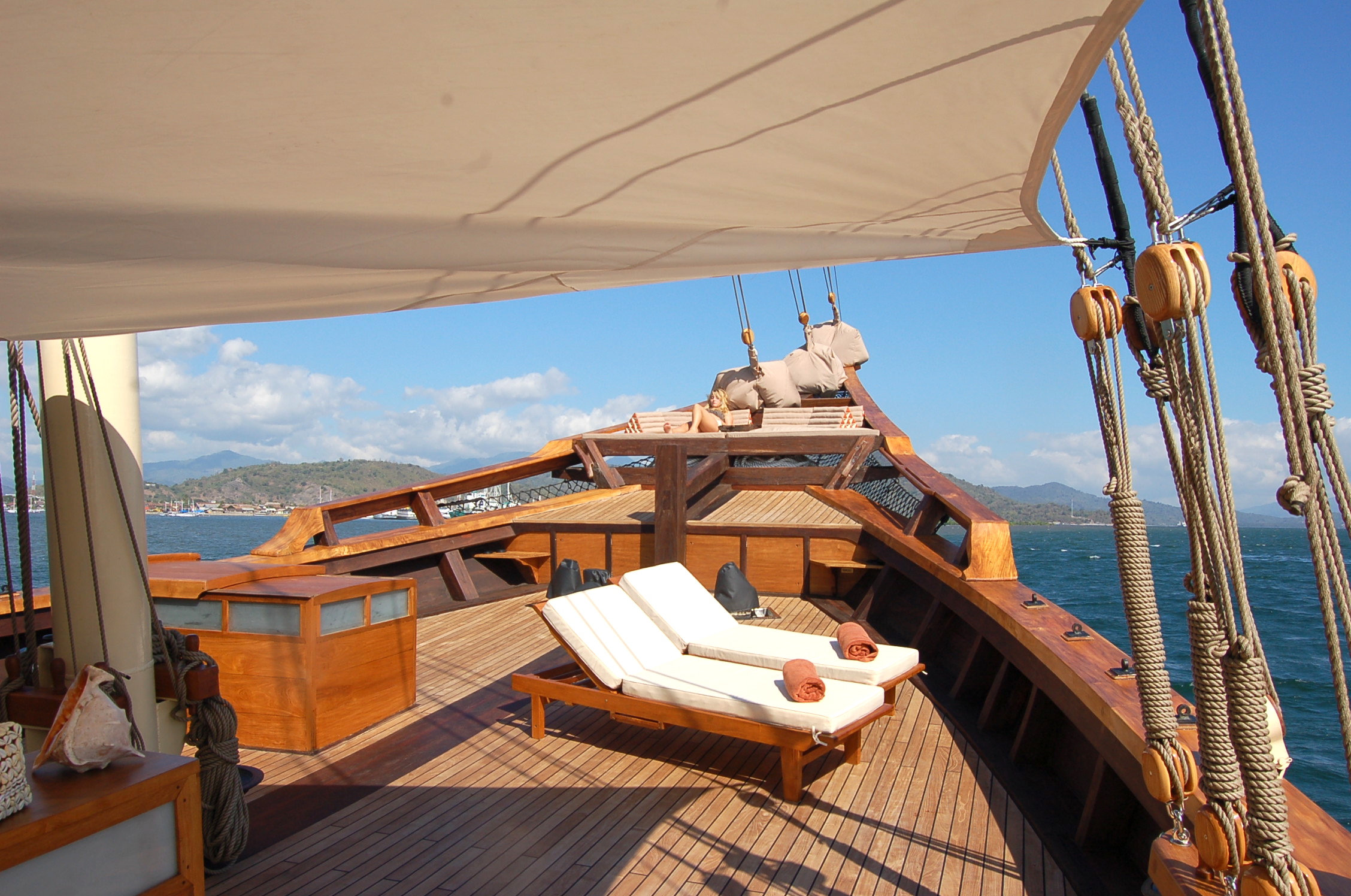
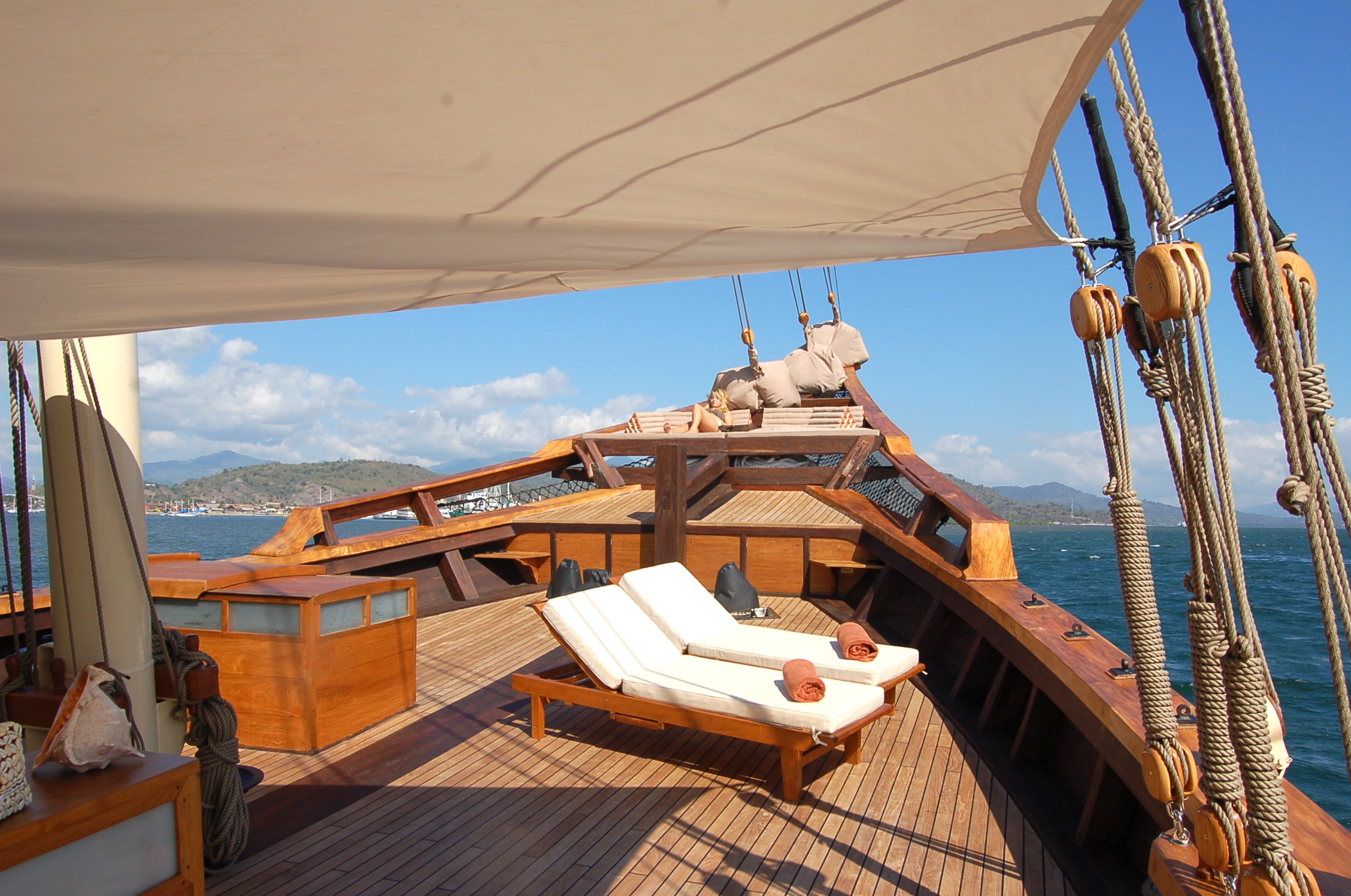
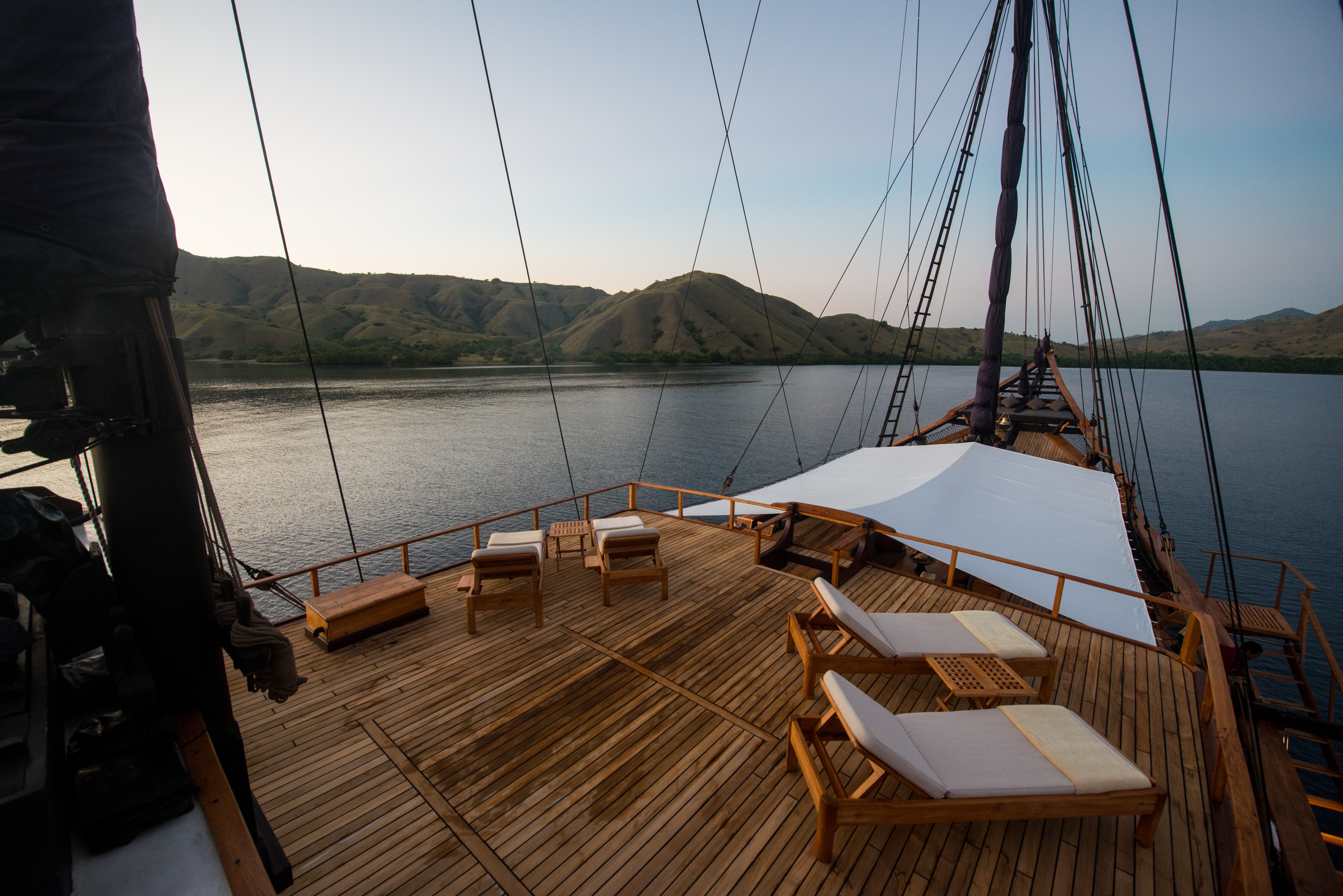
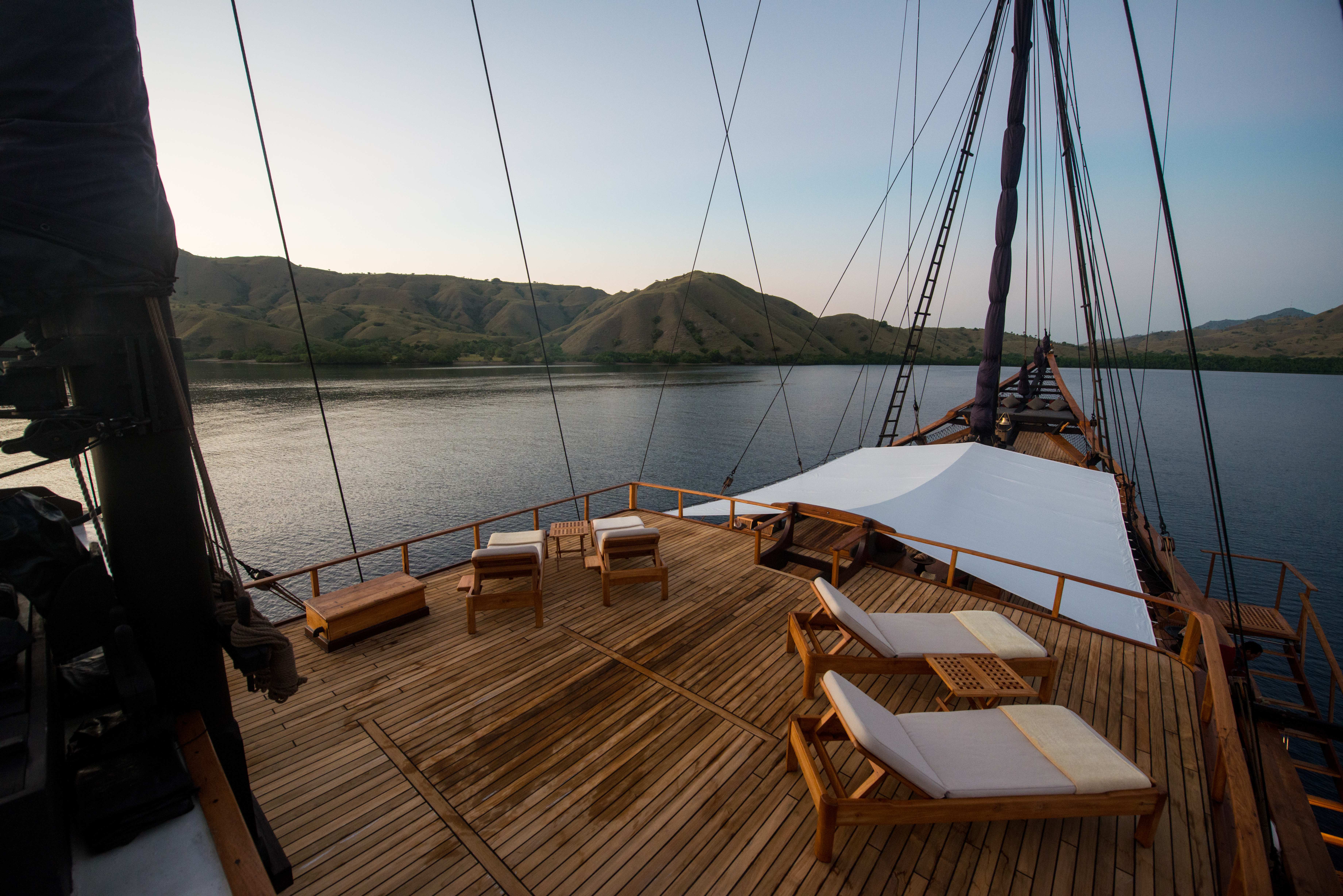
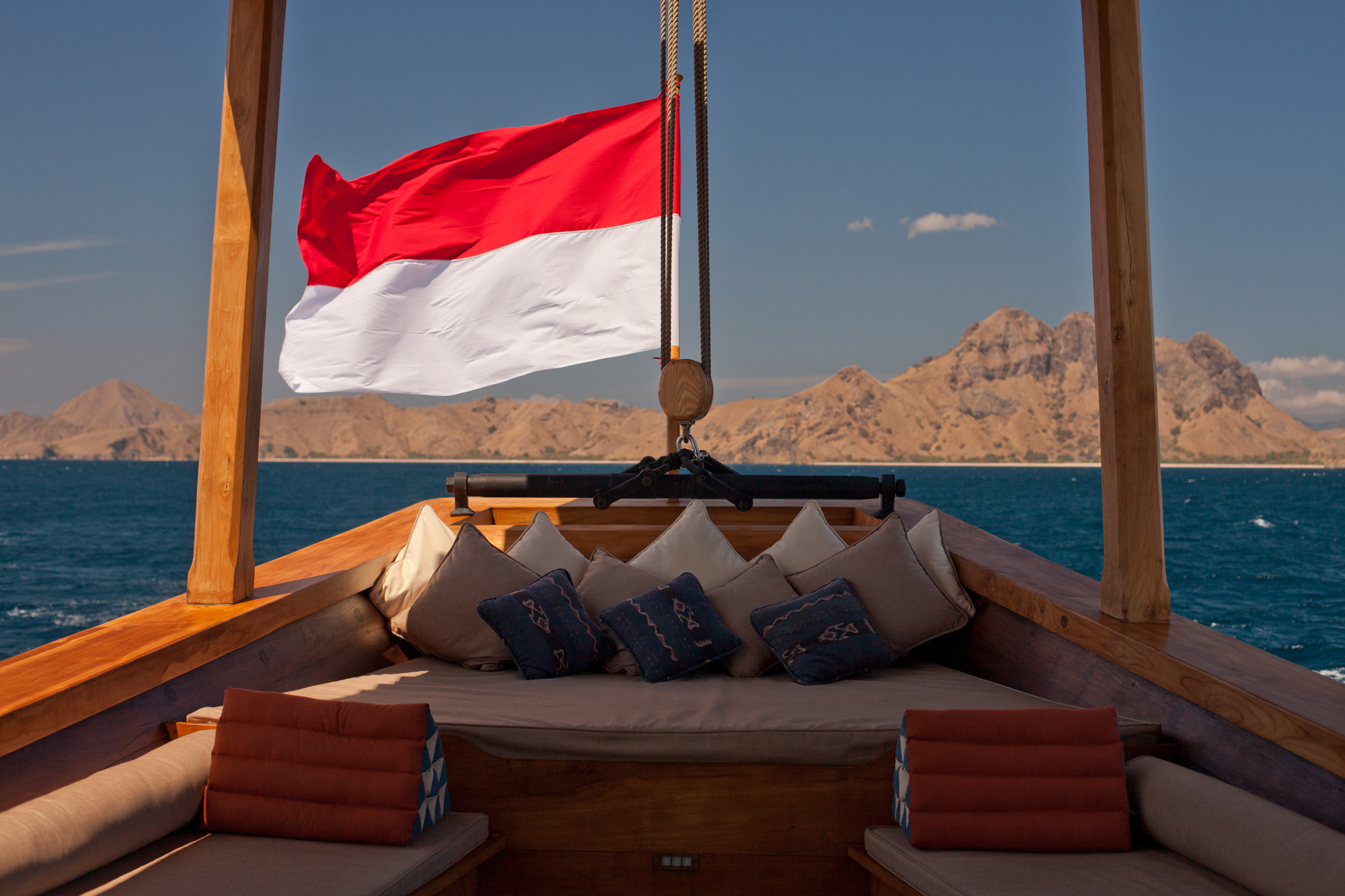
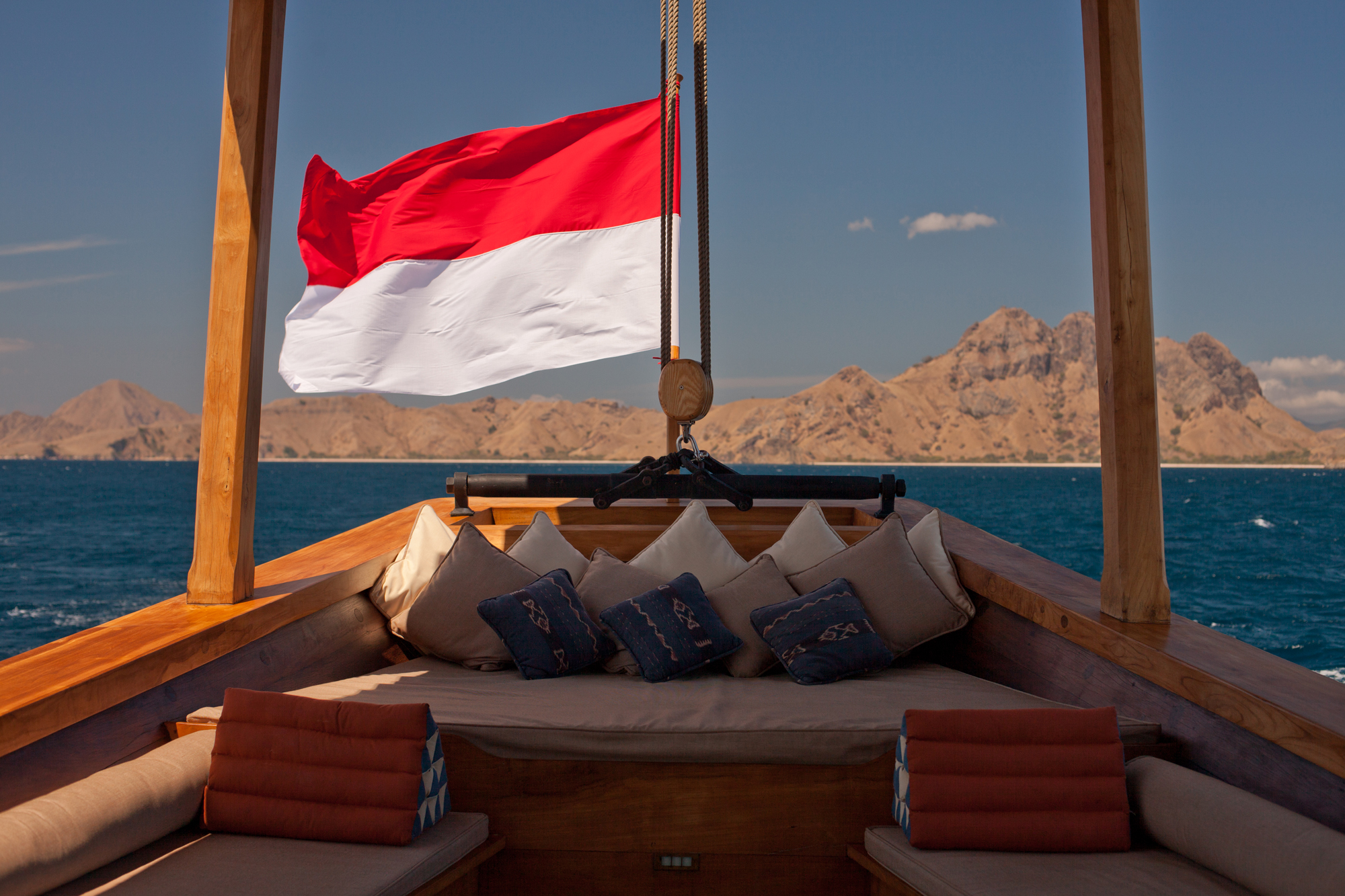
Then there is the sensory reality. Tropical hardwoods from Kalimantan, hand-carved fittings, ikat textiles from the islands you sail through. These vessels are not floating hotel rooms. They are living objects, and the time you spend on them leaves a different kind of mark. Both Silolona and Si Datu Bua were built by the Konjo boatbuilders of Ara and Tanah Beru villages in Sulawesi, the same master craftspeople who have shaped Indonesia's great wooden vessels for generations. That lineage is not decoration. It is structure.
The Three Great Routes
Komodo and the Lesser Sunda Islands
Komodo deserves more respect than its reputation as the dragon island suggests. Varanus komodoensis is genuinely one of the world's most extraordinary wildlife encounters, but the archipelago is also a place of remarkable marine life. Manta Alley, Batu Bolong, and the drift dives around Gili Lawa Laut are not interchangeable with anywhere else on earth. A well-paced Komodo expedition runs seven nights minimum: the Rinca ranger trek, the Padar summit at dawn, Pink Beach, deep dive sites, and the slower moments including a beach barbecue anchored in silence and the Milky Way from the upper deck.
Best window: May through September. Mantas are reliably present at Karang Makassar almost year-round, from surface level to around 12 meters depending on current.
Raja Ampat and the Coral Triangle
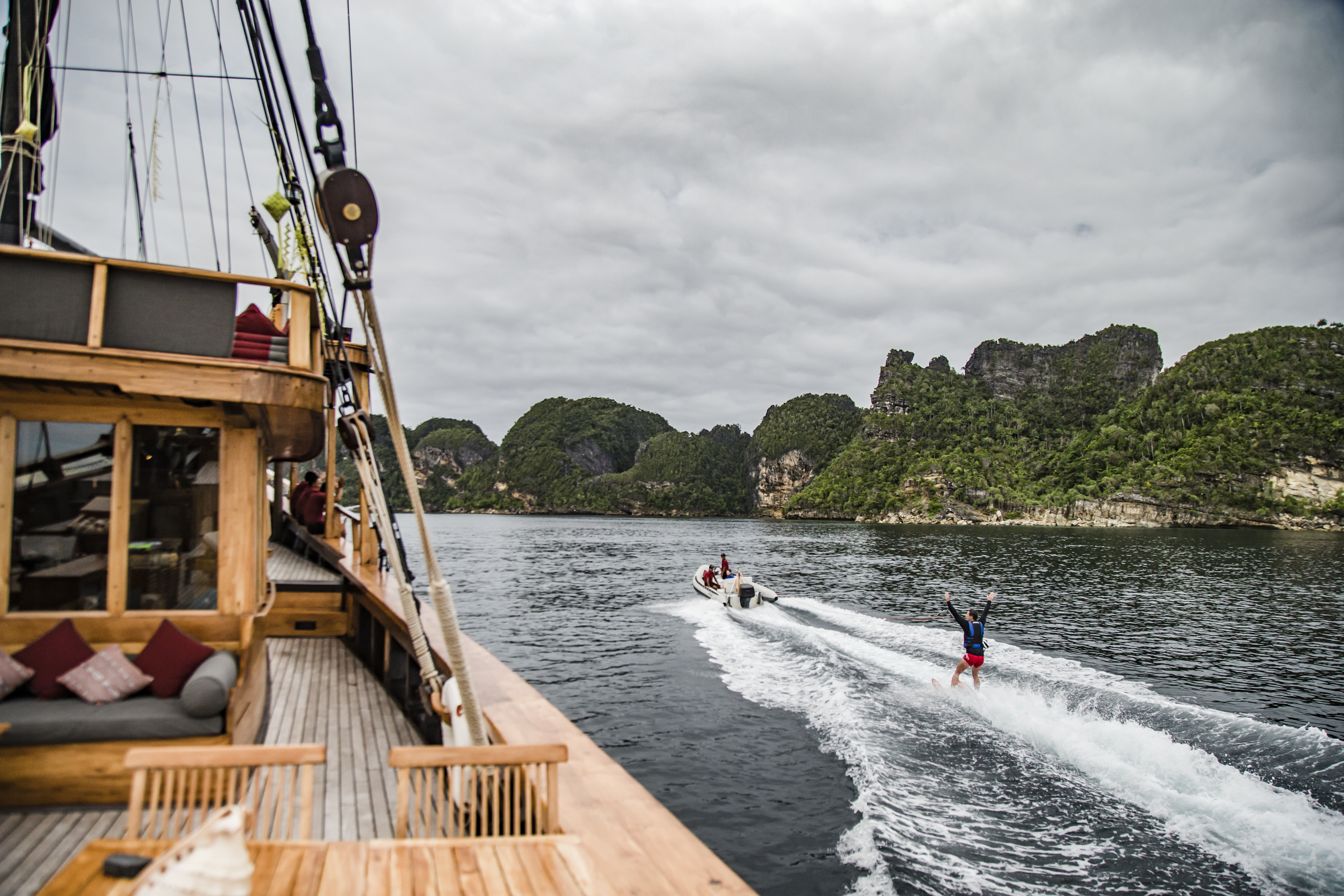
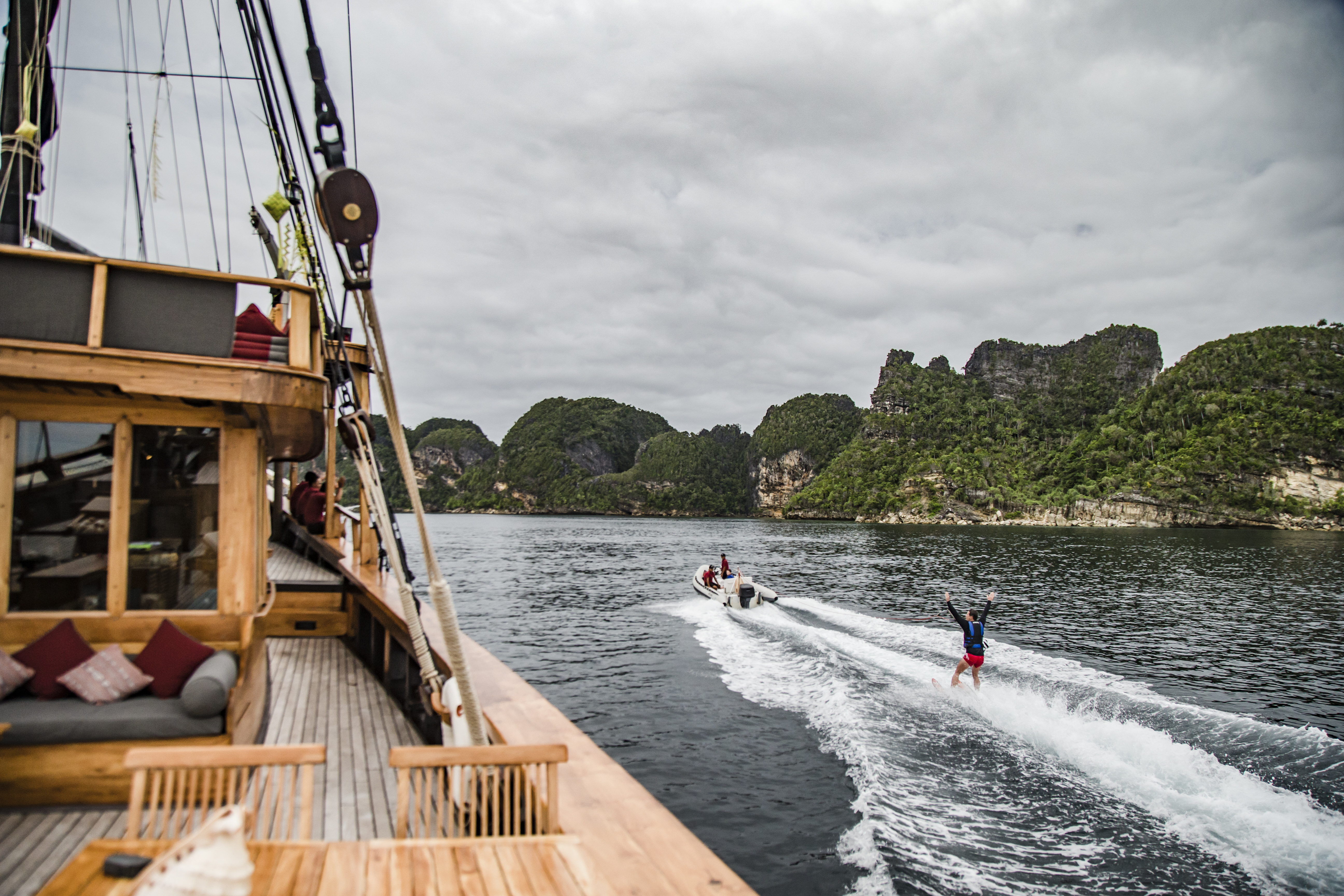
Raja Ampat is where the science becomes visceral. Over 600 coral species. More than 1,600 fish species. Whale sharks and wobbegong sharks resting on reef walls. Schools of fish so dense they turn daylight into something shifting and flickering. But Raja Ampat is not only marine life: the Papuan communities of Waigeo, bird-of-paradise watching on forest walks, the pearl farms of Aljui Bay, the cliff-face paintings at Misool. A seven-night phinisi itinerary moves through Sorong, across Wayag's karst geometry, into the protected waters of Misool and the Fam Islands, with the muck diving at Cendana Jetty revealing ghost pipefish and flamboyant cuttlefish in a completely different underwater vocabulary.
Best window: October through April. Driest skies, clearest visibility, calmest sailing conditions.
The Banda Sea and the Spice Islands
This is the route for a traveler for whom history is a primary motive, not a backdrop. The Banda Islands were once the only place on earth where nutmeg grew. In the 17th century they were the prize for which the Dutch East India Company committed some of history's more extreme colonial violence. Fort Belgica still stands on Banda Neira. The VOC mansions still shelter under ancient trees. The nutmeg orchards still produce, quietly, in groves that predate any European presence. A Banda Sea route from Ambon carries you through all of that while moving through extraordinary and still-underpopulated waters. Most guests who sail here do so by deliberate choice, and they tend to describe it as the most intellectually significant destination in Indonesia.
Best window: September–October or March–April annually during the crossings, when conditions are typically stable and marine visibility is exceptional.
Komodo
Ideal Window: April to November
Marine Highlights: Manta rays and drift diving
Cultural Highlights: Dragon encounters and traditional village life
Raja Ampat
Ideal Window: November to April
Marine Highlights: Rich biodiversity within the Coral Triangle reefs
Cultural Highlights: Papuan culture and bird-of-paradise sightings
Banda Sea
Ideal Window: September to October
Marine Highlights: Exceptional water clarity and remote diving conditions
Cultural Highlights: Historical spice trade routes and Fort Belgica
Alor / Flores
Ideal Window: June to September
Marine Highlights: Whale migration and world-class muck diving
Cultural Highlights: Traditional ikat weaving villages
Conservation and Community: A Framework, Not a Footnote
For a guest who has spent time at the world's leading safari lodges, the word sustainability tends to trigger healthy skepticism. Every operator claims it. Few can quantify it. Silolona's position is different in a specific way: the commitment predates the marketing trend. The company has donated vessel time to marine scientists, partnered with the Misool Manta Project on manta ray research, supported Women in Ocean Science initiatives, and operated with reef-safe practices and minimal-impact anchoring since before these were common talking points.²
What this means practically is that when you visit a community, you are visiting a community that the crew has a multi-year relationship with. Cultural encounters are not arranged on the day. Village visits, ceremonial observations, conversations with artisans: these happen within frameworks of reciprocity built over time. The difference between participation and performance is relationship, and that relationship cannot be purchased by a newer operation.
The Coral Triangle is also a system under pressure. Warming seas have driven recurrent coral bleaching events globally.³ Responsible charter operators maintain anchoring protocols that protect seabed integrity, avoid overfished areas, and contribute to reef monitoring science. This is not a trade-off with the luxury experience. It is what makes those places worth returning to.
Indonesia vs. the Mediterranean and Caribbean
You have done the other oceans. Here is the honest comparison.
Destination density: the Mediterranean offers extraordinary individual sites separated by long open-water stretches between port towns. The Caribbean clusters pleasantly but the distances between truly distinctive cultures are significant. Indonesia offers a new world every 20 nautical miles. Cultural, ecological, and geological variation across a single week's sailing is simply extraordinary.
Crowd dynamics: the Mediterranean in peak season is a shared corridor. Mykonos, Santorini, the Amalfi coast are beautiful but busy. The Caribbean's most popular anchorages see dozens of vessels daily. A well-planned private yacht charter Indonesia route delivers anchorages where you are, genuinely, the only vessel in the bay. This is not a marketing claim. It is a geographic reality of scale.
Cultural depth: the Mediterranean's heritage is predominantly historical and architectural. Indonesia contains living cultures, communities that maintain traditional practices not as tourism productions but as ways of life. That access, done responsibly, is simply not available in the other oceans. And on price reference: a week aboard a comparable vessel in the Mediterranean runs significantly higher, once marina fees, APA structures, and European charter overhead are included. Indonesia operates on a simpler, more transparent model.
Is This Right for You? An Honest Filter
Silolona's vessels attract a specific kind of traveler. Not better or worse. Specific.
You will love this if:
You are drawn to depth over spectacle, and you are ready for something beyond the Maldives.
Your idea of a memorable evening is a small fire on a remote beach and a conversation that runs until the stars rotate.
You travel with family and want your children to see something they will spend their lives describing.
Conservation matters to you and you want your spend to do something useful.
You may prefer a different vessel if:
You run eight dives a day and need a fixed camera table and gear rinse stations for underwater photography.
You require consistent high-speed connectivity throughout.
You prefer resort-scale social environments and large-ship amenities.
This is the honest version of fit that Silolona has always believed in. The right guest on the right vessel makes for the right experience.
How to Begin
A charter begins with a conversation, not a booking form. The itinerary for your expedition is designed around you: who you are traveling with, what you have already seen, what pace suits your group, what cultural access you are looking for, what marine life you most want to encounter.
Silolona Sojourns has done this for over 30 years. The captain's familiarity with a specific anchorage's behavior in the afternoon wind, the crew's relationship with a community in Alor that has never appeared in a travel publication, the ability to pivot intelligently when conditions suggest a better option: this is not software. It is experience. And experience, in these waters, is the most valuable thing of all.
Ready to Begin Your Indonesian Expedition? A charter begins with a conversation, not a booking form. Contact Silolona Sojourns to start designing your private expedition across the world's greatest island nation. |
References
1. Veron JEN, Devantier LM, Turak E, et al. Delineating the Coral Triangle. Galaxea, Journal of Coral Reef Studies. 2009;11(2):91-100. DOI: 10.3755/galaxea.11.91
2. Dearden P, Bennett M, Rollins R. Perceptions of diving impacts and implications for reef conservation. Coastal Management. 2007;35(2):305-317. DOI: 10.1080/08920750601169858
3. Hughes TP, Kerry JT, Alvarez-Noriega M, et al. Global warming and recurrent mass bleaching of corals. Nature. 2017;543(7645):373-377. DOI: 10.1038/nature21707