

Raja Ampat: Sailing the Archipelago with the Highest Marine Biodiversity on Earth
If we look at a globe or a map of the Eastern Hemisphere, we shall perceive between Asia and Australia a number of large and small islands, forming a connected group distinct from those great masses of land and having little connexion with either of them. Situated upon the Equator and bathed in the tepid water of the great tropical oceans, this region enjoys a climate more uniformly hot and moist than almost any other part of the globe and teems with natural productions which are elsewhere unknown.
Alfred Russell Wallace wrote those words in 1869. He was describing the archipelago now known as Raja Ampat, and the observation has not become less true in the century and a half since.
Just off the northwestern tip of New Guinea, the remote Raja Ampat archipelago comprises a labyrinth of more than a thousand islands spread over a vast expanse of calm turquoise seas, startlingly beautiful both above and below the water. The name translates as "four kings," referring to the four main islands of Waigeo, Salawati, Batanta, and Misool. The archipelago holds the highest recorded marine biodiversity on the planet. It is home to the world's richest reefs, and the experiences available to those who sail its waters are not easily replicated anywhere else on earth.
For the November 23 to 30, 2026 departure aboard Silolona, individual cabins are available to reserve. Five cabins. Seven nights. One of the most biodiverse marine environments ever documented.
Sorong: The Gateway to Raja Ampat
The Raja Ampat expedition begins in Sorong, a port city on the northwestern tip of West Papua. Upon arrival at Sorong airport, the Silolona crew meets guests directly and arranges the transfer to the nearby harbor where the vessel is waiting.
Guests flying from Bali or Jakarta arrange their own domestic flights into Sorong. From the moment of embarkation, all expedition logistics are managed by Silolona Sojourns.
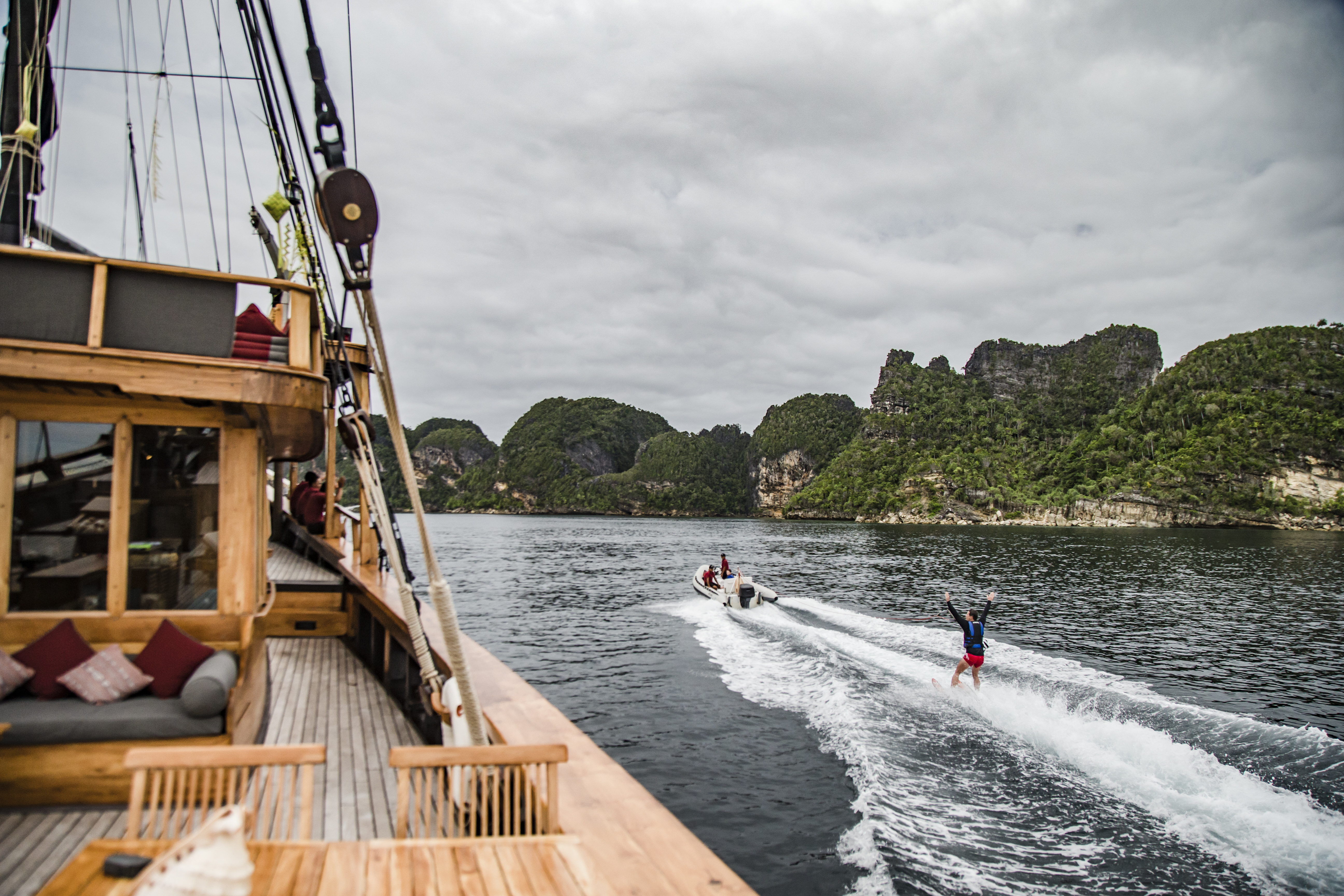
Meals aboard Silolona are served alfresco on the spacious teak deck: Asian, fusion, and Western cuisine prepared onboard with an emphasis on fresh tropical fruits, organically grown vegetables, freshly caught seafood, and pastries and breads made on the vessel each morning. The rhythm of the expedition adjusts naturally to wind, tide, and the wishes of those onboard. The options on any given day include snorkeling or diving with the onboard PADI instructor, kayaking, water skiing, fishing from the tenders, visiting a village, or finding a stretch of white sand and staying there.
Silolona sets sail for the Raja Ampat Archipelago as the day closes.
Friwen and Kri: Where Raja Ampat Begins to Reveal Itself
By Day 2, the vessel is anchored in the heart of the archipelago.
Friwen Island offers an introduction to daily life in Raja Ampat: a quintessential village set against jungle-covered hills, with the particular quietness of a community that has not yet been reshaped by mass tourism. A snorkeling session follows along a 20-meter-deep wall adorned with swaying anemones and vibrant red corals.
The adventure continues at Kri Island for an exhilarating drift snorkel through currents carrying barracuda, big-headed trevally, reef sharks, and shimmering schools of fish. The water at Kri moves with a force that turns the snorkeler into a passenger, carried over coral formations at a pace the ocean sets.
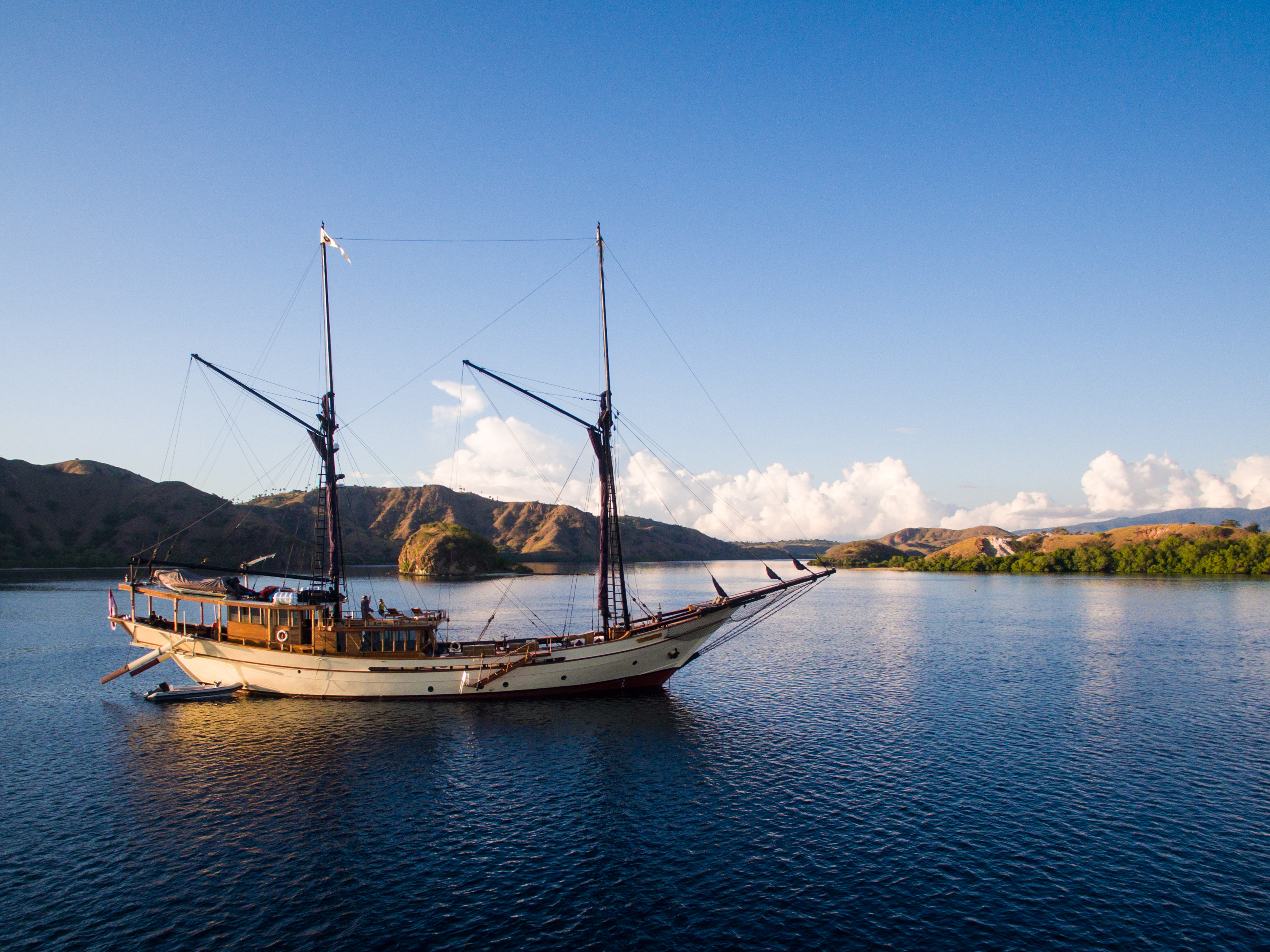
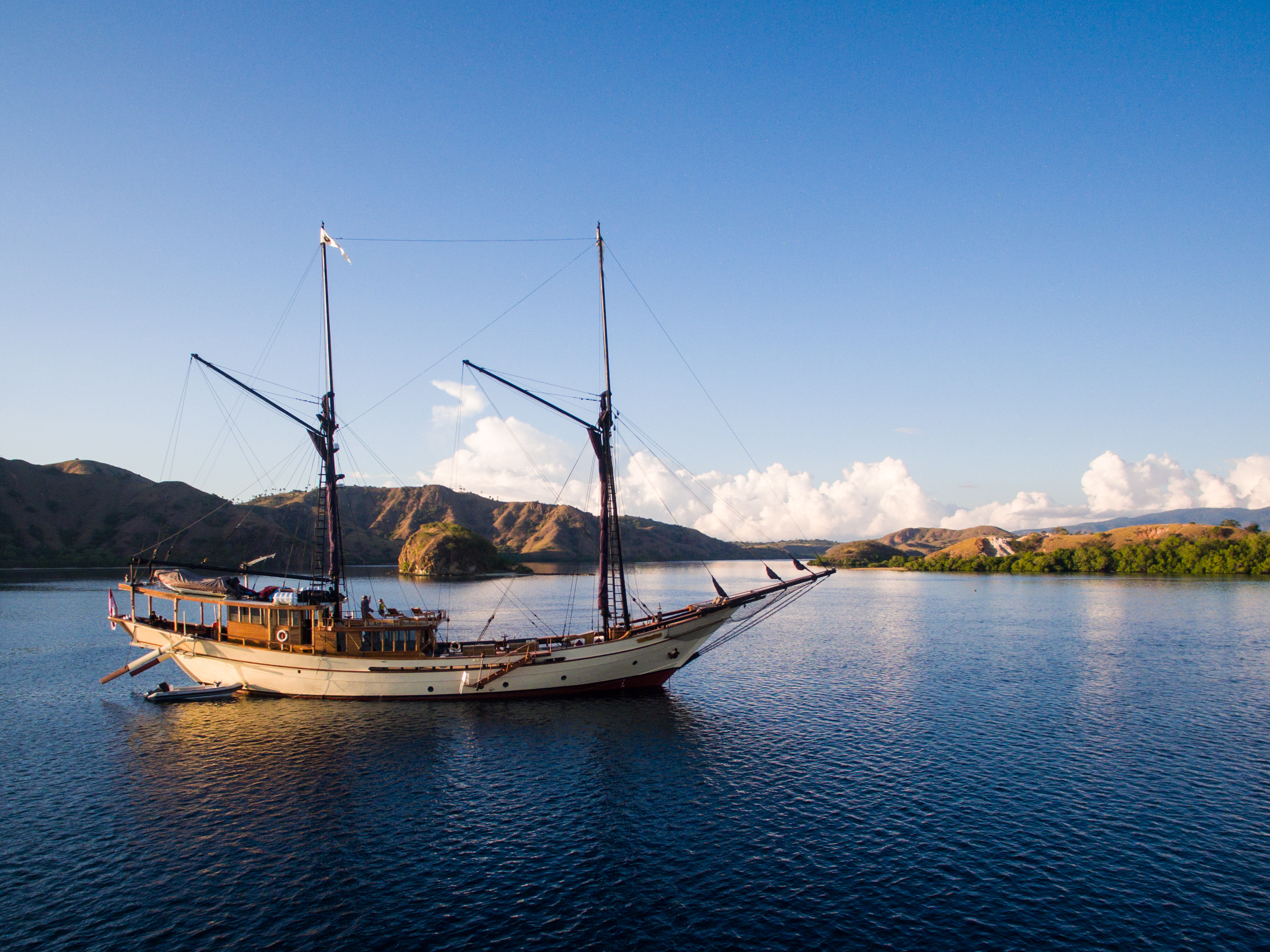
As the day closes, Silolona drops anchor in the serene embrace of Yenbuba Bay, the hull settling into water that holds color long after the sky has darkened.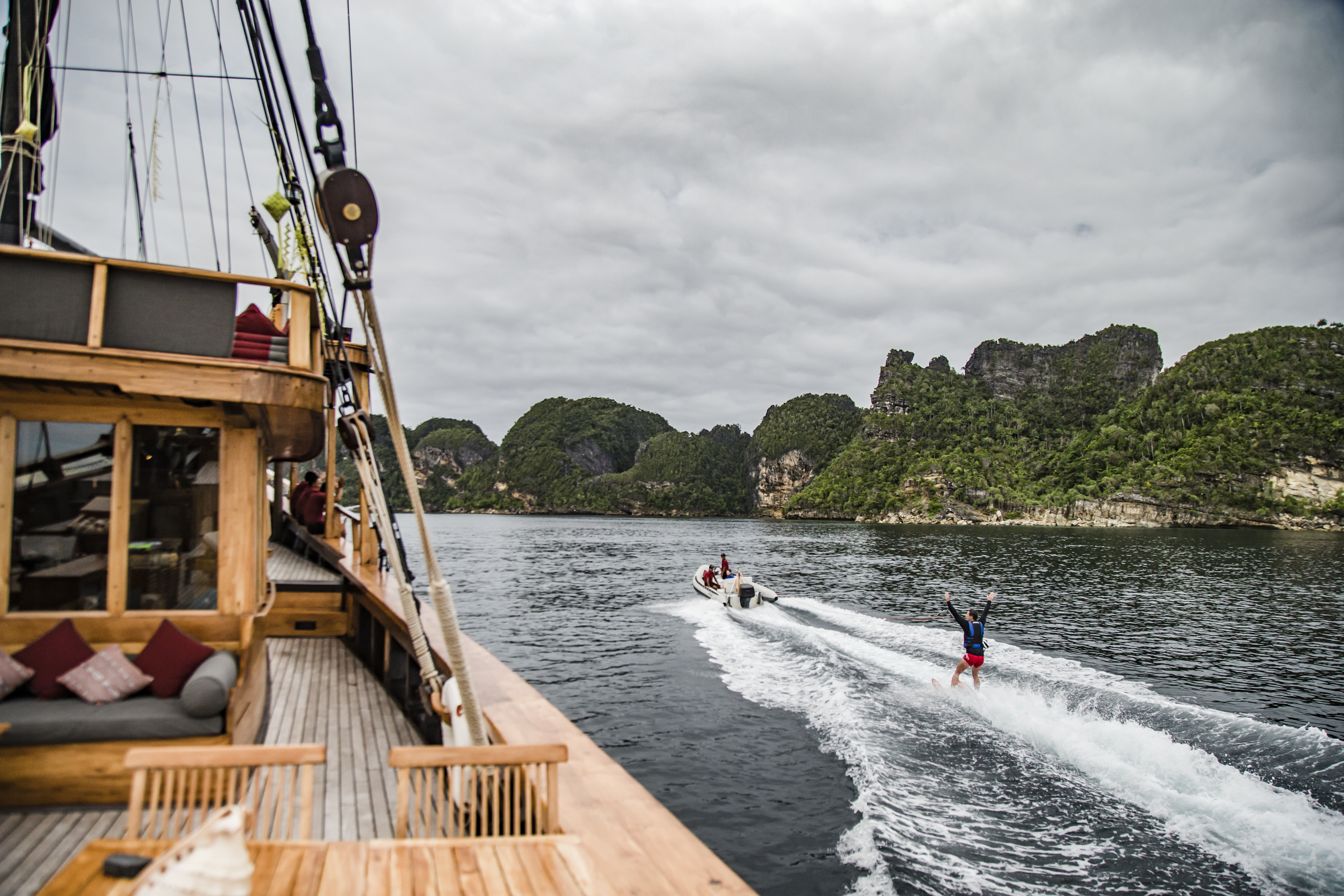
Yenbuba and Tanjung Putus: The Rhythm of the Reefs
Days 3 and 4 are spent in the waters surrounding Yenbuba and Tanjung Putus, and the rhythm of the expedition settles into something deeper.
Morning begins with a snorkeling session in front of the Yenbuba village pontoon. Along its wooden pillars, gorgonians and soft corals thrive. Oriental sweetlips, carrangues, and soldierfish move through the sheltered spaces of what has quietly become one of the more productive snorkeling environments in the archipelago.
Nearby, the corner of Mansuar Island offers another experience entirely: a drift with the current among jacks, barracudas, fusiliers, and countless reef fish, gliding over a coral garden where turtles, rays, and reef sharks are commonly seen. These are not staged encounters. The current chooses the pace, and the marine life belongs to its own world entirely.
The exploration continues at Tanjung Putus, known for its rich marine life and striking underwater scenery.
Aljui Bay: The Pearl Farm at the Edge of the World
The sail into Aljui Bay on Day 5 brings one of the more unusual experiences the Raja Ampat itinerary holds.
Aljui Bay is an extensive mangrove-lined inlet, and it is home to the Cendana pearl farm, one of the operations producing some of the finest South Sea pearls in the world. A tour of the farm offers a close look at the skill, time, and patience required to cultivate natural pearls. On harvest day, each oyster shell is opened to reveal what has grown inside. The pearls are available for sale directly at the farm, and although they represent extraordinary value, these are among the finest pearls produced anywhere, with a quality to match.
Below the Cendana jetty, the muck dive offers a contrast to the open-water reefs encountered elsewhere on the expedition. Stonefish, ornate ghost pipefish, and frogfish inhabit the substrate under the jetty's pilings. Zebra crabs and Coleman's shrimps ride on fluorescent-colored fire urchins in the surrounding water. It is the kind of dive that rewards patience and a slow pace, and it is entirely unlike anything encountered at the coral gardens offshore.
From Aljui Bay, the expedition moves to the island clusters surrounding Pulau Fam and Pulau Yeben. Pulau Fam is surrounded by uninhabited islets and turquoise water that rewards a kayak at the pace a paddler sets. Pulau Yeben is a small, nearly perfect circle of white sand, the kind of island that appears in the imagination when the word is said aloud. The option is simply to be there.


Jerief and Uwares: Beauty Above Water, History Below
Day 7 brings the final full day of the expedition, and it holds two very different experiences.
Jerief Island captures with its soft white beaches, crystal-clear water, and coral gardens alive with reef fish. The pace here is gentle and unhurried, a morning of peaceful exploration in water that invites lingering.
Nearby, Uwares holds one of the more intriguing dive features in all of Raja Ampat: a World War II P-47 fighter plane wreck resting on a gentle slope just offshore. The aircraft has been on the seafloor long enough to have become part of the reef itself, its surfaces now colonized by corals and frequented by marine life that treats the wreck as simply another structure in the underwater landscape. For divers who seek both biodiversity and a layer of human history beneath the waves, this site is one of the more memorable in the archipelago.
The combination of Jerief and Uwares in a single day captures something essential about what Raja Ampat offers: extraordinary beauty above the water and extraordinary wonder below, and the particular feeling of being in a place that asks nothing of you except attention.
What the Expedition Includes
he cabin rate aboard Silolona is structured to cover the full breadth of the experience from embarkation to disembarkation. All meals, snacks, bottled water, and non-alcoholic refreshments are included, prepared onboard and served alfresco on the teak main deck. The 250GB maritime Starlink internet, the services of the English-speaking expedition leader, full crew service, personal laundry, and massage with the onboard spa therapist are all part of the expedition. Diving for certified divers is included, as is the complete water sports inventory: dive equipment, wetsuits, sea kayaks, water skis, wakeboards, SUP boards, snorkel gear, and fishing gear. Entrance fees and permits at seasonal home ports, beach activities, and airport transfers to and from the vessel are covered.
Alcoholic beverages, domestic airfare to Sorong, PADI certification courses, end-of-trip crew gratuities, and government taxes are outside the cabin rate.
There are things that no expedition rate covers: the particular quality of being one of very few people anchored in a bay in Raja Ampat at nightfall, in waters that hold more species than any other marine environment on the planet. That part of the experience belongs to the place itself, and to those who reach it.
A Note on the Vessel and the Experience
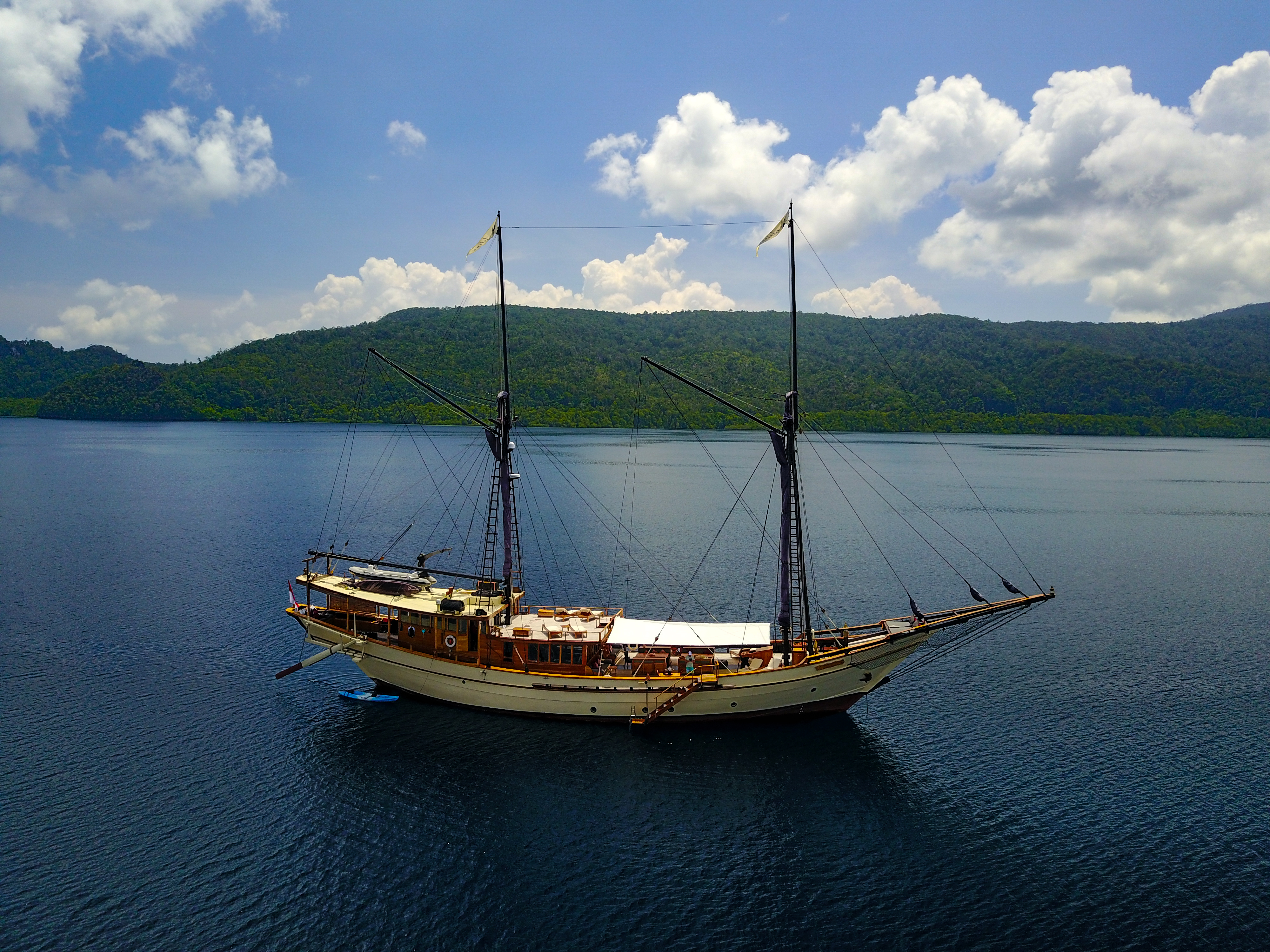
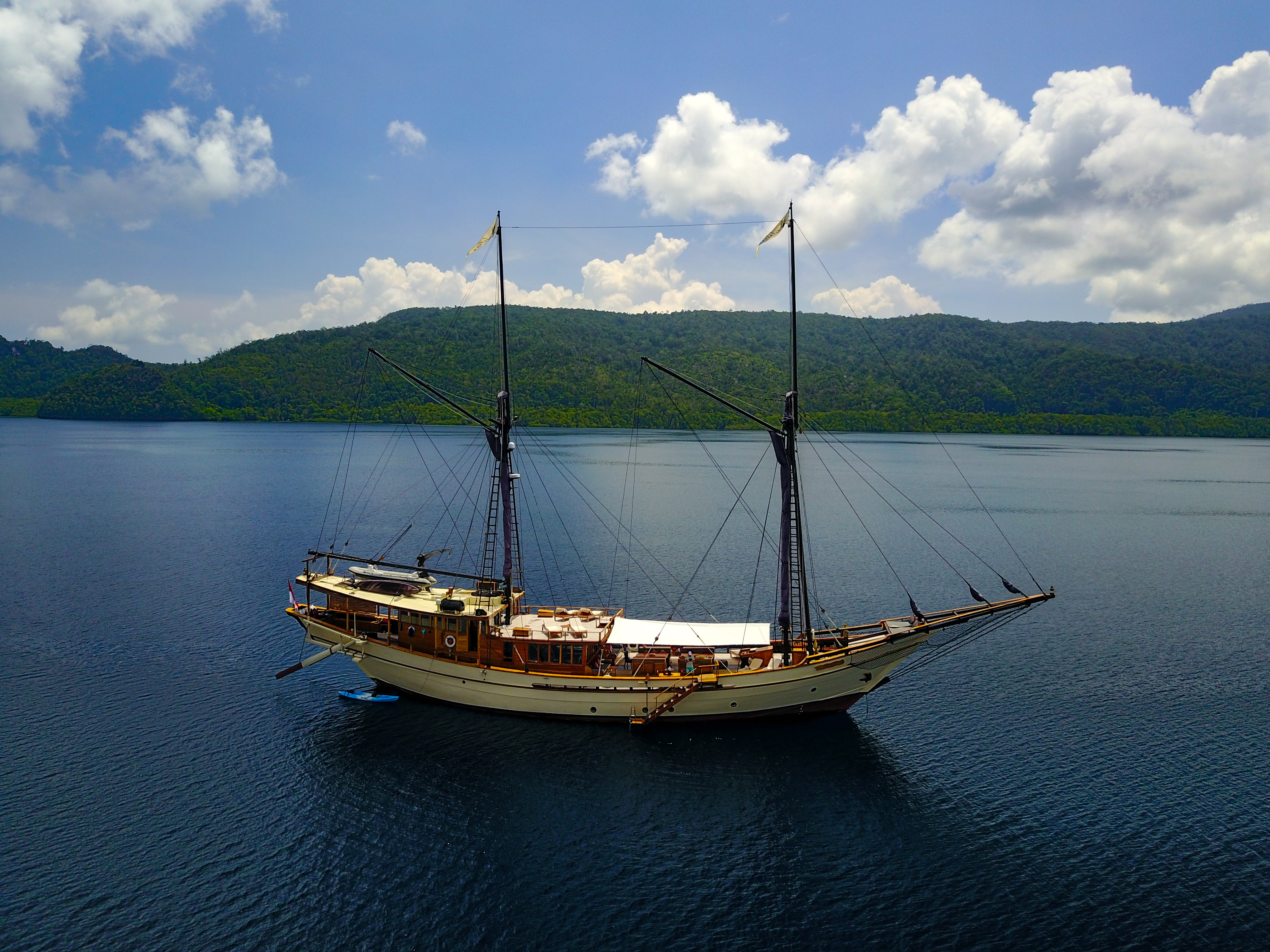
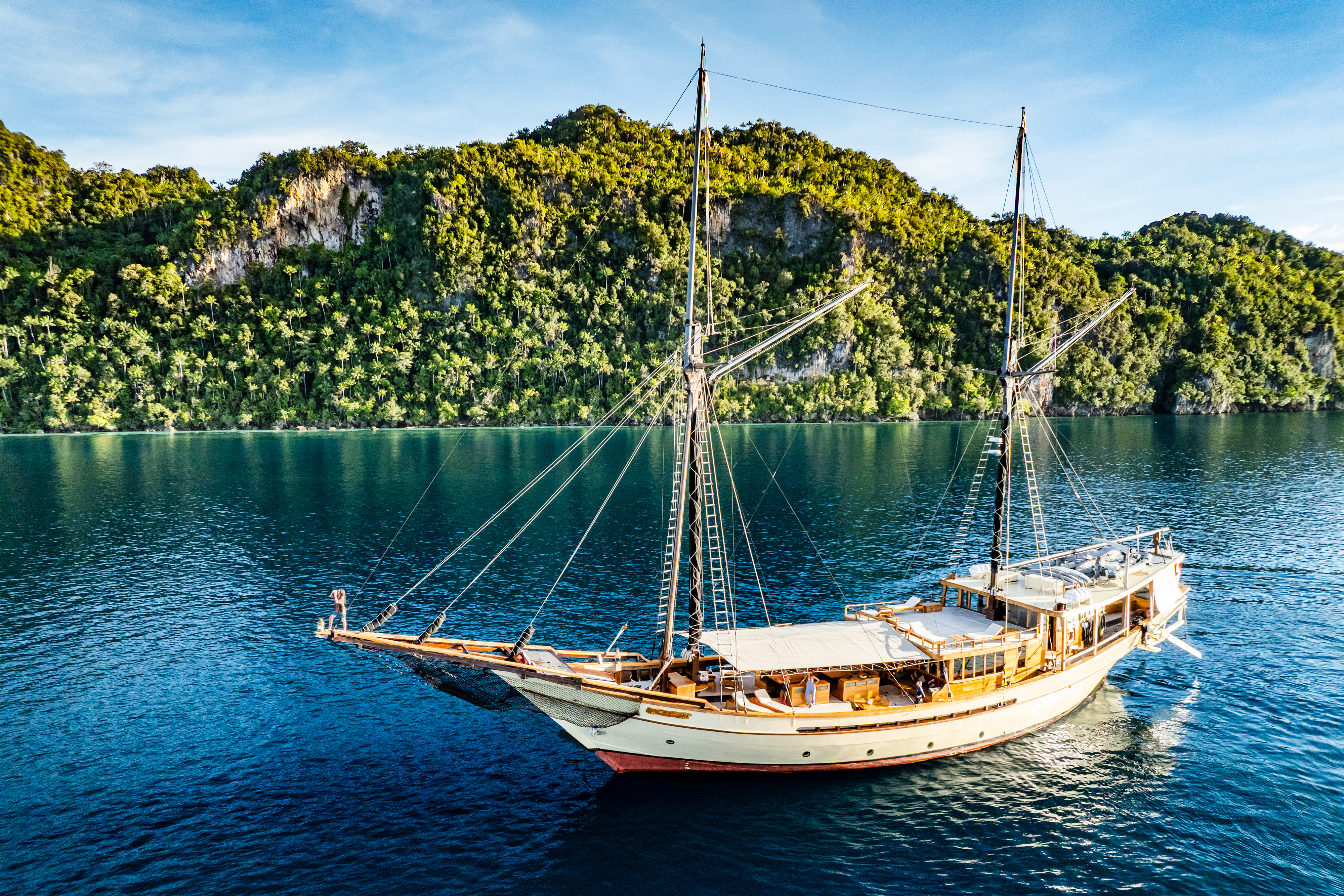
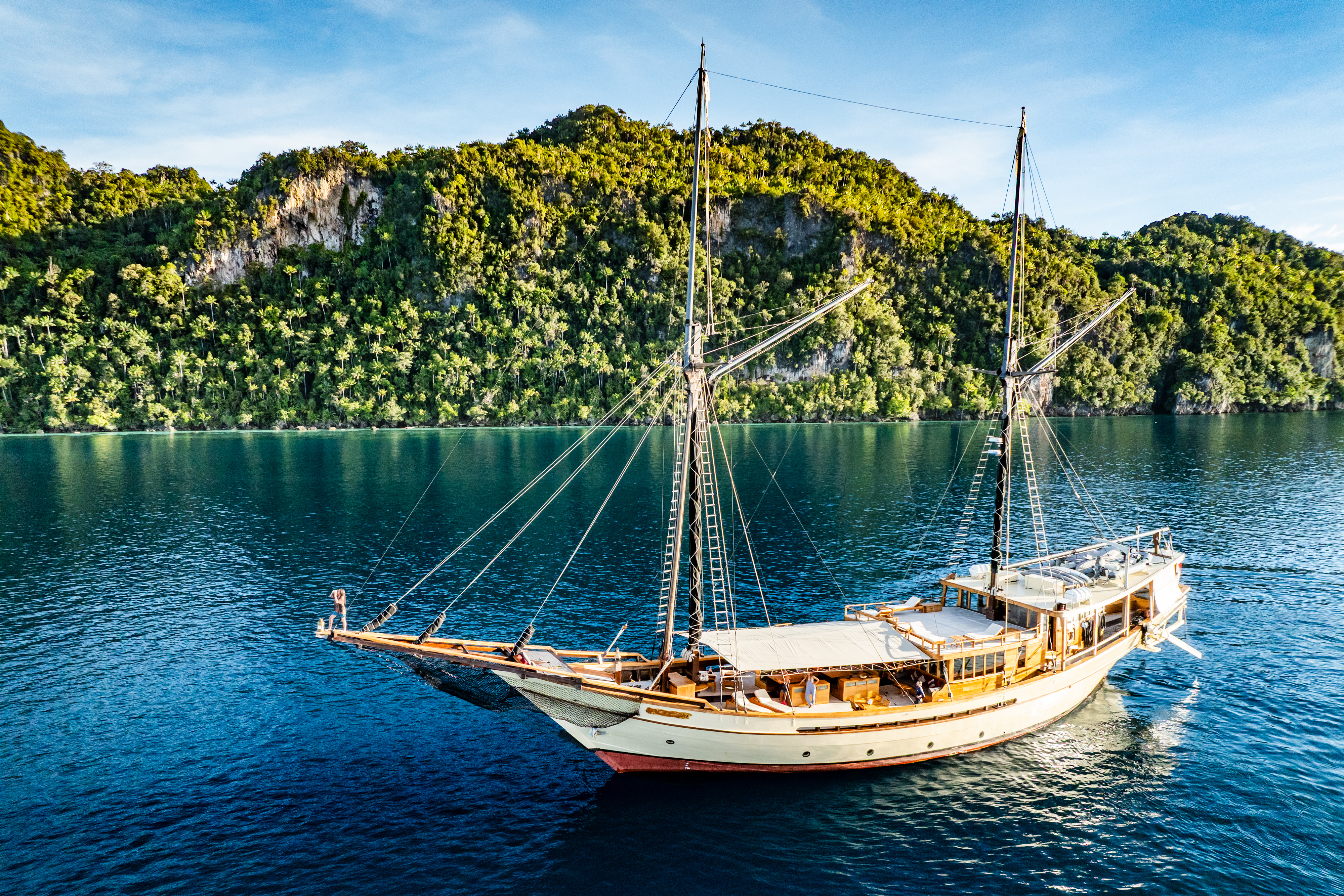
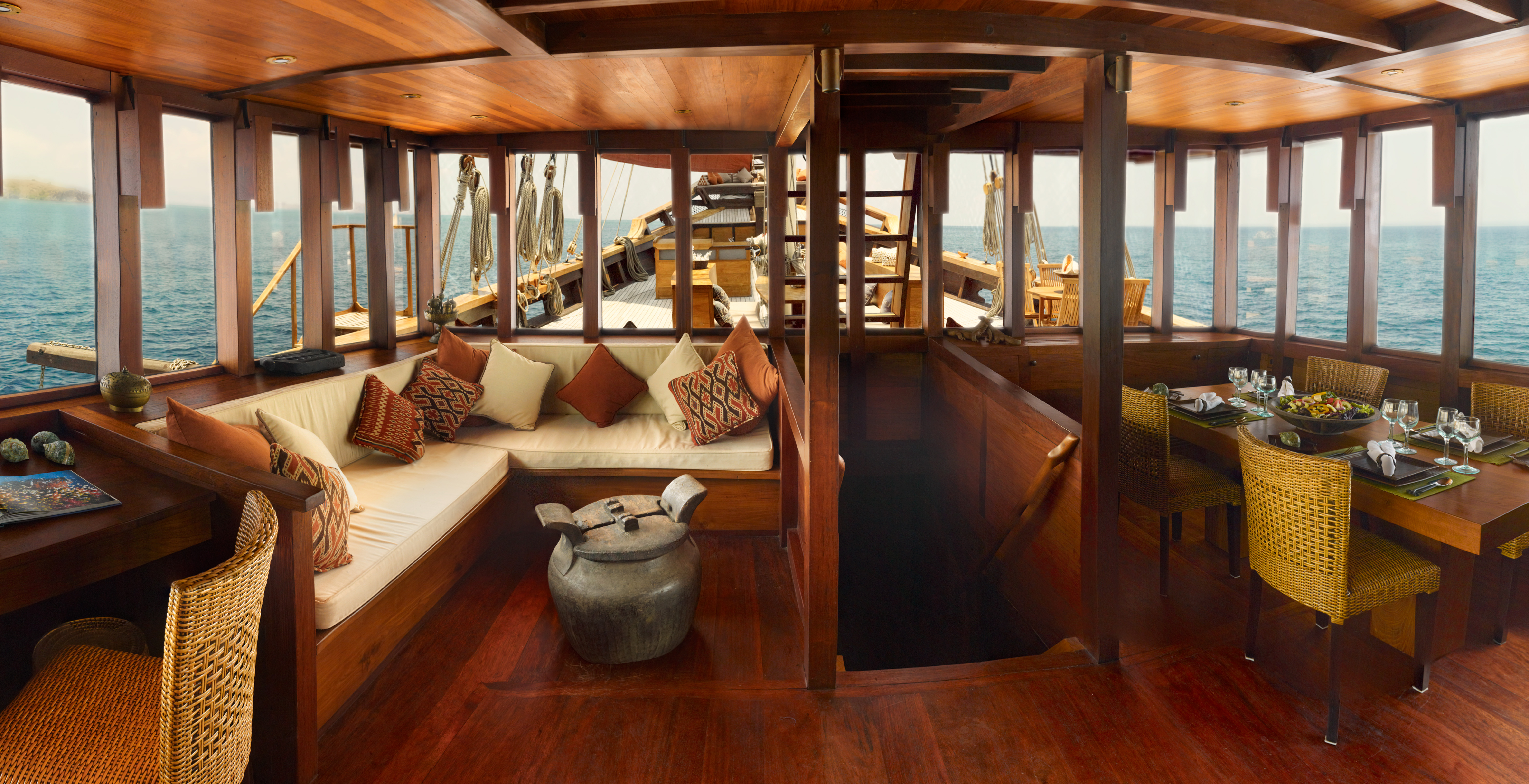
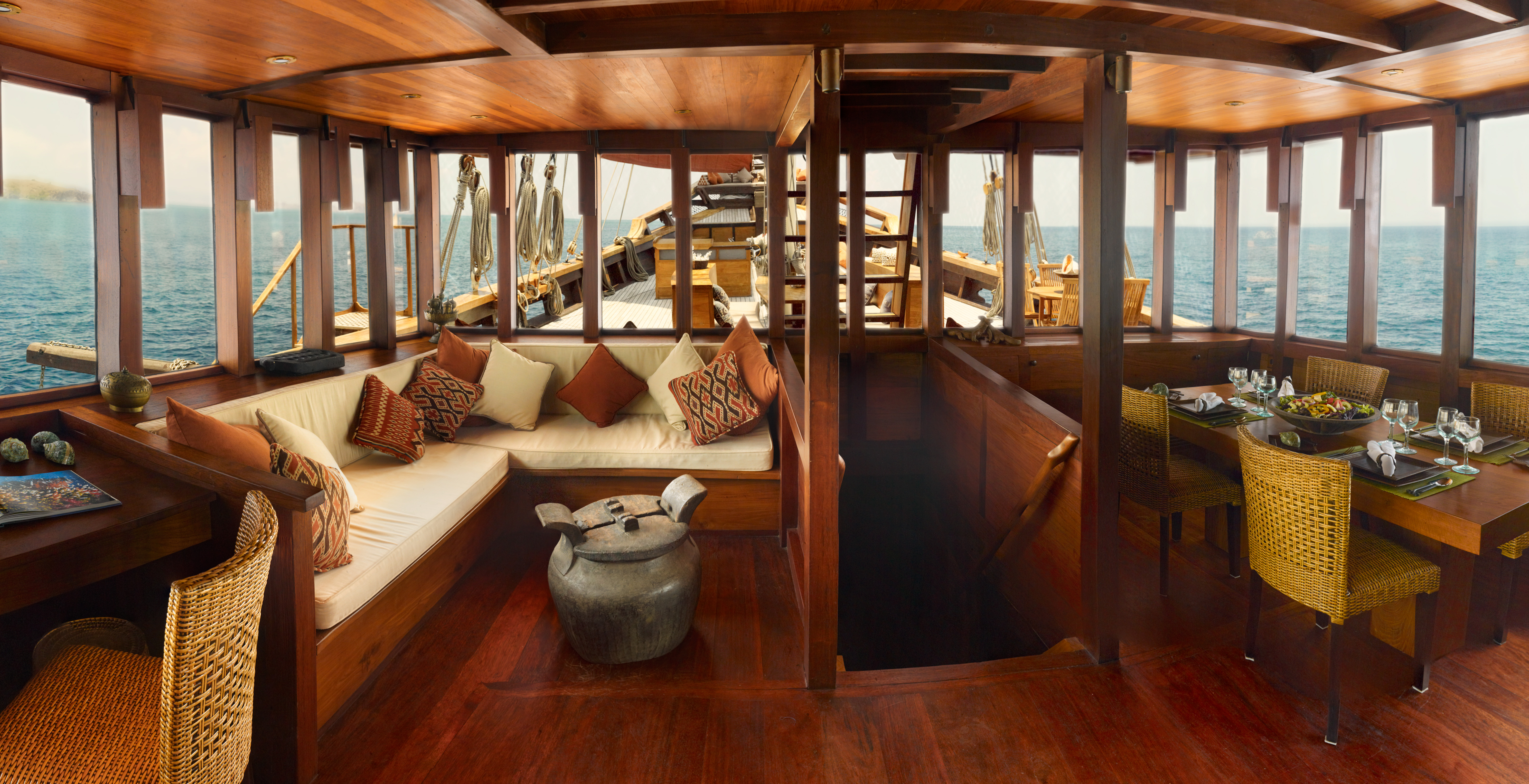
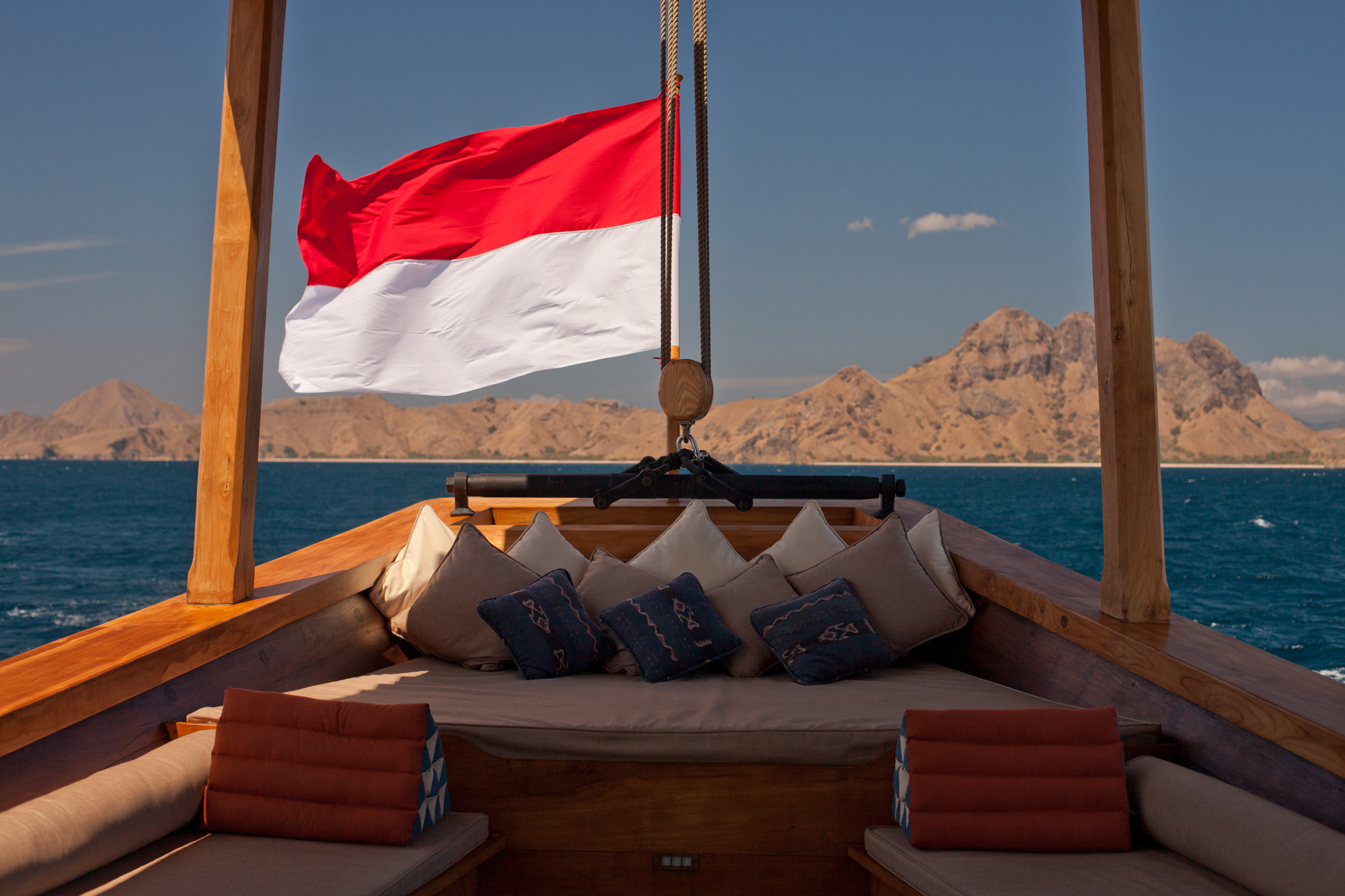
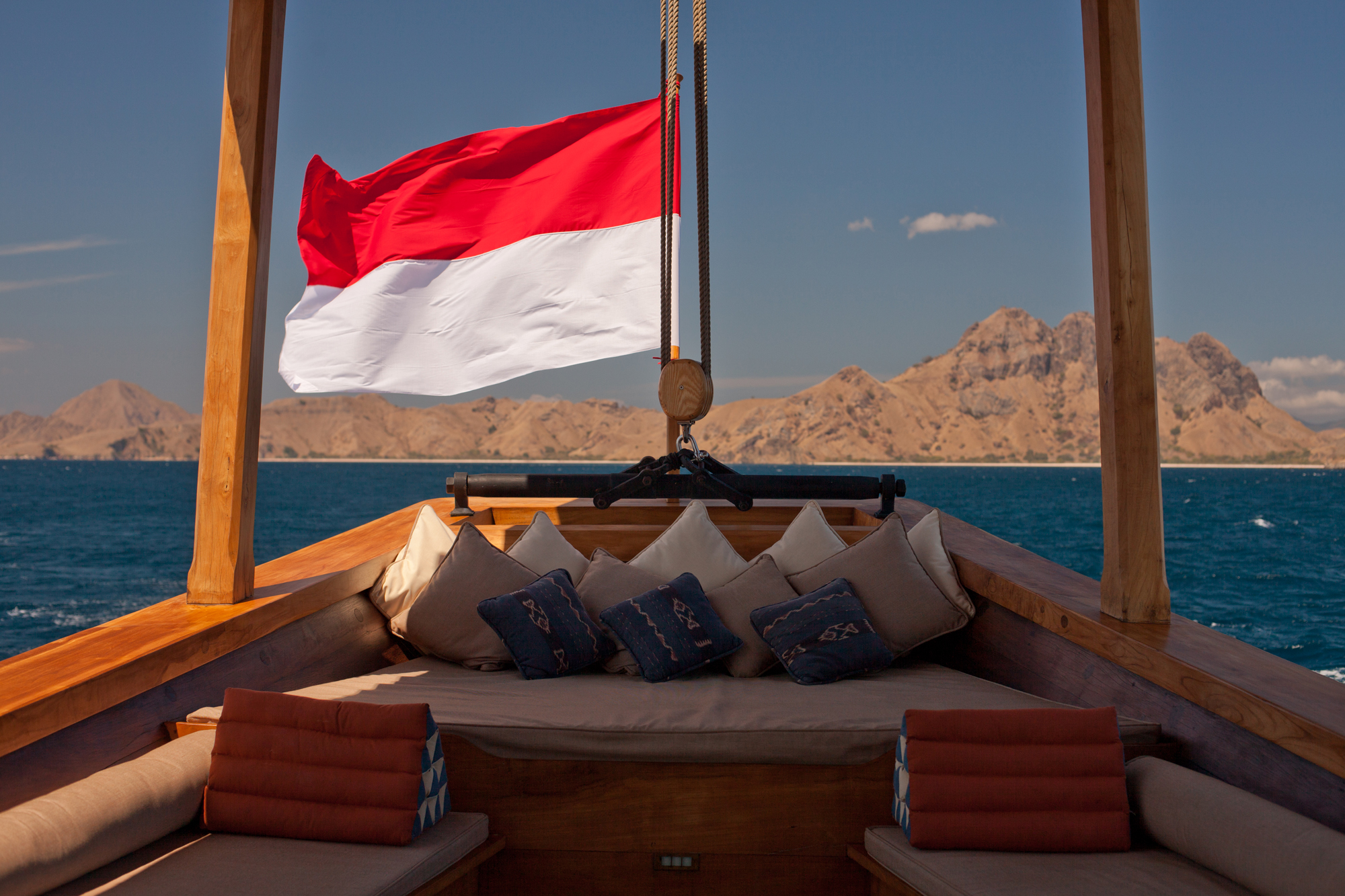
Silolona is a traditionally constructed Indonesian phinisi, a two-masted wooden schooner whose design traces its origins to the shipbuilders of South Sulawesi. The vessel carries five cabins: three master suites and two double cabins, each accommodating up to two guests. The onboard atmosphere is quiet and intimate. The diving pace is exploratory rather than high-volume. The connectivity, supported by maritime Starlink, is not the same as a land-based connection.
For guests who value natural depth, privacy, personalised service, and the particular quality of a handcrafted vessel with an experienced crew in waters as remote as these, this expedition is well-suited.
Reserve a Cabin on the November 2026 Raja Ampat Departure
The question most travelers ask about a voyage of this kind is not what it costs. It is whether, once it has passed, the experience belongs to the category of things that happen only once.
The Raja Ampat cabin expedition aboard Silolona departs once in 2026: November 23 to 30, from Sorong, West Papua. Five cabins. Seven nights. Guests arrange their own domestic flights into Sorong from Bali or Jakarta. A non-refundable deposit secures your cabin. A minimum of three cabins is required for the departure to be guaranteed.
Silolona Sojourns also offers fully bespoke, custom-built itineraries for those who wish to design a route of their own through Raja Ampat and the wider West Papua region, available upon specific request.