

The Photography Expedition: Indonesia's Seas Through the Lens of a Private Yacht
Goris Atawuwur grew up on Flores, learned to dive in the reefs that ring it, and helped build the very hull he now works from. On a Silolona crossing, he is the man who knows, hours ahead, where the light will fall. He will tell you the reef wall at a particular bay reads flat at noon and comes alive at four, that the manta cleaning station off Banta is worth a pre-dawn tender ride, that the sea between two islands goes glass at first light before the trade wind stirs.
For a photographer, filmmaker, or painter who treats Indonesia as a visual subject rather than a backdrop, the archipelago is almost unfair in its abundance. The problem was never subject matter. It was access, timing, and the freedom to wait for the right light or the right tide. That is what a photography expedition means aboard a private phinisi: not a sightseeing itinerary with a camera along for the ride, but a route built and adjusted around when and where light, water, and weather line up, with a crew who effectively work as local scouts. You are not chasing conditions on a fixed schedule. You are positioned inside them, moved by people who read water and weather the way you read a histogram. The seas of eastern Indonesia hold some of the clearest underwater photography conditions anywhere on the planet.
The calendar decides more than your camera does
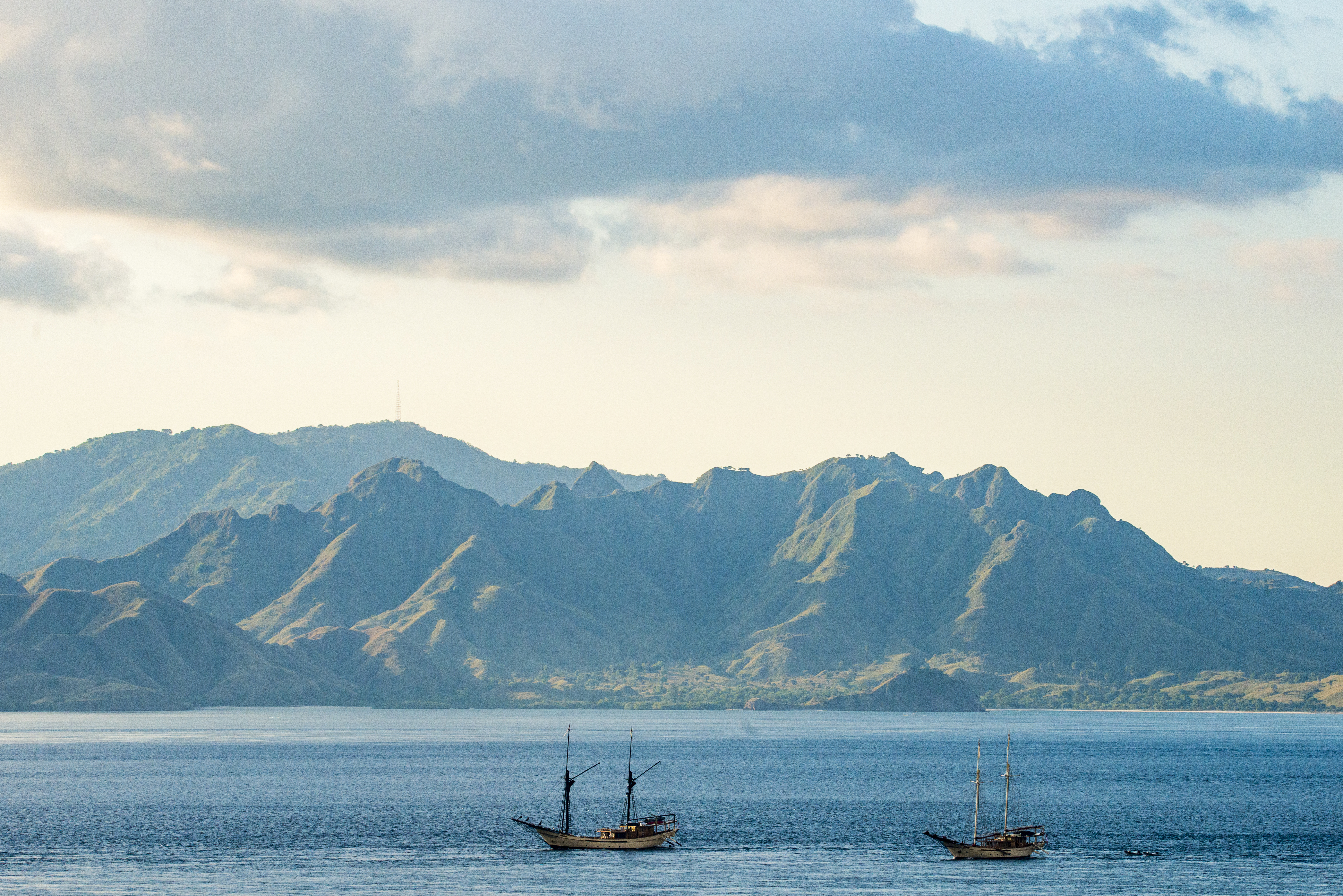
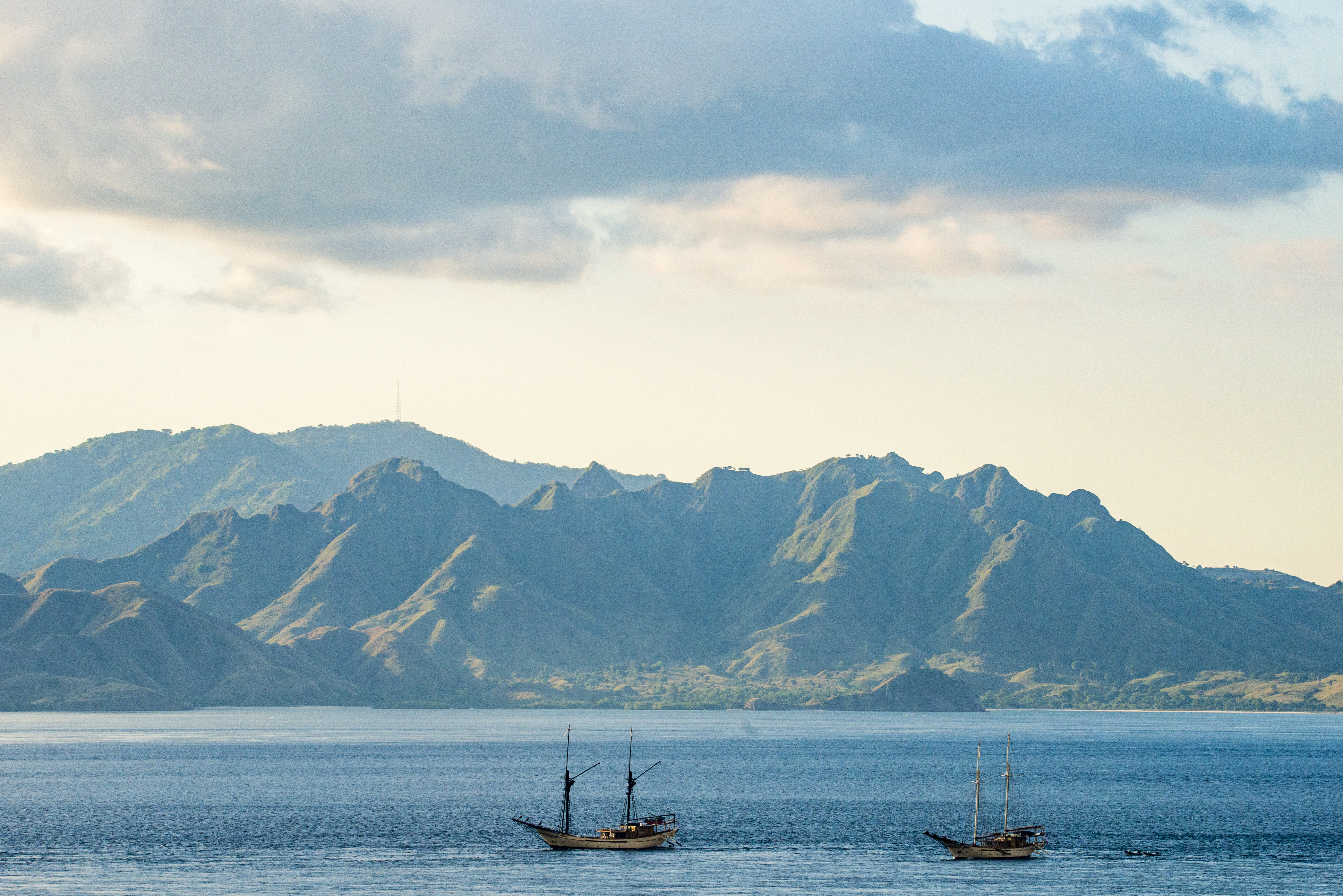
Water clarity in Indonesia is seasonal, and the season is the first creative decision you make. From May through September, the Komodo Archipelago, Flores, and Alor sit in their dry window, when skies stay open and the sea settles into long stretches of high visibility. July through September is the sharpest stretch of that window: clear air topside, clean water below, and light that holds its edge from dawn to late afternoon. From October into April, the weather shifts east, and Raja Ampat, the Banda Islands, and Cenderawasih Bay come into their own.
None of this is a guarantee. Visibility answers to tide, current, and plankton, and the richest reefs are often the ones with the most nutrient in the water, which is exactly what feeds the fish and softens the clarity. A green, particle-heavy afternoon can be the best feeding show you photograph all week. The value of a private vessel is that when a site is not working, you are not committed to it. You lift anchor and try the next headland.
Water this clear is a function of where you are, not luck
Raja Ampat sits at the center of the Coral Triangle, and the numbers behind its reputation are documented rather than marketed. Researchers have recorded more than 1,600 species of reef fish and over 550 species of coral in the region, the highest marine biodiversity yet surveyed anywhere.¹ For a photographer, that density changes how you shoot. A single reef edge can give you a wide-angle scene, a schooling wall, and a thumbnail-sized nudibranch within a few fin-kicks. You are not hunting for one subject. You are editing in the water, deciding what to leave out.
Each region rewards a different lens. Komodo's channels move water fast, and the manta aggregations near Banta and the reefs around the park suit wide-angle and fast shutters. Raja Ampat's limestone bays reward both the sweeping wide of a coral garden and the patient macro of a pygmy seahorse. Banda offers volcanic drop-offs and the strange, historical texture of lava-flow reefs. Ask your expedition leader to sequence dives by light: shallow reef flats when the sun is high and penetrates, deeper walls when it sits lower and rakes across the structure.
A practical note on gear, since the vessel is your darkroom. Bring more storage and battery than you think you need; a week of two or three dives a day plus topside work fills cards quickly. Silolona and Si Datu Bua carry Starlink, roughly 250GB a week, which is enough to back up selects and send a rough cut to a client, though not to upload a full shoot. Salt is the enemy of everything you own, so a sealed dry area and a routine of freshwater rinses matter more than any single body or housing. The dive gear is provided; your housing, ports, strobes, and arms are not, so pack redundancy.
The best hours happen when most yachts are still asleep
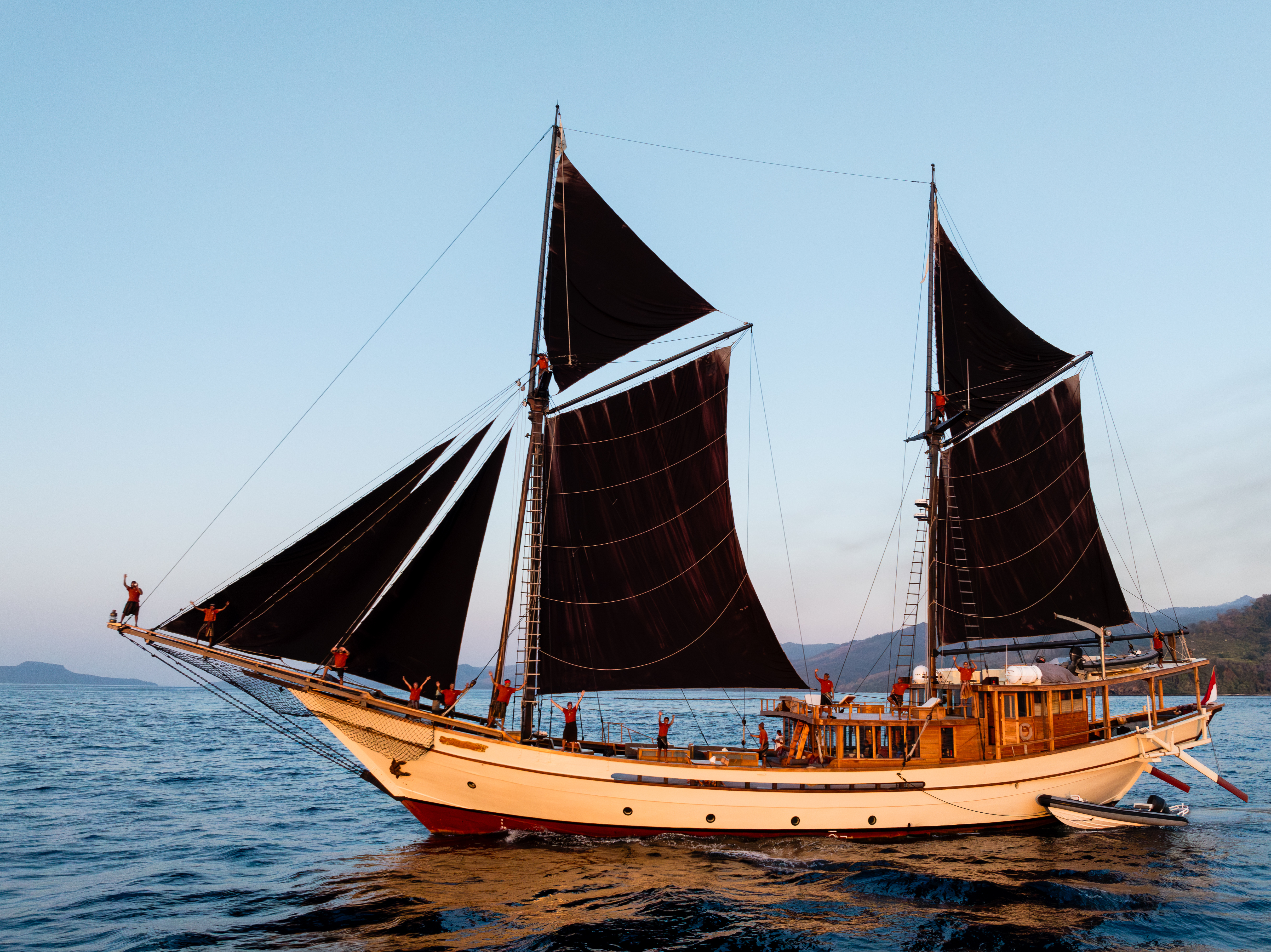
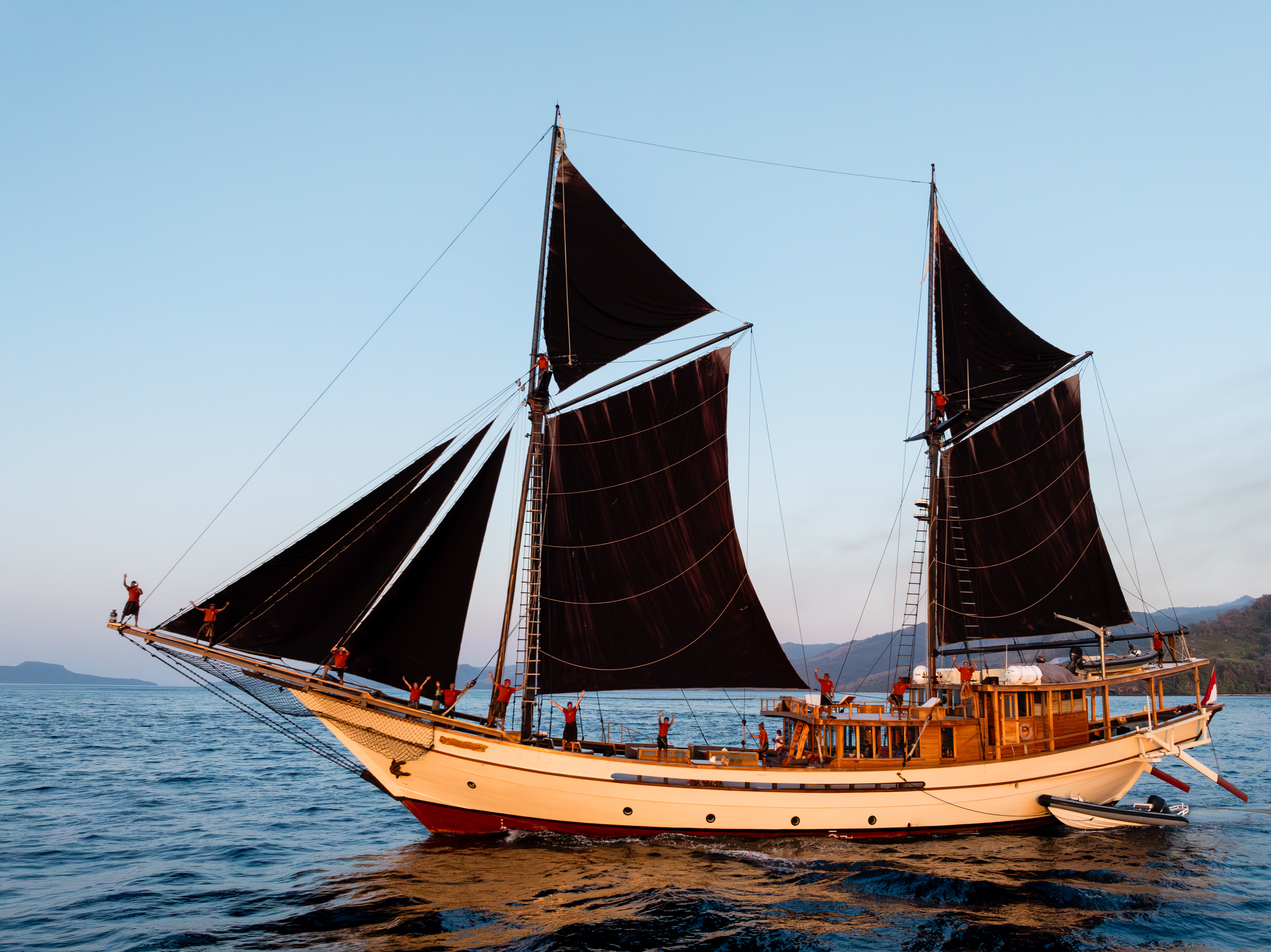
Golden hour on a phinisi is a working shift, not a photo opportunity you hope to catch. Because you are anchored where you choose, the bow becomes a tripod platform for the moment the sun clears the ridgeline, and the crew will have coffee up before it does. Shoot the rigging against a lightening sky, the tender cutting a wake through pink water, a fisherman's outrigger crossing the frame at the exact distance you asked to hold. Ask the captain the night before where the vessel will point at dawn. On a private charter, the answer is not fixed. It can be arranged.
After dark, the archipelago offers something increasingly rare. Global mapping of artificial sky brightness shows that a third of humanity can no longer see the Milky Way from where they live, and most of Europe and North America falls under some measure of light pollution.² Anchored off an uninhabited island in the Banda Sea, you are as far from that glow as a photographer can practically get. The top deck becomes an observatory. Bring a sturdy travel tripod, a fast wide lens, and a plan for star trails or a stacked Milky Way panorama over the silhouette of the masts. The deck moves, so time your exposures between swells or shoot on a still night at anchor.
Drone work extends the same logic upward. Uninhabited bays, reef systems seen from altitude, the wake of the yacht threading between limestone karst: these are the frames that define a Raja Ampat film. Fly responsibly and check current rules, because national park and conservation zones carry their own restrictions, and your expedition leader will know which anchorages are clear and which are not.
Photographing people is a relationship, not a transaction
The most valuable images from these waters are often the human ones, and they carry the most responsibility. In the villages of Flores, Alor, the Bandas, and West Papua, a camera pointed without consent is an extraction. Ask first, every time, and let your guide broker the introduction; a crew that has worked these routes for years arrives as a familiar face, not an intrusion. Learn a few words. Show people the back of the camera. Understand that some ceremonies, textiles, and sacred sites are not yours to publish, and that the right to a portrait does not include the right to sell it without asking.
This is not a formality. The people you meet along these routes are hosts and neighbors of the crew, not subjects to be photographed for effect. The strongest cultural photography comes from time and trust, which is precisely what a slow itinerary gives you. When you return to a village on a second afternoon because the light was wrong the first, you are no longer a stranger. That is when the real frames appear.
What the expedition is actually for
Indonesia will not run out of things to point a camera at. What a private yacht changes is your relationship to time. You can wait for the tide, return for the light, sit on an anchorage an extra day because the reef was better than the plan promised. A photography expedition here is less about the equipment in your hands than about the freedom to be in the right place, repeatedly, until the picture is yours.
With Silolona Sojourns, that freedom is built into how the journey is designed. Aboard Silolona and Si Datu Bua, your route through Komodo, Raja Ampat, or the Banda Islands is shaped around season, sea condition, and the specific images you have come to make, guided by a crew who know these waters as home. When you are ready to plan the light, enquire and begin the conversation.
References
Raja Ampat Marine Park Authority. Marine biodiversity of Raja Ampat. Available from: https://kkprajaampat.com/en/
Falchi F, Cinzano P, Duriscoe D, Kyba CCM, Elvidge CD, Baugh K, et al. The new world atlas of artificial night sky brightness. Sci Adv. 2016;2(6):e1600377. doi:10.1126/sciadv.1600377. Available from: https://www.science.org/doi/10.1126/sciadv.1600377
Allen GR, Erdmann MV. Reef fishes of the East Indies. Perth: Tropical Reef Research; 2012. Available from: https://fisheries.org/2017/09/raja-ampat-a-biodiversity-hot-spot-and-the-future-of-marine-conservation/