

The Spice Trade, Colonialism, and the Seas That Shaped the World
Some history is read. A small amount of it can still be walked into. A Banda Neira historical voyage belongs to the second kind, because the nutmeg islands at the heart of the Spice Islands history sailing story have changed less than almost anywhere else that once moved the world. The question is not whether nutmeg was valuable. It is how nine small islands in the Banda Sea, the only place on earth where the nutmeg tree then grew, pulled European fleets across unmapped oceans, founded a corporation that behaved like a state, and traded away an island (called Run Island) that would become Manhattan. You can stand inside that story now. The forts are still here. The mansions are still here. The trees are still bearing fruit.
For a certain traveler, that is the entire point. Not a museum about the past, but the past itself, lived in, weathered, and ongoing.
The Spice That Was Worth More Than Gold
It is difficult, in an age of full spice racks, to feel why nutmeg mattered. In sixteenth and seventeenth century Europe it was thought to ward off plague and it carried markups that defied reason. A sack carried home could set a sailor up for life. The economic gravity was absurd, and absurd gravity bends history. Banda was the sole source. Traders from China, Southeast Asia, and the Middle East had been arriving for at least two thousand years before any European saw the islands.¹
A Portuguese expedition reached Banda's shores in 1512, followed quickly by the Dutch and the English. What came next was not commerce in any gentle sense. Control of the nutmeg cargo was fought for with violence, and the Dutch East India Company, the VOC, secured its monopoly by force that is uncomfortable to read about and important not to soften. By 1667 that monopoly was effectively complete. Understanding this is part of standing here honestly. The beauty of Banda and the brutality of its history are the same story.
Manhattan Was the Consolation Prize
Here is the fact that reorders most people's sense of scale. Under the Treaty of Breda, signed on 21 July 1667, England relinquished its claim to the tiny Banda island of Run. In exchange, the Dutch gave up New Amsterdam, along with New Jersey and the Delaware estuary, retiring entirely from the North American continent.² New Amsterdam became New York. Manhattan, in other words, was the price the Dutch were willing to pay to keep a nutmeg island the size of a large estate.
Run is still out there. A full day's sail from Banda Neira brings you to an isolated dot now home to a single remaining family, with the ruins of old mansions and nutmeg factories to hike among, an old church, and deep-diving walls offshore. Few places let you feel the arbitrariness of history so directly. One island became the financial capital of the world. The other became quiet. The line between those fates ran straight through these waters.
What Anchoring in Banda Actually Feels Like
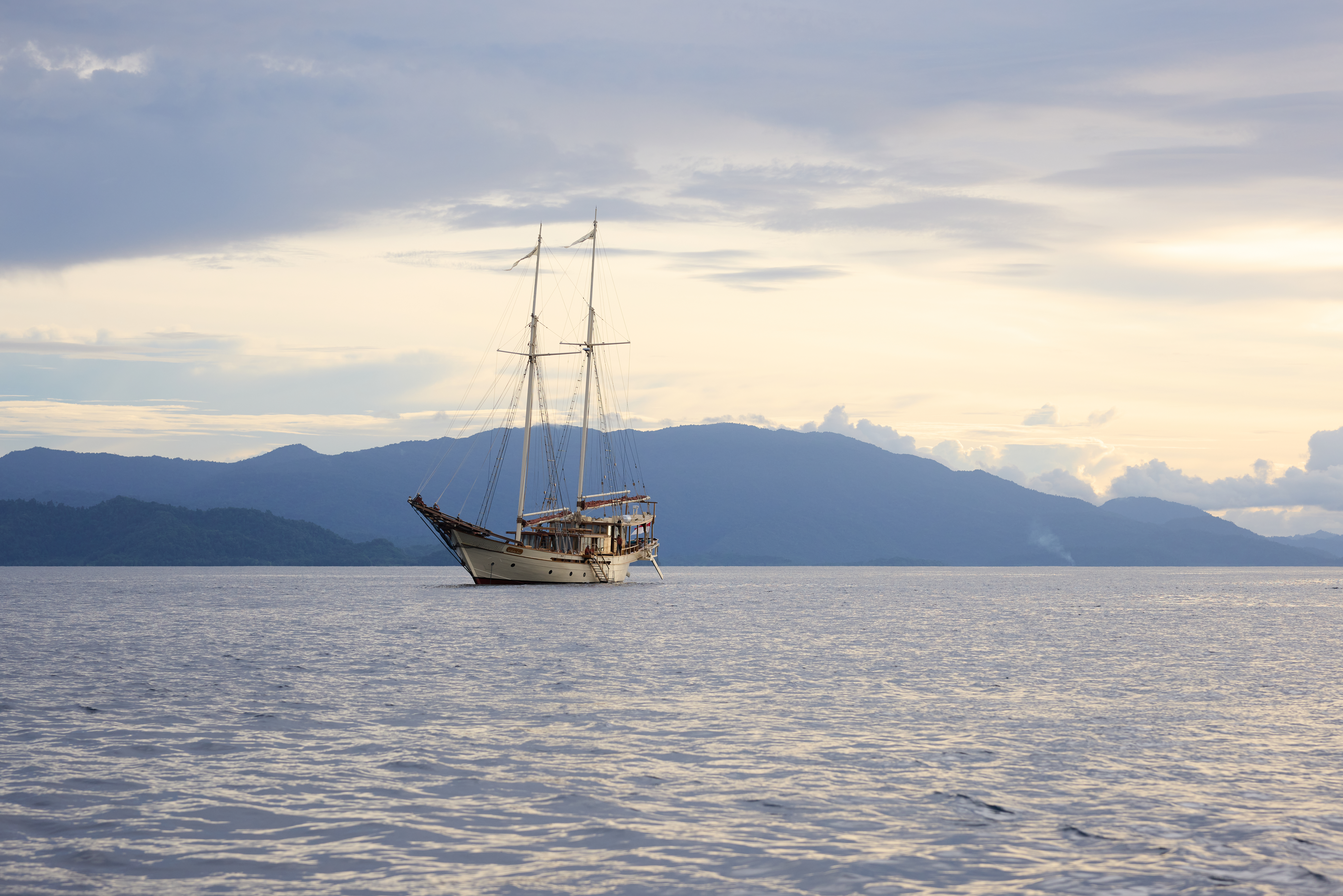
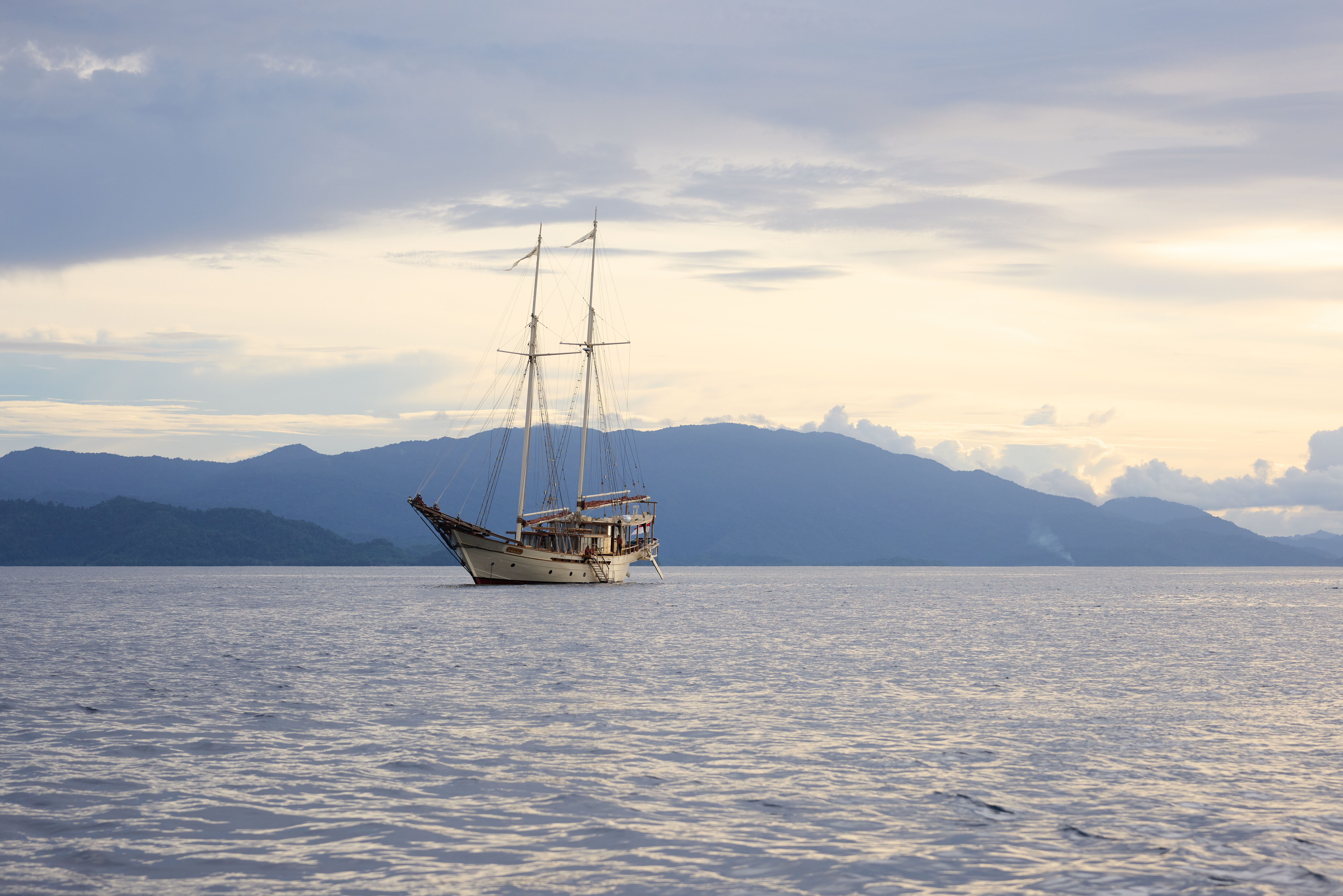
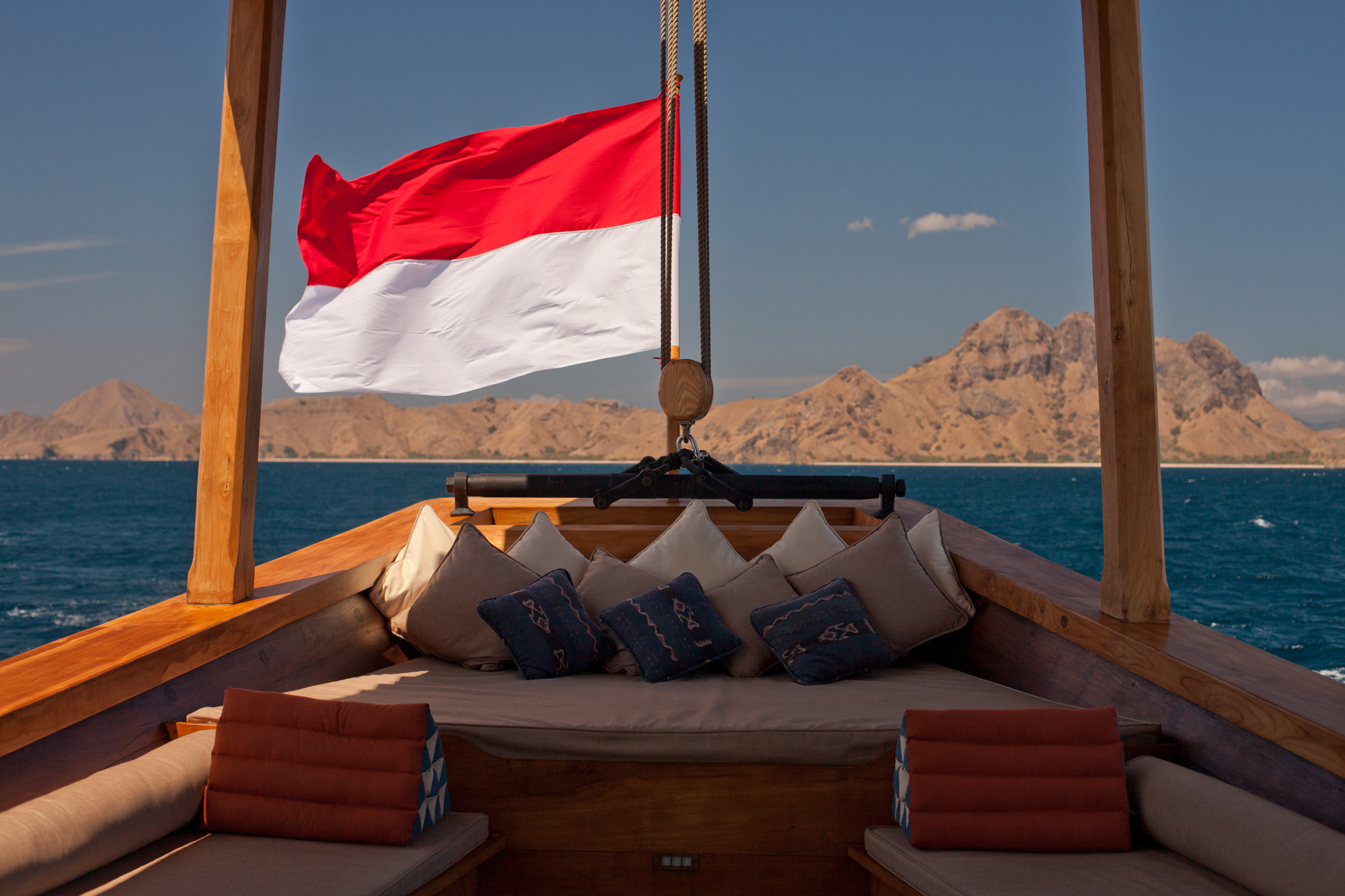
Approaching Banda does not feel like arriving at a destination. It feels like arriving at a scene. Before land is even sighted, the scent of spice reaches the deck across open water. Then the islands resolve, and the cone of Gunung Api rises ahead with a thin plume of smoke drifting from its summit. A wooden schooner glides into the deep, still waters of the Zonnegat Passage, framed by the volcano, and drops anchor. This is the same passage, the same volcano, the same approach that drew the explorers whose decisions you have been reading about. The staging has not changed.
There is a particular quiet to the anchorage. Each morning, small dugout canoes paddle out to supply the market with freshly caught tuna, savoury snacks, wild almond candy, mounds of spice, and tropical fruit. The town of Banda Neira is small and unhurried, its wide streets lined with trees and with the evidence of its enormous past.
The History You Can Physically Stand Inside
Fort Belgica still commands the heights above the town, the silent guardian of the strait between Banda Neira and Lonthor. You climb its ramparts and the whole arrangement of the harbor opens below you, the logic of the place laid bare. This was a position built to control the most valuable trade on earth, and from its walls you can read exactly why. Watching the sun set over Gunung
Api from those ramparts, drink in hand, is the kind of moment that does not announce itself. It simply stays with you.
The town holds more. The former VOC Governor's Mansion, the old church, the museum, and the partially restored Dutch mansions where a traditional Rijsttafel of many local dishes can be served privately, inside the architecture of the people who once ran the monopoly. These are not reconstructions. They are the actual rooms.
A Living Nutmeg Economy, Not a Theme Park
What separates Banda from a ruin is that the nutmeg never stopped. On Lonthor, the crescent island that is the ancient caldera of an extinct volcano, you walk through what are described as the world's oldest nutmeg gardens, shaded by ancient kenari, the wild almond trees that protect the crop. The rich volcanic soil here once produced most of the world's nutmeg. It still produces nutmeg today. The trees that built the VOC are the trees being harvested now, by people whose families have worked them for generations.
This is the texture history loses when it becomes a display. In Banda, the economy that shaped continents is small, ongoing, and visible. You can watch the fruit being opened, the bright red lace of mace peeled from the dark seed. The descendants of the trade live here still, and on islands like Ai and Run the old rituals remain alive, the ceremonial war canoes and the offerings prepared weeks in advance, history kept deliberately present rather than packaged for arrival.
Why a Yacht Is the Honest Way to Arrive
There is also a practical truth. Banda is remote, and remoteness has protected it. The islands reward those who come slowly and on their own terms, anchoring where the schooners once anchored, moving between Neira, Lonthor, Run, Ai, and Hatta at the pace the sea allows. A private passage lets the history breathe, lets a morning dive on volcanic reef sit beside an afternoon among colonial ruins, without the rhythm of a fixed schedule pressing on either. The reefs here are extraordinary in their own right. On the 1988 lava flows of Gunung Api, giant sea fans now grow against a black volcanic backdrop, coral growth so rapid it has puzzled specialists worldwide.³ The naturalist Alfred Russel Wallace, who developed the theory of evolution alongside Darwin, marvelled at the clarity of these same waters in the nineteenth century.
To sail in is to inherit the approach itself. That is what cannot be bought any other way.
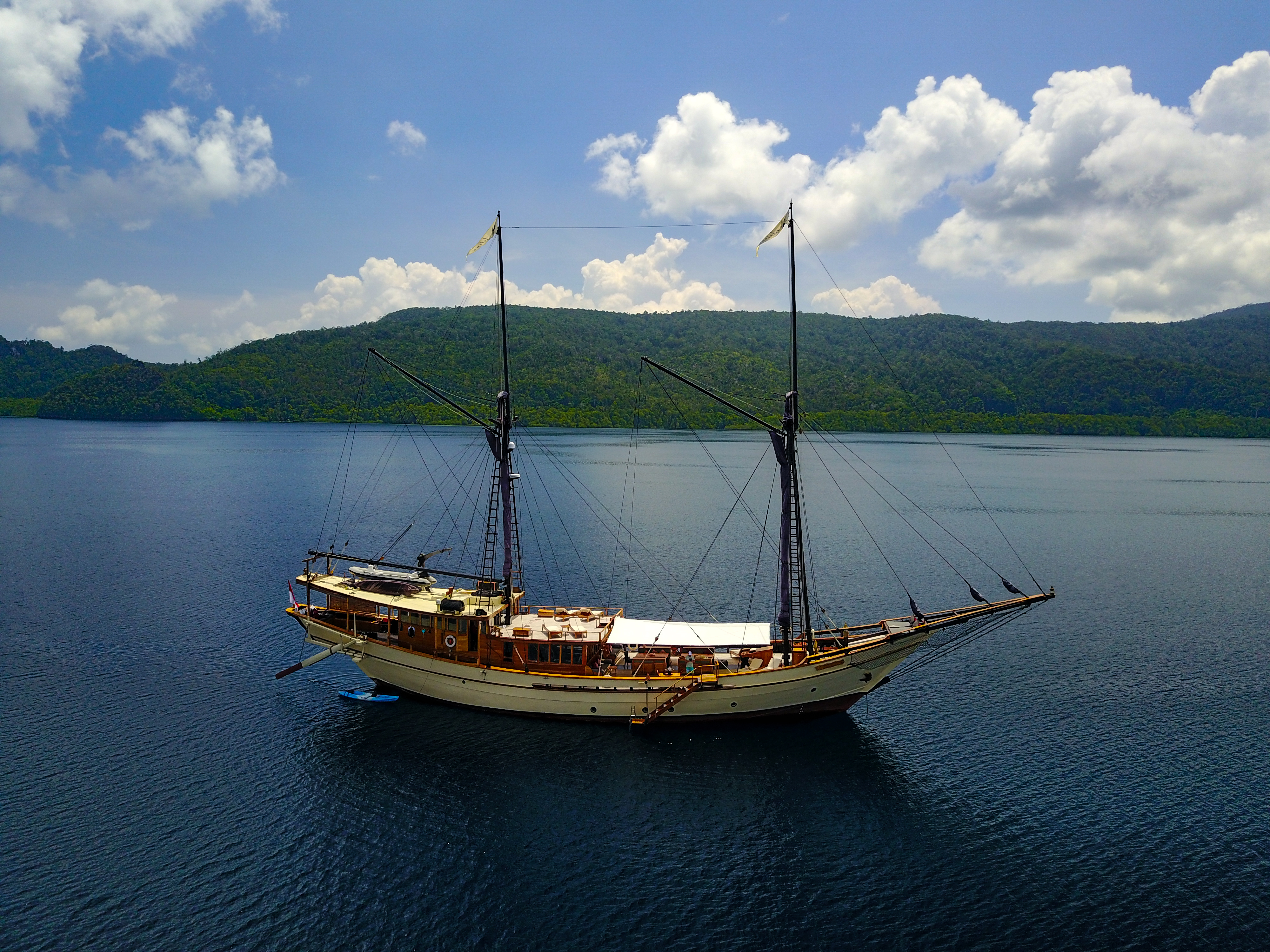
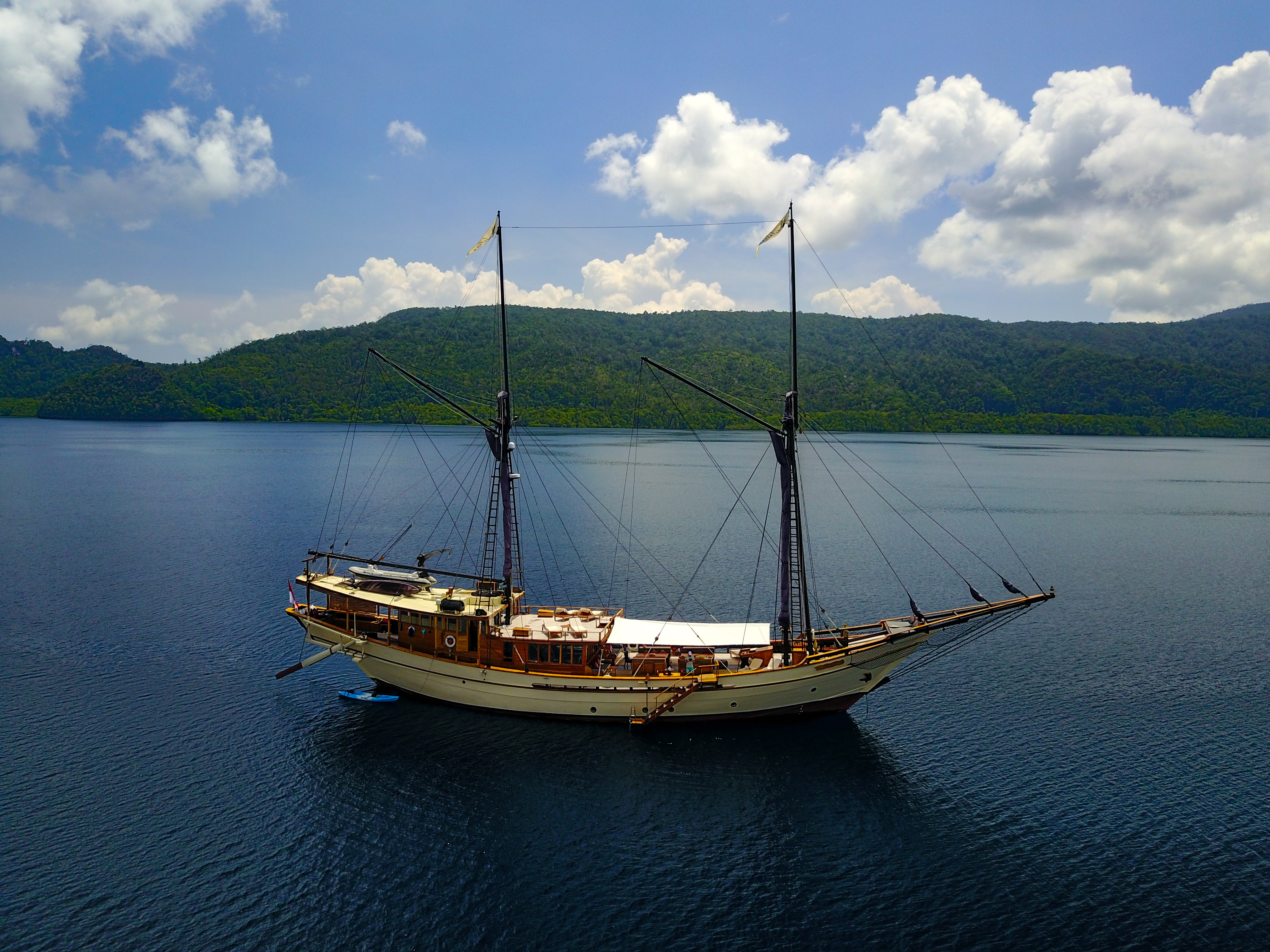
With Silolona Sojourns, a passage through the Spice Islands of Banda is built around exactly this: time to stand inside the history rather than glance at it, aboard Silolona and Si Datu Bua, where the tradition of the South Sulawesi phinisi, recognised by UNESCO as intangible cultural heritage, carries you the same way Banda has always been reached. For travelers drawn equally to the reefs of Raja Ampat or the dragons of Komodo, Banda is the route where the world's history and your own days on the water become the same thing. To begin shaping a private voyage to the islands that traded Manhattan for nutmeg, enquire with Silolona Sojourns.
References
Hanna WA. Indonesian Banda: Colonialism and its Aftermath in the Nutmeg Islands. Philadelphia: Institute for the Study of Human Issues; 1978.
Williamson JA. A Short History of British Expansion. London: Macmillan; 1922.
Tomascik T, Mah AJ, Nontji A, Moosa MK. The Ecology of the Indonesian Seas. Hong Kong: Periplus Editions; 1997. Available from: https://doi.org/10.1086/393941