

Yoga on the Bow: Morning Practice Across Indonesia's Most Peaceful Anchorages
You wake before the rest of the boat, the way you do at home, and by the time you reach the bow the deck has already been wiped dry of dew and a mat is waiting, laid out facing the water. Nobody made a fuss about it. Goris noticed on the first morning that you rose early and moved through something quiet by yourself, and since then the space has simply been ready when you arrive. This is what a wellness sailing journey aboard a phinisi actually offers the person who practices every single morning: not a scheduled class you must attend, but a clean, private platform at anchor, salt air in your lungs, and an uninhabited coastline turning gold while you find your first breath. It is a yoga retreat on a yacht in Indonesia only in the loosest sense. There is no studio, no instructor counting you through poses, no other guests you have to share the sunrise with.
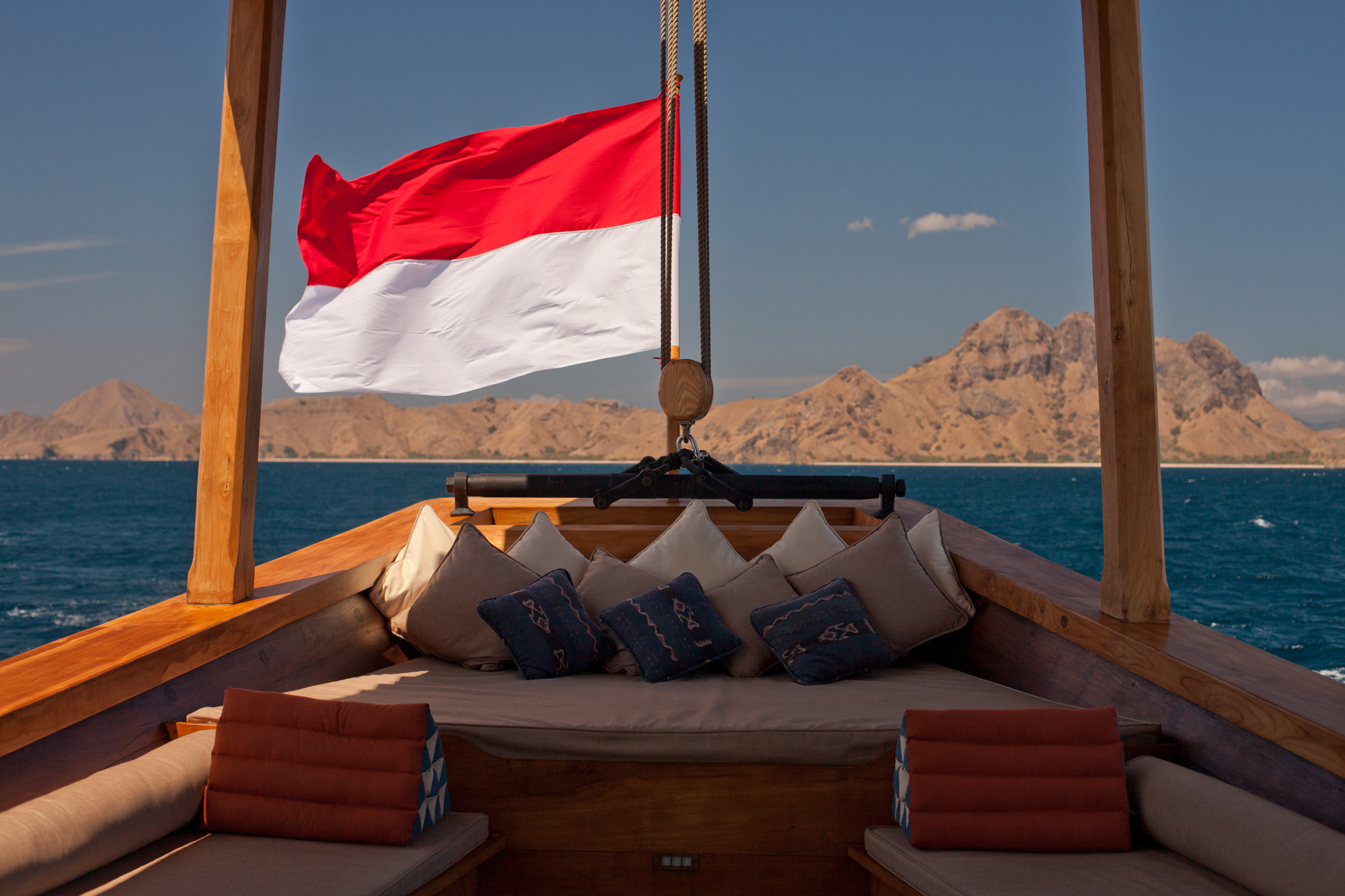
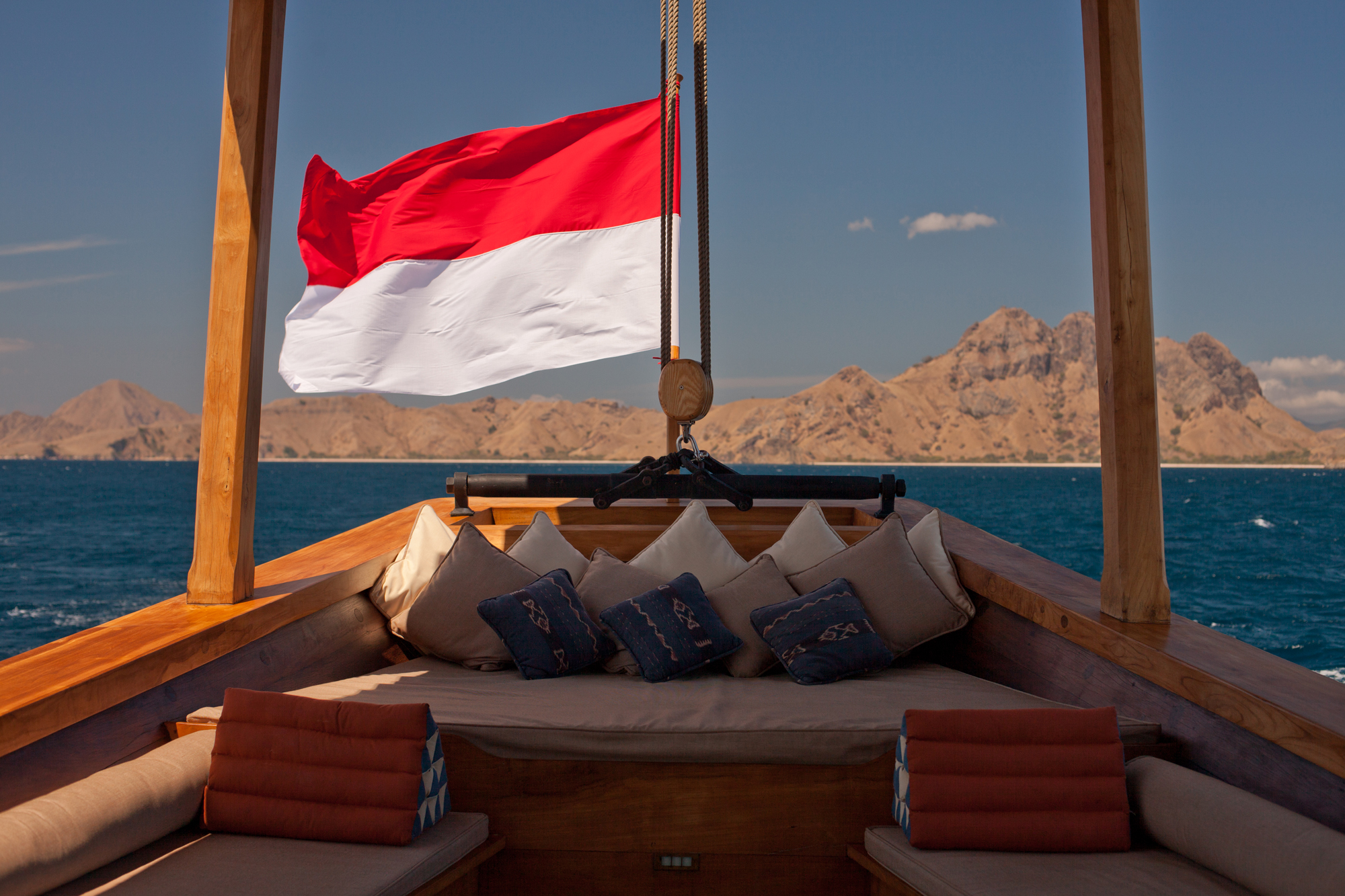
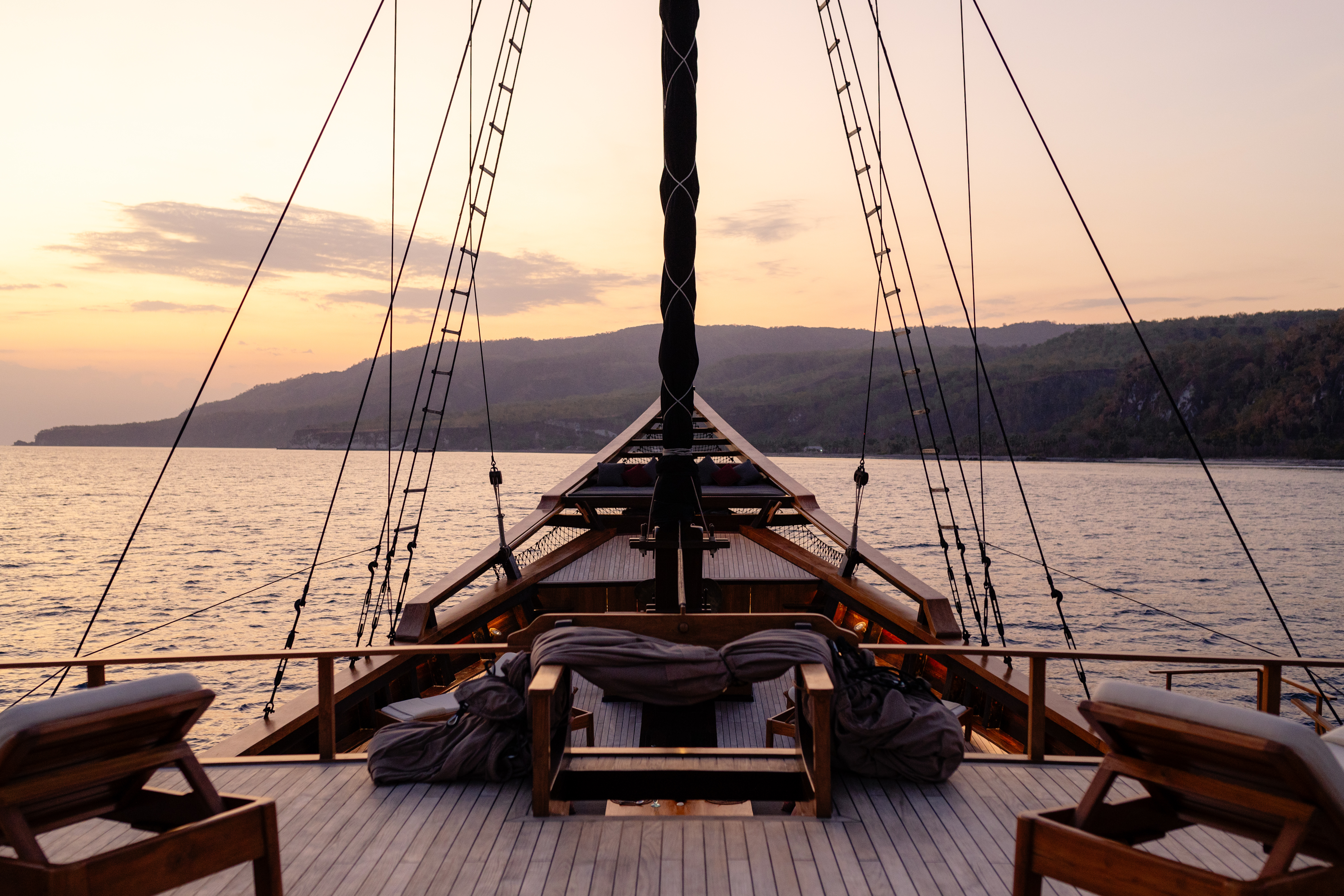
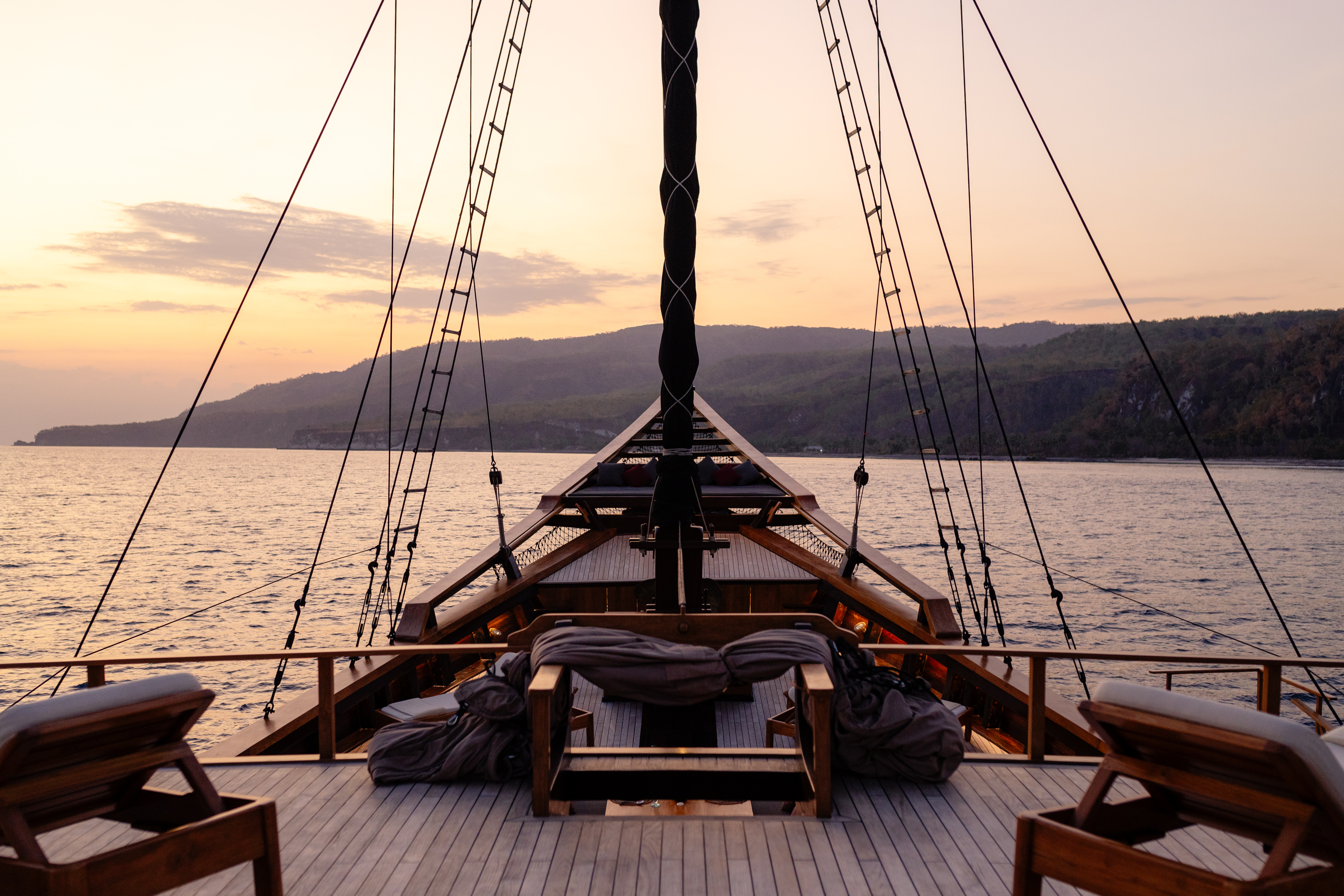
The bow of Silolona is wide, teak, and unobstructed, and at rest in a quiet cove it is one of the more honest places to practice you will find. What makes it work is not equipment. It is where you are and how still it is.
The deck at anchor is the practice space, and the sea sets the terms
A 50-metre vessel at anchor moves, gently, and that movement changes your practice in ways a fixed floor never will. Balance postures ask more of you when the horizon shifts a degree or two under a slow swell. Your standing leg negotiates constantly with the boat. Most people who practice seriously find this clarifying rather than difficult; the small instability pulls your attention fully into the body, which is the thing a busy mind usually resists.
The setting does the rest. Anchored in the lee of an empty island off Komodo, or in the flat morning water among Raja Ampat's limestone karsts, there is no traffic, no phone, no ambient hum of a resort waking up around you. There is the sound of the hull against water and, if you are lucky, a sea eagle working the shallows. The sun near the equator comes up fast and low, and the light on the deck goes from grey to warm gold in a matter of minutes, which happens to line up almost perfectly with the arc of a slow practice from grounding to standing to the first real warmth on your skin. You did not plan that. The geography did it for you.
Indonesian ideas about inner life sit closer to this than you might expect
Yoga arrived in Indonesia from India, but the archipelago has its own deep vocabulary for the inner work you are doing on that mat, and it is worth knowing whose waters you are floating in. In Javanese thought there is the concept of rasa, a single word that gathers up feeling, intuition, inner sense, and a kind of intuitive knowing into one idea. For the Javanese, rasa is understood as both a tool for self-examination and a goal in itself, a way of communicating with oneself. Anyone who has spent years on a mat recognises that territory immediately; it is the quiet listening inward that a good practice trains.
Turn to Bali, the island most guests pass through on their way to board, and the framing shifts toward balance. The Balinese live by Tri Hita Karana, the three causes of wellbeing, which holds that a good life comes from harmony across three relationships: with the divine, with other people, and with the natural world. Silolona's own routes lie further east, through Komodo, Flores, Raja Ampat, and the Banda Sea rather than Bali's waters, but the idea travels well beyond the island that shaped it. You do not need to adopt anyone's religion to feel the usefulness of that idea at sea. Practicing on the bow of a wooden boat that a Sulawesi village built, in water a local crew reads like a familiar road, with an island you will treat as a guest rather than a backdrop, is about as clean an expression of harmony with people and nature as a morning can hold. The philosophy is not decoration you have to take on faith; it simply gives a local name to something your practice is already reaching toward.
The spa continues what the mat begins
What you start at sunrise does not have to end when you roll up the mat. Both Silolona and the more intimate Si Datu Bua carry the capacity for spa treatments on board, and the sequence tends to arrange itself naturally: an early practice on the bow, the day's diving or walking in between, and a massage in the afternoon as the light softens again. The through-line is a body that is worked, stretched, opened, and then released, rather than a spa visit bolted onto an otherwise sedentary holiday. For guests who came specifically for the wellness dimension, this rhythm is often the part they did not anticipate and end up valuing most.
Meals support it without preaching about it. The galley cooks Asian, fusion, and Western food to your preferences, breads and pastries baked fresh on board, which means eating cleanly and lightly through a practice-heavy week is a matter of a quiet word with Ketut, not a special request that raises eyebrows.
The crew's job is to make the space and then disappear from it
Here is the trade-off worth being honest about. This is not a program with a resident yoga teacher and a printed schedule, and if what you want is to be led through a class each morning by a certified instructor, a fixed retreat may suit you better. What Silolona offers instead is the thing that program cannot: total privacy and a crew whose skill is knowing when to be absent.
Gede, the chief purser, and the other crew on the deck will make sure the bow is clear and dry before you rise, and will quietly keep other guests from wandering forward while you practice, without you ever having to ask for the boundary. If you want the tender to drop you on an empty beach to practice on sand at sunrise, Captain Kamto will have read the anchorage and the tide and made it simple. And then they step back. Nobody hovers, nobody photographs you, nobody asks how the session was in a way that turns a private thing into a performance. The seventeen crew who run this boat understand that the most attentive service, for this kind of guest, is the service you do not notice, the arrangement of stillness and space that lets your practice belong entirely to you.
With Silolona Sojourns, a morning on the bow becomes the anchor the whole day turns around, unhurried and genuinely your own. Whether you sail Komodo in the dry months from May to September, or move east to Raja Ampat and the historic Banda islands from October to April, the anchorages are quiet, the coastlines often uninhabited, and the sunrises entirely yours. To sail aboard Silolona and Si Datu Bua, or to plan a private journey built around the way you already move through your mornings, you are warmly invited to enquire.
References
Sugiarto R, Koentjoro. The Javanese Rasa: sense, psychology, and spirituality. Cult Psychol. 2025. doi:10.1177/1354067X241300978
Roth D, Sedana G. Reframing Tri Hita Karana: from 'Balinese culture' to politics. Asia Pac J Anthropol. 2015;16(2):157-175. doi:10.1080/14442213.2014.994674
UNESCO. Pinisi, art of boatbuilding in South Sulawesi. Representative List of the Intangible Cultural Heritage of Humanity; 2017. Available from: https://ich.unesco.org/en/RL/pinisi-art-of-boatbuilding-in-south-sulawesi-01197