

Bird Watching in Papua: A Private Expedition to See Birds of Paradise
The Forest Begins Before Sunrise
Before the reef turns blue, before the yacht deck warms under the first light, Papua’s forest begins to speak. It starts in fragments: a wingbeat somewhere above the canopy, a rustle in leaves too dark to read, the low instruction of a local guide asking everyone to wait, breathe quietly, and listen. You are not here for a casual nature walk. You are here for one of the rarest performances in the natural world.
A Birds of Paradise expedition in Papua is not built around spectacle on demand. It is built around patience. The birds do not appear because you have traveled far. They appear if the weather is kind, if the forest remains undisturbed, if your guide knows the lek tree, if the village has granted permission, and if you understand that silence is part of the experience.
For travelers searching bird watching Papua Indonesia, the appeal is immediate and almost mythic. Birds of paradise sit at the intersection of evolution, beauty, place, and culture. Their courtship dances are among the most studied and admired examples of sexual selection in birds. Molecular research has shown that the birds of paradise have a long evolutionary history shaped by sexual selection and complex biogeography across New Guinea and nearby islands.¹
Papua offers something more than a sighting. It offers the feeling of standing at the edge of a living evolutionary theatre.
Why Papua Is a Bucket List Destination for Ornithologists
Papua and the wider island of New Guinea form one of the world’s great avian frontiers. Cornell Lab of Ornithology notes that New Guinea is home to more than 600 bird species, including 27 bird of paradise species, many of which live nowhere else on earth. The family itself is often described as having just over 40 species, with most species found in New Guinea, Indonesian Papua, Papua New Guinea, and nearby regions.
That distinction matters. Papua is not home to every bird of paradise species under every modern taxonomy, and no responsible article should claim that without qualification. What Papua does offer is world class access to some of the most coveted species in the family, especially when a yacht expedition combines Raja Ampat, Waigeo, Cenderawasih Bay, and carefully arranged forest visits with local guides.
For a bucket list ornithologist, the dream is not simply to tick a species. It is to watch behavior: the display posture, the clearing of a court, the timing of a call, the way light catches iridescent feathers for only a few seconds before the bird becomes forest again.
Waigeo: Wilson’s Bird of Paradise and the Art of Waiting
If one bird can turn a serious traveler into a silent believer, it may be Wilson’s Bird of Paradise. Found only on Waigeo and Batanta in Indonesia’s Raja Ampat region, Wilson’s is among the most coveted species for birders and wildlife photographers. Local Raja Ampat birding operators identify Waigeo as one of the key places to search for Wilson’s Bird of Paradise, often through early morning guided forest walks.
The male’s display is famous not because it is large, but because it is precise. He tends a small forest court, clearing leaves and debris so that his color can be seen from above. In the half light of dawn, the scene can feel almost ceremonial. You wait in a hide or concealed viewing position. You keep your voice low. You resist the urge to move when the forest stirs.
Recent field observations on Batanta recorded Wilson’s Bird of Paradise at multiple locations and noted male display courts and synchronized courtship activity, adding to the scientific understanding of this little known endemic species.² For the traveler, that research reinforces what local guides have long known: these birds are tied to specific forest places, and those places require care.
Red Bird of Paradise: Raja Ampat’s Crimson Display
The Red Bird of Paradise is another iconic species associated with Raja Ampat. Birding operators in the region commonly guide guests to viewing areas on or near Waigeo, where males display in the early light. Papua Diving describes guided Red Bird of Paradise excursions near local villages, with fees directed to local guides, and notes that male birds perform their courtship dances in the early part of the day.
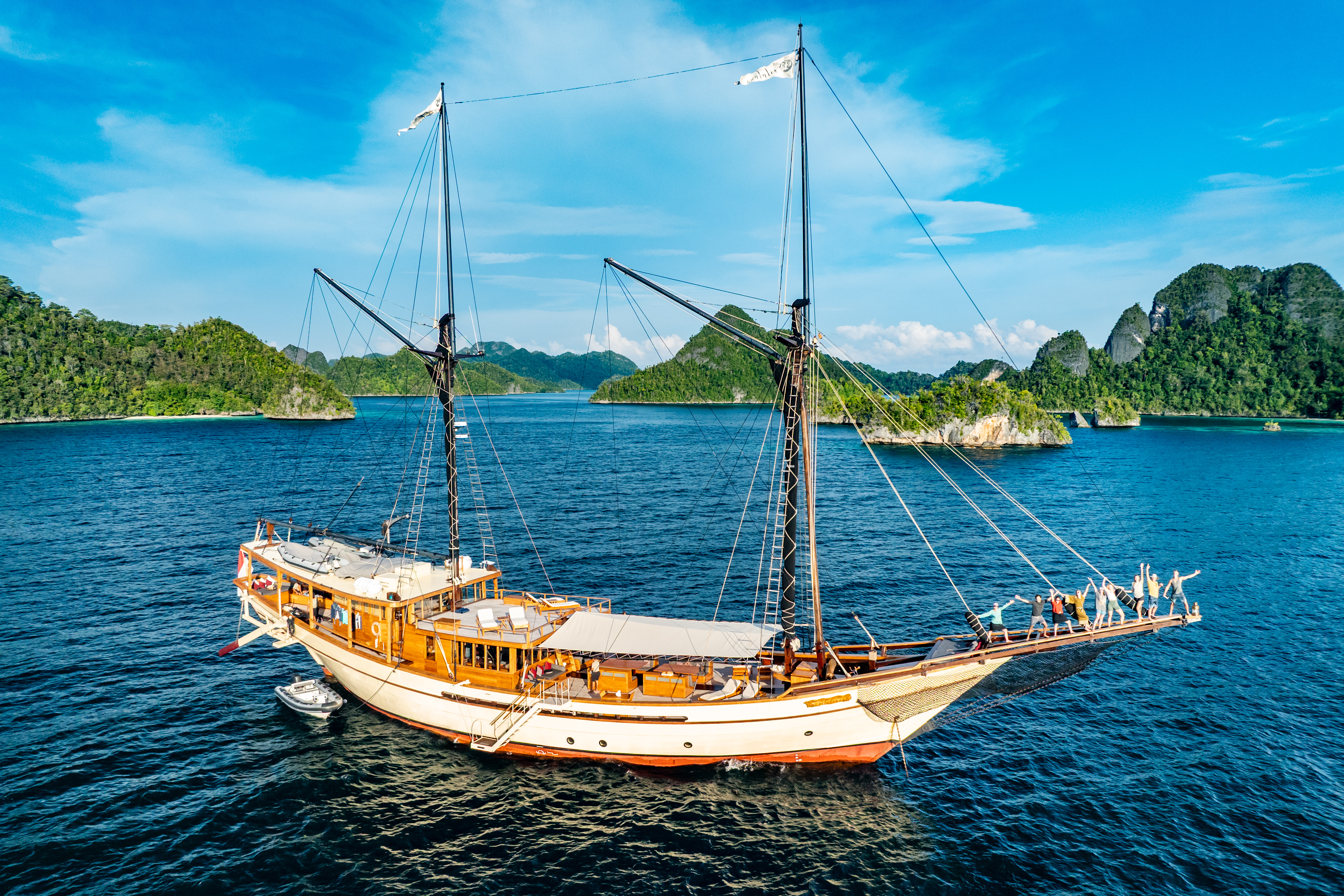
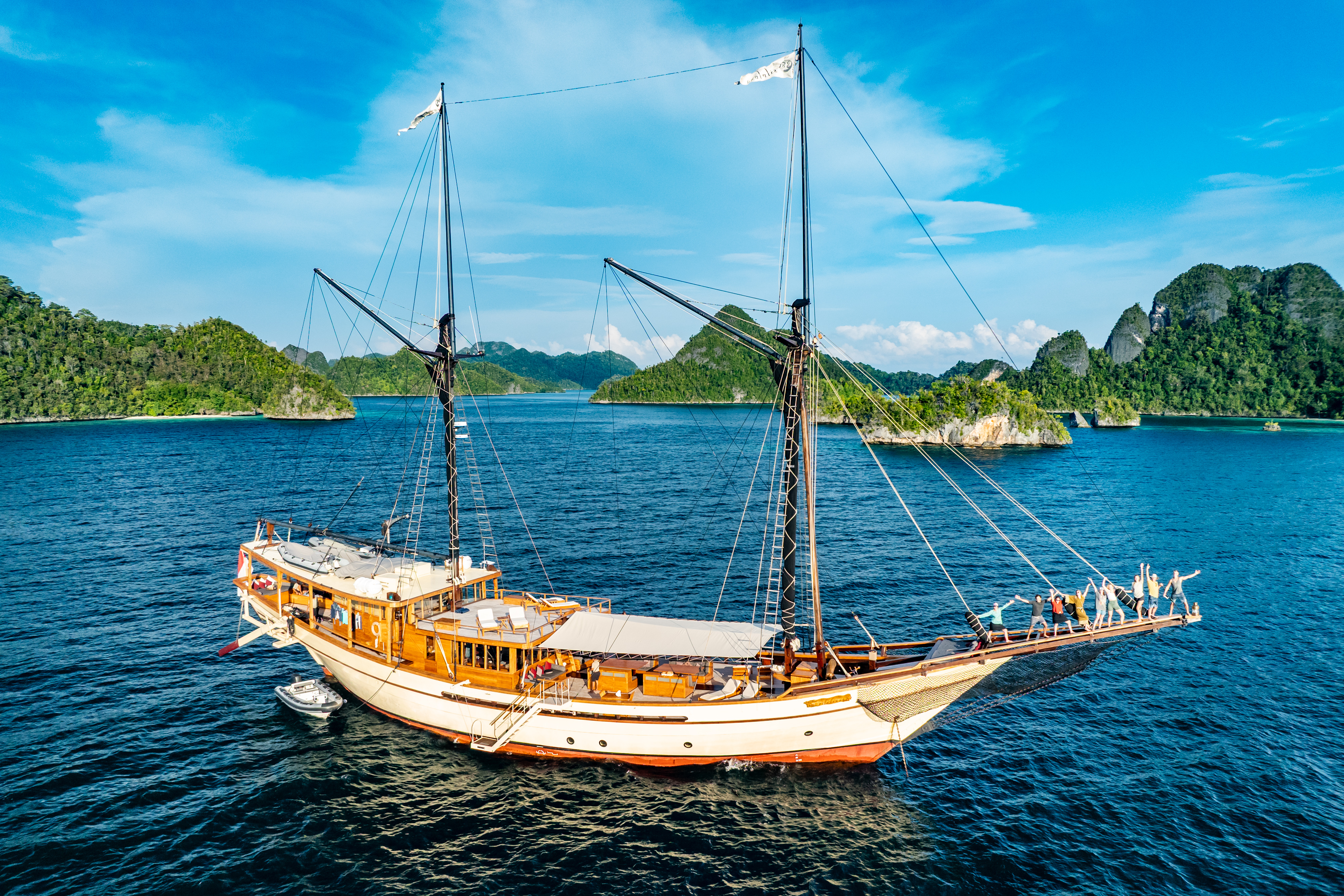
This is one of the most powerful reasons to combine birding with a yacht journey. You can anchor near Raja Ampat’s seascape, then move ashore before sunrise with a local guide who knows the forest, the trail, the community protocols, and the correct behavior at the viewing site.
You are not entering an empty wilderness. You are entering a living landscape where village knowledge, forest access, and wildlife conservation are connected. The best expedition does not treat local people as background. It treats them as hosts, experts, and essential custodians of the experience.
Raggiana Bird of Paradise: The Dawn Legend of New Guinea
The Raggiana Bird of Paradise, also known as Count Raggi’s Bird of Paradise, is strongly associated with Papua New Guinea and is famous for its elaborate lek displays at dawn. Its distribution is widely described across southern and northeastern New Guinea, and it holds national significance in Papua New Guinea.
For a Papua Indonesia yacht article, Raggiana should be framed carefully. It is a New Guinea icon and an essential part of the broader birds of paradise story, but it is not the principal target species for a Raja Ampat yacht based itinerary. Serious birders may encounter related Paradisaea species and other birds of paradise depending on the route, altitude, access, and local arrangements, but the most reliable Raja Ampat focus is usually Wilson’s and Red Bird of Paradise.
This honesty strengthens the article. Luxury travelers do not need inflated promises. They need informed expectations.
Cenderawasih Bay: Where Sea Expeditions Meet Forest Possibility
Cenderawasih Bay is best known in yacht travel for whale sharks, calm waters, and the wider Bird’s Head Seascape. Silolona describes Cenderawasih Bay as part of the Bird’s Head Seascape alongside Raja Ampat and Triton Bay, emphasizing its ecological uniqueness, endemic marine life, and whale shark encounters near fishing platforms.
For bird watching, Cenderawasih Bay should be understood as a gateway rather than a guaranteed birds of paradise stage. The bay’s coastline and nearby forests can support birding opportunities, and some specialist sources mention bird watching in the region, but actual sightings depend heavily on route design, permissions, local guides, habitat access, and timing.
This is exactly where a private yacht becomes useful. The vessel creates a comfortable expedition base across remote waters, while forest excursions can be arranged only where they are appropriate, welcomed, and guided by local knowledge. The yacht does not replace the forest guide. It makes reaching the forest more graceful.
The Best Locations for a Papua Birds of Paradise Expedition
A strong expedition should not treat Papua as a single dot on a map. The best birding experiences are highly local, often tied to specific islands, villages, trails, and display trees.
Waigeo, Raja Ampat Best known for Wilson’s Bird of Paradise and Red Bird of Paradise. This is one of the most practical yacht connected birding areas because it combines world class marine scenery with early morning forest access.
Batanta, Raja Ampat One of the only islands associated with Wilson’s Bird of Paradise, along with Waigeo. Access requires careful local coordination and should be guided by people who know current trail and permission conditions.
Gam and nearby Raja Ampat islands Useful for broader birding, village based nature encounters, and forest edge observations. Research on Gam Island has recorded avian diversity and noted Red Bird of Paradise among observed species endemic to the Raja Ampat archipelago.³
Cenderawasih Bay and the Bird’s Head Seascape Best framed as an expedition extension combining marine wildlife, coastal exploration, and potential birding with local arrangements. It is not a simple “arrive and see” destination for birds of paradise.
Papua mainland and highland extensions For specialist ornithologists, some of the richest birding requires land based extensions beyond the yacht route, often into forest and upland habitats. These trips demand more time, permits, physical readiness, and specialist bird guides.
Season and Timing: When to Watch
Birding in Papua begins early. Most birds of paradise viewing is organized before or around dawn, when males are more likely to display and forest activity rises with the light. For yacht based travel in Raja Ampat and the Bird’s Head Seascape, many private yacht itineraries align with the region’s calmer cruising season, commonly from around November to April for Raja Ampat charters. Independent yacht charter listings also describe Raja Ampat cruising as typically November to April.
That said, birding success is not controlled by calendar alone. Rain, wind, fruiting patterns, nesting cycles, local trail access, and community availability can all shape the experience. For guests with serious ornithological goals, the itinerary should be designed with extra mornings, not just one attempt. Birds of paradise reward patience.
The most important timing is daily: wake before dawn, move quietly, reach the viewing place before the forest brightens, and accept that waiting is part of the privilege.
Community Permission Is Not a Formality
In Papua, the most meaningful birding often happens on land connected to local communities. This means permission is not a box to tick. It is the foundation of the experience.
A responsible expedition should work through local guides, village contacts, customary land arrangements where relevant, and clear visitor etiquette. Fees should support the people who protect the forest and guide visitors. Trails should be used with consent. Viewing sites should not be overrun. Photography rules should be explained before arrival.
This is especially important for birds of paradise because display sites can be sensitive. Disturbance at a lek or display court can change behavior and reduce future viewing quality. Conservation literature on birds of paradise in Indonesian Papua continues to identify habitat loss, hunting, and exploitation as major concerns, making responsible ecotourism and community involvement central to long term protection.
For luxury travelers, this is where the definition of exclusivity changes. The rarest access is not private because it is bought. It is private because it is trusted.
Responsible Wildlife Etiquette for Birds of Paradise
A birds of paradise encounter should feel almost ceremonial. The etiquette is simple, but it must be followed carefully.
Arrive early and stay quiet. Wear muted colors. Avoid perfume or strong scents. Keep phones silent. Do not use flash. Do not play recorded calls unless a qualified guide explicitly permits it for scientific or controlled guiding purposes, and even then it should be used sparingly or avoided. Do not walk toward the display tree. Do not break branches for a better view. Do not pressure your guide to get closer.
Indonesia’s official tourism guidance for cenderawasih watching also advises visitors to avoid noise, use dark colored clothing, and remain concealed because the birds are sensitive to disturbance.
The best guests are not the ones who get nearest. They are the ones the forest forgets are there.
Why a Private Yacht Makes Sense for Bird Watching Papua Indonesia
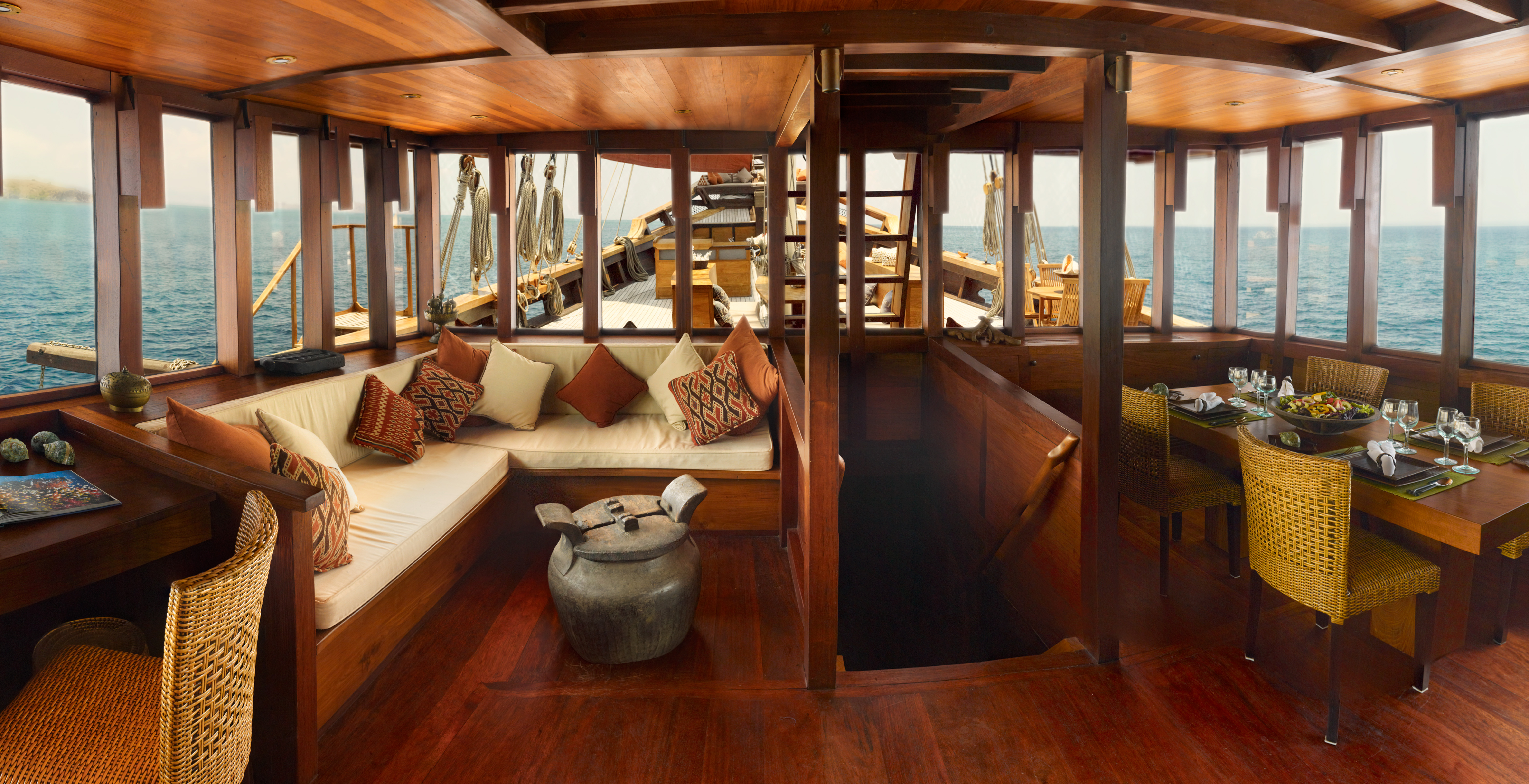
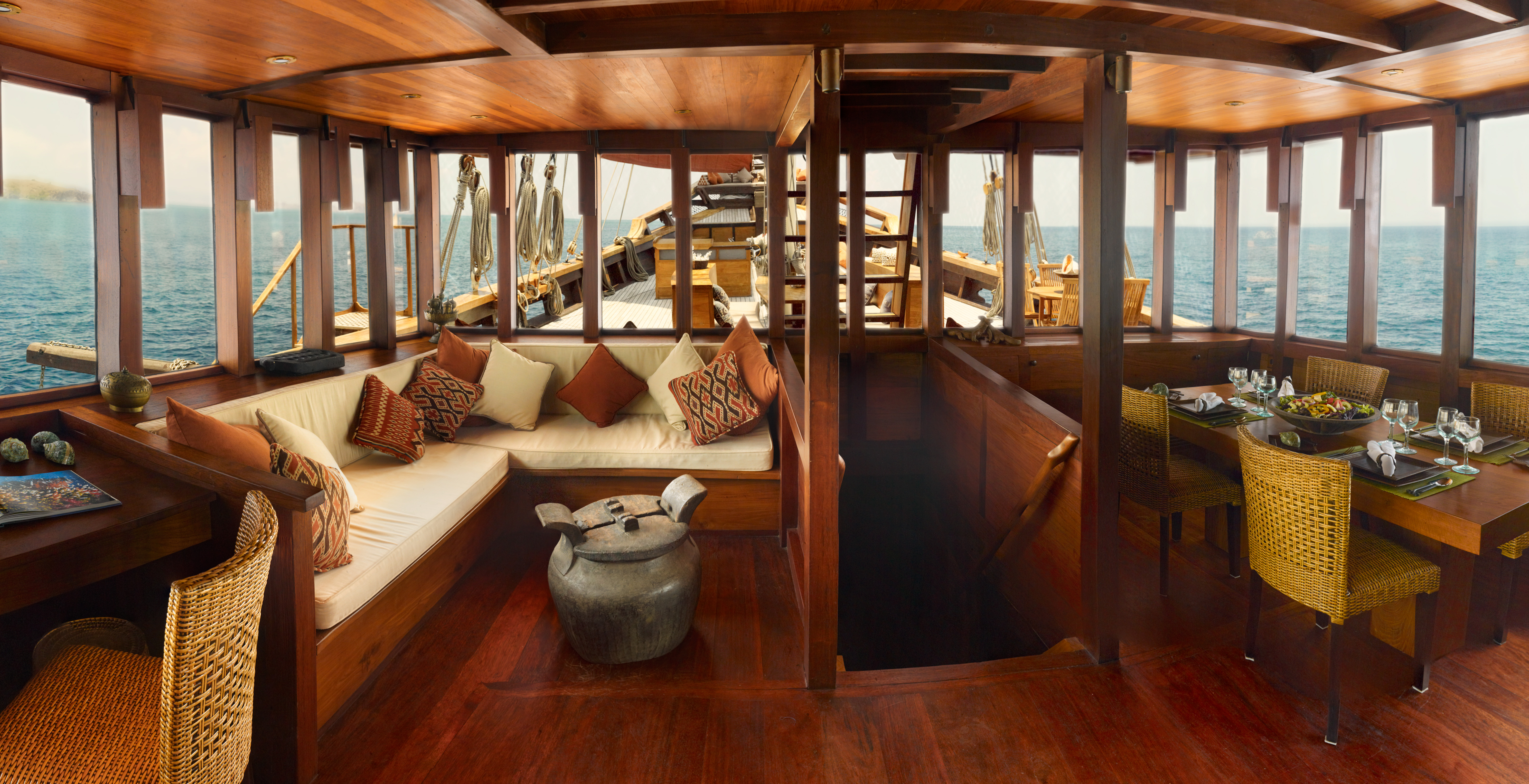
A yacht might seem, at first, like an unusual platform for birding. In Papua, it can be one of the most elegant ways to link sea and forest. Raja Ampat, Cenderawasih Bay, Triton Bay, and the Bird’s Head Seascape are not destinations where roads define the journey. Water does.
Silolona Sojourns positions its Papua and Bird’s Head Seascape journeys around remote luxury yacht charters, including Raja Ampat and Cenderawasih Bay, with access to isolated marine environments, whale sharks, coral reefs, and remote island experiences. The company also describes deep regional expertise in Indonesia yacht charter logistics, including authorities, provisioning, customs, and bespoke cultural tours across the archipelago.
For birders, that logistical layer matters. A dawn forest visit may require anchoring near the right village, moving by tender before sunrise, coordinating with a guide, respecting permissions, and returning guests safely after a muddy trail or long wait. The yacht gives comfort, but the experience depends on coordination.
The Mixed Expedition: Birds at Dawn, Reefs by Noon
One of the strongest advantages of a Papua yacht expedition is that it does not force every guest into the same passion. A serious birder can rise before dawn to seek Wilson’s Bird of Paradise. Another guest can sleep later, snorkel a coral garden, kayak a lagoon, or spend the morning on deck. By lunch, everyone is back together with different stories from the same landscape.
This is especially powerful in Raja Ampat. Above water, the forest holds birds of paradise, palm cockatoos, parrots, kingfishers, pigeons, and hornbills depending on location. Below water, the reefs hold one of the richest marine ecosystems on earth. A private yacht lets you experience the vertical richness of Papua: canopy, cliff, lagoon, reef, and open sea.
The journey becomes more than a birding trip. It becomes a full natural history expedition.
For the Bucket List Ornithologist
For a serious birder, a Papua expedition carries a different emotional weight. Birds of paradise are not just beautiful. They are legendary. They shaped scientific imagination, inspired early naturalists, and continue to fascinate evolutionary biologists because their displays push courtship into theatre. Research on courtship phenotype evolution in birds of paradise has examined how form and display have diversified across the family, reinforcing their importance as a model for sexual selection.⁴
Yet the real encounter is never abstract. It is the sound of feet on a wet trail before sunrise. It is the guide lifting a hand to stop you. It is binoculars rising slowly. It is a flash of red, yellow, emerald, blue, or black so improbable that for a moment the forest feels invented.
That is the bucket list appeal. Not ownership. Not conquest. Witness.
The Rarest Performance Is the One You Do Not Control
Bird watching in Papua asks for a different kind of luxury. It is not about speed, certainty, or spectacle arranged on command. It is about access with humility. It is about being carried by yacht through one of the world’s great seascapes, then stepping quietly into forest where a bird may or may not choose to appear.
For the right traveler, that uncertainty is the gift. Papua’s birds of paradise are not decorations in a tropical itinerary. They are living symbols of evolution, forest health, community stewardship, and patience. To see one is memorable. To wait well for one is transformative.
A Birds of Paradise expedition by private yacht is not simply a journey to remote Indonesia. It is a journey into attention itself.
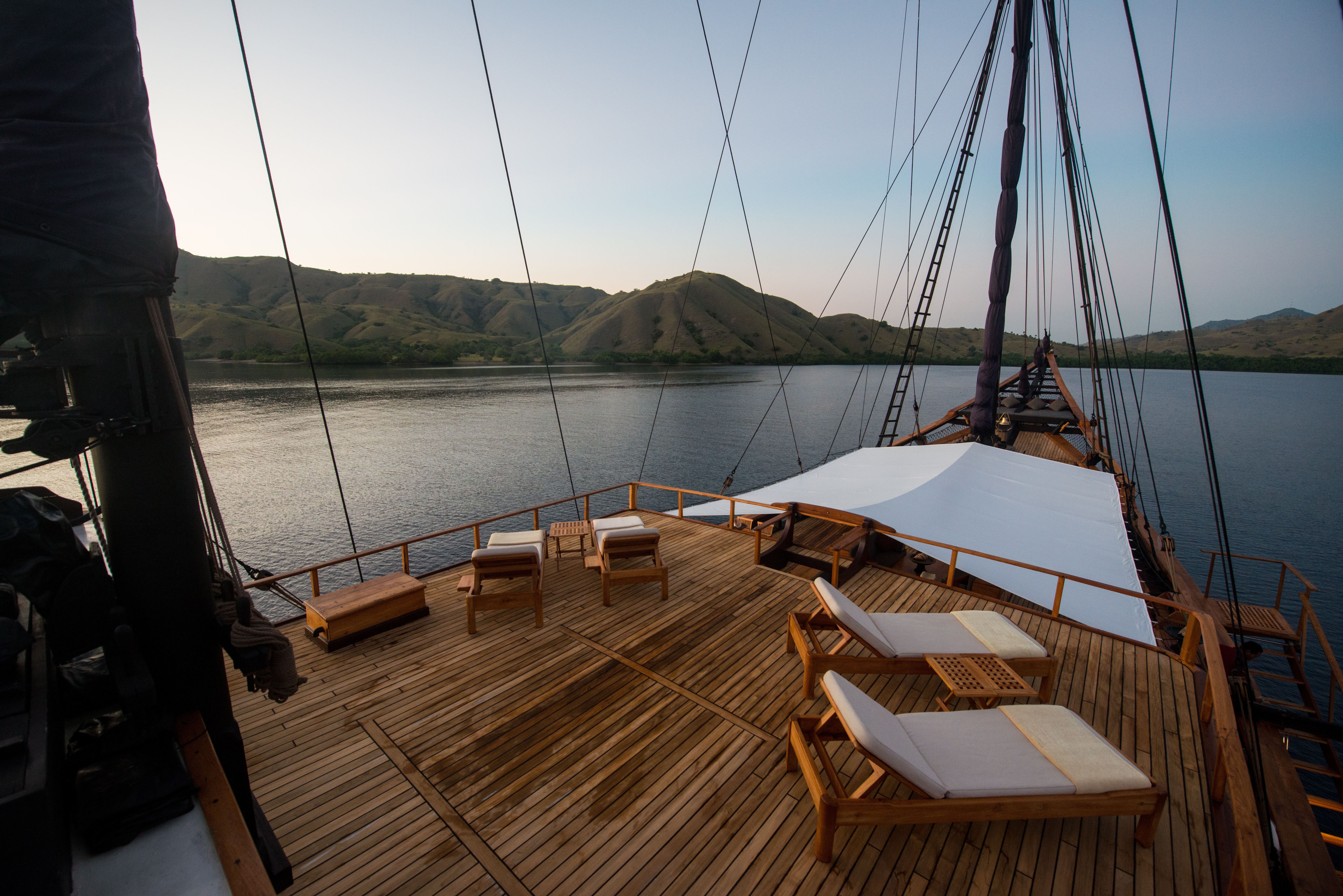
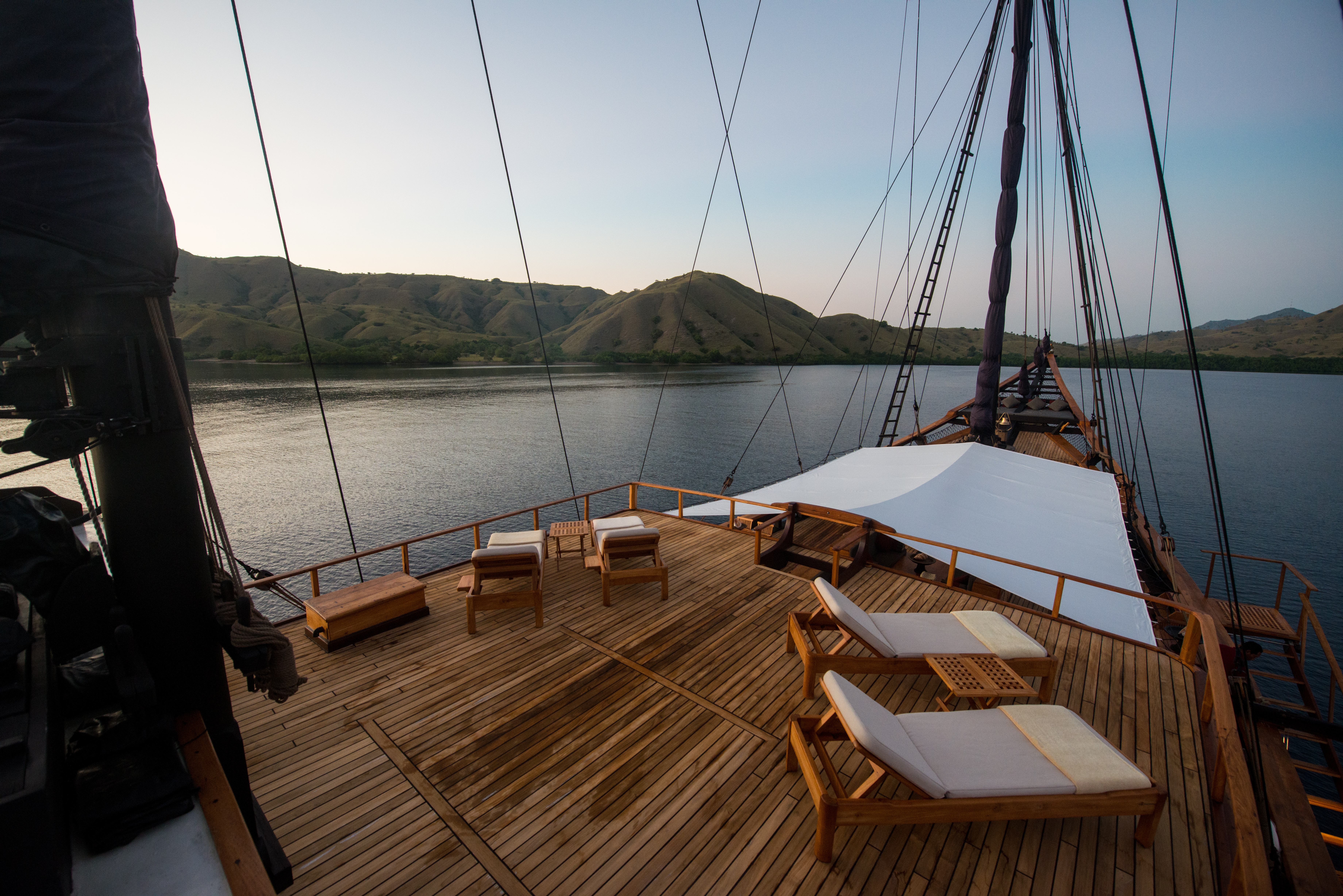
With Silolona Sojourns, a Papua bird watching journey becomes a private expedition across sea and forest, shaped for travelers who want rare wildlife without sacrificing comfort, sensitivity, or depth. You can anchor in Raja Ampat, rise before dawn for Wilson’s Bird of Paradise or Red Bird of Paradise with local guides, explore the Bird’s Head Seascape by yacht, snorkel coral gardens by midday, and return each evening to the quiet elegance of a handcrafted phinisi. For conservation minded travelers and bucket list ornithologists, Silolona offers the right balance: remote access, cultural respect, flexible routing, and the patience required to encounter Papua on its own terms.
References
Irestedt M, Jønsson KA, Fjeldså J, Christidis L, Ericson PGP. An unexpectedly long history of sexual selection in birds of paradise. BMC Evolutionary Biology. 2009;9:235. doi:10.1186/1471-2148-9-235
Horváth R, et al. Wilson’s bird of paradise, Diphyllodes respublica, data from Batanta, Indonesia, West Papua, Raja Ampat. Aquila. 2024;131:17-31.
Schrader J, et al. An annotated bird checklist for Gam Island, Raja Ampat, West Papua, Indonesia. Forest and Society. 2020;4(2):310-329. doi:10.24259/fs.v4i2.8664
Scholes E III. Evolution of the courtship phenotype in the bird of paradise genus Parotia. Biological Journal of the Linnean Society. 2008;94(3):491-504. doi:10.1111/j.1095-8312.2008.01012.x