

Cendrawasih Bay: Sailing with Whale Sharks in Indonesia’s Largest Marine National Park
Where Whale Sharks Rise Beneath Wooden Platforms
In Cendrawasih Bay, the morning does not begin with a reef. It begins with a silhouette. A wooden bagan fishing platform stands on the water, its frame dark against the first pale light, its nets hanging below like a secret. Fishermen move quietly above. Small fish flash near the surface. Then something larger gathers beneath the platform, slow and immense, its spotted back appearing through the blue.
A whale shark does not arrive like a predator. It rises like a weather system.
This is the rare promise of Cendrawasih Bay whale sharks: not a distant chance in open ocean, not a rushed boat chase, not a fleeting fin at the edge of visibility, but the possibility of entering calm water beside the world’s largest fish as it feeds around traditional lift net fishing platforms. Cendrawasih Bay is one of the most distinctive whale shark destinations in Indonesia because the animals are strongly associated with bagan fisheries, where anchovies and small baitfish attract them to the surface. WWF Indonesia has linked consistent whale shark sightings in Teluk Cenderawasih Marine National Park with lift net fisheries targeting anchovies. For travelers seeking a Papua yacht expedition, this is not only a wildlife encounter. It is a seascape where biology, local fishing knowledge, conservation, and yacht based access meet in one quiet dawn.
Indonesia’s Largest Marine National Park
Cendrawasih Bay sits within the Bird’s Head Seascape of Indonesian Papua, east of Raja Ampat and south of the Bird’s Head Peninsula. Official Indonesian conservation data lists Teluk Cenderawasih National Park at 1,447,361.19 hectares, making it one of the largest protected marine landscapes in the country. Other government and conservation sources have commonly described the park at around 1.45 million hectares and as Indonesia’s largest marine national park or largest marine sanctuary.
That scale matters. This is not a single bay in the simple sense. It is an enormous marine world of islands, reefs, coastal villages, mangroves, deep water, fishing grounds, and sheltered passages. It is also remote enough that the journey itself becomes part of the experience. You do not come here casually. You sail into it.
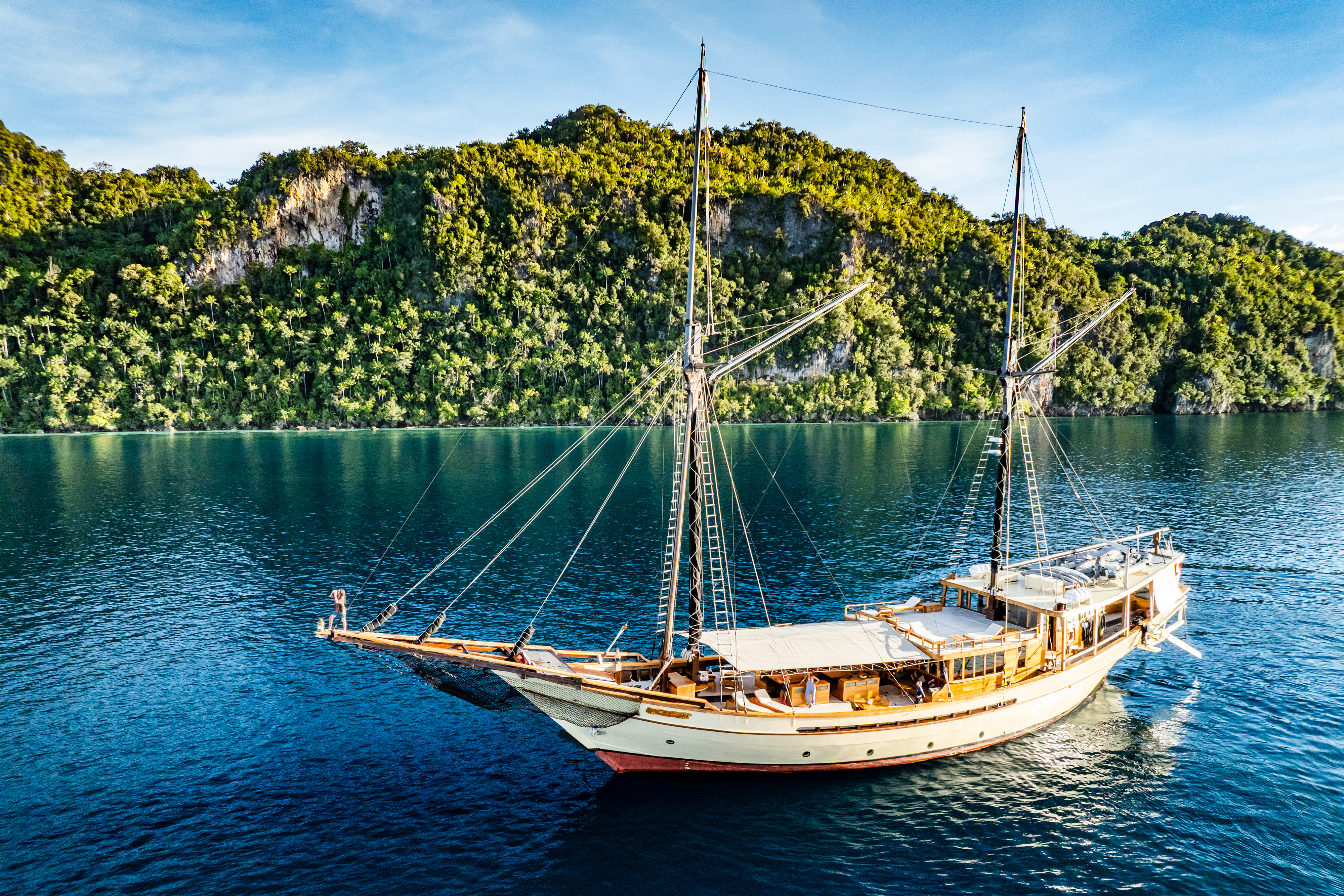
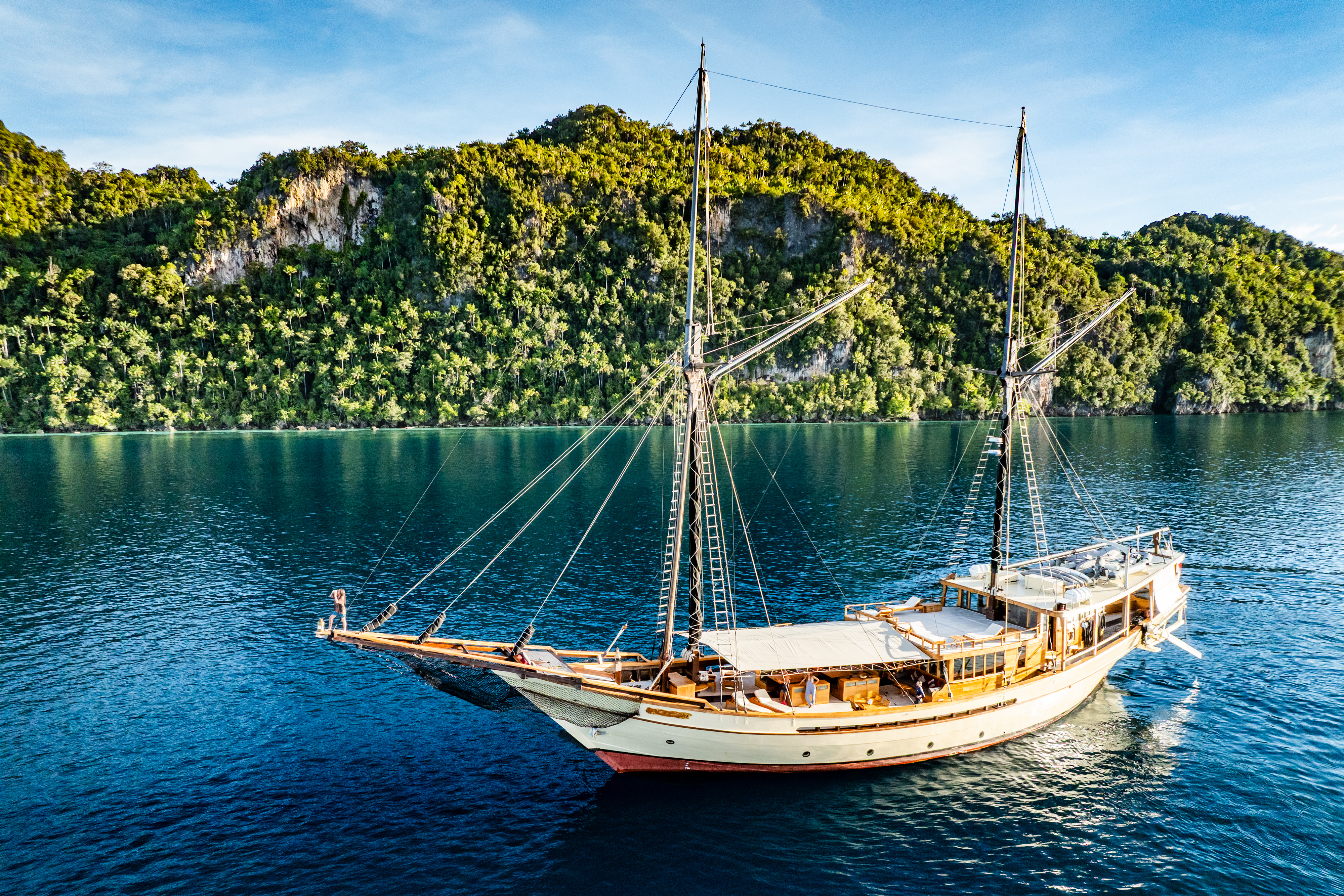
Silolona Sojourns describes Cendrawasih Bay as part of the wider Bird’s Head Seascape together with Raja Ampat and Triton Bay, highlighting its endemic marine life, ecological uniqueness, and whale shark encounters around fishing bagans. For a luxury yacht traveler, this is exactly the kind of destination where the vessel is not simply accommodation. It is the key to access.
The Bagan Phenomenon: Why Whale Sharks Gather Here
A bagan is a traditional lift net fishing platform used by local fishermen to attract and catch small fish, often at night with lights. In Cendrawasih Bay, whale sharks have learned to associate these platforms with food. They feed on small fish around the nets and sometimes appear close to the surface beneath the wooden structure.
Scientific and conservation sources repeatedly identify this relationship between whale sharks and bagan fisheries as central to the bay’s whale shark tourism. A 2025 Frontiers in Marine Science study on whale sharks in the Bird’s Head Seascape notes that whale sharks are present year round in Cenderawasih Bay, with aggregation sites strongly linked to bagans and dominated by juvenile and immature males.¹
For guests, that changes the nature of the encounter. You are not scanning empty water in hope. You are entering a working seascape where fishermen, baitfish, nets, and whale sharks form a strange and delicate relationship. The platform may look simple, but beneath it is a living intersection of human livelihood and marine behavior.
This is what makes Cendrawasih so hard to replicate from a resort. The experience is not only about where the whale sharks are. It is about how they are encountered: around floating platforms, with local fishermen, in water calm enough that snorkelers can often observe them from the surface when conditions allow.
Resident Giants, Not Passing ShadowsResident Giants, Not Passing Shadows
Whale sharks are often described as ocean wanderers, capable of long distance movement across tropical and subtropical waters. Cendrawasih Bay is different because research has found strong residency patterns. The 2025 Frontiers study reports that whale sharks are present year round in Cenderawasih Bay, while Kaimana shows more seasonal presence.¹ A 2020 long term satellite tagging study also found that Cenderawasih Bay functions as an important foraging area, with tagged whale sharks spending much of their time in foraging related behavior, mostly in shallow waters.²
This does not mean sightings should be guaranteed. Wildlife is never a performance. Weather, fishing activity, platform location, food availability, boat traffic, and animal movement can all affect the day. But Cendrawasih’s pattern of residency makes it one of Indonesia’s most compelling places to plan a whale shark focused voyage.
The animals most commonly observed in the region are young males. The 2025 study describes key aggregation sites in Cenderawasih Bay and Kaimana as commonly hosting juvenile and immature male whale sharks, often between 2 and 8 meters in length.¹ Even at that size, the encounter feels monumental. A young whale shark is still larger than almost anything you have ever shared water with.
What You Experience in the Water
A whale shark swim in Cendrawasih Bay often begins from the tender. The yacht or tender approaches the bagan carefully, respecting local arrangements and avoiding unnecessary disturbance. The guide checks the water, the fishermen’s activity, the position of the animal, and guest readiness. Then you enter slowly.
The first sensation is scale. The animal moves with an ease that makes your own body feel hurried. Its mouth may open as it feeds near the surface. Its spots appear almost painted against the blue. Remoras may travel beneath it. Small fish scatter and regroup. If the water is calm, you can float nearby with minimal movement, watching the shark rise, turn, and return beneath the platform.
The best encounters are not athletic. They are patient. You do not chase. You do not block the animal. You do not touch it. You do not crowd its head or tail. You stay with the guide, keep a respectful distance, and allow the whale shark to decide the shape of the moment.
For many guests, this is why Cendrawasih Bay feels so profound. You are in shallow, quiet water with one of the ocean’s great travelers, yet the scene is intimate: a wooden platform, Papuan fishermen, morning light, and a giant fish feeding with unhurried grace.
Why Calm Water Changes Everything
Many whale shark destinations require open sea searches, rolling swell, short entries, or fast movement. Cendrawasih Bay is different because the bagan encounters often happen in relatively sheltered water. That does not make the experience automatic or risk free, but it can make it more accessible for confident snorkelers, first time wildlife swimmers, and mixed groups where not everyone is a diver.
This is one of the strongest reasons the destination works by private yacht. Divers, snorkelers, photographers, and non diving companions can all participate at different levels. One guest may enter the water. Another may watch from the tender. Another may photograph from above. The yacht remains nearby as a calm base for rest, equipment, meals, and the emotional decompression that often follows an encounter this large.
For luxury travelers, the value is not just exclusivity. It is the ability to meet the animal without hurry.
The Fishermen Are Part of the Story
Cendrawasih’s whale shark encounters cannot be separated from the fishermen who work the bagans. The animals gather because the platforms attract baitfish and because fishing activity creates feeding opportunities. That means the cultural dimension is not decorative. It is essential.
A meaningful visit should recognize fishermen as partners in the experience, not background figures. They understand the platforms, the fish, the timing, and the daily rhythm of the bay. Their livelihoods are part of the same seascape that makes whale shark encounters possible.
This also creates ethical responsibility. Whale shark tourism must be managed carefully so that the animals are not overfed, crowded, injured by boats, or made dependent in harmful ways. Research published in Frontiers in Marine Science, led by Konservasi Indonesia, the Elasmobranch Institute Indonesia, and Conservation International, documents that West Papua's Bird's Head Seascape serves as a vital habitat for juvenile male whale sharks, yet lift-net fisheries, tourism boats, and emerging mining activities in the region underscore the urgent need for stronger protection and management. The same 13-year study, which identified 268 individual whale sharks from over 1,100 observations, found that almost all were juvenile males, a demographic particularly vulnerable to long-term population recovery. More than half showed injuries tied to human activity, reinforcing that increasing tourism, boat traffic, and fishing pressure can meaningfully alter habitat use and animal behaviour if not effectively managed.
For guests, the lesson is clear. This is not a theme park encounter. It is a working marine landscape that needs respect for both people and wildlife.
Seasonal Timing: When to Sail Cendrawasih Bay
Because whale sharks are present year round in Cendrawasih Bay, the question of timing is less about whether they exist in the bay and more about comfort, visibility, sea state, yacht routing, and wider Papua expedition goals.
For yacht planning, Cendrawasih often fits beautifully into a broader Bird’s Head Seascape expedition. Depending on route, weather, and vessel schedule, guests may combine whale shark encounters with reefs, coastal villages, island stops, and possibly onward journeys toward Raja Ampat or Triton Bay. Silolona’s Cendrawasih Bay page frames the region as part of a larger triad with Raja Ampat and Triton Bay, which supports this wider expedition style.
The most important timing is often daily. Early mornings near the bagans can be especially atmospheric, when light is soft, the platforms are active, and the water still holds the quiet of night fishing.
The Science of a Gentle Giant
Whale sharks are the largest fish in the world, but their feeding strategy is built around small prey. They filter feed on plankton, small fish, and other tiny organisms, using enormous mouths and specialized filtering structures. In Cendrawasih, their association with anchovies and other baitfish around bagans creates a distinctive feeding opportunity.
Long term satellite tagging research in Cenderawasih Bay revealed that whale sharks spent an average of 81 percent of their time in foraging related behaviors, mostly in shallow waters, with traveling behavior associated with deeper waters.² This helps explain why the bagan encounters can feel so steady compared with more open ocean searches. The animals are not merely passing through. They are using the bay as feeding habitat.
Yet that habitat use also creates conservation questions. If whale sharks become closely tied to fishing platforms and tourism pressure increases, management has to protect both animal welfare and community livelihoods. The future of Cendrawasih’s whale shark tourism depends on moderation, monitoring, and respect.
Responsible Whale Shark Etiquette
A responsible whale shark swim should feel calm. Your guide should explain how to enter the water, where to position yourself, how close is appropriate, and what not to do.
The basic rules are simple. Do not touch the whale shark. Do not ride it. Do not block its path. Do not swim directly in front of its mouth or too close to its tail. Do not use flash in a way that disturbs the animal. Do not crowd the shark with too many swimmers. Do not pressure fishermen or guides for a closer encounter. Stay beside the animal, not above it, and let it move freely.
These rules protect the animal, but they also improve the guest experience. A whale shark that is not harassed can continue feeding naturally. The encounter becomes longer, quieter, and more memorable.
In luxury travel, restraint is part of the privilege. You have come far enough to see the animal. You do not need to dominate the moment.
Beyond Whale Sharks: A Bay of Reefs, Islands, and Quiet Coastlines
Whale sharks may be the reason many travelers first hear about Cendrawasih Bay, but they are not the only reason to sail here. The national park protects reefs, islands, coastal ecosystems, and marine habitats across a vast area. Silolona describes the bay as an ecological treasure within the Bird’s Head Seascape, with endemic marine life and unusual shallow water biodiversity.
A yacht expedition can move beyond the bagans into quieter anchorages, reef snorkeling, coastal exploration, island walks, and village encounters. This matters because a responsible itinerary should never treat whale sharks as the only story. The bay is a place, not just a wildlife site.
For guests, the rhythm can be beautifully simple: whale sharks at dawn, breakfast aboard, reef exploration later in the day, sunset across a wide Papuan horizon, and the feeling that you have entered a marine world still governed by distance.
Why Resorts Cannot Replicate This Encounter
A resort can offer comfort. A day boat can offer a single excursion. But Cendrawasih Bay’s whale shark experience belongs naturally to expedition travel because the sites are remote, the bagans are mobile working platforms, and the bay itself is vast.
A private yacht gives you three advantages. First, proximity: you can position near the right area rather than commute from far away. Second, flexibility: you can adapt to platform activity, sea conditions, and guest readiness. Third, atmosphere: you experience the bay as a continuous seascape, not a day trip.
This is why a Papua yacht expedition is not only a more luxurious way to see Cendrawasih. It is often the most coherent way to understand it.
Silolona in Cendrawasih Bay
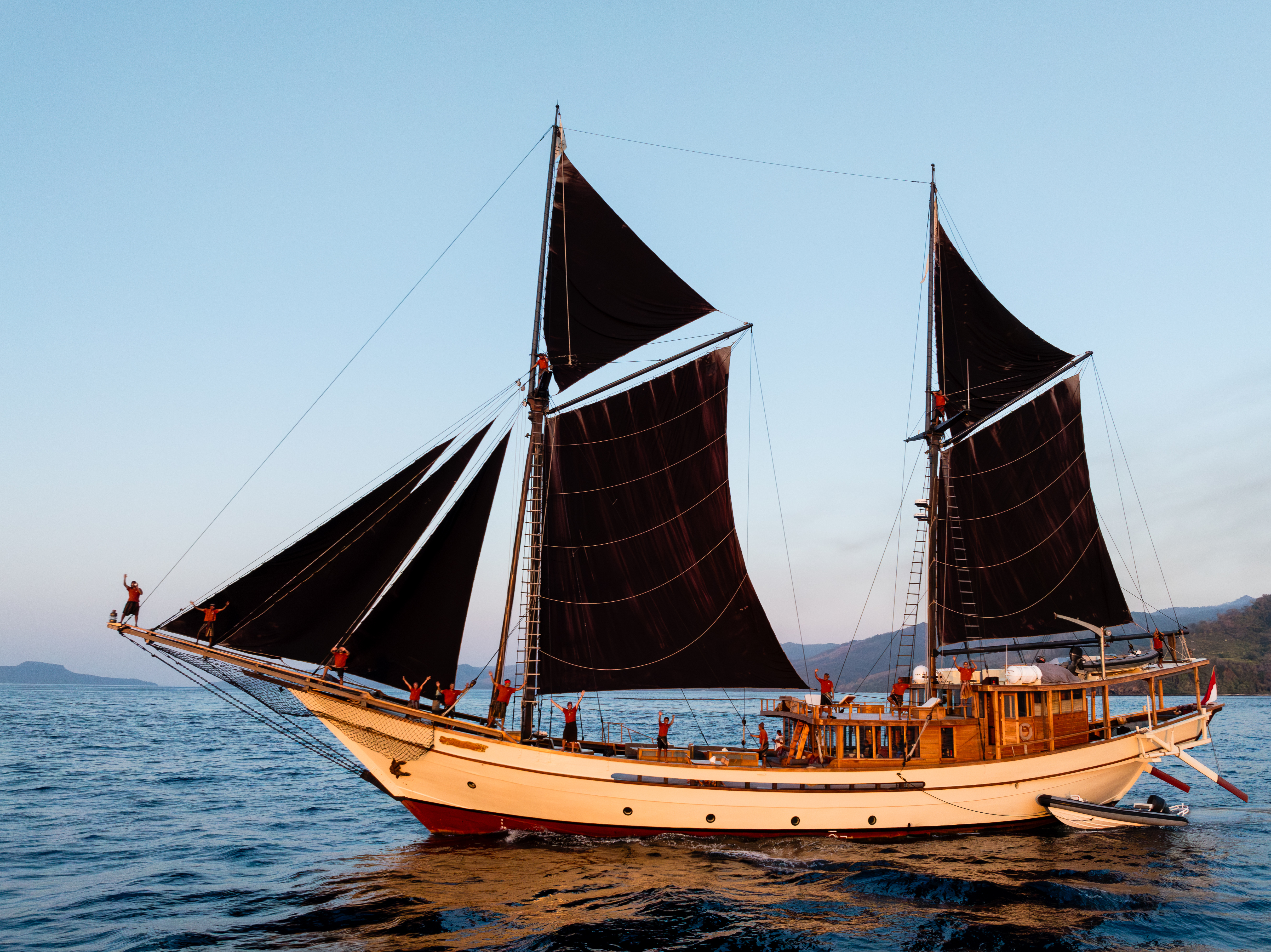
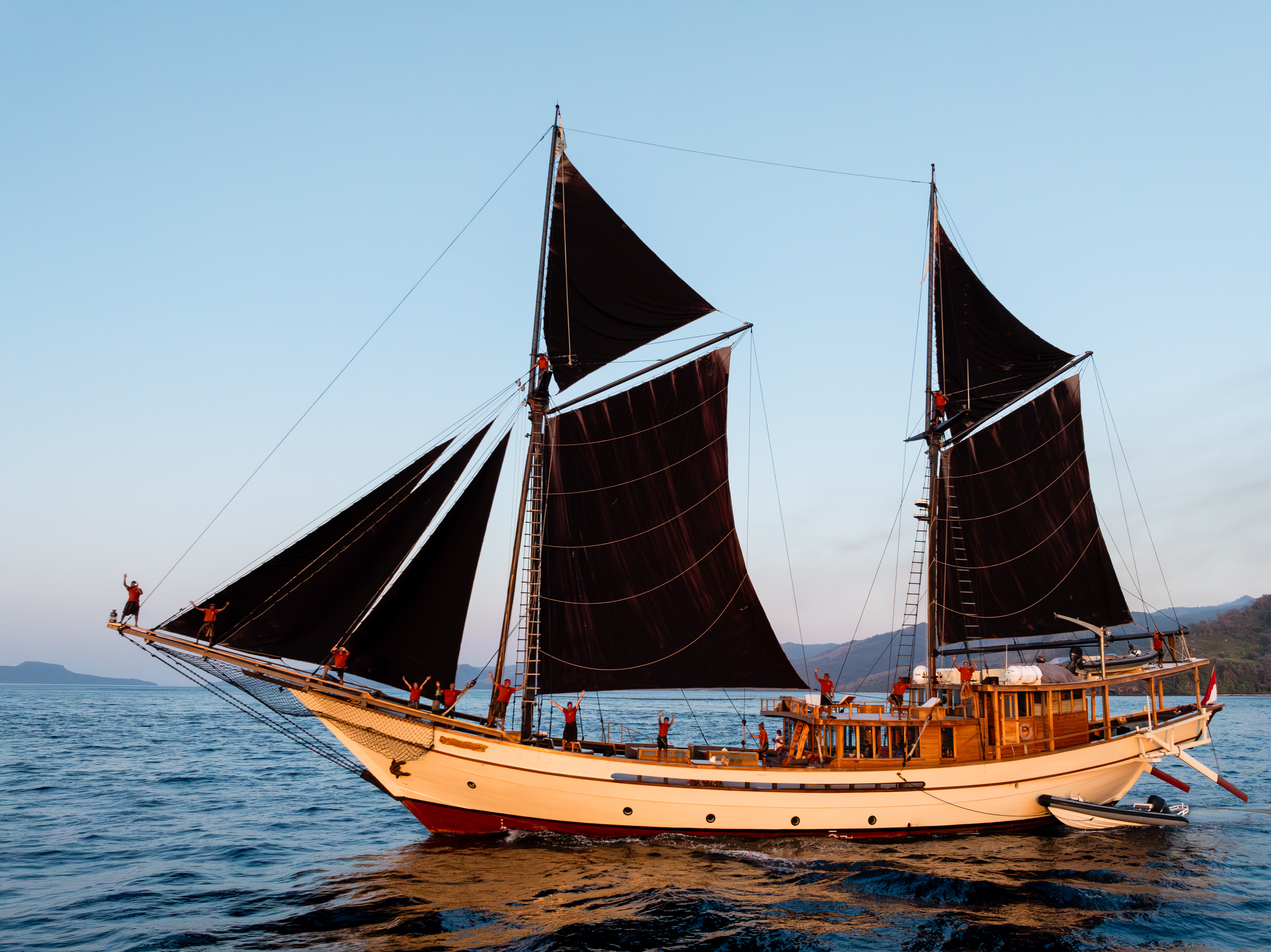
Silolona Sojourns positions Cendrawasih Bay as a luxury yacht charter destination for swimming with whale sharks, exploring endemic marine life, and sailing through the Bird’s Head Seascape. Its official destination page specifically describes whale sharks feeding beneath floating bagans, where fishing platforms discard fish into the water and attract these gentle giants.
Silolona also describes itself as an Indonesia yacht charter specialist with 30 years of expertise, handling yacht calls with authorities, provisioning, bunkering, customs, and bespoke cultural tours across the archipelago and Southeast Asia. In Cendrawasih, that operational depth matters. The bay is remote. The best encounters require coordination. Local relationships, permissions, timing, and responsible conduct are not extras. They are the foundation of the journey.
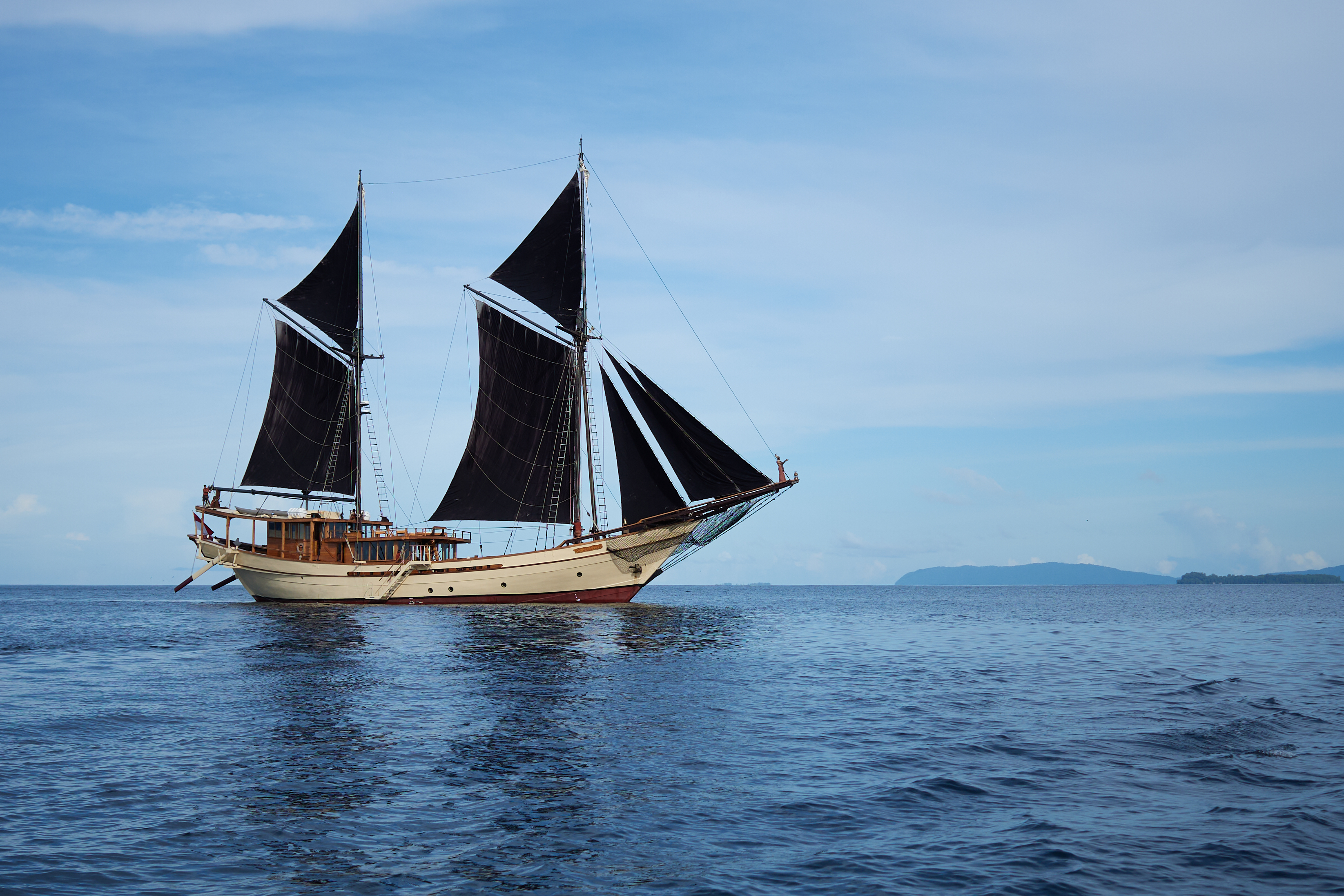
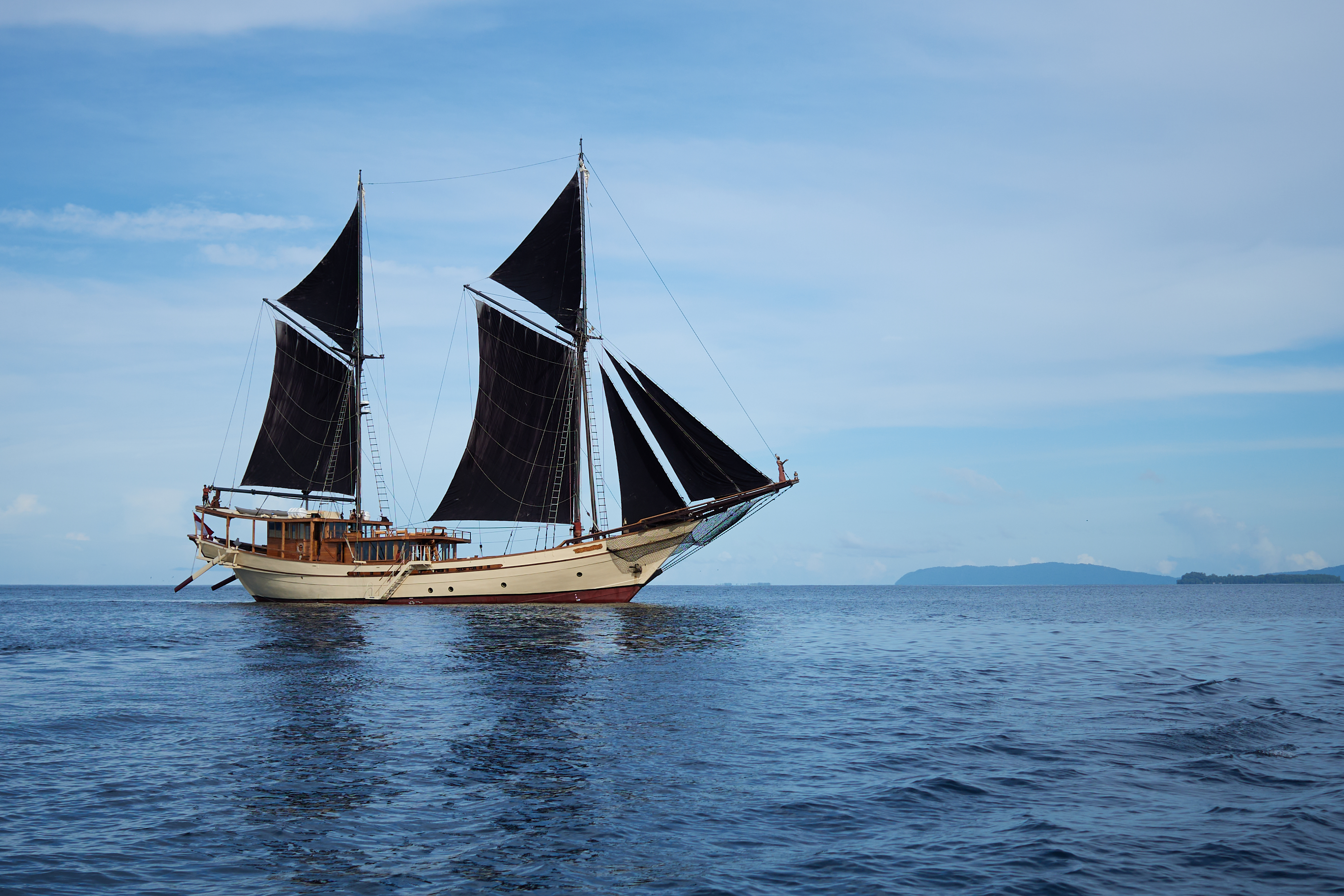
A handcrafted phinisi does not make the whale shark encounter more real. The whale shark does that on its own. What the yacht provides is grace around the encounter: access, comfort, privacy, patience, and the ability to move through Papua without reducing it to a single wildlife photograph.
A Suggested Cendrawasih Bay Yacht Rhythm
A well paced journey should begin with the bay itself. Arrive, slow down, understand the scale of where you are. The first whale shark morning should not feel rushed. The crew coordinates with the bagan fishermen, the guide briefs the group, and guests enter the water only when conditions and animal behavior are appropriate.
After the encounter, the day can open outward. Snorkel a reef. Visit an island. Listen to fishermen explain the platform. Rest aboard. Return to the water only if it feels respectful and well managed. Another morning may bring another chance, or a different whale shark, or no whale shark at all. That uncertainty is part of the living nature of the bay.
The strongest itinerary leaves room for more than one attempt. It also leaves room for the unexpected: dolphins at a distance, a quiet village, a reef seen in perfect light, or a sunset that makes the whole bay feel endless.
Who This Journey Is For
Cendrawasih Bay is for travelers who want rarity without noise. It is for families who want a wildlife encounter that does not require technical diving. It is for photographers who understand patience. It is for conservation minded travelers who want the context behind the animal. It is for luxury guests who have seen famous places and now want something stranger, gentler, and farther from the usual map.
It is also for people who understand that wildlife travel is most powerful when it remains partly uncertain. A whale shark may appear. It may stay. It may turn away. The bay does not owe you a performance. That is exactly why the encounter feels sacred when it happens.
The Bay Where Giants Learned the Rhythm of Fishermen
Cendrawasih Bay is one of Indonesia’s most remarkable marine destinations because it holds a relationship found in very few places on earth: whale sharks gathering around traditional fishing platforms, local fishermen working above, and travelers entering the water carefully beside the world’s largest fish.
It is a place of science, but also of feeling. Research tells us about residency, foraging, juvenile males, satellite tracks, and habitat use. The fishermen show us the daily rhythm of the bagans. The whale shark brings all of it into one quiet moment beneath the surface.
For anyone searching Cendrawasih Bay whale sharks or planning a Papua yacht expedition, this is the reason to go: not simply to swim with a giant, but to understand the seascape that brings it close.
With Silolona Sojourns, Cendrawasih Bay becomes a private expedition into one of Indonesia’s most extraordinary marine worlds. You can wake near traditional bagan platforms, enter calm Papuan water beside whale sharks, meet the fishermen whose daily work shapes the encounter, and return to the quiet elegance of a handcrafted phinisi yacht. For travelers who want wildlife, cultural context, comfort, and responsible access in one seamless journey, Silolona offers a rare way to experience Cendrawasih Bay with patience, privacy, and respect.


References
Setyawan E, et al. Insights into the population demographics and residency of whale sharks in Indonesia’s Bird’s Head Seascape. Frontiers in Marine Science. 2025. doi:10.3389/fmars.2025.1607027
Meyers MM, et al. Movement patterns of whale sharks in Cenderawasih Bay, Indonesia, revealed through long term satellite tagging. Pacific Conservation Biology. 2020. doi:10.1071/PC19034
Himawan MR, Tania C, Noor BA, Wijonarno A, Subhan B, Madduppa H. Analysis of two whale shark watching destinations in Indonesia: Status and ecotourism potential. Biodiversitas. 2019;20(2):451-463. doi:10.13057/biodiv/d200219
Kementerian Kehutanan Republik Indonesia. Profil TN Teluk Cenderawasih. Official conservation area profile.
WWF Indonesia. WWF starts whale shark monitoring and research program in Teluk Cenderawasih.
Silolona Sojourns. Cenderawasih Bay Whale Shark Charter. Official Silolona Sojourns destination page.