

Designing a Bespoke Itinerary: How Silolona Crafts a Journey That Doesn't Exist Yet
A guest once arrived at the planning conversation with a single sentence: she wanted the opposite of what everyone does. No Padar at sunrise with forty other boats in the bay, no dragon trail at the hour the day trippers arrive, none of the photographs she had already seen a thousand times. What she got, three months later, was a bespoke yacht itinerary across Indonesia that began in the Banda Sea instead of Komodo, anchored two nights off an island most charters never name, and was rerouted on the fifth morning because the expedition leader heard the current had turned at a reef he wanted her to dive. That is the work behind a custom Silolona voyage, and most of it happens long before you step aboard.
Almost every operator in Indonesia offers a tailor-made itinerary. The difference shows in what the phrase actually contains: whether anyone is genuinely redrawing the map for you, or moving you along a fixed route with your name on the cover. A real bespoke journey is an act of design, and design takes expertise, time, and a crew who know the water well enough to improvise within it.
It starts with a conversation about what you want to feel, not where you want to go
The first consultation rarely begins with a map. It begins with questions that sound almost personal. Who is travelling, and how do they relate to each other? Are there children, or grandparents, or a mix of divers and people who would rather read on deck? What does a good day feel like to you: a dawn hike and three dives, or one slow snorkel and a long lunch that drifts into the afternoon? Have you done this before, and if so, what did you wish had been different?
Out of those answers, a shape begins to form. Someone chasing privacy and stillness is routed differently from someone chasing biodiversity, and both are routed differently from a family marking a milestone. The planning team works backward from the feeling you describe to the regions, the season, and the vessel that deliver it. Indonesia's geography forces real choices here, and honesty about them is part of the service. Komodo, Flores, and Alor sail well from roughly May to September; Raja Ampat, the Banda Sea, and the Papua routes belong to the months from October to April. A request to combine the wrong regions in the wrong month gets discussed and reshaped before anything is promised, rather than quietly accepted and then fumbled at sea.
The choice of boat is part of the same conversation. Silolona carries up to ten guests across five staterooms with seventeen crew; Si Datu Bua takes up to six in three king suites with fifteen crew, a more intimate proposition. For a larger group wanting eight cabins, the two can sail in tandem. None of this is upsell. It is matching the instrument to the music you have asked for.
Timing then becomes its own quiet negotiation. The best access, a particular village welcome, a chef who can source a regional ingredient, an anchorage that suits the moon and tide of your specific dates, is not infinite or on demand. The earlier the conversation starts, the more of it can be built around you rather than around the calendar. Guests who plan well ahead are not paying for a longer wait; they are buying the room to design something exact.
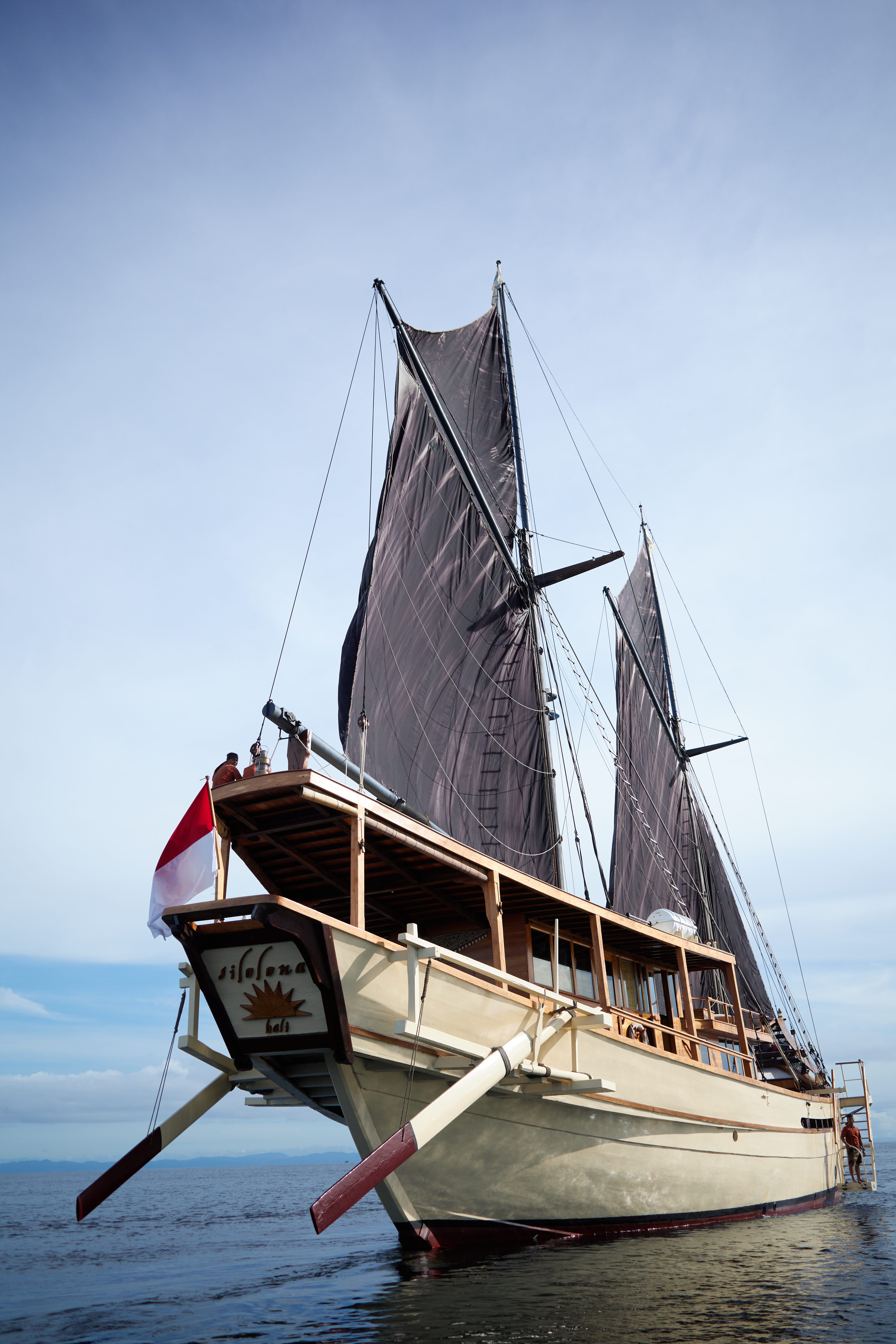
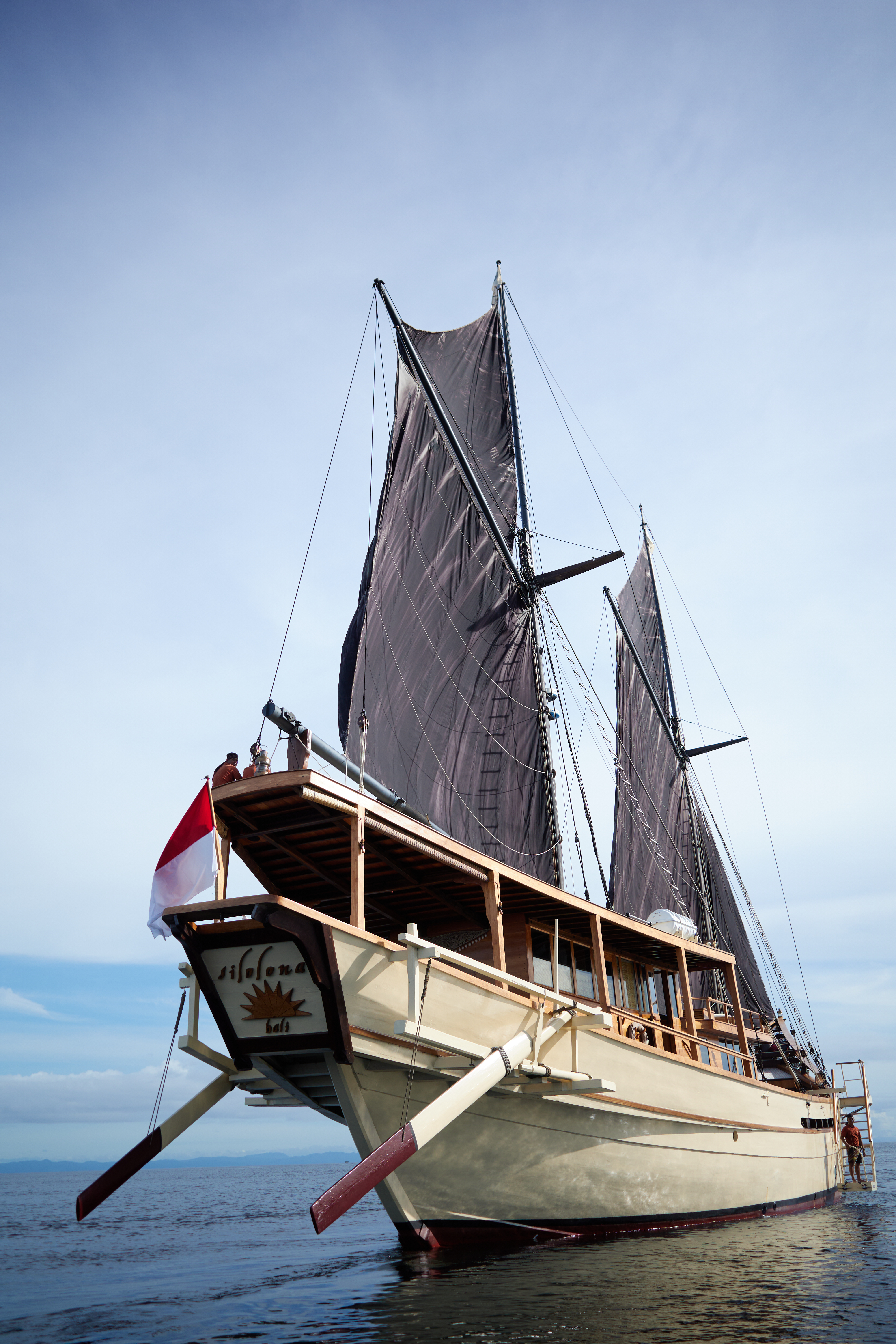
The crew design the route, because they are the ones who read the sea
Here is where bespoke stops being a sales promise and becomes a craft. The people shaping your route are not only planners at desks in Bali. They are the captains and expedition leaders who have spent their working lives in these waters.
Captain Kamto carries an extensive knowledge of Indonesian waters that no chart fully holds: which bay shelters from which wind, where a current runs clean on a particular tide, which anchorage empties out by late afternoon. When a guest asks for solitude, that knowledge is what produces it. Goris Atawuwur, from Flores, dives and photographs these reefs and was part of the team that built Silolona; ask him for the reef that rewards patience over spectacle and he has an answer drawn from decades, not a guidebook. The expedition leader, English speaking and reading conditions daily, is the person who will quietly suggest swapping tomorrow's plan because something better has opened up. A route designed with this input is structurally different from one drawn purely from a brochure. It anticipates the sea instead of fighting it.
Cultural access works the same way, and it cannot be improvised on the day. A visit to a weaving village, a meal built around Bandanese cooking in the Spice Islands or Manadonese flavours in northern Sulawesi, time with people on their own terms rather than as a photo stop: these are arranged months ahead, through relationships the company has held for years. The bread and pastry come out of the galley each morning regardless. The deeper access is booked into the calendar before you have packed a bag.
What "bespoke" actually buys you, in practice
Strip away the language and a custom journey delivers four concrete things. The first is a route that exists only for you, drawn from your answers rather than a catalogue, including the highly exclusive itineraries that sit well outside any sample route. The second is pacing you control: the charter includes a generous cruising allowance of around fifty nautical miles a day, enough to range widely, and the discipline to sit still when sitting still is the better call. The third is genuine flexibility once you are aboard. Because the vessel is wholly yours, with its own dive gear, expedition leader, kitchen, permits, and airport transfers already handled, the plan can change on the fifth morning without anyone scrambling. The fourth is the part guests notice last and remember longest: a crew large enough, and long enough in their roles, to absorb a change of plan as if it were the plan all along.
Return to the guest who wanted the opposite of what everyone does. Her week worked not because someone wrote "bespoke" on a proposal, but because Kamto knew which anchorages would be empty, because the village welcome had been arranged in spring for an autumn arrival, and because when the current turned, the people around her recognised the opportunity and took it. The flexibility looked effortless. It was the visible surface of months of quiet expertise.
The small things compounded. Her morning coffee arrived on deck before the sun cleared the ridgeline because the steward had learned by the second day when she woke. The reef the expedition leader rerouted toward held a manta she would not stop talking about at dinner, where the kitchen had quietly worked her one dietary line into every course without being asked twice. By the end she had stopped checking the plan at all, which is the surest sign a journey has been designed well: the machinery disappears, and only the days remain.
A custom voyage is a study in restraint and preparation in equal measure. The freedom you feel on board, to change your mind, to stay another night, to chase a better reef, rests entirely on how much was thought through before you arrived. That is the real reward of the thing, though no one aboard would announce it: a journey shaped so precisely to you that it could belong to no one else, sailing as if it had always existed.
WithSilolona Sojourns, a bespoke voyage is designed around your people, your pace, and the access only long-held relationships can open, then sailed by a crew who can redraw the day when the sea offers something better. Trace the dragon waters ofKomodo, the coral walls ofRaja Ampat, or the old spice route through theBanda Islands aboardSilolona and Si Datu Bua, each route drawn from scratch rather than pulled from a shelf. When you are ready to design a journey that does not exist yet,enquire and let the planning begin.
References
Cinner JE, Huchery C, MacNeil MA, et al. Bright spots among the world's coral reefs. Nature. 2016;535(7612):416-419. doi:10.1038/nature18607
UNESCO. Pinisi, art of boatbuilding in South Sulawesi. Available from: https://ich.unesco.org/en/RL/pinisi-art-of-boatbuilding-in-south-sulawesi-01197