

Designing a Bespoke Phinisi Itinerary: Who Plans It, What It Costs, What We've Said No To
Alberto, the cruise director, keeps a note from a guest who signed off as M.M from Ireland. She had just spent a New Year aboard Silolona and wrote about what she remembered: the diving, an afternoon at Mantus Juntas and Sianok, the hike up to a waterfall, the massages from Kadek that left her serene. What she described was not a package. It was a route assembled around her, day by day, by people who had been reading the sea and her mood in equal measure. That note is a useful place to start, because the question most serious travelers ask before a private charter is rarely about the boat. It is about who actually plans the thing. Designing a personalized yacht charter itinerary is a craft with a division of labour behind it, and understanding that division is the difference between a holiday and an expedition shaped to your interests. This is what it looks like from the inside: who advises on the itinerary, what drives the price, and the requests we have turned down.
The design begins with a conversation, not a catalogue
There is no menu. The first exchange with your broker or with the Bali office is a set of questions, and the good ones are uncomfortable: What do you want to feel at the end of two weeks? Who is travelling, and what do they secretly dread? Is this a diving trip that tolerates culture, or a cultural trip that tolerates diving? A family of ten spanning three generations wants something different from four friends who dive to 40 metres and want the day built around it.
From there the route moves through six hands. Your broker frames the commercial shape and manages expectations. The yacht charter manager in Bali translates desire into logistics: permits, provisioning windows, the realities of moving a 50-metre vessel through the archipelago. The captain, Bambang or Kamto depending on which vessel you charter, holds the veto on anything the sea will not allow. Both know Indonesian waters in the way that only decades of running them teach. The cruise director, Alberto, choreographs the days once you are aboard, reading the group and adjusting the tempo. Goris Atawuwur, a Flores native who was on the original team that built Silolona and has since spent more than twenty years aboard, now leads the trips and shapes what happens below the surface. And then there is you, whose interests set the brief but whose expectations have to meet what the season and the reef will actually deliver. Six people, one route. The itinerary is the negotiated outcome of all six.
A journey being designed now: the Lost Sharks expedition
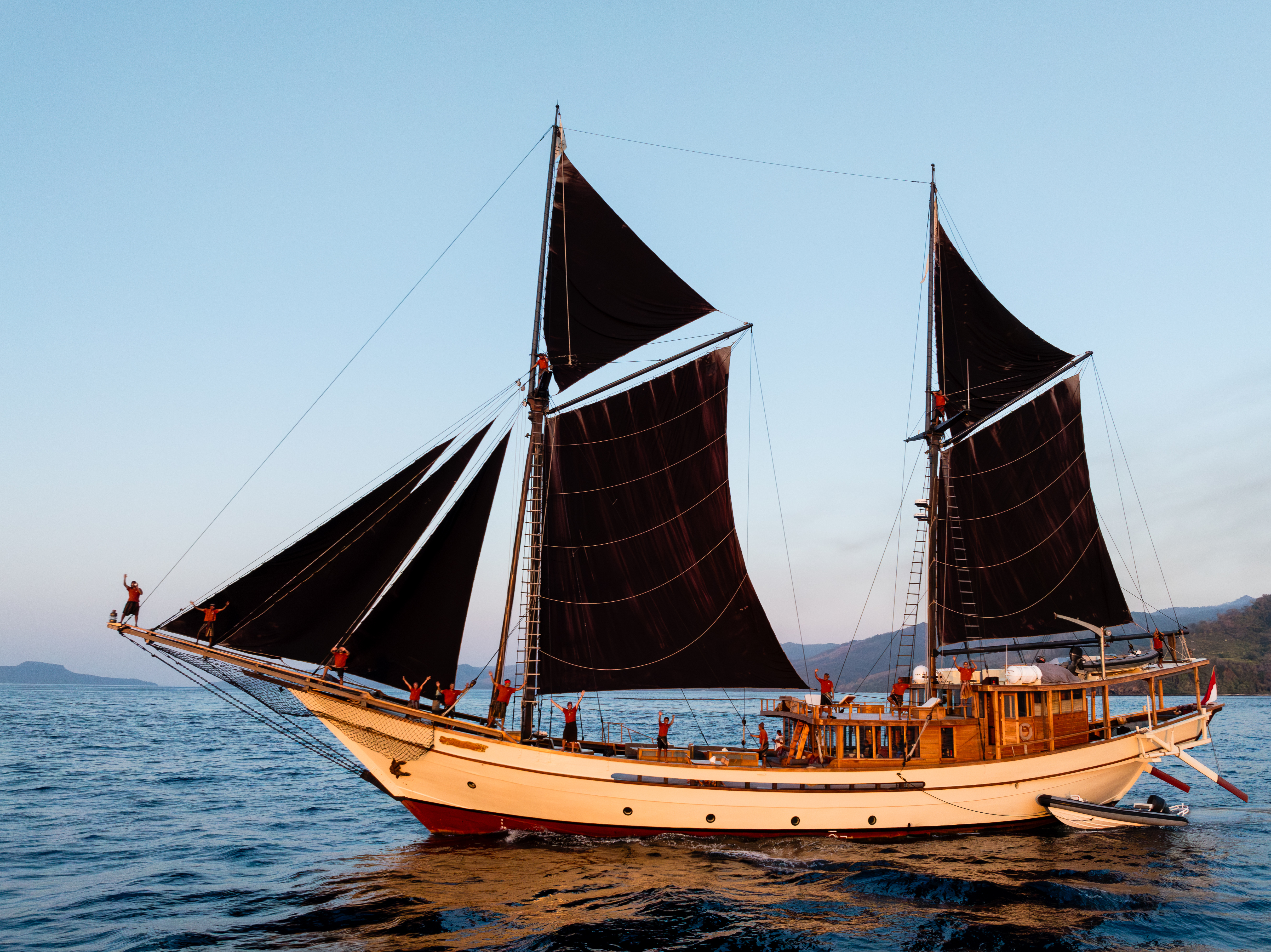
In 2027, Silolona will sail an expedition built around the Lost Sharks work, the ongoing effort to document and protect the poorly known shark and ray species of eastern Indonesia. The itinerary is being designed in collaboration with the guests joining it, shaped around their interests, the wildlife they hope to encounter, and the scientific opportunity in front of them. That means sailing where the science is rather than where the postcard reefs are: days that run on survey time, guests in the water alongside people doing real fieldwork, anchorages chosen for what might be recorded rather than what will photograph well at golden hour.
This is the part of bespoke design that rarely survives a standard itinerary. A voyage built around leopard shark rewilding or manta surveys, the kind of work Silolona has long supported through partners including Re:wild and ReShark and the marine biologist Dr Mark Erdmann, does not look like a conventional Raja Ampat charter. It looks closer to a research platform that happens to serve exceptional food and sleep ten people in comfort. The guests who ask for this are not buying scenery. They are buying proximity to something rare, and access to people who know where to find it.
What an all-inclusive charter actually covers
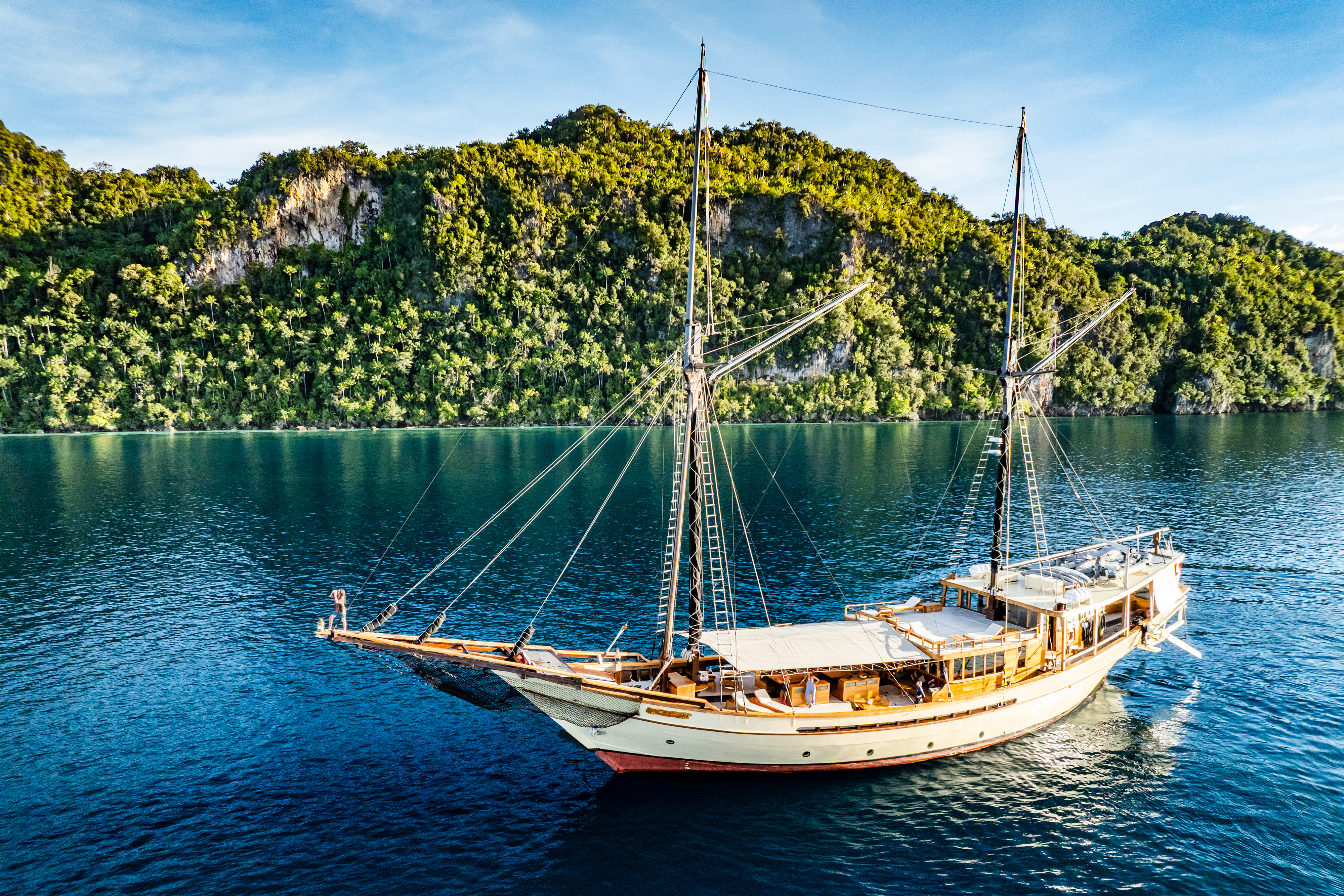
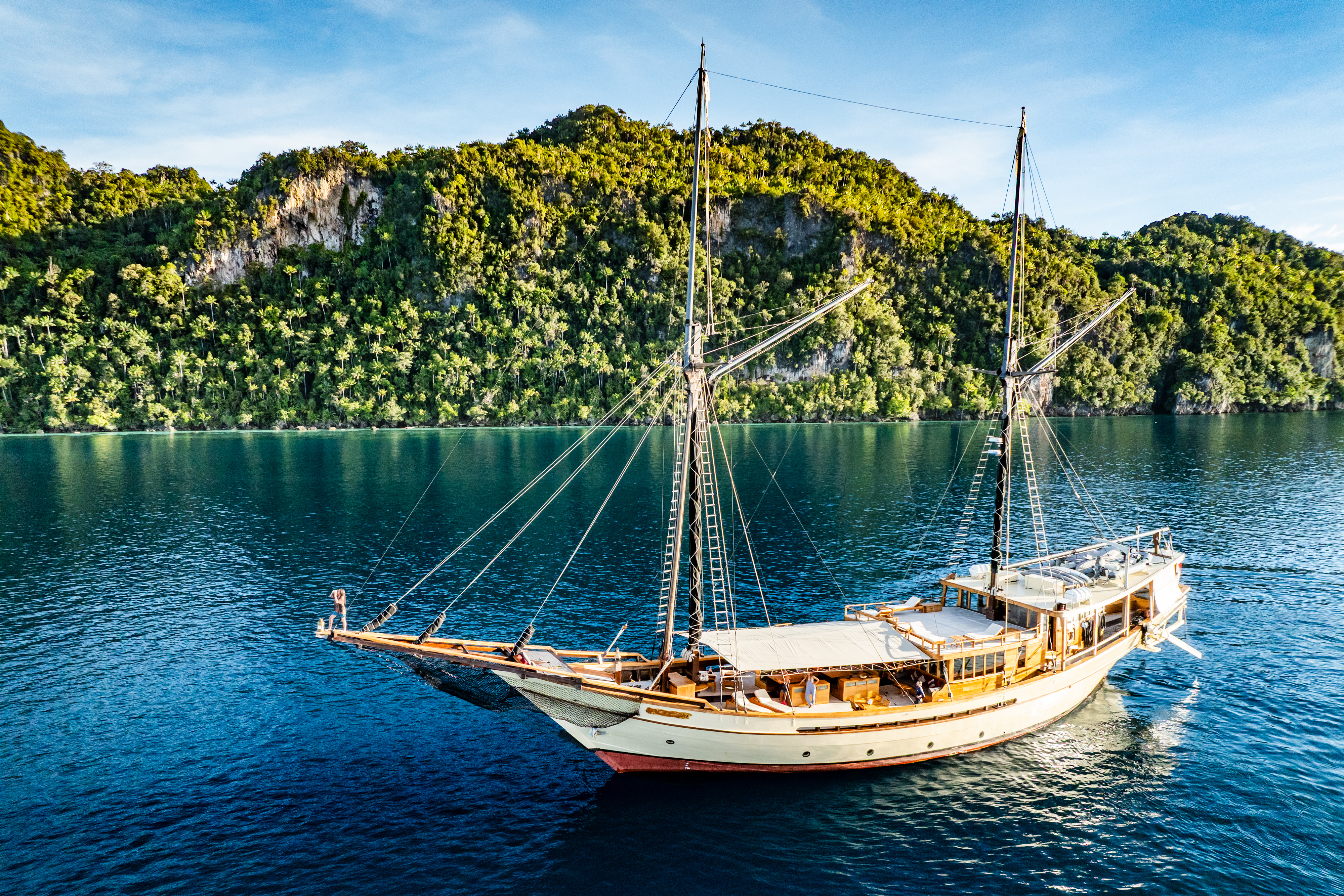
Chartering both vessels in tandem, Silolona and Si Datu Bua sailing together, sits at the upper end of private travel anywhere in the world. That is worth explaining properly rather than leaving as an abstraction, because the structure behind it is unusual and most of what it covers is invisible from the outside.
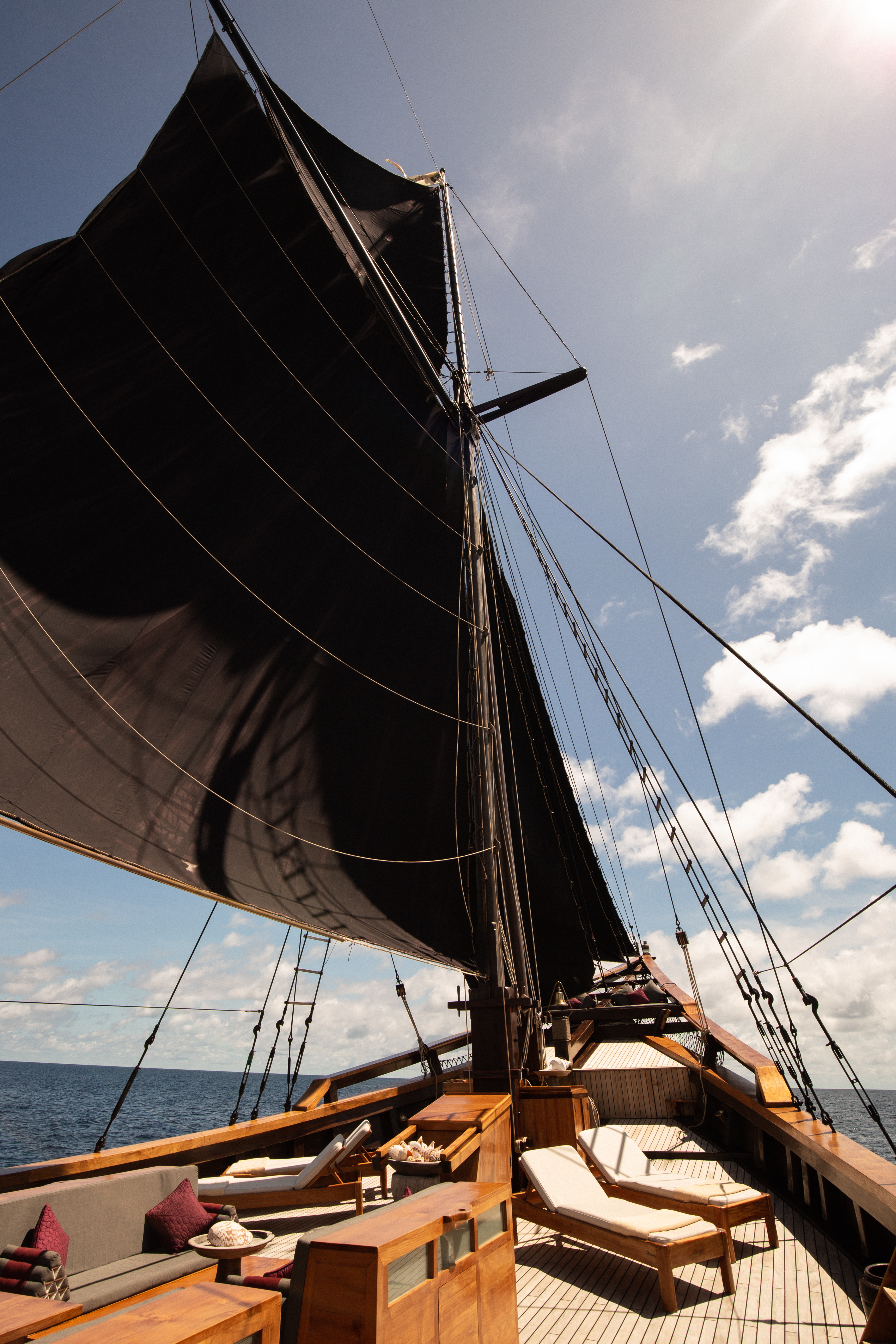
Start with the crew ratio. Silolona carries 17 crew for up to 10 guests; Si Datu Bua carries 15 for up to 6. Running a wooden expedition vessel safely in remote water requires that many hands: engineers, a PADI dive instructor, a bosun, deckhands, chefs, stewards, and a captain who has spent a career in these straits. The phinisi tradition these vessels descend from is itself recognised by UNESCO as intangible cultural heritage of South Sulawesi.³ Then provisioning. Once the vessel leaves for a remote route, there is no restocking along the way: everything you eat and drink for the voyage is planned, sourced, and loaded in advance, including the bread and pastry baked fresh on board each morning. Fuel for a vessel of this size moving across the archipelago is a serious line. Park fees and cruising permits are real and non-trivial, particularly in Raja Ampat and the Banda Sea. And a portion goes where we think it should: to conservation contributions, the annual support for Raja Ampat marine park protection through the Misool Foundation, the survey expeditions, and the fieldwork that keeps these waters worth sailing into. The reefs of eastern Indonesia sit within a region researchers have identified as harbouring rare conservation success against the global trend of decline,¹ which is part of why the access is worth protecting.
Charters are all-inclusive by design. Meals, the full crew, the expedition leader, watersports and dive gear, airport transfers, permits, and satellite connectivity are covered, so nothing meaningful is billed separately once you are aboard. Alcohol, flights, taxes, dive certification, and gratuities sit outside it. What that structure removes is the running arithmetic of a trip: no daily decisions about what costs extra, no reckoning at the end. The rest is discussed directly, because a journey of this kind is arranged in conversation rather than read off a page.
The requests we turn down
Flexibility that has no floor is not service, it is servility, and it reads that way to the people who most value their time. So it is worth being plain about what we decline.
We do not chase wildlife guarantees. If a guest wants a contract that promises manta rays on a given morning, we cannot write it, and we say so before the deposit rather than after. We will not compress a route into a checklist that has the vessel steaming through the night, night after night, to tick off anchorages, because that is neither safe nor the point. We do not sail into weather the captain has called against, regardless of who is asking or what they are paying.
And there are refusals on conservation grounds that we make without apology. Requests to feed or handle wildlife are declined, whatever the reason behind them. No rule on a page requires it. We decline because the reefs and the animals of eastern Indonesia are not a set to be arranged, and because the survey partners we work with have spent years earning the trust of these places. That trust is not ours to spend. A firm no, explained without piety, is one of the clearest signals a serious traveller gets that an operation has standards it will not sell.
What you are really commissioning
An itinerary built this way is a small piece of infrastructure: six people, months of planning, a vessel, a crew, a set of permits, and a route that exists for you and dissolves when you disembark. The best of them, end with the guest more rested and more curious than when they boarded, having seen something they could not have found on their own and would not have been allowed to spoil. That is the whole proposition: a way into the archipelago that a handful of people spend their lives keeping open, rather than simply a boat you rent.
WithSilolona Sojourns, the itinerary is the product, and it is assembled by hand. Whether you are drawn to the reefs ofRaja Ampat, the nutmeg gardens and lava flow reefs ofBanda, or the dragons and dive sites ofKomodo, whose islands scientists have flagged as critical refuges for the world's largest lizard,2, and whether you sail aboard one vessel or takeSilolona and Si Datu Bua in tandem, the design begins with a conversation about what you actually want. When you are ready to start that conversation,enquire and we will tell you honestly what your journey can and cannot be.
References
Cinner JE, Huchery C, MacNeil MA, et al. Bright spots among the world's coral reefs. Nature. 2016;535(7612):416-419. doi:10.1038/nature18607.
Jones AR, Jessop TS, Ariefiandy A, et al. Identifying island safe havens to prevent the extinction of the world's largest lizard from global warming. Ecol Evol. 2020;10(19):10492-10507. doi:10.1002/ece3.6705.
UNESCO. Pinisi, art of boatbuilding in South Sulawesi. Representative List of the Intangible Cultural Heritage of Humanity. 2017. Available from: https://ich.unesco.org/en/RL/pinisi-art-of-boatbuilding-in-south-sulawesi-01197.