

Designing Your Bespoke Phinisi Itinerary: How a Silolona Voyage Is Built Around You
A guest from Ireland, M.M., ended her voyage last December with a request that read less like a booking form and more like a wish list: diving, a stop at Mantus Juntas, the Sianok gorge, a hike to a waterfall. "An eclectic packed itinerary," she called it. By the time she disembarked in the new year she wrote that the whole party was "fully relaxed and charged up to take on all the adventures of 2026." That gap, between a list of disconnected wishes and a week that flows as if it were always meant to, is the work. It is the least visible part of the work, and the part that takes the longest.
Designing a genuinely bespoke itinerary takes more than a willing tone in the sales call. It is a sequence of decisions made by named people who know the water, the weather, and the difference between what a brochure says and what a place actually delivers in the second week of April. What follows is how a voyage aboard Silolona is actually built, from the first email to the morning you step aboard.
The first conversation is about you, not the boat
Most charter enquiries begin with a question about availability and price. The useful conversation begins somewhere else: what do you want this week to feel like, and who is it for. A multigenerational family with three restless teenagers needs a different rhythm than two couples chasing wide-angle reef photography, and both differ again from a group whose real interest is culture ashore.
The Lost Sharks of Raja Ampat expedition, sailing in 2027, shows how this works in practice. Built with Cookson Adventures and hosted by conservation scientists from ReShark, it is being designed in collaboration with the guests joining it, shaped around their interests, the wildlife they hope to encounter, and the scientific opportunity in front of them. The starting point was not a route. It was a set of guest priorities: hands-on shark tagging, real fieldwork, and enough unhurried diving and cultural time that the week never feels like a lecture. The route follows from those priorities rather than framing them.
Cruising grounds are chosen against the calendar, not the wish list
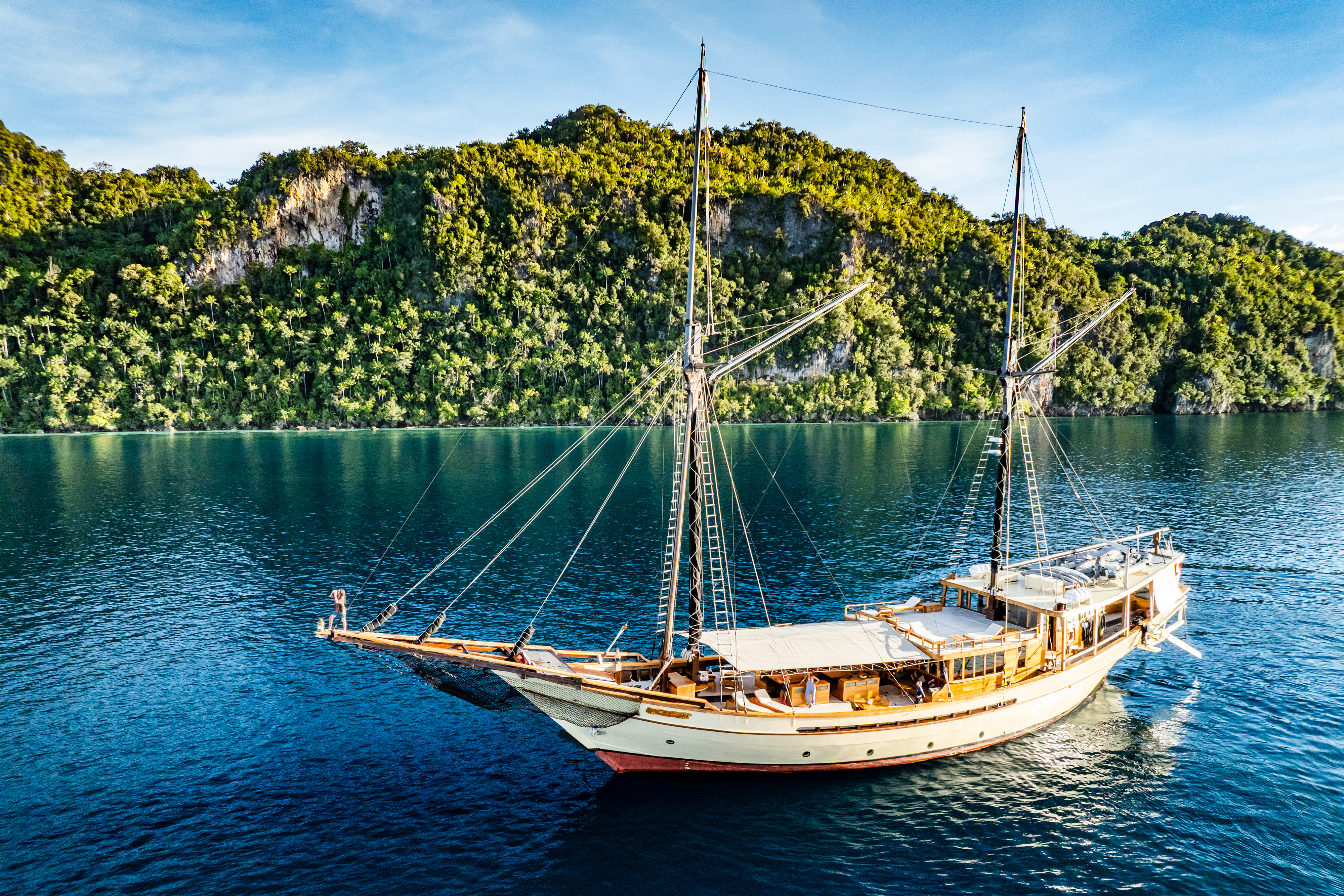
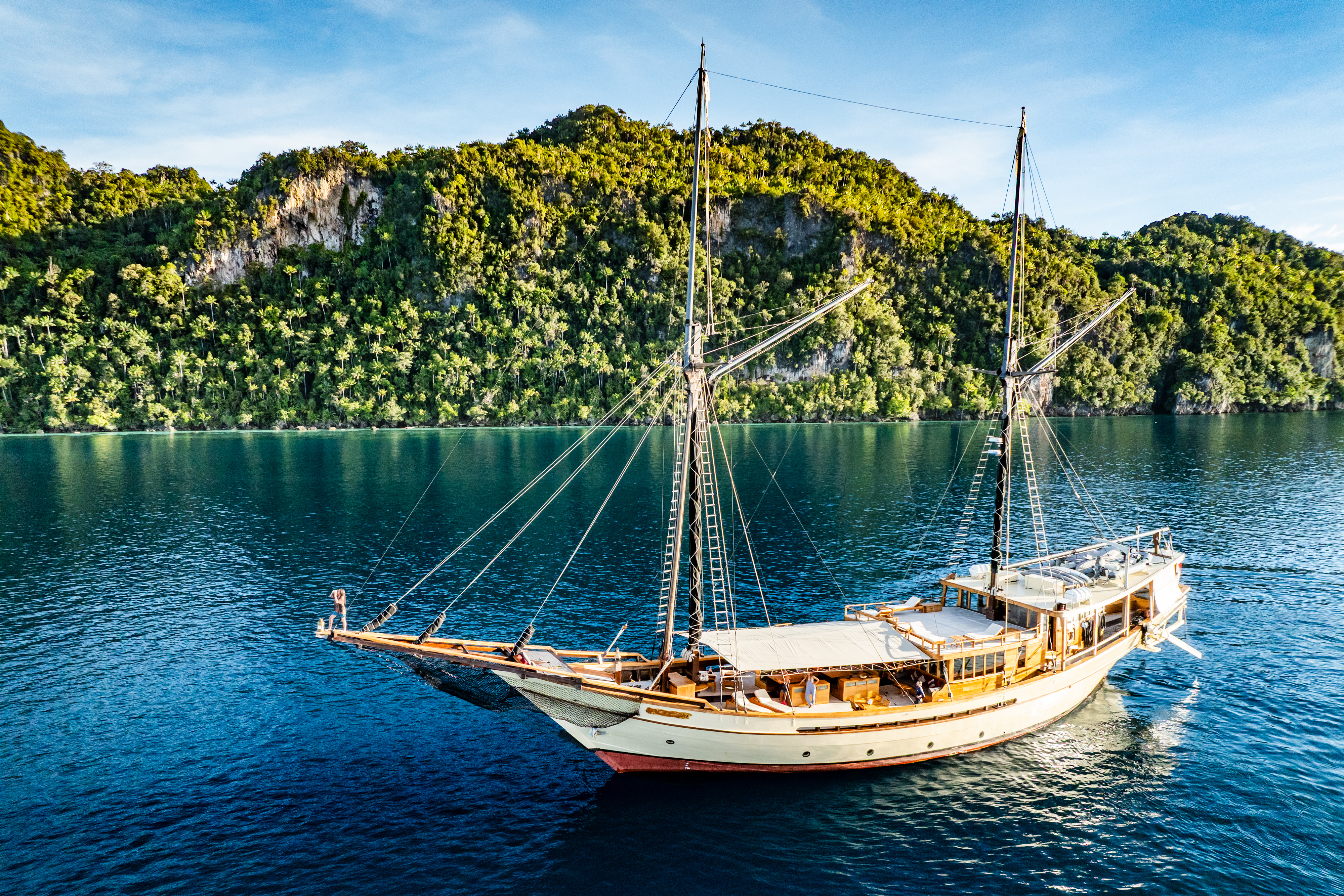
Once your interests are clear, the question becomes geography and season. Silolona and Si Datu Bua sail five principal regions: Raja Ampat, Komodo, Banda, Flores, and Sumba. Each has a window when it is at its best. Komodo, Flores, and Alor read strongest from May through September. Raja Ampat and Banda come into their own from October through April. These are working guidelines drawn from decades on the water, not rigid promises, because currents, plankton, and manta behaviour do not consult a calendar.
The design skill lies in matching your travel dates to the region that will actually reward them, then declining the regions that will not. An honest planner will tell you when the month you have chosen argues against the destination you had in mind, and propose the one that fits instead. That restraint is the difference between a route that photographs well on paper and a week that delivers in the water.
The route is drafted, then pressure-tested by people who sail it
With region and season set, a draft route takes shape: anchorages, dive sites, village visits, the hike to the waterfall, the pearl farm, the afternoon left deliberately empty. Then it goes to the people who will run it. Captain Bambang and Captain Kamto, both from East Java, carry extensive knowledge of Indonesian waters between them, and a draft that looks elegant on a chart often meets a quieter correction from the bridge. This passage is better sailed at dawn, that bay is exposed to the prevailing swell in this month, this village welcomes visitors more warmly on a different day.
Dive planning gets the same treatment. Goris Atawuwur, from Flores, was part of the original team that built Silolona and spent more than twenty years aboard as a dive instructor before taking over as trip leader. He knows which sites hold mantas when the current runs a certain way. His read on a reef carries the weight of years rather than the confidence of a guidebook; it is the accumulated pattern of someone who has watched these waters change through the seasons and returned to the same sites often enough to know their moods. A route survives contact with this crew or it gets rewritten, and the rewriting is where the expertise lives. Guests rarely see this stage, which is precisely the point: the polish arrives before you do.
Onboard life is designed with the same care as the route
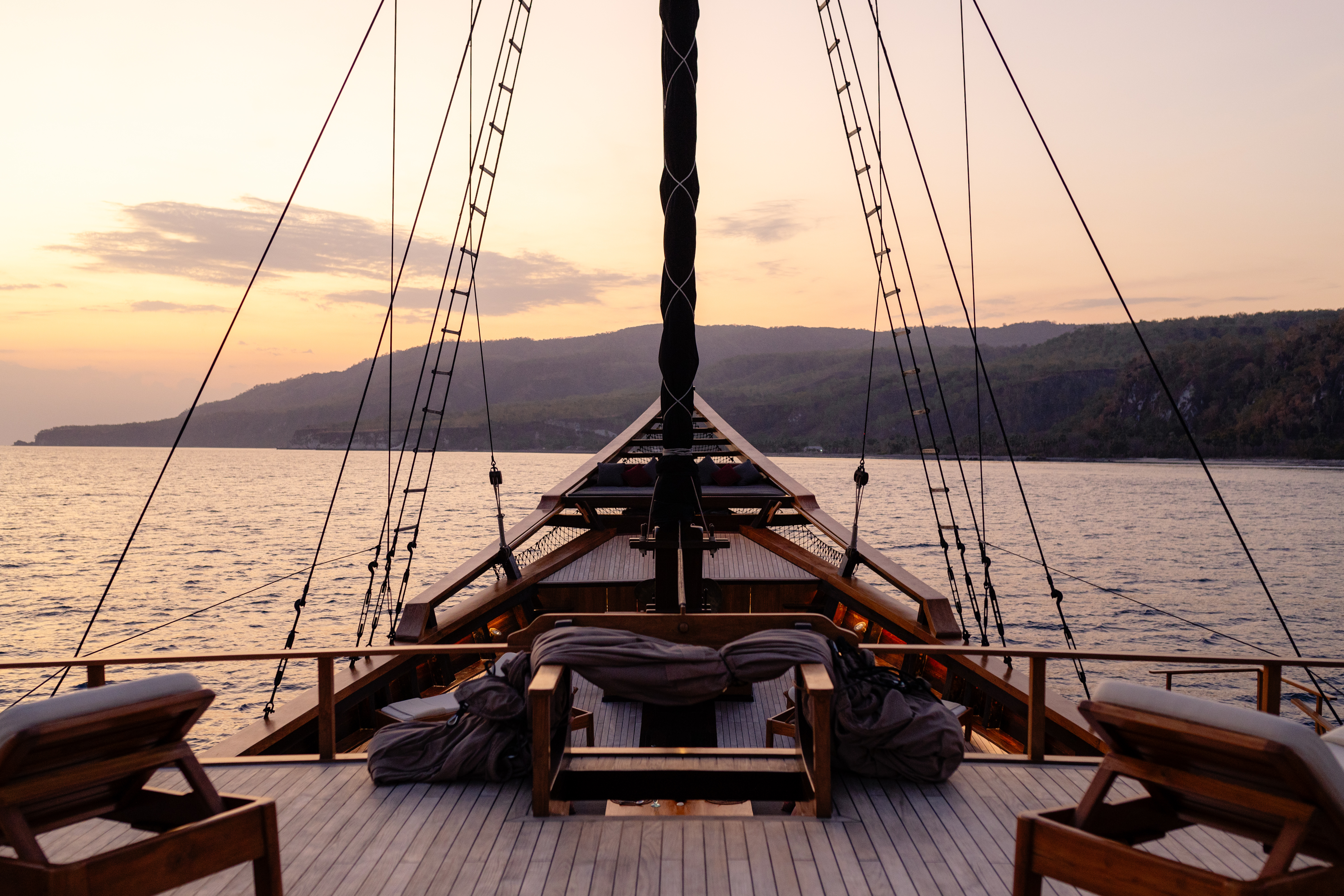
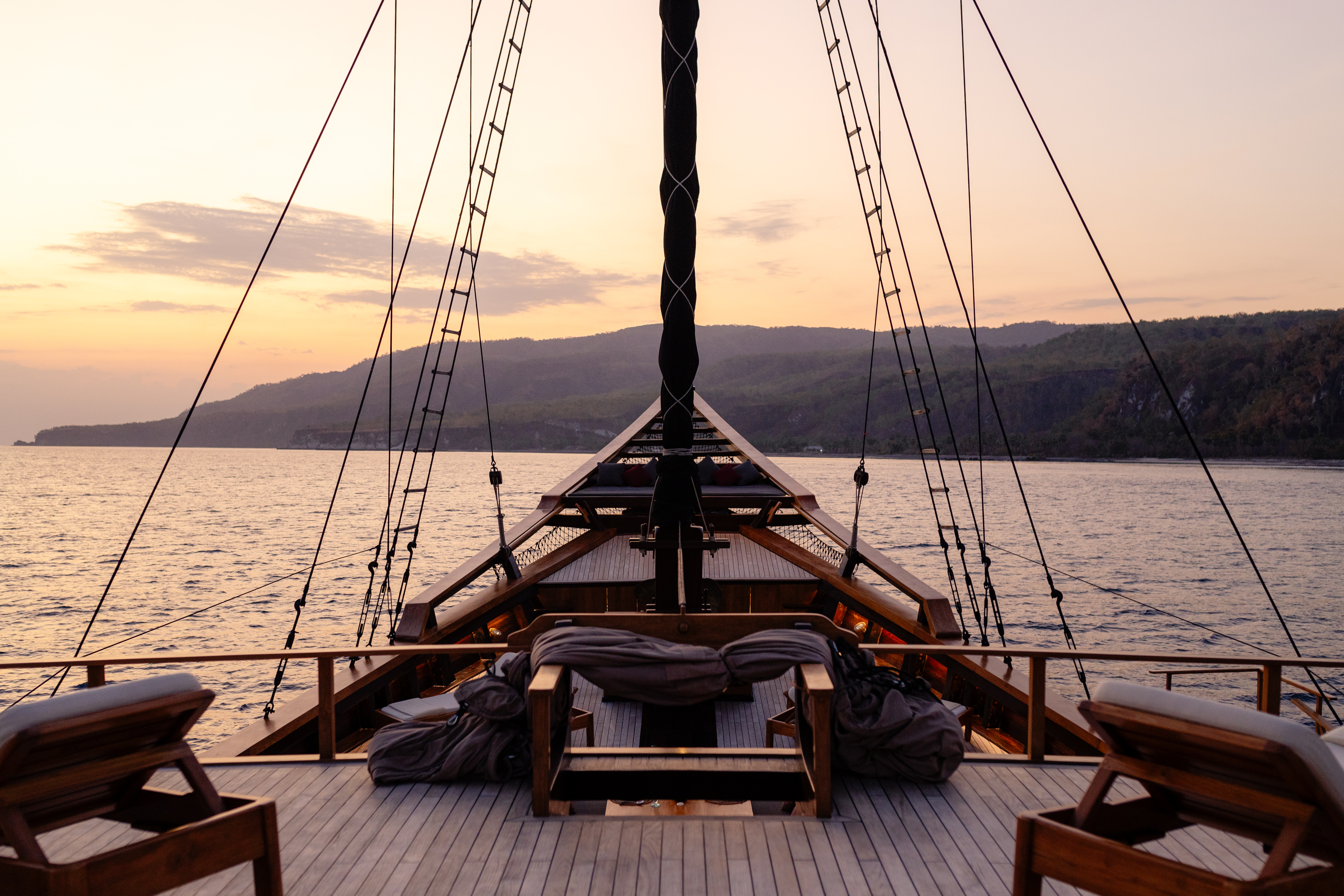
A bespoke itinerary lives as much in the shape of the day as in where the anchor drops. Meals aboard are prepared fresh, Asian, fusion, and Western, with breads and pastries made on board and menus that lean into wherever you happen to be: Bandanese flavours in Banda, Manadonese dishes off North Sulawesi, the day's catch turned into sashimi at sunset. Chef Ketut Kusumawardana, from Buleleng in Bali, specialises in the desserts and pastry that tend to become the quiet highlight of the week. This, too, is a design choice, calibrated to your table rather than a fixed catering plan, and it is the kind of detail a group remembers long after the dive log has been filed away.
The register of the week is yours to set. M.M's group came ashore for a gorge and a waterfall by day and came back to the boat for massage by Kadek, whose hands, in her words, left them serene. Diving, hiking, culture, stillness: a well-built itinerary holds all four in a rhythm that suits the specific people aboard, then flexes when the group's mood shifts mid-voyage. On these two vessels, seventeen crew serve up to ten guests aboard Silolona, and fifteen serve up to six aboard Si Datu Bua, a ratio that exists precisely so the plan can bend without breaking.
The final route stays open on purpose
The finished itinerary is detailed, but it is not sealed. The best weeks leave room for the encounter nobody planned: a pod of dolphins on the crossing, a village festival that happens to fall on your passing day, a reef so good you decide to dive it twice and drop the afternoon's second stop. A rigid schedule cannot absorb these. A well-designed one is built to, which is why the plan you approve before departure and the week you actually live are close cousins rather than identical twins. The tandem option, both vessels sailing together for eight cabins in total, extends this same flexibility to larger groups who want to travel as one party without surrendering the intimacy that makes the experience work.
Done properly, a tailor-made itinerary is a sequence of judgements: your priorities first, then season, then a draft, then the crew's correction, then a day shaped around your table and your pace, and finally a route deliberately left open to what the sea decides to offer. Each of those judgements belongs to someone specific, and the same people make them voyage after voyage. That is what separates a designed journey from a printed one.
With Silolona Sojourns, the design of your voyage begins long before you step aboard and continues to adapt while you are at sea. Whether your instinct pulls you toward the reefs of Raja Ampat, the dragons and pink beaches of Komodo, or the colonial history of Banda in the old spice islands, the route is drawn around you and refined by the crew who will sail it. You can travel aboard Silolona and Si Datu Bua individually or in tandem, and when you are ready to begin the conversation, you are welcome to enquire and let the design begin.
References
Wilson MW, Sinaga DSR, Rahman A, et al. Population genetics of the endangered Indo-Pacific leopard shark reveals conservation units for a rewilding programme in Indonesia. Front Mar Sci. 2024;11:1362930. Available from: https://doi.org/10.3389/fmars.2024.1362930
Veron JEN, Devantier LM, Turak E, et al. Delineating the Coral Triangle. Galaxea J Coral Reef Stud. 2009;11(2):91-100. Available from: https://doi.org/10.3755/galaxea.11.91
UNESCO. Pinisi, art of boatbuilding in South Sulawesi. Representative List of the Intangible Cultural Heritage of Humanity. 2017. Available from: https://ich.unesco.org/en/RL/pinisi-art-of-boatbuilding-in-south-sulawesi-01197