

East Flores and the Savu Sea: The Route Silolona Calls Its Own
A Route Written in Fire, Cloth, and Open Sea
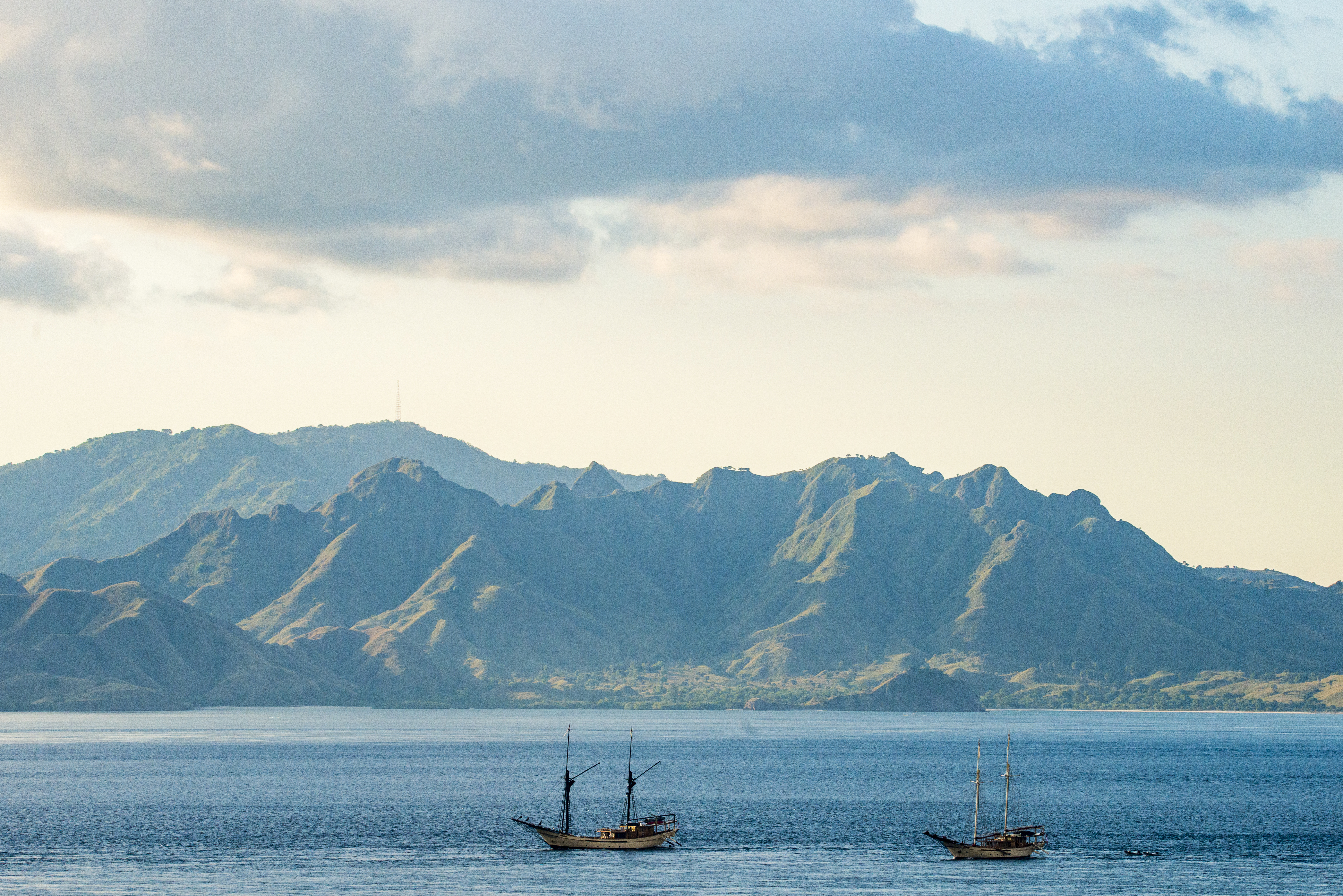
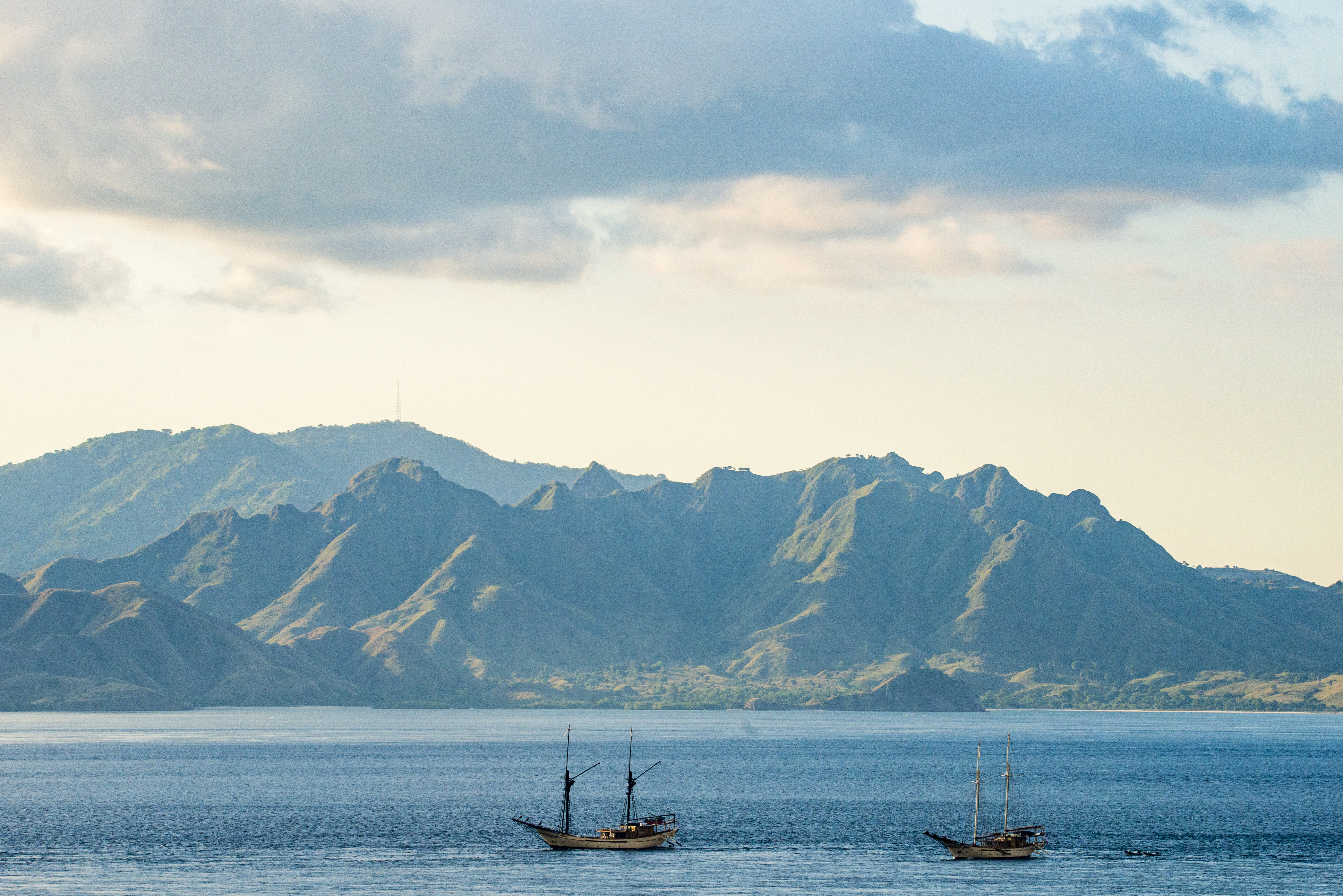
There are routes in Indonesia that feel discovered, and then there are routes that still feel like a private understanding between wind and water. East Flores and the Savu Sea belong to the second kind. Here, the islands do not arrive as famous names. They appear as ridgelines at dawn, smoking volcanoes in the distance, fishing harbors still waking, beaches with no footprints, and villages where cloth, stone, and ceremony carry older forms of memory.
An East Flores yacht journey is not a polished resort circuit. It is an expedition through Indonesia’s elemental east: Flores, Lembata, Alor, the Savu Sea, and, when the route extends wider, Sumba. The landscape is restless. Volcanoes rise out of the sea. Deep channels hold whales and dolphins. Reefs drop into blue water. Ikat textiles are still made by hand. Megalithic tombs still stand beside traditional houses. Tourism exists, but often only as a faint echo.
Silolona Sojourns publicly positions Flores and Alor as a May to September destination, describing the region as a place of rugged islands, dramatic volcanoes, traditional cultures, handwoven textiles, unique languages, and traditional farming and fishing communities. Its Savu Sea and Sumba route is framed around lesser known islands, ikat textiles, volcanic lakes, ancient traditions, smoldering volcanic landscapes, tranquil bays, and diving.
For travelers seeking a Savu Sea expedition Indonesia experience, this is the route that feels closest to the old idea of voyage. Not travel as transfer. Travel as arrival by degrees.
Day One: East of the Familiar Map
The first sensation is distance. Once you sail east of the better known gateways, the water changes mood. The itinerary no longer feels like a chain of attractions. It becomes a series of conditions: light, tide, wind, anchorage, current, village permission, visibility, weather over the mountains.
That is why this region belongs naturally to a private yacht. Roads do not define the journey. The sea does. A yacht can move between islands that ordinary itineraries barely connect. It can hold comfort in places where infrastructure thins out. It can wait for tide, shift anchorages, turn a weather day into a cultural morning, or let a reef be explored only when the water invites it.
Silolona describes itself as an Indonesia yacht charter specialist with 30 years of expertise, supporting yacht calls with authorities, provisioning, bunkering, customs, and bespoke cultural tours across the archipelago and Southeast Asia. In the Savu Sea, those details are not administrative background. They are what make remoteness feel graceful.
Kelimutu: Three Lakes, Three Colors, One Mountain of Spirits
No expedition through East Flores feels complete without Kelimutu. The volcano is famous for its three summit crater lakes, each known for distinct and changing colors. Indonesia’s official tourism guidance describes the three lakes as sharing the name Kelimutu, meaning “the boiling lake,” each with its own color and local name, and each believed locally to be connected with the resting place of departed souls.
To reach Kelimutu from a yacht route requires a land excursion, often beginning before dawn. The road climbs inland from the coast through villages and mountain air. By the time you arrive near the summit, the sea has disappeared behind you. The world becomes cloud, crater rim, mineral water, and the strange silence of altitude.
The science is as compelling as the mythology. A 2018 study in Bulletin of Volcanology examined the color and temperature of Kelimutu’s three crater lakes using about 30 years of Landsat satellite data, showing that color and temperature vary through time and can reveal volcanic lake processes.¹
For you, the experience is not only visual. It is a change in scale. One morning you are sailing through an island sea. The next, you are standing above volcanic lakes whose colors shift because the mountain is still chemically alive.
Batu Tara: The Volcano That Reminds You the Route Is Living
North of Lembata, Batu Tara rises from Komba Island like a dark pyramid in the sea. It has long held a place in expedition imagination because of its historic eruptive activity. Smithsonian’s Global Volcanism Program documents a long lasting eruption at Batu Tara with frequent Strombolian and Vulcanian activity reported through the mid 2010s, and later weekly volcanic activity reports note observations into 2022.
A responsible article should not promise that Batu Tara will be erupting when you pass. Volcanoes are not performances. What can be said is stronger: the island sits inside a route where geology is present, visible, and sometimes dramatic. The sea here has not forgotten fire.
From the deck of a yacht, Batu Tara becomes a landmark of caution and wonder. You do not need an eruption to feel its force. Its shape alone changes the horizon. It reminds you that this journey crosses one of Indonesia’s most geologically expressive regions, where land is still being written by pressure, heat, collapse, uplift, and time.
Lembata and the Human Memory of the Sea
The Savu Sea is not only a marine corridor. It is a cultural sea. Around Lembata and Solor, maritime communities have long held relationships with deep water, wind, fishing, and marine life. Scholarship on marine mammals in the Savu Sea describes the region as important for marine mammals in Indonesia, supporting at least 19 cetacean species and the dugong, with deep inter island channels and upwelling processes benefiting marine mammal populations.²
That same research discusses traditional whaling cultures in places such as Lamalera and Lamakera, including their social, spiritual, and conservation complexities. This is not a topic for casual spectacle. It requires context and sensitivity. A yacht expedition should approach such cultural landscapes with care, guided by local arrangements, conservation awareness, and respect for communities whose relationship with the sea is far older than tourism.
For travelers, this is where the route deepens. You are not moving through empty wilderness. You are crossing waters where ecology, livelihood, belief, and history have always met.
The Savu Sea: A Marine Corridor With Almost No Audience
The Savu Sea has a different kind of drama from Komodo or Raja Ampat. It does not need iconic limestone towers or famous dive names to feel important. Its power is oceanographic. Deep channels, upwelling, island chains, and seasonal movement make it one of eastern Indonesia’s meaningful marine spaces.
The same Savu Sea research identifies the region as supporting at least 19 cetacean species and the dugong, while highlighting inter island channels and upwellings as important to marine mammal populations.² For a yacht guest, that knowledge changes the way you look from the deck. A distant blow, a line of dolphins, or a sudden disturbance of water is not simply a lucky sighting. It belongs to a larger marine system.
Wildlife should never be guaranteed. But the possibility of whales and dolphins moving through these waters gives the route a particular electricity. You sail knowing the sea around you is not empty. It is inhabited in ways that may or may not reveal themselves.
Diving in the Eastern Lesser Sundas: Color, Current, and Solitude
The diving along an East Flores, Alor, and Savu Sea route is not built around mass market convenience. It is shaped by currents, volcanic structure, reef edges, and the immense variability of eastern Indonesian seas. Some sites may offer walls and coral gardens. Others may bring macro life, black sand, unusual critters, or cooler nutrient rich water. Around Alor, diving is especially known for contrast: current swept reefs in the Pantar Strait and macro focused bays where patient divers look for nudibranchs, frogfish, pipefish, and seahorses.
The greatest luxury here is often solitude. You may surface from a dive and see no other boats. You may snorkel a reef that feels unnamed, not because nobody knows it locally, but because global tourism has not yet turned it into a brand.
This is where Silolona’s route becomes distinctive. The company’s own Flores and Alor writing frames the journey around Alor, Lembata, and Savu, with dive expeditions, weaving encounters, whale migrations, and volcanic dawns as part of the voyage. The point is not to count the maximum number of dives. The point is to let the sea choose its best moments.
Alor: Ikat, Reefs, and the Discipline of Distance
Alor is where the expedition begins to feel intimate again. The islands are rugged, the channels strong, and the villages distinct in language and identity. Handwoven textiles are not merely decorative. They are social objects, artistic labor, and carriers of local meaning.
An Alor visit might bring you into contact with ikat weavers, depending on route, timing, permission, and community arrangement. The experience should be slow. You sit. You listen. You watch thread become pattern. You understand that the cloth is not simply a thing to buy, but a form of knowledge made visible.
Then, by afternoon, the same journey may return you to the water. Alor’s diving and snorkeling can move from reef drama to macro detail in a single day. That duality is what makes the region powerful. Above water, hands bind and dye thread. Below water, tiny animals hide in volcanic sand. Both require patience to see properly.
Sumba: Stones, Horses, and the Living Weight of Marapu
When the expedition extends toward Sumba, the tone changes again. Sumba is not a reef stop. It is a cultural landscape of wide grasslands, ancestral houses, handwoven textiles, horses, ritual calendars, and stone tombs that can sit at the center of village life rather than at the edge of archaeology.
Recent scholarship on Sumba’s megalithic tradition examines it from a sustainability perspective and identifies the ongoing importance of megalithic practices in contemporary Sumbanese life.³ That matters for travelers because the stones are not simply remnants. In many places, they remain connected to living social and ancestral systems.
Pasola, the famous mounted ritual contest of western Sumba, is often described by visitors as spectacle, but it is not merely entertainment. It is tied to Marapu belief, seasonal cycles, and community meaning. Recent Indonesian scholarship describes Pasola as part of Sumbanese Marapu cultural tradition and emphasizes its social and ritual significance.
For an ethical yacht expedition, timing around Pasola must be handled carefully. The festival follows local ritual calendars and varies by place and year. Attendance should be guided by local hosts and respectful etiquette. You are not there to consume danger or drama. You are there to understand why horses, land, ancestors, and season still move together.
The No Tourist Factor
There are places where luxury is created by exclusivity. In East Flores and the Savu Sea, exclusivity is created by distance. The absence of tourists is not a marketing effect. It is geographical reality. Many islands here sit outside the standard Indonesia itinerary. Some anchorages have no resorts. Some beaches have no vendors. Some reefs have no mooring buoys. Some villages receive visitors only occasionally, and only with proper arrangement.
This makes the journey feel rare, but it also demands responsibility. Remote does not mean empty. Quiet does not mean available. A beach may be used by local fishermen. A village may have protocols. A ceremony may not be for guests. A reef may be fragile precisely because it has not been pressured by traffic.
The best expedition does not act like discovery gives ownership. It acts like discovery creates duty.
Silolona’s Seasonal Logic
Silolona’s destination page places Flores and Alor in the May to September season, alongside Komodo, while Raja Ampat, Tribal Papua, Savu Sea and Sumba, Cenderawasih Bay, and Banda are presented under October to April on the same public destination overview. For an East Flores and Savu Sea article, the publish safe interpretation is this: the wider route is seasonal and must be planned around vessel schedule, wind, sea state, guest goals, and the specific balance between Flores, Alor, Savu, and Sumba.
That is important because the route is not one fixed cruise. East Flores, Alor, Savu Sea, and Sumba can be combined differently depending on month, conditions, and expedition design. A diving heavy itinerary may prioritize Alor and the eastern Lesser Sunda waters. A culture heavy route may extend deeper toward Sumba or specific weaving communities. A volcanic journal style voyage may emphasize Kelimutu, Lembata, Batu Tara, and remote anchorages.
The strongest luxury is not forcing the same route every time. It is knowing when the sea wants a different plan.
Why This Route Belongs to Silolona
Some yacht routes are popular because everyone can sell them. This route is different. East Flores and the Savu Sea require operational confidence, cultural sensitivity, local coordination, and comfort with emptiness. There may be no neighboring yacht. There may be no familiar marina. There may be no quick substitute if a plan changes. The journey works only when the operator understands both the beauty and the logistical weight of the region.
Silolona’s public positioning supports this identity. The brand describes off the grid luxury yacht charters in remote and relatively untouched areas of Southeast Asia, plus bespoke cultural tours and yacht support across Indonesia. Its destination overview specifically frames Savu Sea and Sumba as lesser known islands where ikat textiles, volcanic lakes, ancient traditions, smoldering volcanic scenery, tranquil bays, and diving come together.
This is why the route can be described as one Silolona calls its own. Not because no one else can sail there, but because few journeys can hold the region’s full range without flattening it: volcano, reef, textile, cetacean corridor, megalith, ritual, silence.
What Guests Actually Experience
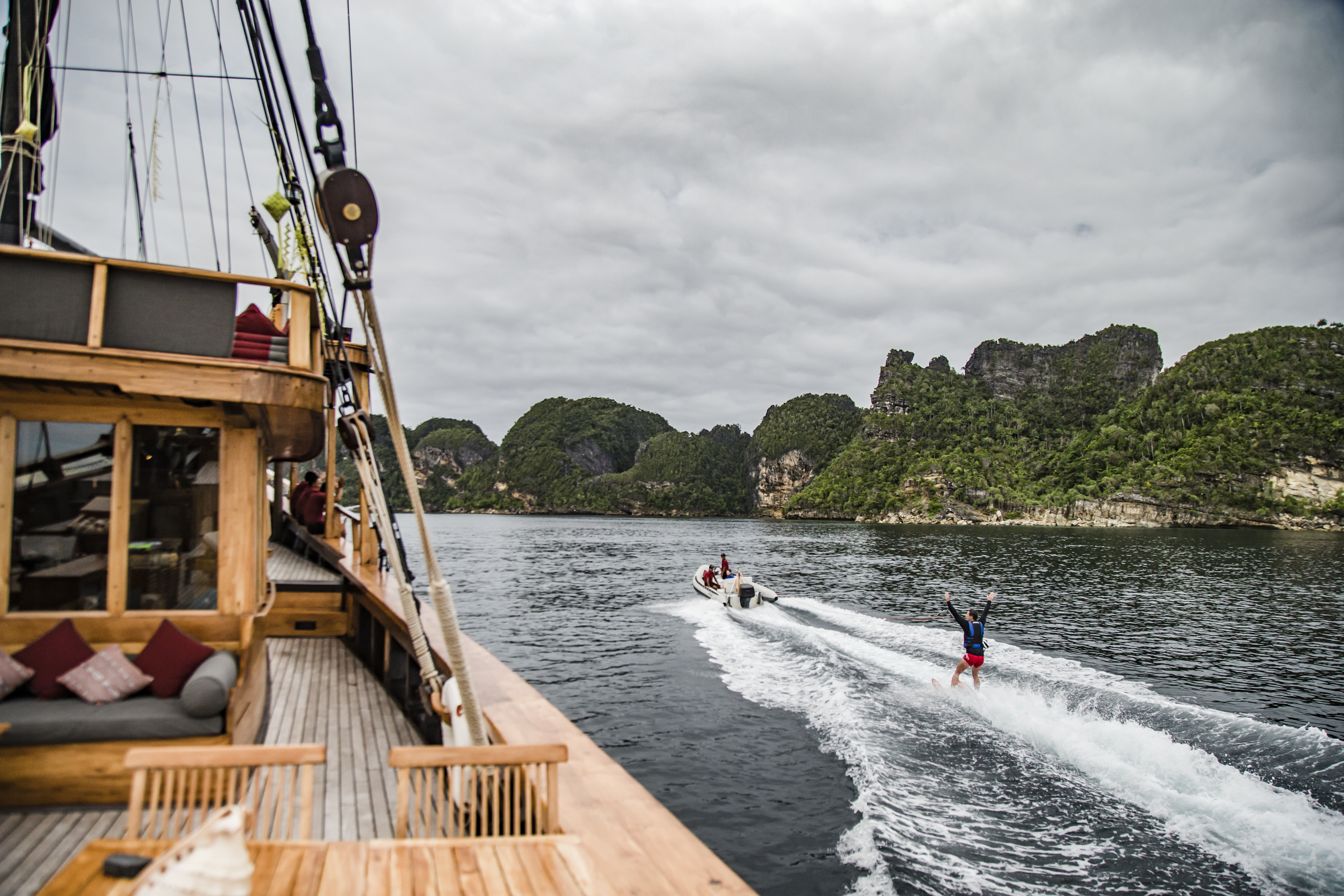
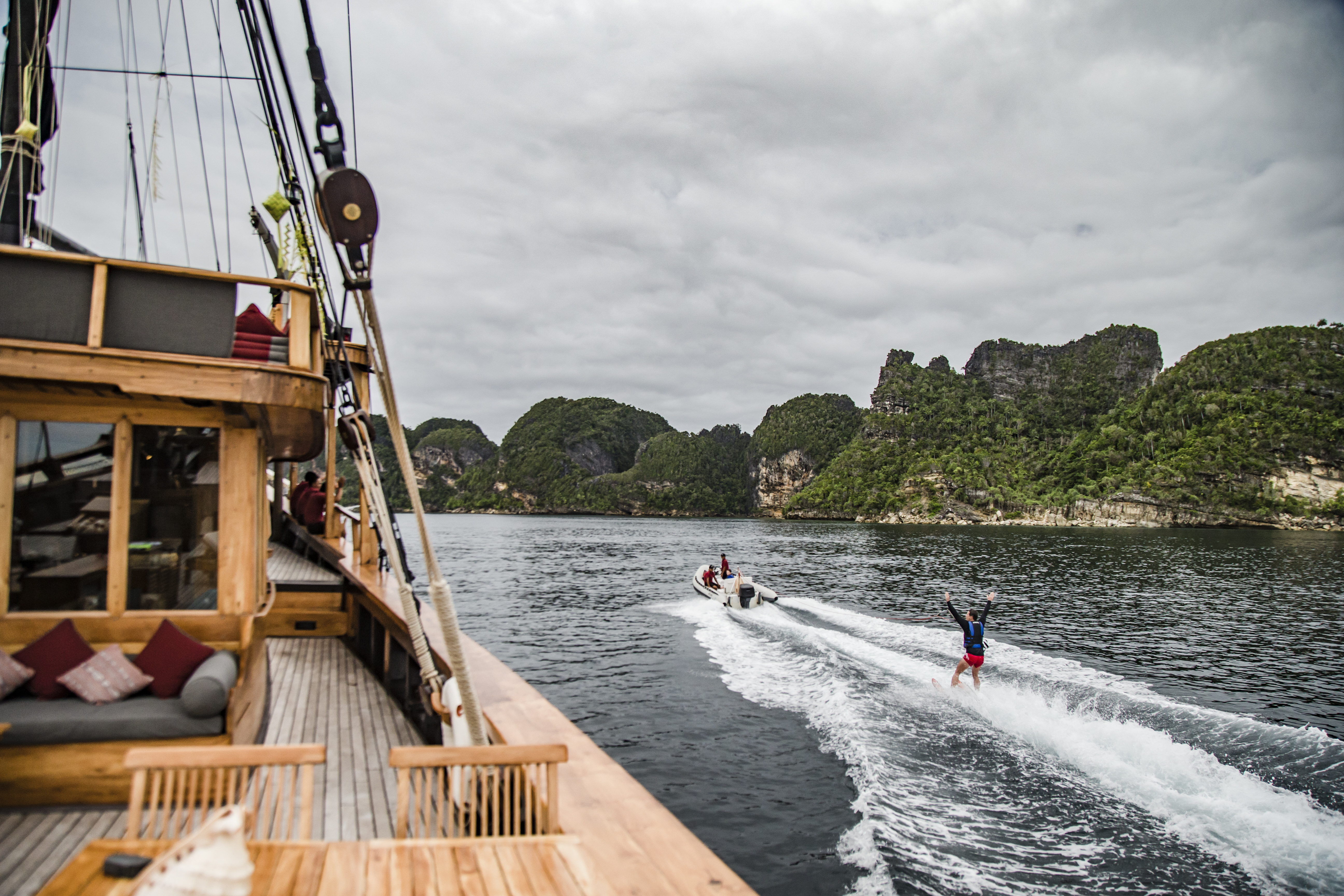
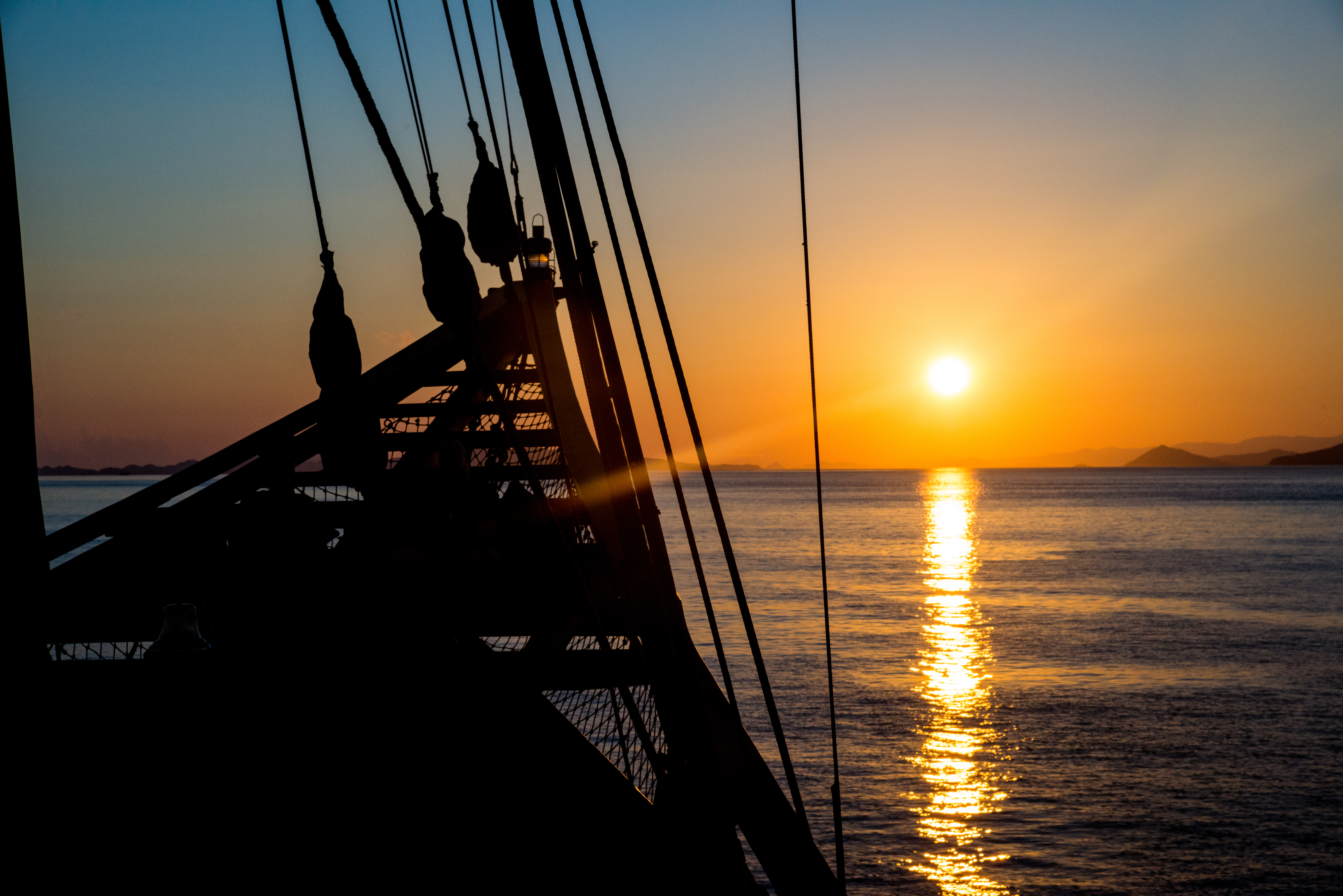
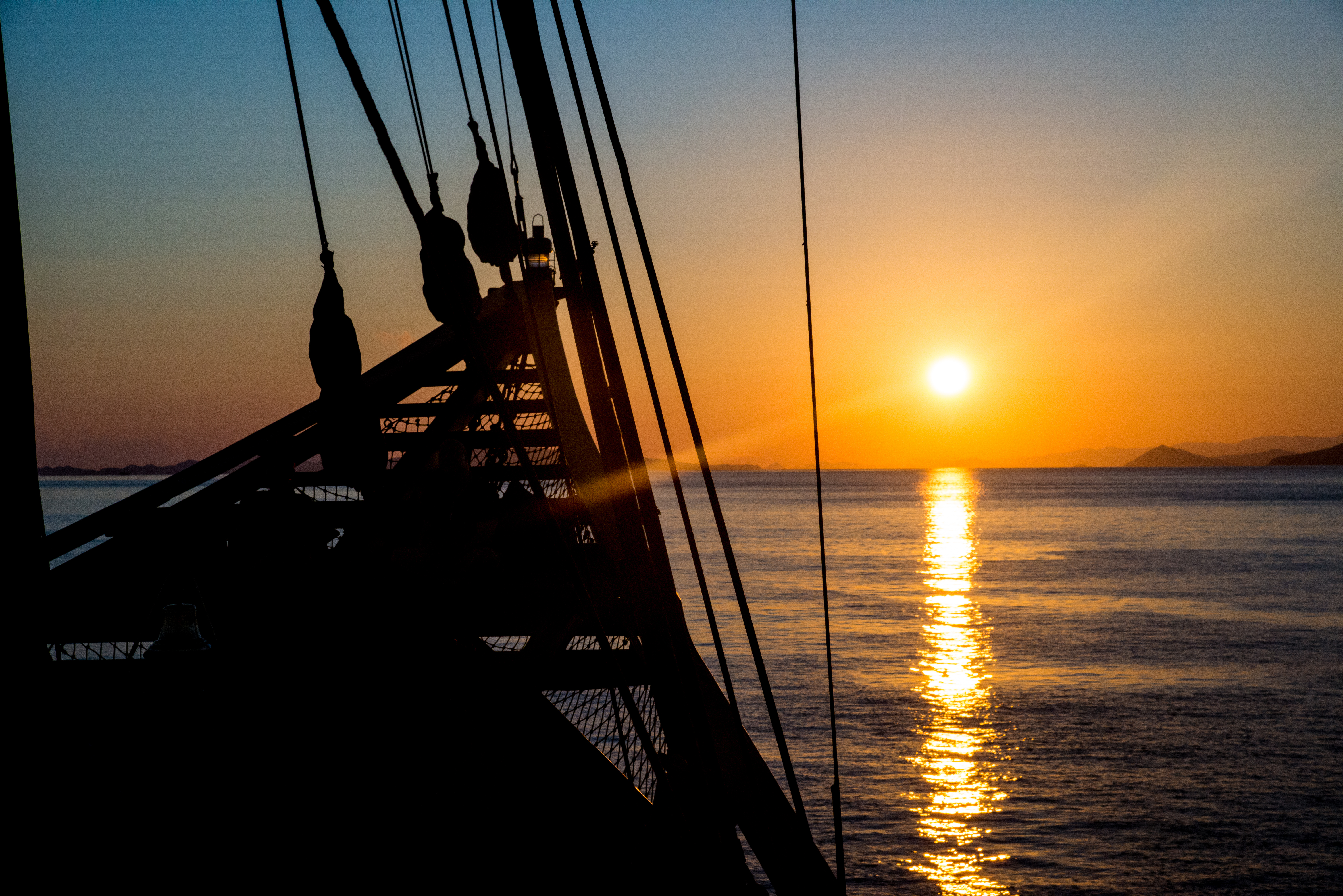
A day on this route rarely has one identity. Morning might begin with coffee on deck as a volcanic island appears in haze. Later, you may go ashore to meet weavers or walk through a harbor village. By midday, the yacht has moved to a quiet bay for snorkeling or diving. Afternoon light may catch the ridges of Lembata or Alor. At sunset, dolphins may appear, or nothing at all may happen except the sea turning silver.
Another day may begin inland, climbing toward Kelimutu before dawn. Another may bring Sumba’s stone tombs and high roofed houses. Another may be all water: tender rides, reef edges, blue channels, and the deep awareness that no other tourist boat has crossed your horizon.
For guests used to famous places, this can be disorienting at first. There is no constant validation from crowds. No queue confirms that the site matters. The route teaches you to trust your own attention.
The Cultural Rhythm: Weaving, Stone, and Ceremony
The cultural richness of this route should be approached as living practice, not staged heritage. In Alor and parts of the Lesser Sundas, ikat weaving carries knowledge through thread, dye, pattern, and repetition. In Sumba, megalithic tombs and Marapu related traditions continue to shape village space and social life. In Lembata and nearby islands, maritime culture holds long, complex relationships with deep water and marine life.
A meaningful yacht expedition does not compress these cultures into “tribal visits.” It arranges encounters through appropriate local channels, respects timing, pays fairly, briefs guests before arrival, and accepts that some things should not be photographed, entered, or witnessed.
The more remote the route, the more important this becomes. A luxury yacht should never make a community feel like a spectacle. It should create the conditions for respectful meeting.
The Expedition Journal Route
Imagine the journey as a sequence of entries rather than a schedule.
Entry One: East Flores
The yacht lies off the coast while the land rises green and volcanic. Kelimutu waits inland, its three crater lakes changing color over time through volcanic and chemical processes.¹
Entry Two: Lembata and Batu Tara
The horizon sharpens. Komba Island appears, and Batu Tara reminds everyone aboard that these seas belong to fire as much as water. Its historic eruptions are documented by Smithsonian, but its presence is powerful even in quiet.
Entry Three: Alor
The sea narrows and quickens. Reefs become current swept. Villages hold distinct languages and textile traditions. The day moves between diving, snorkeling, and ikat encounters.
Entry Four: The Savu Sea
Open water returns. Marine mammal history thickens the route. The possibility of whales or dolphins keeps the deck attentive, though nothing is promised.²
Entry Five: Sumba
If the expedition bends toward Sumba, the story enters stone and horse country: megalithic tombs, traditional villages, woven cloth, and Pasola culture shaped by Marapu belief and seasonal timing.³
This is not a route that needs to shout. It accumulates.
The Luxury of Sailing Where the Map Goes Quiet
East Flores and the Savu Sea offer a kind of Indonesia that is increasingly rare in luxury travel. Not untouched, because people have lived here, sailed here, woven here, fished here, prayed here, and named these places for generations. But untouched by the heavy hand of predictable tourism.
You come for volcanic lakes and find a mountain of spirits. You come for diving and find a sea alive with current. You come for culture and find cloth, stone, horses, and ceremony still carrying meaning. You come for remoteness and find that distance is not emptiness. It is depth.
For travelers searching East Flores yacht or Savu Sea expedition Indonesia, this is the journey that refuses to become ordinary. It is not a route of famous stops. It is a route of elements: fire, textile, reef, whale road, stone, and horizon.
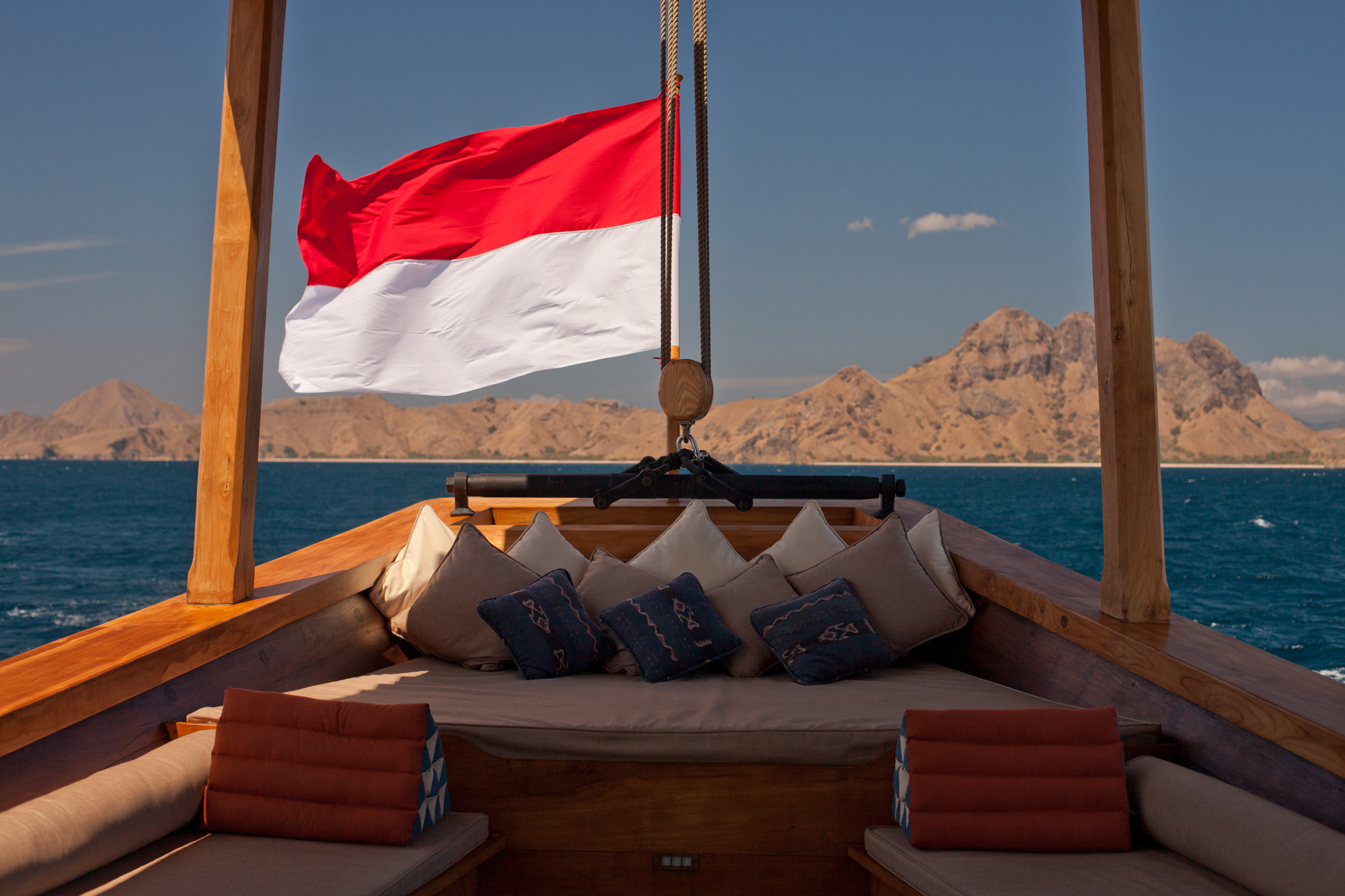
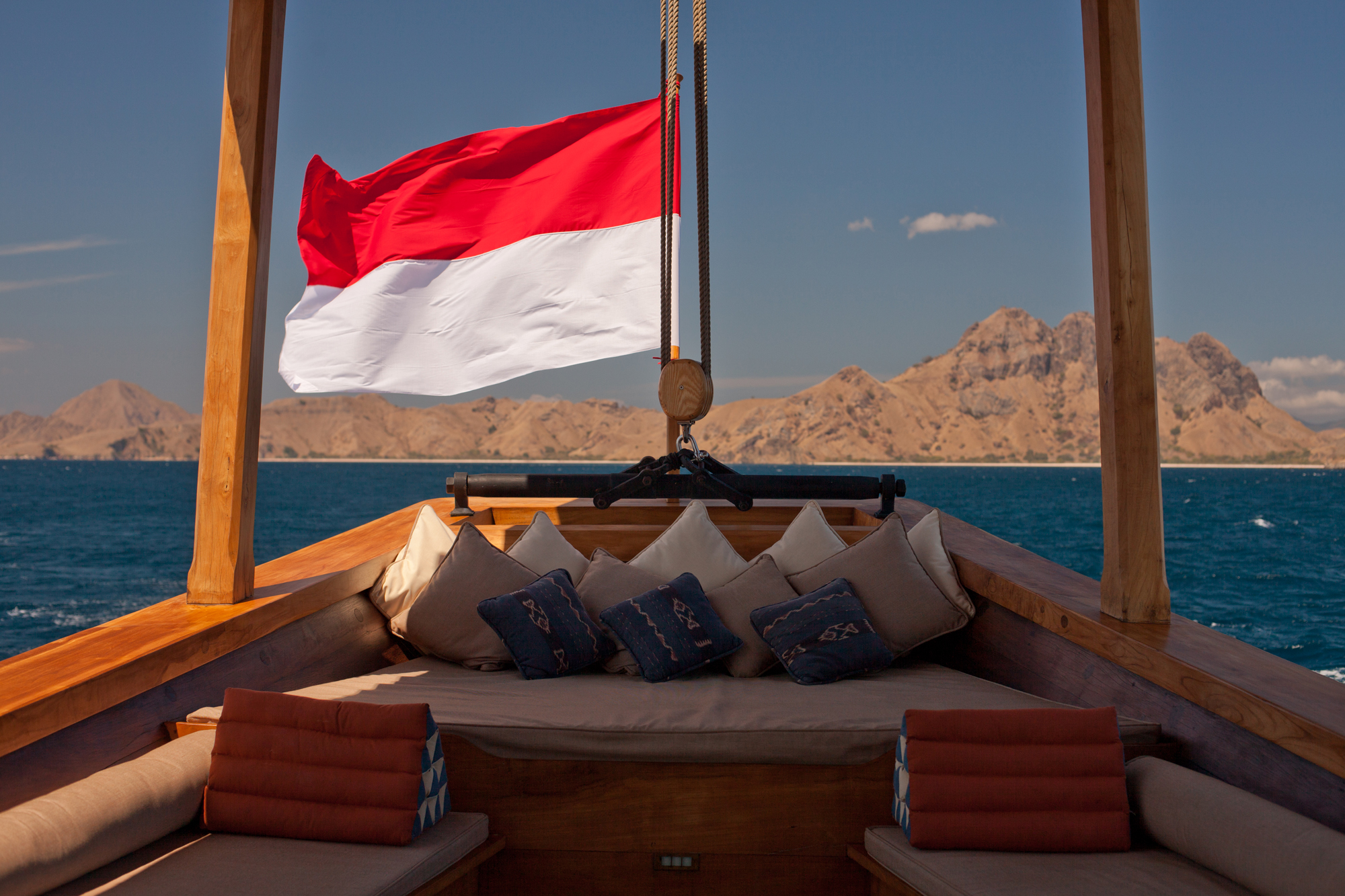
With Silolona Sojourns, East Flores and the Savu Sea become a private expedition through one of Indonesia’s most remote and least repeated seascapes. You can sail by handcrafted phinisi past volcanic islands, journey inland to Kelimutu’s crater lakes, explore Alor’s reefs and ikat traditions, watch the Savu Sea for whales and dolphins, and extend toward Sumba’s megalithic villages and Pasola culture when timing and local arrangements allow. For travelers who want complete remoteness without sacrificing elegance, Silolona offers the rare balance: deep regional experience, flexible seasonal routing, cultural sensitivity, and the quiet confidence to sail where the map goes still.
References
Murphy SW, Wright R, Rouwet D. Color and temperature of the crater lakes at Kelimutu volcano through time. Bulletin of Volcanology. 2018;80:2. doi:10.1007/s00445-017-1172-2
Mustika PLK. Marine mammals in the Savu Sea, Indonesia: indigenous knowledge, threat analysis and management options. James Cook University. 2006. doi:10.25903/qxya-t904
Handini R, Gunawijaya J, Geria IM. Sumba megalithic tradition: A sustainability perspective. L Anthropologie. 2023;127(1). doi:10.1016/j.anthro.2023.103154
Smithsonian Institution. Global Volcanism Program. Batu Tara volcano profile and weekly activity reports.
Silolona Sojourns. Flores and Alor Yacht Expeditions. Official Silolona destination page.
Silolona Sojourns. Explore Exotic Yacht Destinations in Indonesia and Southeast Asia. Official Silolona destination overview.