

Generations at Sea: Designing a Multigenerational Voyage Aboard Silolona
There is a particular quiet that settles over a family only when the phones stop working. The grandfather who normally checks markets before breakfast is watching his granddaughter lower herself off the swim platform for the first time. The teenager who lives behind a screen is the one calling out a turtle gliding beneath the tender. Three generations who rarely sit in the same room find themselves sharing the same horizon. This is the promise of a multigenerational luxury yacht Indonesia voyage, and it is what a family phinisi charter aboard Silolona is quietly designed to create.
You are not looking for a hotel that happens to float, nor a packed cruise ship with a children's club below decks. You want to bring grandparents, parents, and children into one shared adventure without forcing any of them to compromise on what they love. That is harder to design than it sounds, and it is exactly where a private phinisi journey earns its place.
Why a Family Phinisi Charter Solves the Multigenerational Problem
Most family holidays fail the same way. The interests of a nine-year-old, a teenager, two parents, and two grandparents pull in different directions, and a fixed resort or rigid tour can satisfy only a few at once. A private yacht changes the mechanics, because the journey is shaped around your family rather than the reverse.
Silolona Sojourns crafts private yacht journeys across Indonesia and Southeast Asia, with three decades of expertise in the logistics that make this possible: clearances, provisioning, customs, and bespoke cultural routing through remote regions. For a family, the meaning is simple. The hard parts happen invisibly, so the only decisions left to you are the pleasant ones. Because the vessel moves with you, the reef, the village, the ranger trek, and the quiet afternoon nap can live in the same day. Grandparents rest in an air-conditioned suite while teenagers dive; young children nap on board while parents kayak nearby. Research on slower, immersive travel suggests this is not only more comfortable but more meaningful, supporting emotional engagement and lasting memory rather than the blur of a rushed itinerary.¹
Two Phinisi, One Family, Eight Cabins
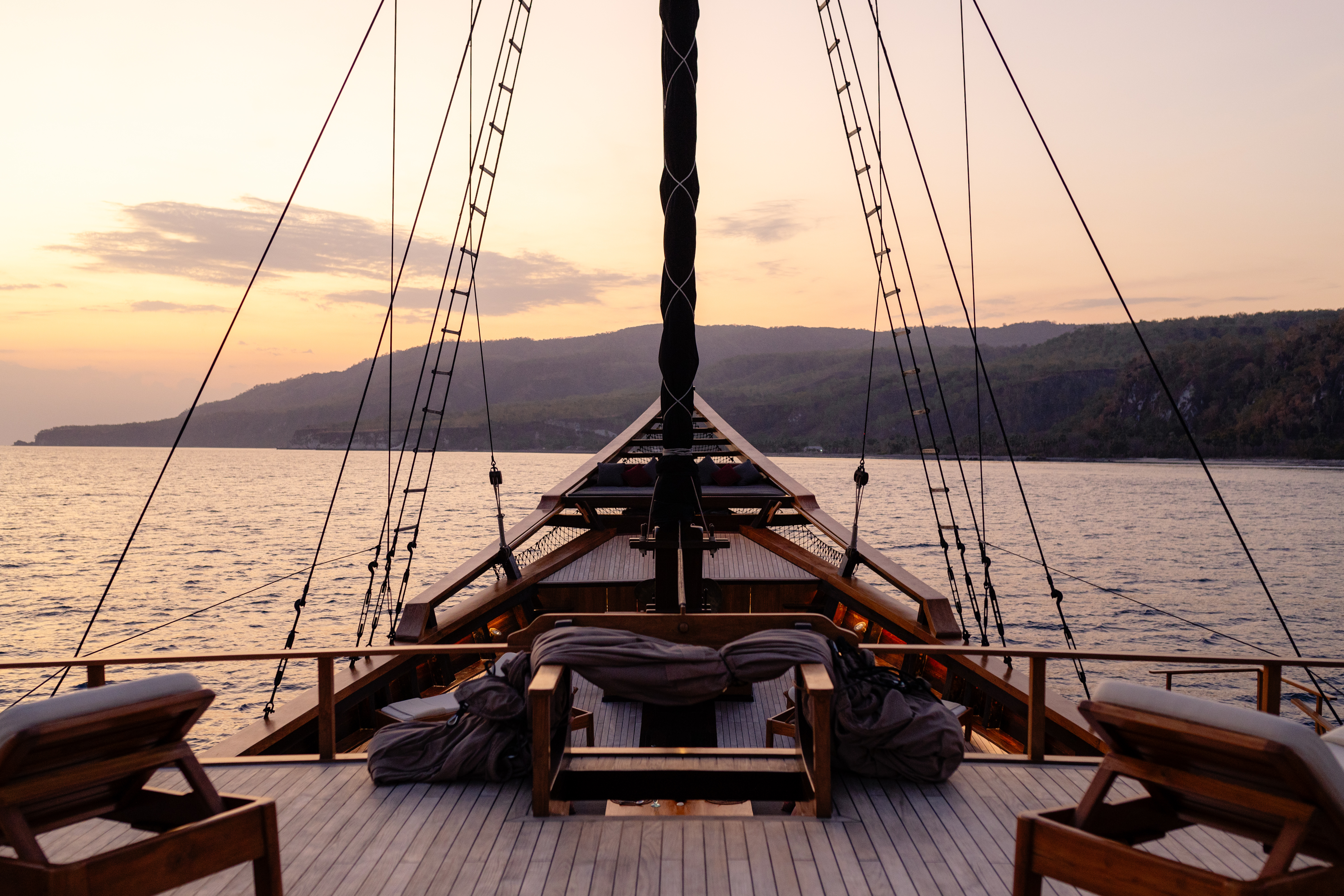
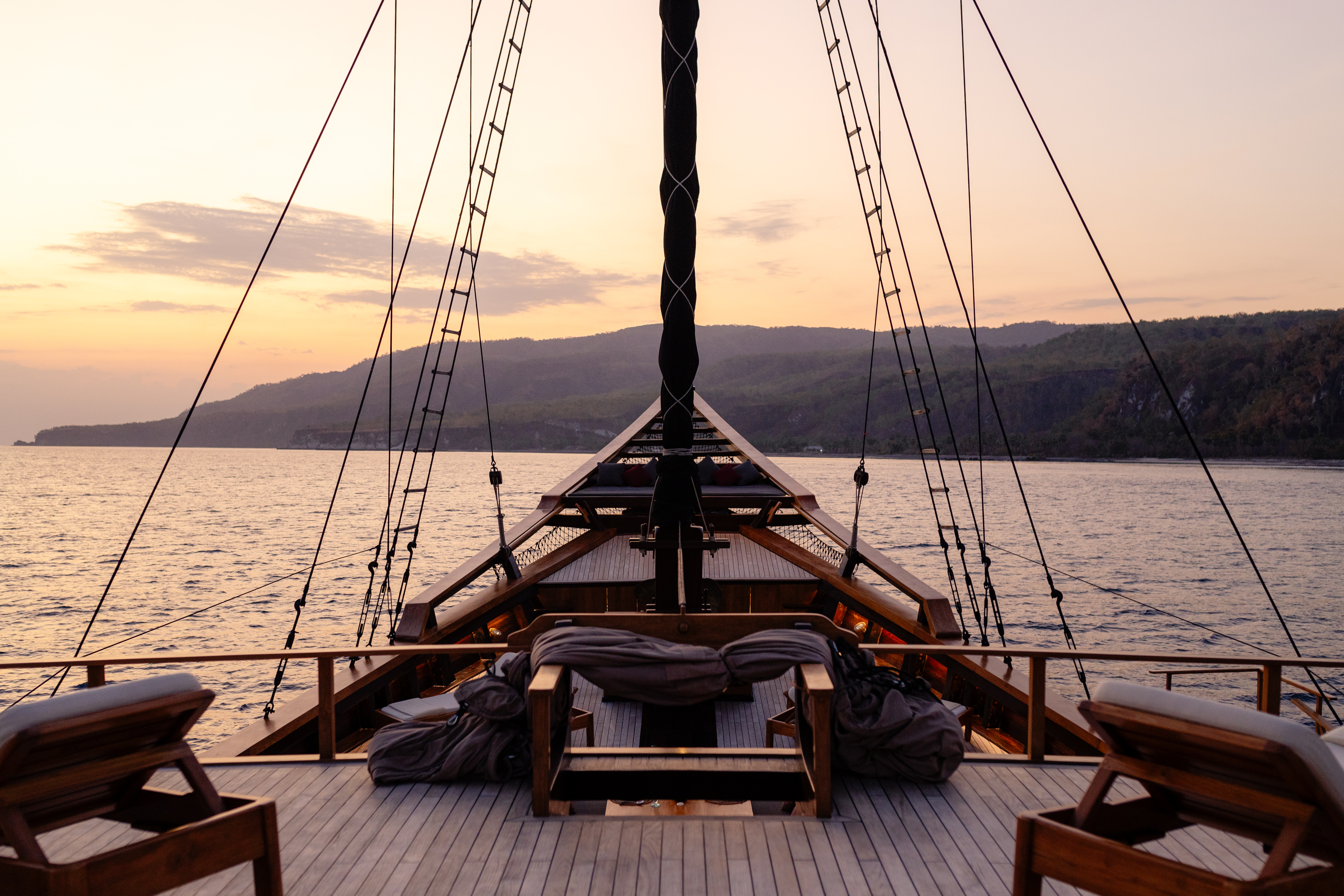
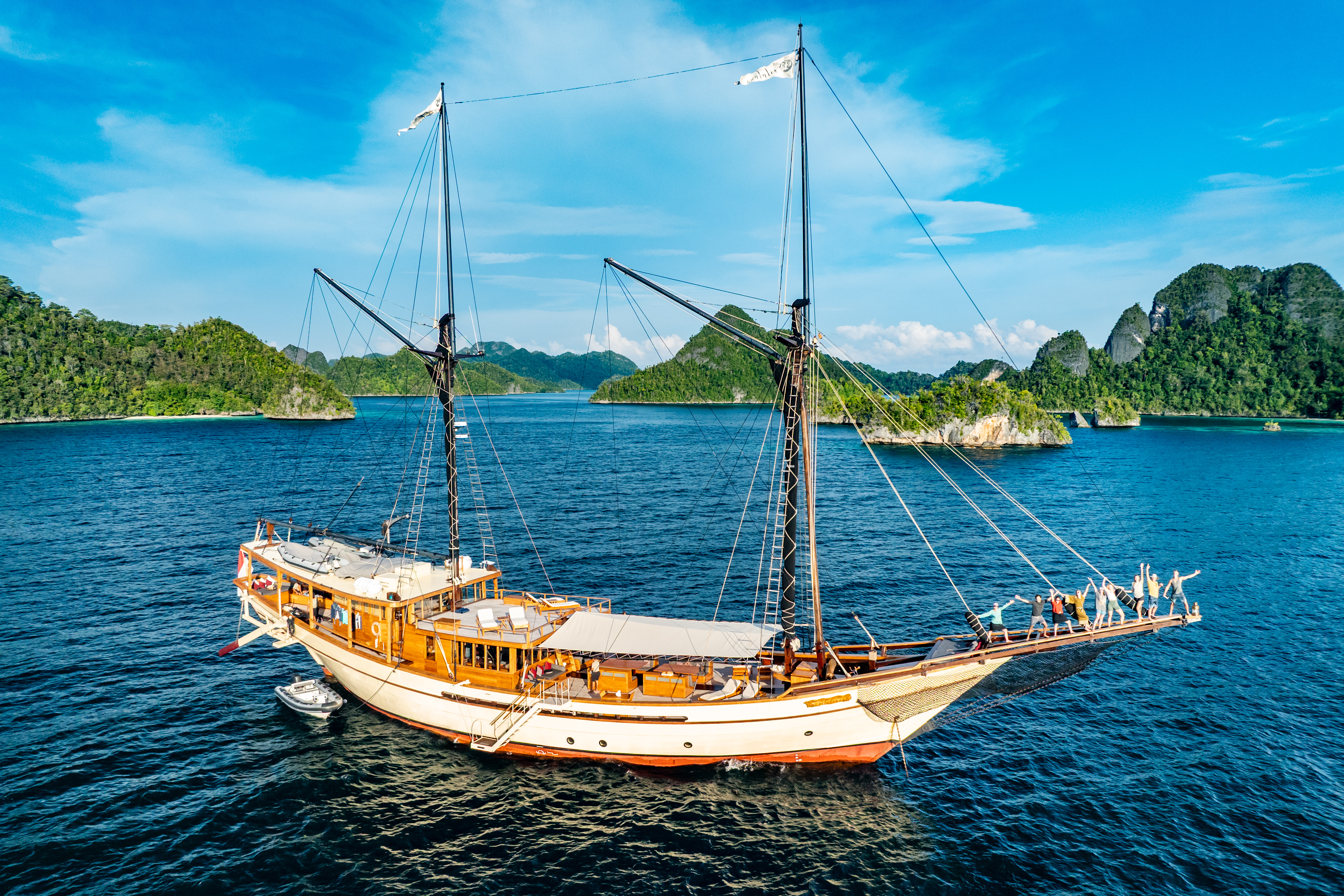
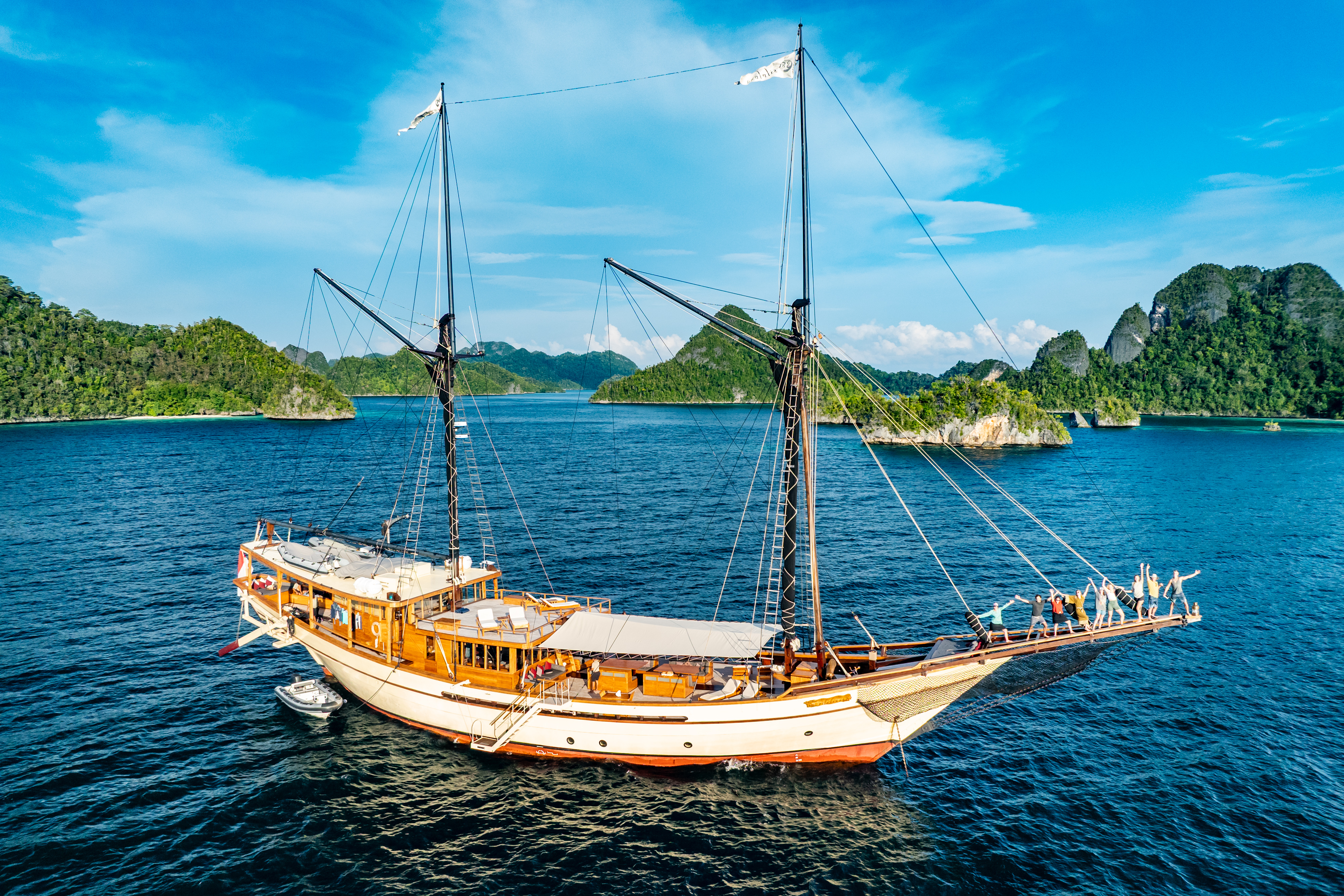
A great multigenerational charter needs space that flexes. MSV Silolona is the larger, more iconic vessel, a handcrafted wooden sailing vessel launched in 2004 and built from tropical hardwoods to German Lloyds specifications by Master Konjo boat builders of Sulawesi. She measures 50 meters, carries three tenders, and offers five staterooms (three king suites and two double suites) in a fully air-conditioned interior. MSV Si Datu Bua, whose name means Beloved Princess, is the more intimate vessel at 40.20 meters, with three king suites and a graceful, private character, ideal for a smaller family group.
For a large extended family, the most elegant answer is to sail both in tandem. Between Silolona's five staterooms and Si Datu Bua's three suites, a tandem charter opens eight cabins across two hulls. Grandparents and the youngest children might take the steadier, more spacious decks of MSV Silolona, while teenagers and younger couples claim the intimacy of Si Datu Bua. The two vessels anchor in the same bay, share the same reefs and beaches, and come together for shared dinners and celebrations, then separate again for sleep and quiet. You gain the togetherness of one voyage and the breathing room of two homes.
One Day, Every Age: Parallel Programming
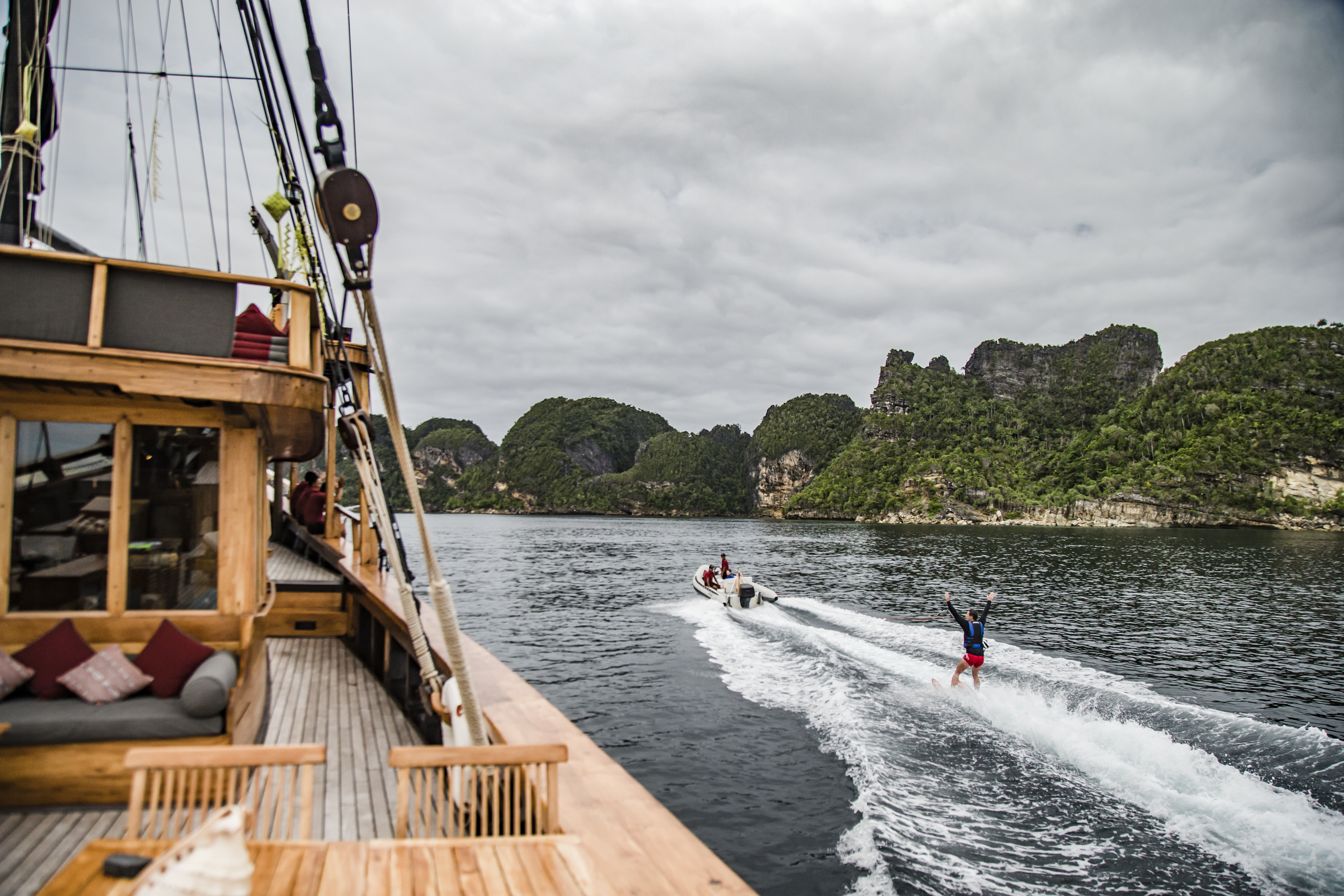
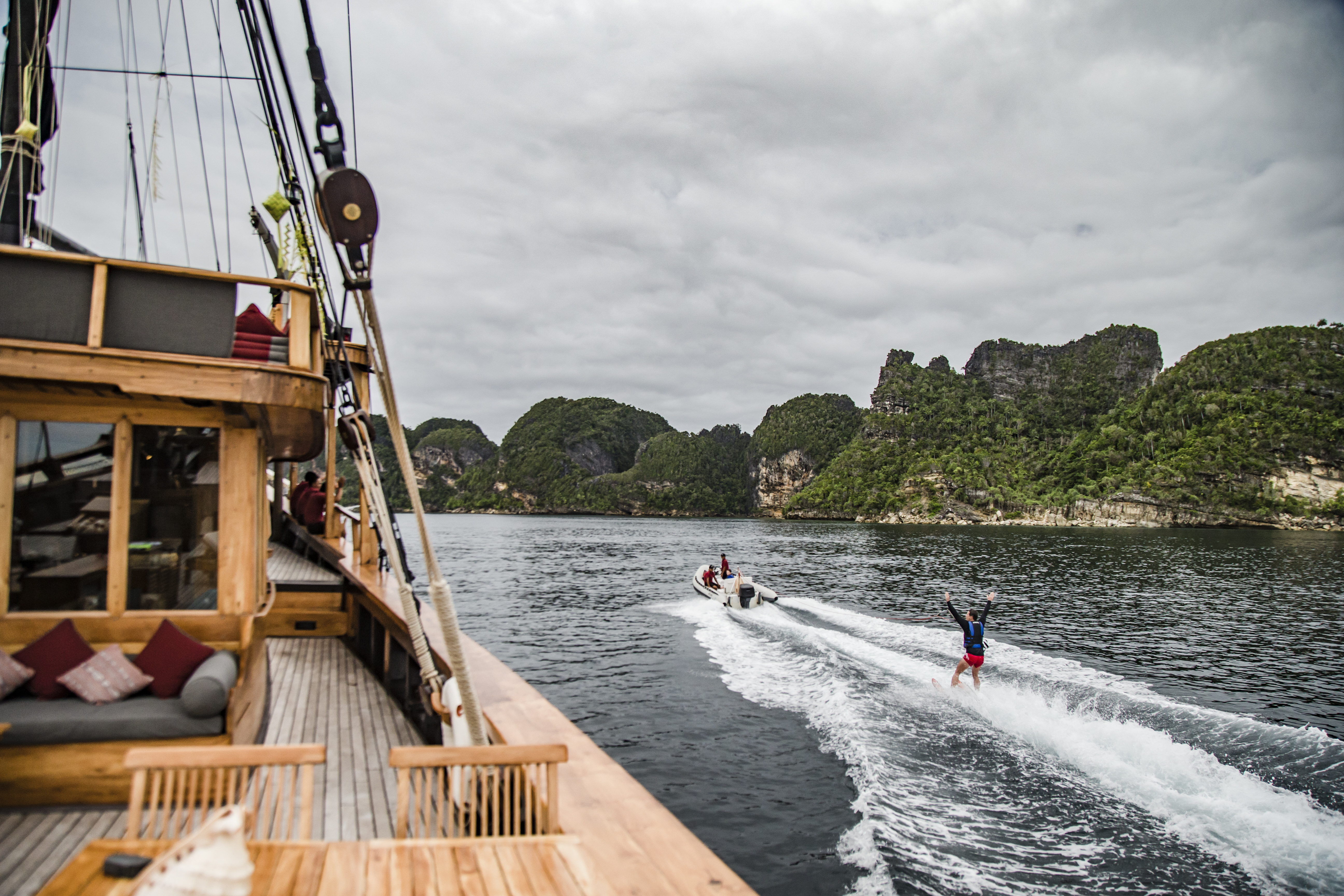
The defining skill of a family charter is parallel programming, running several experiences at once so no one is ever simply waiting. A Silolona day branches, then reconvenes. Picture a morning in Komodo, planned within the May to September season. The day begins early, before the heat. While certified teenagers and adults take a guided snorkel or dive over a reef wall, a second tender carries younger children and a parent to a sheltered cove for a gentler swim. Grandparents watch from a shaded deck with coffee and Asian fusion cuisine from the galley. By mid-morning, everyone is back on board, and the only thing anyone missed was the part they did not want.
The afternoon branches again. A ranger-led trek on Rinca to observe Komodo dragons, always guided and respectful, suits the energetic, while others stay near the water for kayaking or a quiet read. The point is not to do more, but to let each generation choose its own version of the same place, with the crew handling the choreography.
Children at Sea: Curiosity as the Itinerary
Children remember a trip by what they were allowed to discover. The richest material is already in the water. Indonesia sits at the heart of the Coral Triangle, and Raja Ampat, best sailed October to April, holds more than 600 islands with nearly 1,200 documented fish species and 540 coral species. For a curious child, that is a reason to keep a simple field journal and learn the names of the fish they saw that morning. Marine scientists have shown that even reefs under pressure can sustain surprising abundance where local stewardship is strong, a lesson in responsibility that lands far better at the edge of a real reef than in any classroom.²
Ashore, and only with permission and care, a visit to a weaving village lets children watch ikat textiles take shape and hear stories from local hosts and elders, framed as genuine exchange rather than performance. The crew, drawn from Sulawesi's seafaring traditions, are natural storytellers, and for many children the lasting memory is a quiet hour on deck learning to spot a constellation or tie a knot.
Designing for Grandparents: Pace, Comfort, and Care
A multigenerational voyage is only as good as its gentlest pace. The fully air conditioned interiors give older travelers a cool retreat at any hour, and the bespoke itinerary means a day can be softened the moment it needs to be. If the sea is lively or the heat is high, the route can shift toward sheltered anchorages and shorter excursions. A grandparent can join the morning's village visit and skip the afternoon trek. In the honest spirit of a good charter, it is worth noting that a traditional phinisi has stairs, tenders, and the natural motion of a sailing vessel, so families with significant mobility needs should speak with the team early so the journey can be planned around them.
What grandparents value most is the feeling of being cared for without being managed, watching their grandchildren grow braver by the day from an unhurried vantage.
A Crew That Knows Families
Logistics can be bought, but ease around children and elders is earned. Silolona's value for families rests on a stable, experienced crew with decades of local navigational knowledge, the same people who handle clearance, provisioning, and daily life aboard. In practice this means a galley that adapts to a toddler's plain rice as readily as a refined dinner, a deck team that keeps a discreet eye on young swimmers, and guides who can pitch a ranger briefing to a ten-year-old and a grandfather in the same breath. Because the same crew returns season after season, the service is anticipatory: the snack that appears at the right moment, the calmer anchorage chosen before anyone asks, the milestone birthday quietly arranged at sea.
Planning Your Voyage: Seasons, Length, and Fit
Silolona's seasonal rhythm follows Indonesia's changing seas. Komodo, Flores, and Alor are best planned from May to September, while Raja Ampat, Cenderawasih Bay, Banda, and Papua are generally shaped around October to April. These are planning guides, not rigid promises. Most journeys run 7 to 14 days, with a 7-day voyage usually focusing on one region. A few principles help:
- Choose a 7-day single-region voyage for a first family charter or for groups with very young children.
- Allow 10 to 14 days to combine reef, culture, and landscape at a slower tempo.
- Book early for June, July, and August, when demand for private summer charters in Komodo is strongest.
- Share ages, swimming and diving experience, dietary needs, mobility, and any celebrations in advance, so the crew can build parallel programming around your family.
Be honest about fit, too. This is built for families who want privacy, cultural depth, and a journey paced around their own people. Those chasing maximum dive counts, constant connectivity, or a resort style social scene may be better served elsewhere.
A multigenerational voyage is not really about the yacht or the dragons. It is about uninterrupted time, the kind that lets a grandmother teach a grandchild to float and a family rediscover itself away from the noise of ordinary life. The best family trips are measured not by how much you saw, but by how close you felt at the end. A voyage designed around every generation at once is a story your family will tell for years.
Plan Your Generations at Sea Voyage with Silolona Sojourns
WithSilolona Sojourns, a multigenerational journey is shaped around your family rather than a fixed schedule. Sail by private phinisi into reef-rich anchorages, ranger-led trails, and gentle cultural encounters, with parallel programming for children, parents, and grandparents. For the largest gatherings, thetandem MSV Silolona and MSV Si Datu Bua concept opens eight cabins across two hulls, so your whole family travels as one while each generation keeps its own space. To begin designing a voyage around your family's ages, interests, and pace,enquire with the Silolona team.
References
Pearce PL. Tourist Behaviour: Themes and Conceptual Schemes. Clevedon: Channel View Publications; 2005. doi:10.21832/9781845410247.
Cinner JE, Huchery C, MacNeil MA, et al. Bright spots among the world's coral reefs. Nature. 2016;535(7612):416-419. doi:10.1038/nature18607.