

"My First Dive": Learning to Scuba in Raja Ampat, at Any Age
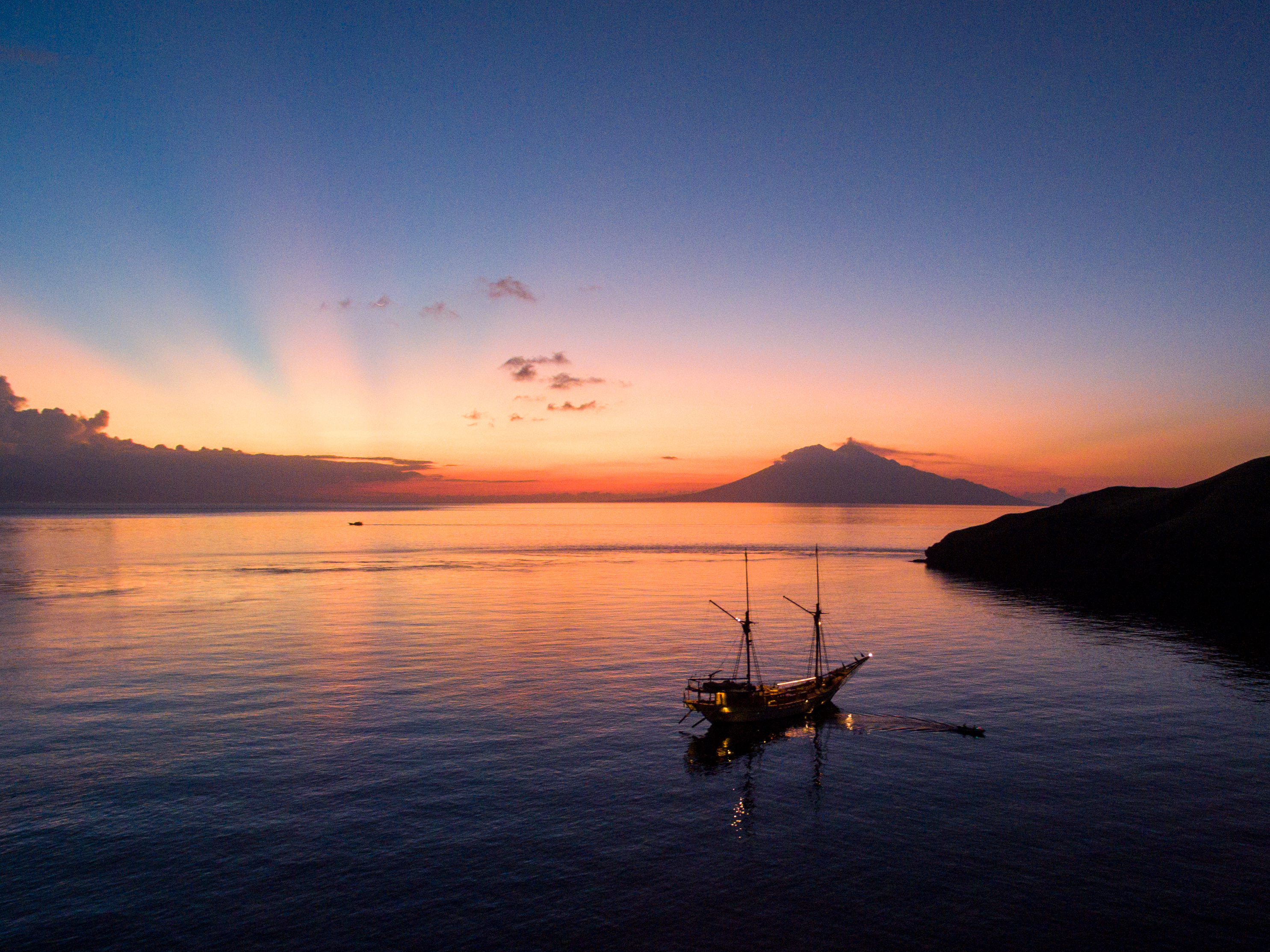
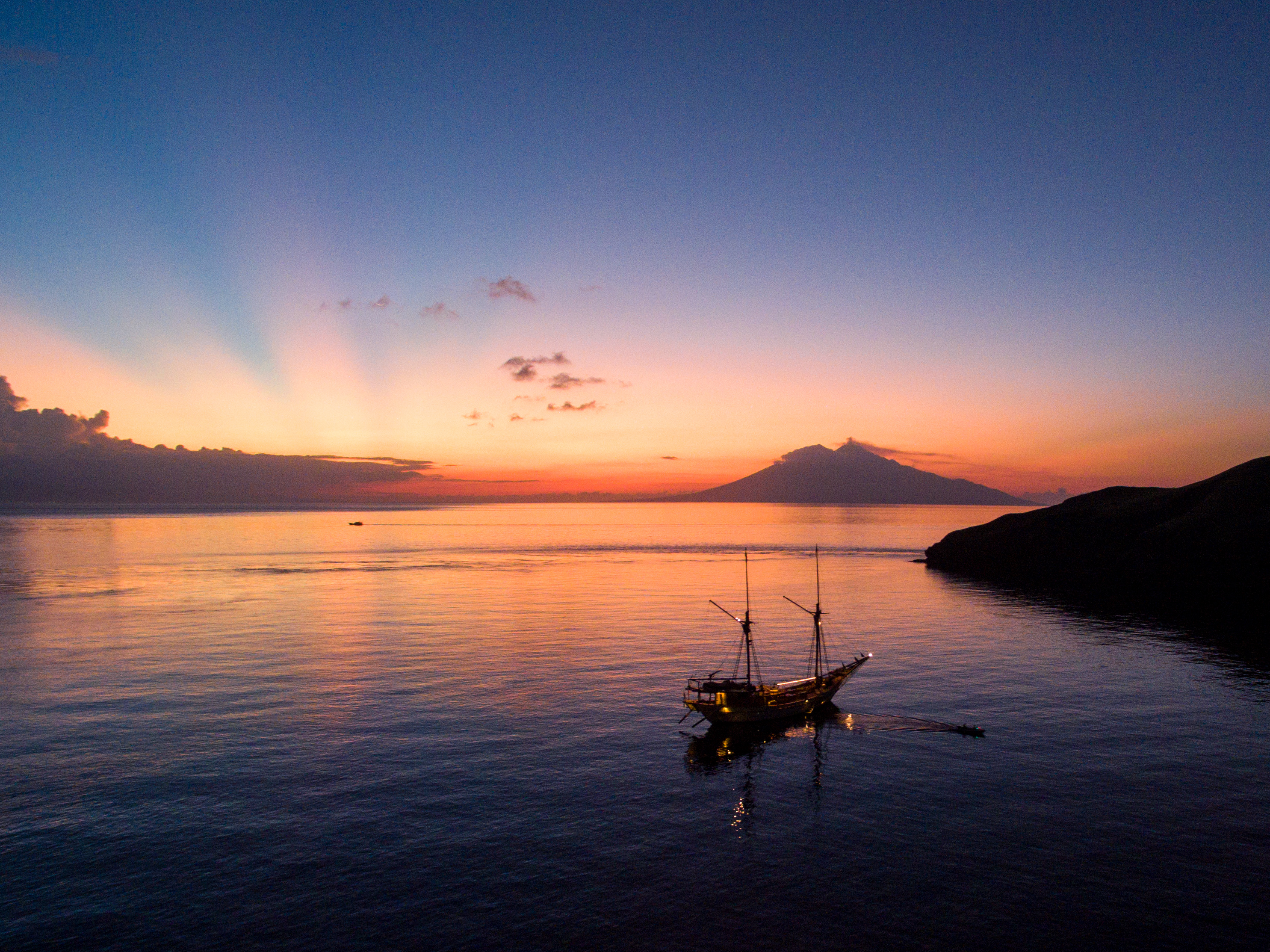
On the tenth of January, in a bay off Raja Ampat, a guest from the United States named N.K. put on a mask, weighted himself down, and dropped below the surface for the first time in his life. He was not a teenager on a gap year. He had spent decades reaching this moment without ever taking it. And then, on his very first dive from the deck of Si Datu Bua, a dugong appeared. If you have been quietly wondering whether it is too late to learn to scuba dive in Raja Ampat, whether a first time diving from a liveaboard is something you can attempt with your dignity intact, his afternoon is the honest answer. It is not too late. It rarely is.
Most people who reach a certain point in life have made peace with the things they never learned. Somewhere in that pile, for a surprising number of accomplished people, sits scuba diving. They snorkelled once in the Maldives. They watched everyone else gear up in the Galápagos and stayed on deck with a book. The reasons accumulate quietly: no time, a slight claustrophobia, a sense that the window closed at forty, or fifty, or later. What almost nobody does is say any of this out loud, least of all to a broker. It is a small private question, and it deserves a straight answer rather than a reassuring one.
The reasons people wait are real, and none of them are disqualifying
There is a myth that diving belongs to the young and the athletic. It does not. A discover-dive program, the kind Silolona's instructors run for first-timers, is built around a controlled introduction in shallow, calm water with an instructor within arm's reach the entire time. You are not asked to perform. You are asked to breathe slowly and trust the equipment, and the equipment is very good at its job. The physical demands of an introductory dive are closer to a gentle swim than to anything strenuous. What actually stops people is rarely the body. It is the private fear of being the beginner in a group of experts, of holding everyone up, of admitting in front of strangers that you never learned.
That fear dissolves faster underwater than you would expect. The Coral Triangle, of which Raja Ampat is the beating heart, holds roughly 1,200 species of reef fish and 540 species of coral across its 600-plus islands, the richest marine biodiversity measured anywhere on the planet.1 On a first descent, the sheer density of life gives your mind something to do other than panic. You forget to be self-conscious because a school of fusiliers has just parted around you like a curtain. The reef does not know you are a beginner, and it does not care.
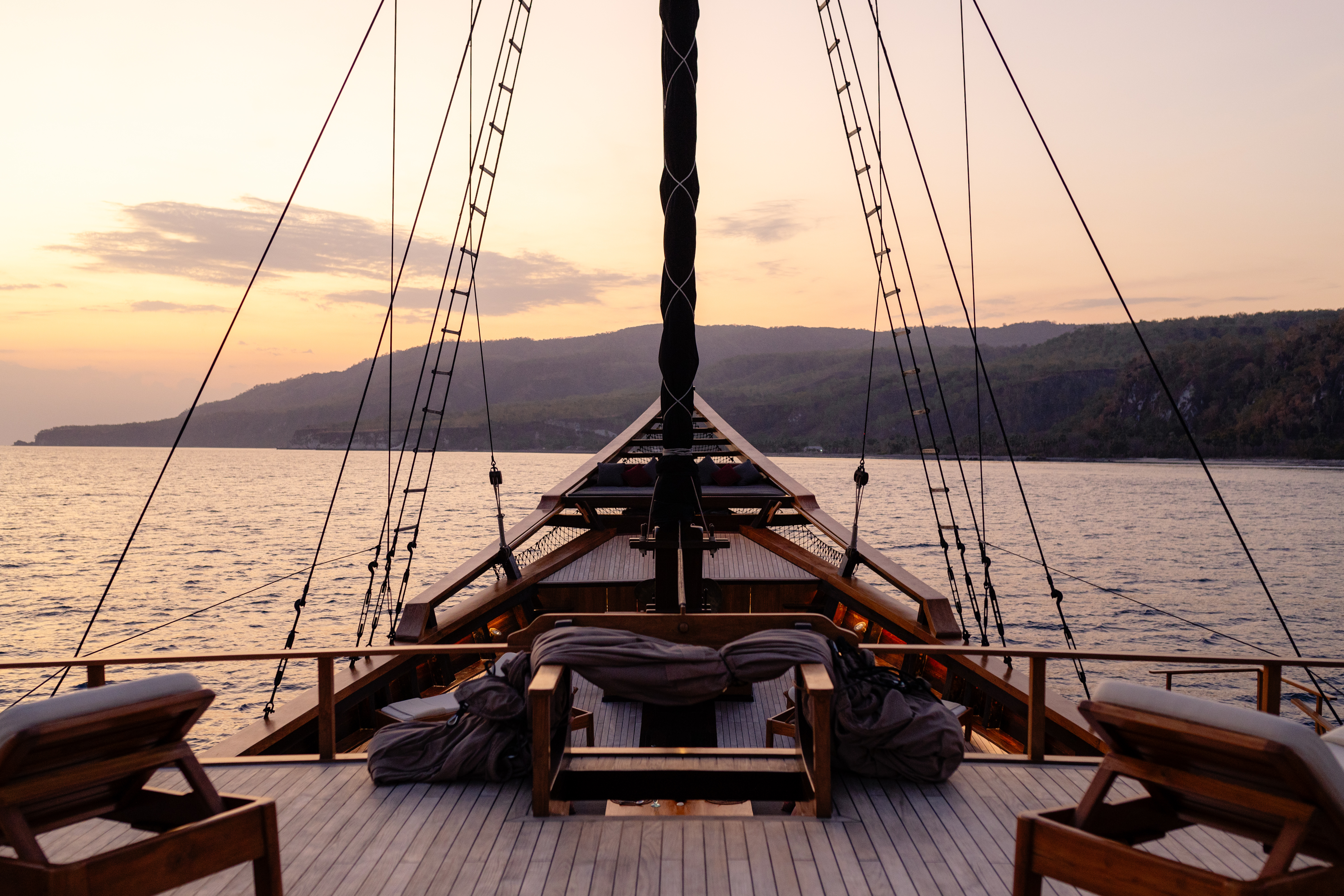
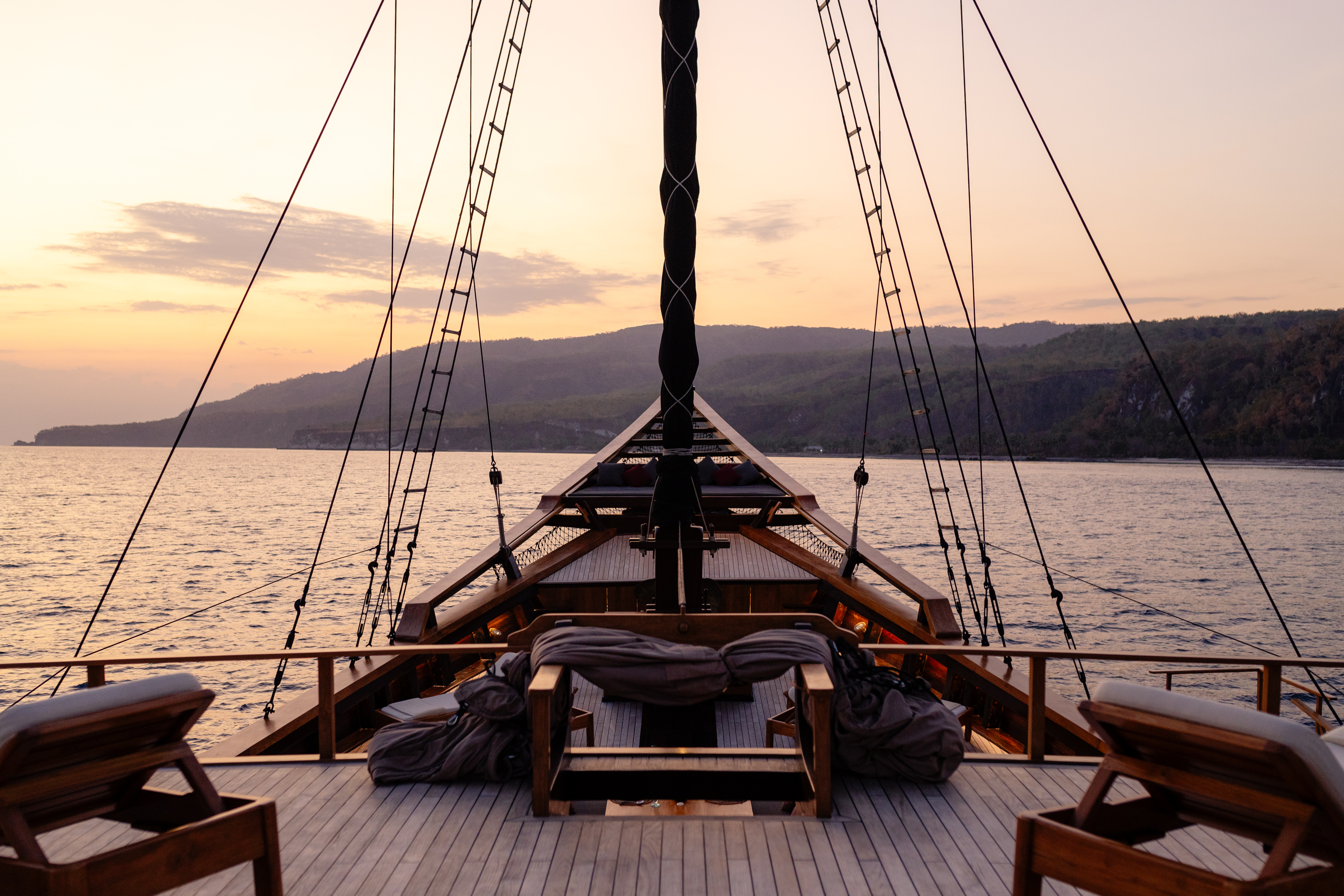
Alberto teaches the way a good teacher should: slowly, and without an audience
the guest.'s instructor was Alberto Rodrigues Puentez, one of Si Datu Bua's cruise directors. Alberto has lived in Indonesia for close to a decade and has more than fifteen years of diving and liveaboard experience across the world's oceans. He is fluent in English and Spanish, and he is also, less usually, an artist who draws the small creatures he finds underwater. That last detail matters more than it sounds. A person who has spent years learning to look closely enough at a nudibranch to draw it is a person who notices, and who has patience. He was joined by Goris Atawuwur, a diver who has explored these waters for decades and helped build the original Silolona herself.
The instruction on board is not a factory line. Because the vessels carry a small number of guests, an instructor can give a first-timer genuine, unhurried attention. There is no queue of certified divers tapping their fins behind you. You go at your pace, in your own bay, and if you need to surface and start again, you surface and start again. This is the quiet advantage of learning aboard a private phinisi rather than in a crowded resort dive class: the ratio is in your favor, and so is the discretion.
What the Guest Actually Saw, and Why it is Almost Unfair
Here is the part that sounds invented. On that first dive, the guest encountered a dugong, the shy, slow-moving marine mammal that most experienced divers spend years hoping to glimpse and never do. Over the course of his time in Raja Ampat, he alsohealso swam with manta rays and found a wobbegong, the flat, carpet-patterned shark that lies motionless on the reef floor looking like something the sea forgot to finish. A dugong, mantas, and a wobbegong are, between them, a wish list that many people with hundreds of logged dives have not completed. He saw them on and around her first week underwater.
This is not a promise. No one can promise a dugong, and any operator who does is not being honest with you. Wildlife in Raja Ampat is wild, which is precisely the point. What can be said is that these are the waters where such encounters are possible, that the reefs here are healthy enough to support the animals that vanish elsewhere, and that a well-led expedition puts you in the right places at the right tides to give chance its best odds. Our guest was fortunate. But he was fortunate in the one part of the world where that particular fortune still exists.
Fewer dives a day is not a smaller experience. It is a different audience.
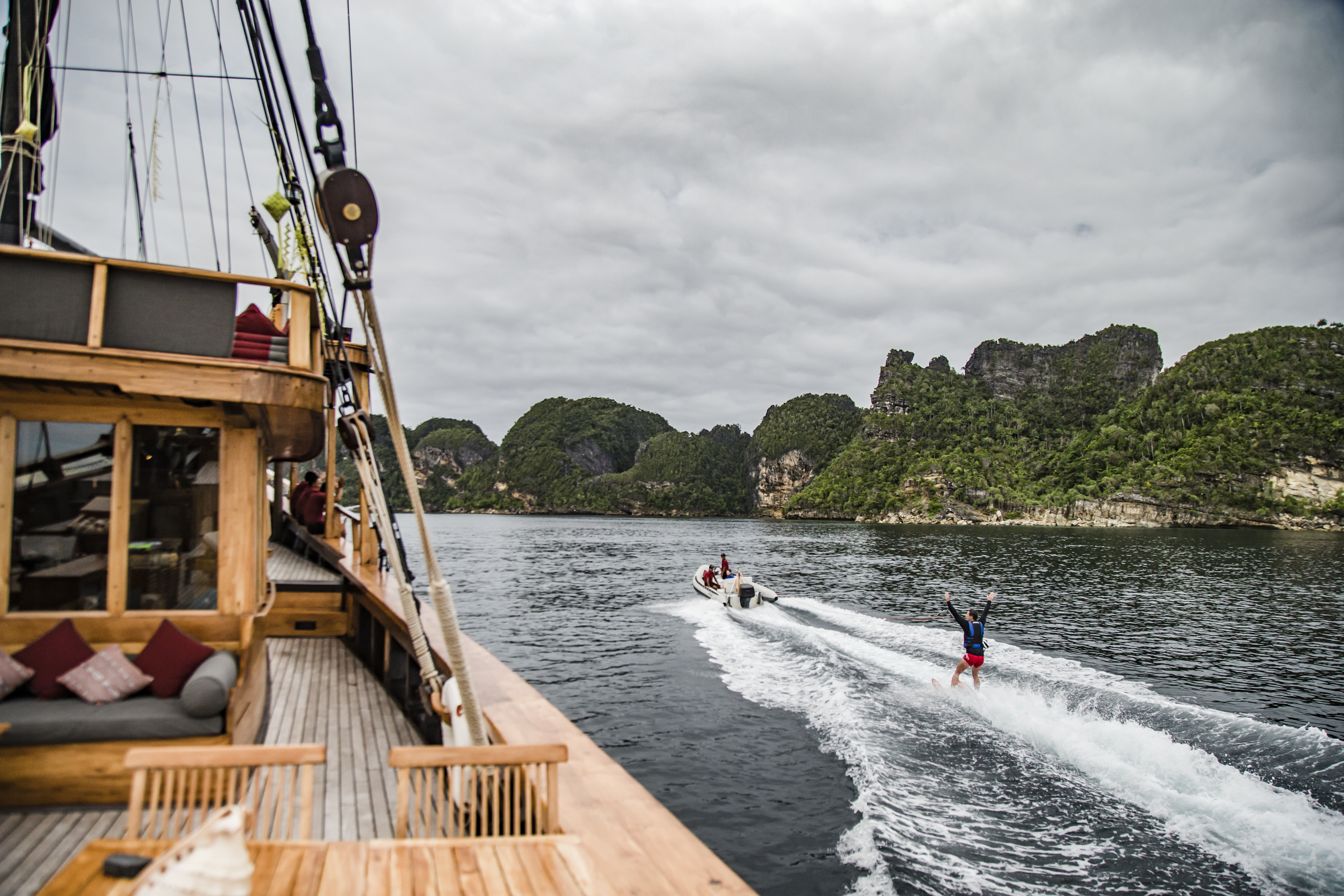
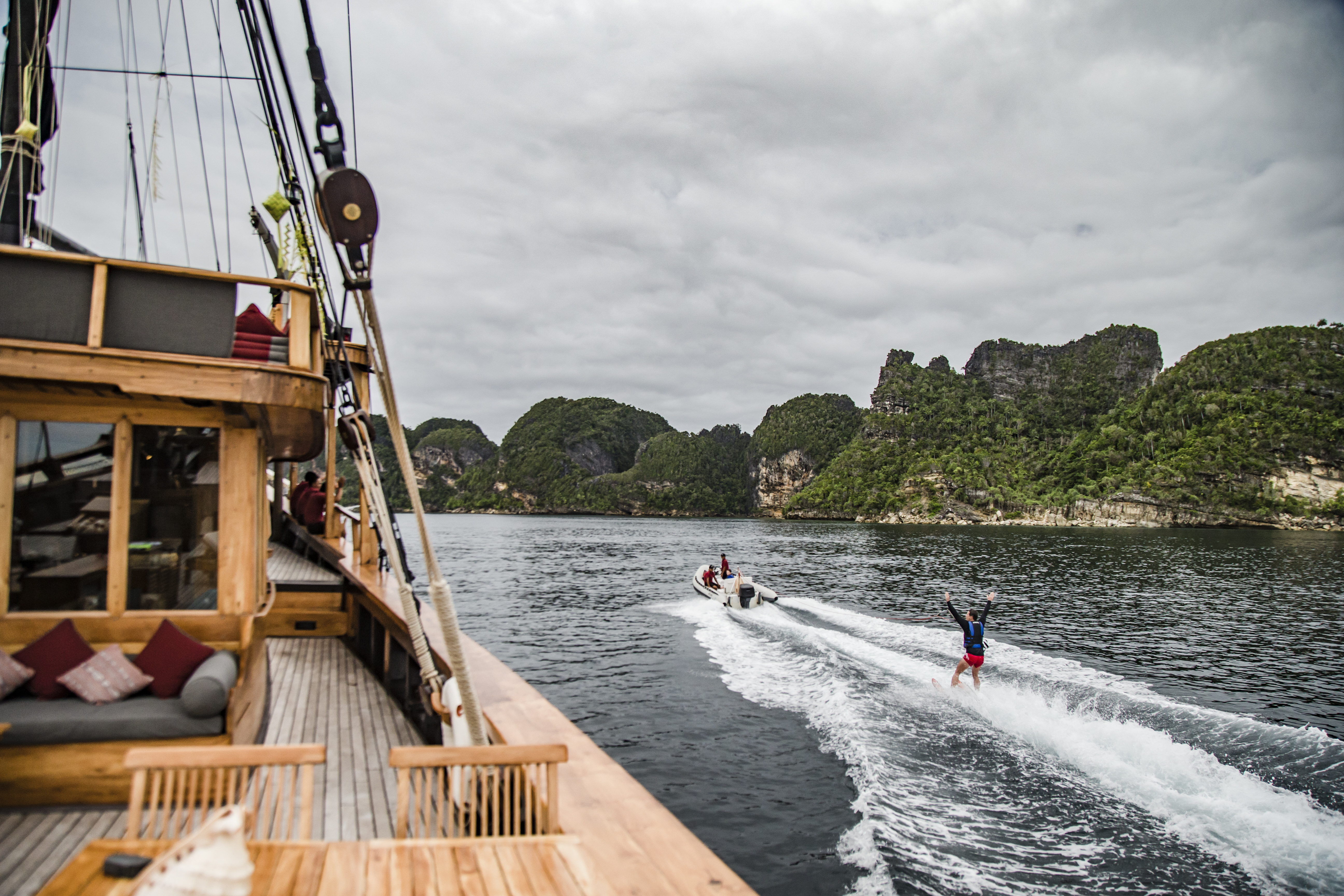
There is a kind of diving trip built for people who want to log four or five dives a day, surface, eat, and descend again, treating the week as a marathon. Those trips exist and they serve their guests well. A Silolona Sojourns journey is deliberately not that. The pacing is gentler: a dive, a long unhurried lunch, a snorkel over a shallow reef, an afternoon on deck as the light goes gold, a dinner that someone spent real care preparing. For a certain traveler this reads as a shortfall. For the traveler this article is written for, it reads as the entire reason to come.
If your week is measured only in the number of times you got wet, a private phinisi is the wrong vessel. If it is measured in whether your first dive was calm enough to actually remember, whether you had time to sit with what you saw, whether the crew felt like people rather than staff, then the pacing is not a compromise. It is the design. One of Silolona Sojourns’s guests . wrote afterward that the crew made him feel like family, and thanked them for giving him the courage and the spirit to try scuba at all. That sentence is the whole case. He did not need more dives. He needed the right one.
The honest note nobody else will give you
Learning to dive later in life carries small realities worth naming plainly. If you have significant heart or lung conditions, you will need a doctor's clearance, and a responsible operator will ask for it. Ears that struggle to equalize can make the first few meters uncomfortable until you learn the technique. None of this is a reason not to begin. All of it is a reason to begin somewhere with an experienced instructor, calm water, and no pressure to keep up with anyone. That combination is exactly what a small private expedition provides, and exactly what a busy dive resort often cannot. The gentlest possible introduction to diving happens to be the most privately delivered one, which is a coincidence that works entirely in your favor.
The best age to start is the one you are
The people who regret learning to dive are vanishingly rare. The people who regret not learning are everywhere, and they tend to phrase it the same way: I always meant to. That one guest with initial N.K. was one of them until the tenth of January, and now he is the person who saw a dugong on his first dive. The reef in Raja Ampat has been assembling itself for millions of years. It is not going anywhere in the time it takes you to decide, but the version of you willing to try gets no younger, and the water is warm, and someone patient is waiting to teach you.
WithSilolona Sojourns, a first descent is treated as what it is: a quiet, significant thing, not a box to tick. AboardSilolona and Si Datu Bua, the small guest numbers mean an instructor can give a first-time diver the unhurried, private attention that turns nerves into wonder, whether your journey is throughRaja Ampat, the reefs and dragons ofKomodo, or the spice-laden history ofBanda. If you have been carrying the quiet question of whether it is too late, we would be glad to answer it in person; you are warmly invited toenquire and begin the conversation.
References
Allen GR, Erdmann MV. Reef fishes of the East Indies. Perth: Tropical Reef Research; 2012. Available from: https://doi.org/10.1071/9780643109391
Veron JEN, Devantier LM, Turak E, et al. Delineating the Coral Triangle. Galaxea J Coral Reef Stud. 2009;11(2):91-100. doi:10.3755/galaxea.11.91.
Mangubhai S, Erdmann MV, Wilson JR, et al. Papuan Bird's Head Seascape: emerging threats and challenges in the global center of marine biodiversity. Mar Pollut Bull. 2012;64(11):2279-2295. doi:10.1016/j.marpolbul.2012.07.024.