

Sailing with Children: Why a Phinisi Expedition Is the Best Education Money Can Buy
The Best Classroom for a Child May Not Be a Classroom at All
A child learns more in a week at sea than most parents expect, and almost none of it looks like school. There is no desk, no screen, no worksheet. There is a reef to read, a sail to set, a language to try out on a patient crew, and a night sky with no city to dim it. This is the quiet argument behind a family expedition yacht Indonesia voyage: that the most lasting education is not delivered, it is encountered.
For parents who have decided that experiences matter more than possessions, this is not a radical idea. It is simply how children have always learned best, through curiosity, repetition, and the freedom to discover. A phinisi expedition does not dress this up as a program. It builds the conditions and lets the learning happen. The question is not whether a voyage can entertain your children. It is whether it can change how they see the world. The answer is yes, but only when the trip is built around their curiosity rather than a fixed itinerary.
Why Sailing Teaches Differently From Travel Built for Comfort
Most family holidays are designed to remove friction. Everything is easy, predictable, and arranged so that a child never has to wait, wonder, or adapt. A voyage works the other way. The sea sets the pace, the weather has opinions, and the day is shaped by real conditions rather than a schedule. That is not a flaw. It is the entire point.
Children rise to environments that ask something of them. On a phinisi, the reef does not appear on a screen, it appears off the swim platform. The fish are not named in an app, they are identified by a child holding a field journal. Research on time spent in natural settings points to measurable gains in children's attention, mood, and creativity, the very faculties that comfort driven, screen heavy travel tends to dull.¹ A voyage simply makes that immersion complete. There is nowhere for the digital world to intrude, and into that space rushes everything else.
The Reef as a Living Marine Biology Lesson
Indonesia sits at the heart of the Coral Triangle, the richest marine region on Earth, and Silolona's routes reach its center. Raja Ampat alone, best sailed October to April, holds more than 600 islands with nearly 1,200 documented fish species and 540 coral species. For a child, that is not a statistic. It is a reason to get in the water.
A reef teaches without trying. A child learns to identify a parrotfish and then understands why the sand on the beach is white. They learn that a manta, always observed calmly and never chased or fed, returns to the same waters year after year. They learn that a reef is not scenery but a system, and that systems can be harmed or protected. Marine scientists have shown that even reefs under pressure can sustain remarkable abundance where local stewardship is strong, a lesson in both wonder and responsibility that lands far more deeply at the edge of a real reef than in any classroom.² A child who has felt that does not forget it.
Navigation Is a Life Skill, Not a Gimmick
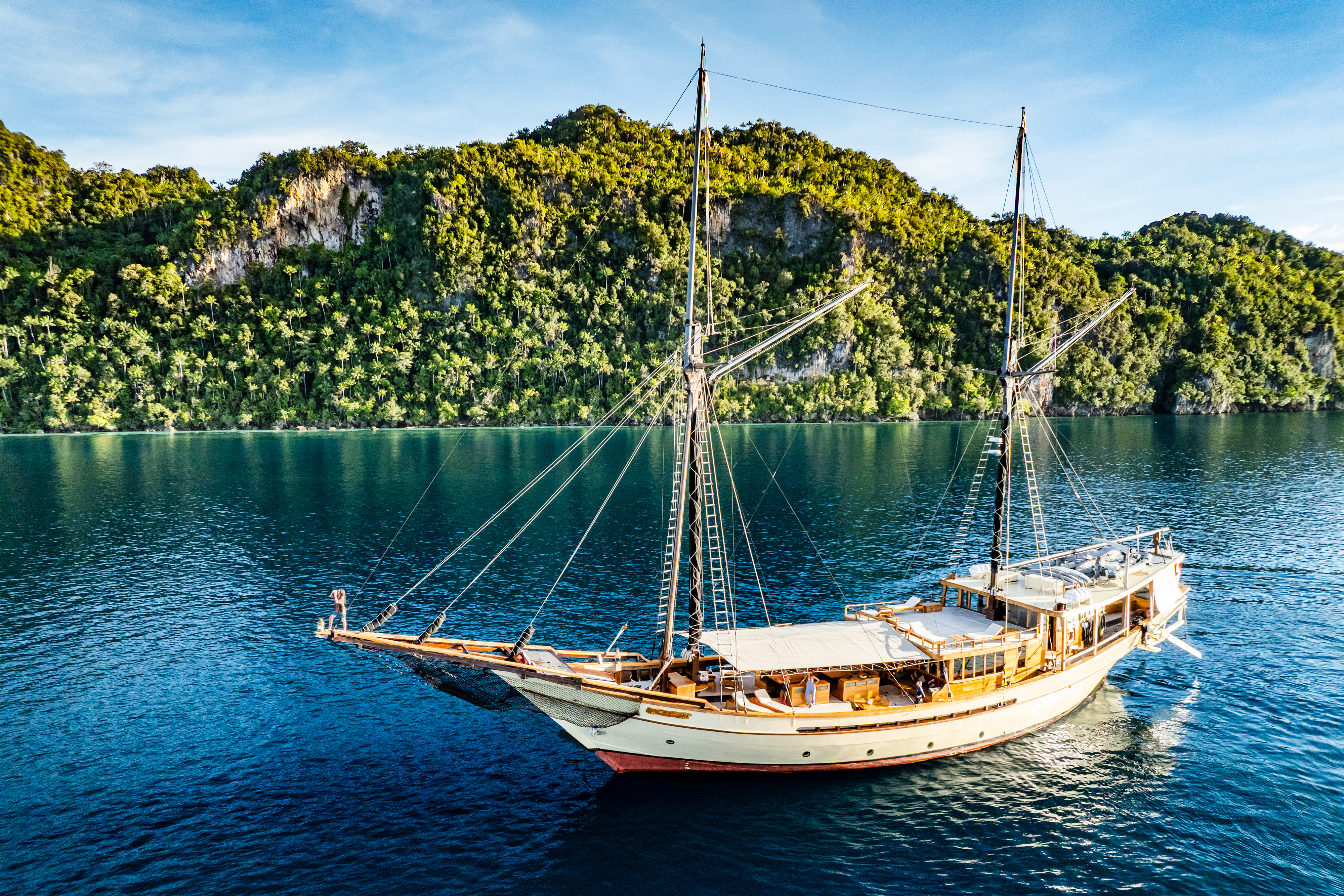
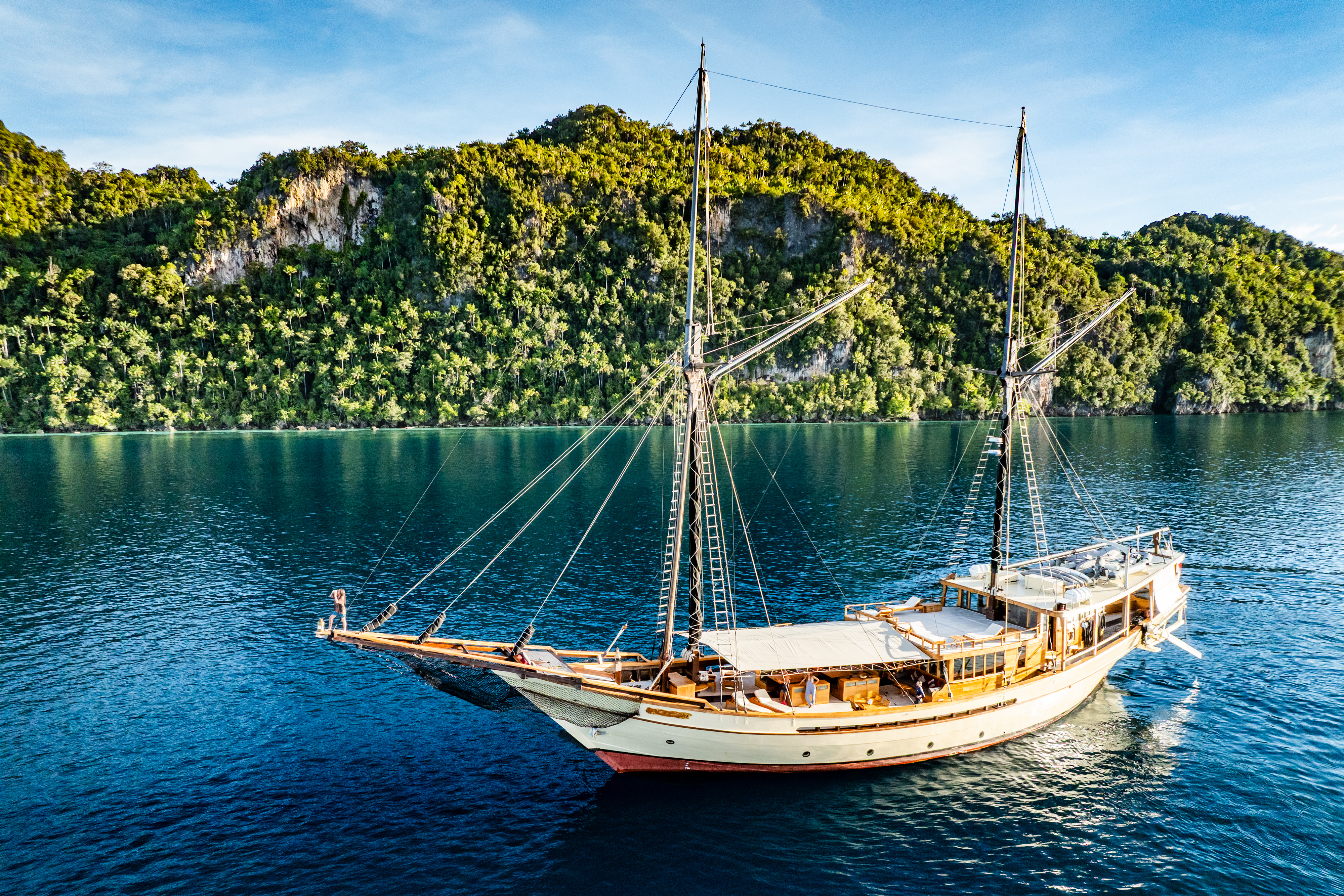
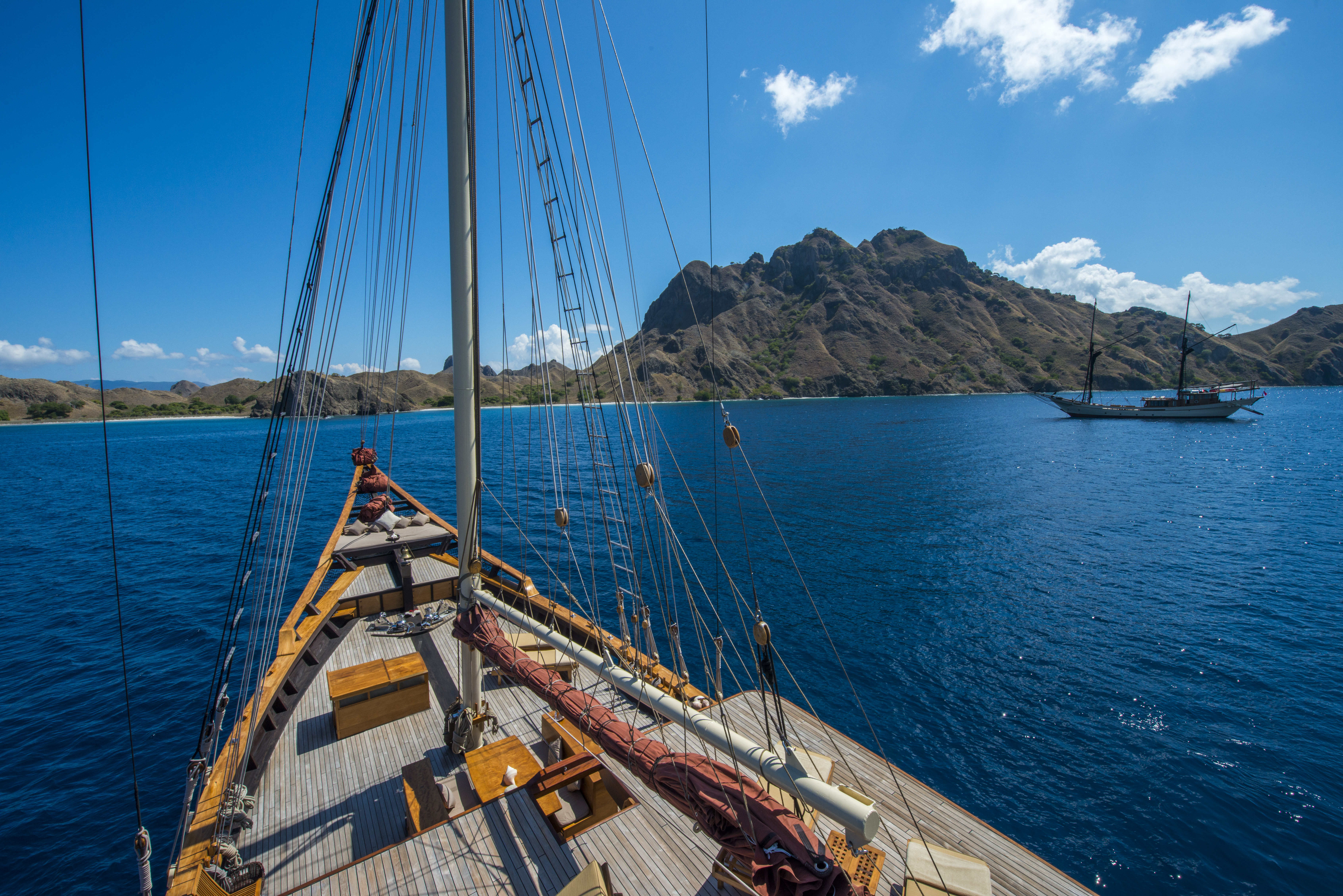
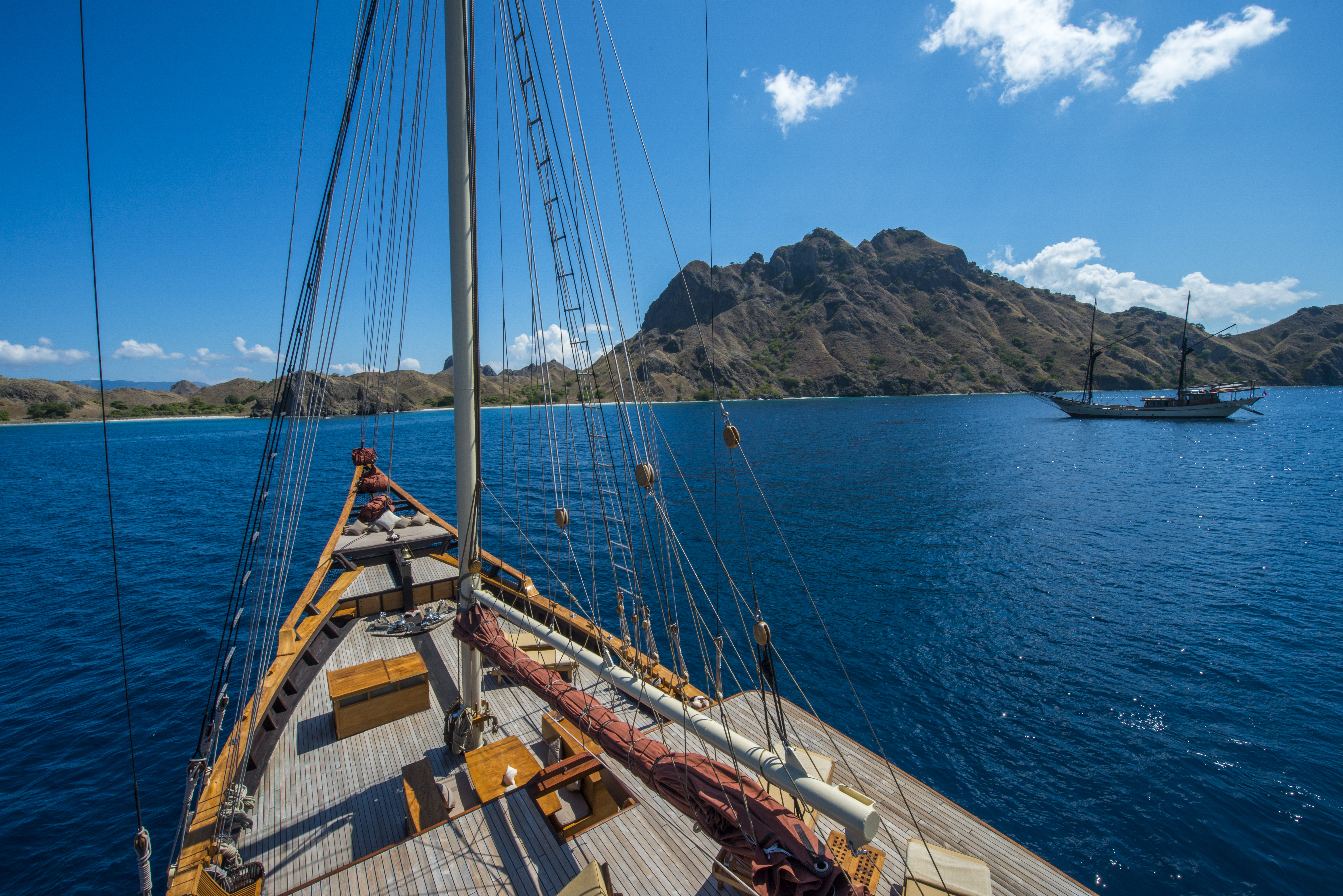
A traditional phinisi is a working sailing vessel, and that makes the deck one of the best teachers a child can have. Silolona's vessels draw on South Sulawesi's living boatbuilding tradition, recognized by UNESCO as intangible cultural heritage, and the crew carries decades of local navigational knowledge passed down through generations of Bugis and Makassarese seafarers.
This is real craft, not a performance staged for young guests. A child can learn how a crew reads the wind, why the sea changes color over a reef, how the decision to anchor or move is made, and what the points of a compass actually mean when there is no road to follow. They can watch sails being set and understand that weather is something you observe and respect, not an icon on a phone. A child who learns to tie a proper knot or call out a landmark on the horizon has gained something a screen cannot give: competence, earned in the real world. That confidence tends to come home with them.
Cooking and Language: Lessons That Travel Home
The richest learning on a voyage is human, and it happens in two places: the galley and the conversation. In the galley, the cook can welcome children in to help prepare the Asian fusion dishes served on board, showing them where ingredients come from and how a kitchen at sea works. It is a cooking lesson with a view that no culinary school can offer, and the result is something the whole family eats together that evening.
Language arrives just as naturally. The crew, patient and warm, become a child's first teachers of Bahasa Indonesia, trading words through the day until a shy guest is greeting, counting, and thanking people in a new tongue. And ashore, with permission and care, a visit to a coastal village lets children meet local hosts and artisans and watch ikat textiles take shape, framed as a genuine encounter rather than a spectacle to photograph. Studies of cultural and heritage tourism point to exactly this kind of meaningful, well-managed exchange as the source of lasting value for both young visitors and the communities who welcome them.³ These are the lessons that do not end when the voyage does.
How the Crew Engages Children Without Lecturing
None of this works without the people, and this is where a phinisi quietly separates itself. Silolona's crew return season after season, the same people who handle clearances, provisioning, and the rhythm of the day so that you can be present with your children rather than managing logistics. They are not childminders. They are guides, storytellers, and patient teachers who know how to pitch a reef briefing or a navigation lesson to a ten-year-old without ever talking down.
In practice, this means a deck team that keeps a discreet eye on young swimmers, a galley that adapts to a fussy eater as readily as it plates a careful dinner, and guides who turn a tender ride into an unplanned lesson on tides. Because the crew anticipates rather than reacts, the learning is never forced. It unfolds in the natural course of the day, which is exactly why it sticks.
Experiences Over Possessions Is Not a Slogan
There is a philosophy underneath all of this, and many thoughtful parents already hold it: that what you give a child to experience shapes them more than anything you give them to own. A voyage is the clearest expression of that idea. The reef, the language, the night sky, the afternoon learning to read the wind, none of it can be unwrapped, outgrown, or left in a drawer. It becomes part of who the child is.
This is the honest case for the trip. A possession answers a want for a season. An experience like this answers a question the child did not know they had, and keeps answering it for years. That is not sentiment. It is simply how formative memory works, and it is why parents who can give their children almost anything increasingly choose to give them this instead.
What Children Actually Bring Home
Ask a child what they remember from a voyage, and they rarely mention comfort. They mention the turtle that surfaced beside the tender, the word they learned to say correctly, and the night the sky was so dark the Milky Way became a band of light. They bring home a confidence in the water, a curiosity about other cultures, and a respect for the sea and the people who live by it.
These are not souvenirs. They are a way of seeing, and they tend to surface long after the trip, in how a child talks about the ocean, in a sudden interest in marine science, in the easy way they greet a stranger from another culture. That is the real return on a voyage, and it is the kind that compounds.
Planning a Voyage Around Your Children
A family expedition rewards honest planning. Silolona's seasonal rhythm follows Indonesia's changing seas. Komodo, Flores, and Alor are best planned from May to September, with dramatic landscapes, ranger led wildlife encounters, and reef rich anchorages. Raja Ampat, Cenderawasih Bay, Banda, and Papua are generally shaped around October to April. These are planning guides, not fixed promises, refined by weather, sea conditions, and the kind of journey you want.
Most Indonesian yacht journeys run 7 to 14 days, with a 7-day voyage usually focusing on a single region, which often suits younger children best. Share their ages, swimming and snorkeling experience, interests, and dietary needs in advance, and the crew can shape the learning and the pacing around your family rather than a generic template. The goal is not to do the most. It is to give each child the right version of the voyage.
The Lesson That Outlasts the Trip
A voyage with your children is not measured by what they saw, but by who they became while seeing it. Indonesia, with its 17,000 islands and its living cultures, is one of the few places left where a child can still discover the world slowly, with their own eyes and hands, far from the screen. A phinisi gives them that, and gives you the rare privilege of watching it happen. The best education has never been something you can simply buy. But you can give your children the conditions for it, the sea, the reef, the language, the crew, and the time, and let the voyage do the rest.
With Silolona Sojourns, a family voyage becomes an education your children cannot find anywhere else. Sail by private phinisi into reef-rich anchorages and quiet cultural encounters, with marine discovery, time in the galley, navigation on deck, and language learning woven naturally through the days, all guided by a crew who teach without ever lecturing. Whether you sail aboard MSV Silolona or MSV Si Datu Bua, the journey is shaped around your children's ages, curiosity, and pace. To begin designing a voyage that gives your children experiences over possessions,enquire with theSilolona Sojourns team.
References
Tillmann S, Tobin D, Avison W, Gilliland J. Mental health benefits of interactions with nature in children and teenagers: a systematic review. J Epidemiol Community Health. 2018;72(10):958-966. doi:10.1136/jech-2018-210436
Cinner JE, Huchery C, MacNeil MA, et al. Bright spots among the world's coral reefs. Nature. 2016;535(7612):416-419. doi:10.1038/nature18607
Silberberg T. Cultural tourism and business opportunities for museums and heritage sites. Tour Manag. 1995;16(5):361-365. doi:10.1016/0261-5177(95)00039-Q
Silolona Sojourns. Komodo National Park Yacht Charter. Available from: https://silolona.com/destination/komodo-archipelago/