

Stargazing at Sea: The Cultural Ethics of Expedition Travel
The most revealing question to ask any operator in eastern Indonesia is not where they take you. It is who knows their name when they arrive. A yacht can drop anchor off any village in the archipelago and send guests ashore with cameras. The harder thing, the thing that takes years and cannot be bought in a season, is to be expected. To have the village headman walk down to the jetty because the relationship is old, the terms are understood, and the visit was arranged long before the sails came into view. That distinction is the whole of it.
This is what responsible luxury travel Indonesia actually demands, and it is why ethical cultural immersion Indonesia cannot be improvised. Silolona Sojourns has spent more than two decades sailing these waters, and the framework below is how that time translates into conduct. It is not a marketing position. It is a way of entering places that belong entirely to the people who live in them.
Authenticity Is a Verb, Not an Adjective
There is a version of cultural travel that arranges itself for the visitor. The dance begins when the tender lands. The ceremony exists because the booking exists. The community offers a version of itself it believes the outsider wants to see, and everyone goes home content that something real occurred. Yet nothing real occurred. A transaction had simply worn the costume of an encounter.
The distinction we draw is not between what can be arranged and what cannot. A great deal can be arranged, and arranging it well is its own quiet craft. On Pulau Ai in the Banda Islands, the ceremonial war canoes known as Kora-Kora are paddled by forty men to the rhythm of drum and chant, and a well connected operator can bring guests to witness them.¹ The real difference lies one layer deeper, in what the arrangement opens onto. It is the difference between watching something staged for you and being received into something that was already underway. When the timing is right, that might mean a private dinner within a centuries old spice trade mansion, its walls holding four hundred years of history. Or it might mean standing witness to the Cakalele war dance, not as a scheduled performance but as it unfolds inside a genuine adat ceremony such as a Buka Kampung or a Naik Belang, where the dance belongs to the occasion and you are simply fortunate to be present for it.
That is the line worth drawing. Almost anyone can arrange a ceremony. The rarer thing is to be admitted to the moment when it still means something to the people performing it, and to accept that this depends on relationships and timing you do not control. On Pulau Ai, the offerings for any adat ritual are prepared weeks in advance.¹ That is not something you can order. A culture that decides when and how to welcome you is a culture that still belongs to itself.
How a Community Is Chosen
Selection is the first ethical decision, and it runs opposite to how most itineraries are built. The wrong way is to scan a map for photogenic villages and route the yacht toward them. The right way begins with the relationship and lets the route follow.
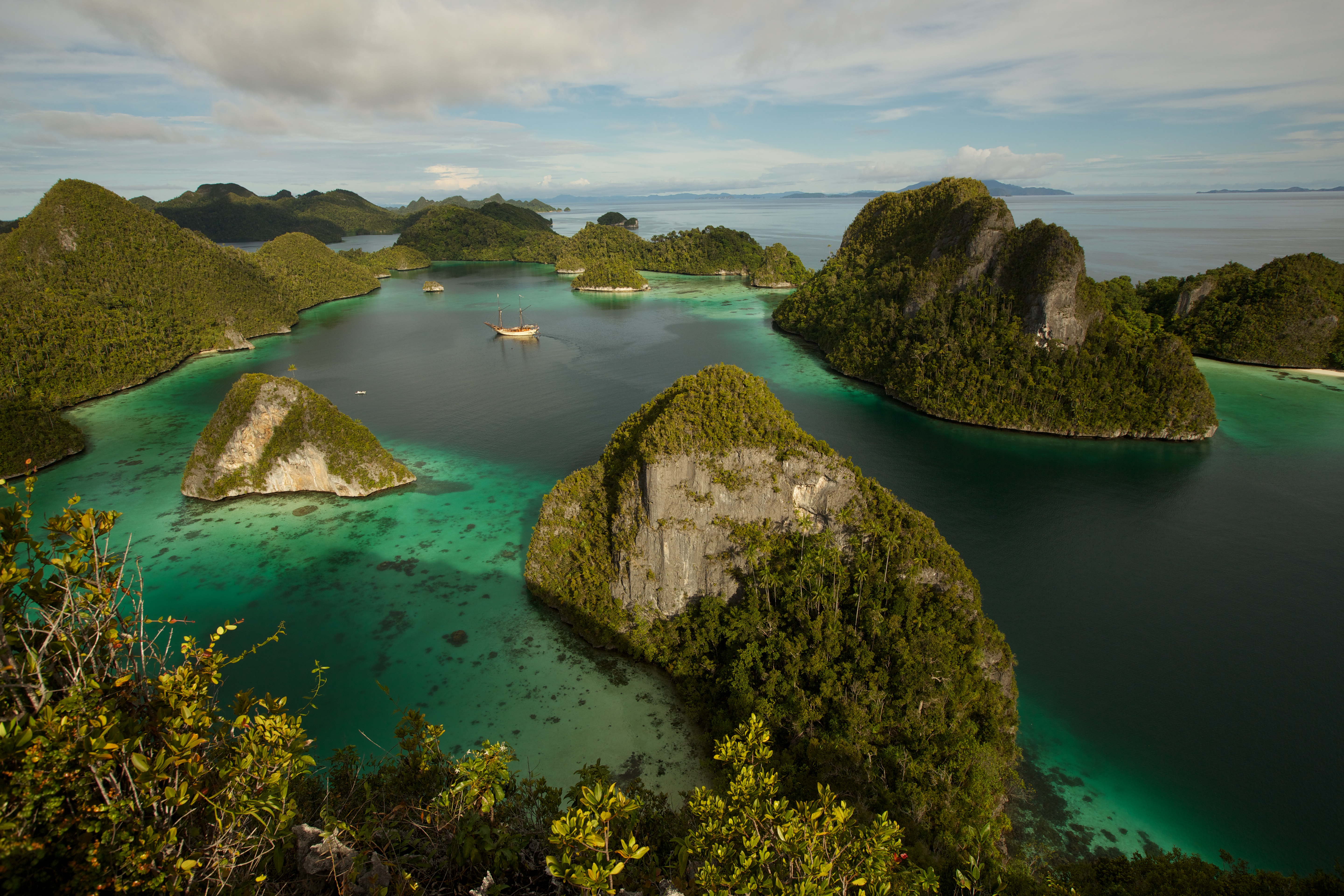
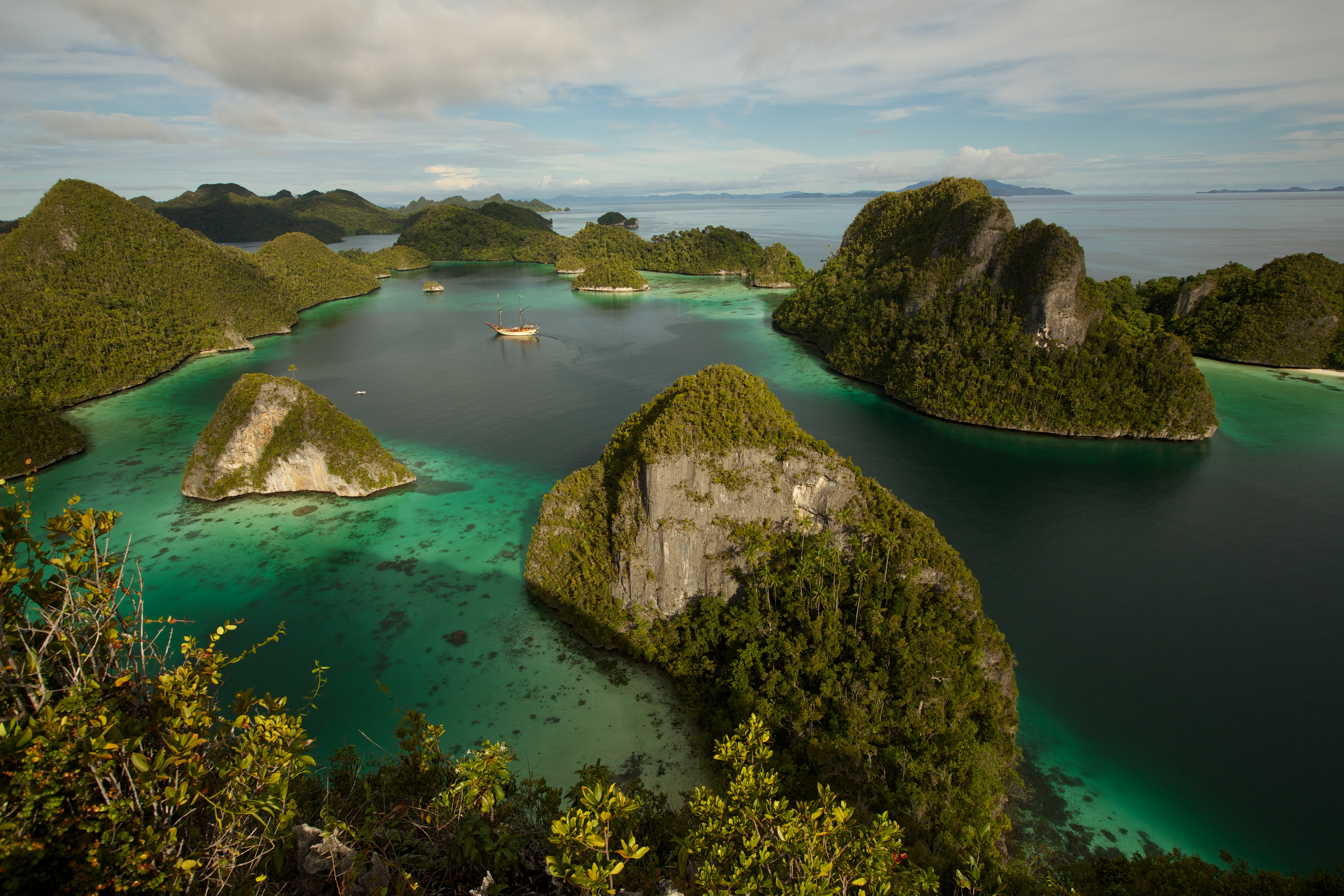
Silolona works within a network of communities built over thirty years of operating across the archipelago, from the Banda spice islands to the Bird's Head Seascape of West Papua. A community enters that network only where there is a standing relationship, a local host who can speak for the village, and a clear sense that a visit will be welcome rather than merely tolerated. Where Papua's Indigenous communities and the Asmat artistic heritage are concerned, this care is not optional. It is the difference between cultural learning conducted with permission and the old extractive habit of treating people as scenery. The map does not decide. The relationships decide.
Consent Is Asked Before the Anchor Drops
Consent in this context is not a waiver signed on a clipboard. It is a sequence of permissions, sought in advance and capable of being withdrawn. Will the village receive visitors that week. Which areas are open and which are not. May anything be photographed, and may certain things never be. Is there a ritual calendar that a visit would intrude upon, and if so, the visit moves or does not happen.
These questions are settled before guests are ever told a stop is confirmed, which is why itineraries here are shaped rather than fixed. A genuine cultural encounter cannot be guaranteed in a brochure, because guaranteeing it would mean overriding the very consent that makes it ethical.
A Visit Is an Exchange, Not a Viewing
The structural flaw in conventional cultural tourism is that value flows one direction. The visitor receives a memory and a photograph. The community receives footfall and disruption. An ethical framework has to reverse some of that flow, and the cleanest way is to treat every visit as a genuine exchange rather than a viewing.
In practice, this means the encounter is reciprocal. Guests come as participants, not spectators, learning something rather than collecting something. Where craft traditions are alive, the textile makers of Sumba and their ikat among them, the exchange can mean purchasing directly from the artisan at a fair price rather than haggling for a souvenir.² It means meals and provisioning that draw on local supply where possible, so that the yacht's presence circulates value rather than merely consuming attention. It means that where a community hosts a ceremony or opens its workshops, the arrangement is compensated in terms the community itself sets, not in terms imposed by the visitor. Money is the crudest form of this and rarely the most useful. More often the lasting value is the repeat custom, the introductions to other guests, and the quiet preference Silolona gives to communities it already knows over novel stops that would photograph well and contribute nothing. The test is simple. After the tender leaves, is the community better off for having received you, or only quieter. If the honest answer is only quieter, the visit was theater.


What Authentic Costs, and What Performative Hides
The difference between authentic and performative immersion is finally a question of who absorbs the inconvenience. In performative tourism, the community absorbs all of it, bending its rhythm to the visitor's schedule. In authentic immersion, the visitor absorbs it, accepting that weather, ritual obligation, and the community's own priorities outrank the itinerary.
This is also where the long relationship proves itself. A village that has known an operator across many seasons does not perform for that operator. It relaxes around it. Children are not arranged for a photograph. The headman speaks plainly because there is trust to speak plainly into. That ease cannot be staged and it cannot be rushed, which is precisely why it functions as a moat. Any yacht can buy access to a place once. Almost none can return, year after year, and be received as something close to family. The reciprocity ethos and the participant-not-spectator approach are not slogans. They are what more than twenty years of showing up correctly actually buys.
The Sky Above the Same Communities
There is a reason stargazing belongs in a discussion of cultural ethics. Far from any city, anchored in the dark between islands, you look up at the same sky the Bugis and Makassar navigators read to cross these seas long before instruments existed. The phinisi beneath you descends from that tradition, a South Sulawesi boatbuilding heritage that UNESCO recognized as intangible cultural heritage of humanity in 2017.³ The stars are not a backdrop. They are the original chart, and the communities you visit are the living continuation of the people who first drew it. To travel well here is to remember that you are a guest under someone else's sky.
With Silolona Sojourns, the ambition is to enter Indonesia's living communities the way they deserve to be entered, slowly, with consent, and with a relationship that outlasts any single voyage. AboardSilolona and Si Datu Bua, a journey through theSpice Islands of Banda, the reefs and villages ofRaja Ampat, or theKomodo archipelago is shaped around what each place can authentically offer rather than what a schedule would prefer to promise. To begin a conversation about a voyage built on these terms,enquire with the team atSilolona Sojourns.


References
Banda Islands itinerary, Silolona Sojourns. Pulau Ai ceremonial Kora-Kora canoes and adat ritual practice. Available from: https://silolona.com/destination/spice-island-of-banda/
Silberberg T. Cultural tourism and business opportunities for museums and heritage sites. Tour Manag. 1995;16(5):361-365. doi:10.1016/0261-5177(95)00039-Q
UNESCO. Pinisi, art of boatbuilding in South Sulawesi. Representative List of the Intangible Cultural Heritage of Humanity; 2017. Available from: https://ich.unesco.org/en/RL/pinisi-art-of-boatbuilding-in-south-sulawesi-01197