

The Reef We Help Keep: Silolona and the Misool Marine Reserve
Most conservation language is written in the future tense: what a place could become, what a donation might protect, what the ocean will look like if enough people care. The Misool Marine Reserve is unusual because its case can be made almost entirely in the past tense, in numbers that were counted rather than hoped for. That is the reason Silolona Sojourns has quietly funded it, year after year, for the better part of two decades. When you charter a Silolona journey through southern Raja Ampat, you are not underwriting a promise. You are underwriting a patrol schedule, a ranger payroll, and a body of water whose recovery has already been measured.
This is a piece about what that support actually buys, told through the organisation Silolona backs most consistently. We prefer a ledger to a manifesto, and the Misool Foundation keeps the kind of ledger that rewards reading closely.
Most conservation language is written in the future tense: what a place could become, what a donation might protect, what the ocean will look like if enough people care. The Misool Marine Reserve is unusual because its case can be made almost entirely in the past tense, in numbers that were counted rather than hoped for. That is the reason Silolona Sojourns has quietly funded it, year after year, for the better part of two decades. When you charter a Silolona journey through southern Raja Ampat, you are not underwriting a promise. You are underwriting a patrol schedule, a ranger payroll, and a body of water whose recovery has already been measured.
This is a piece about what that support actually buys, told through the organisation Silolona backs most consistently. We prefer a ledger to a manifesto, and the Misool Foundation keeps the kind of ledger that rewards reading closely.
A reserve that began as a shark finning camp
In 2005, in the waters off Batbitim in southern Raja Ampat, a partnership between local Matbat and Matlou communities and private enterprise converted a recently abandoned shark finning camp into the region’s first no-take zone. The reef there had been part of the machinery of the global fin trade, one node in an industry that kills on the order of a hundred million sharks a year. Two decades later that same water is a Misool Foundation-managed reserve of roughly 300,000 acres, about 1,220 square kilometres, leased directly from the villages that own it and comprising two distinct no-take zones linked by a restricted-gear corridor.1 It sits inside the Coral Triangle, a region documented to hold on the order of 1,200 fish species and 540 coral species,2 and the reason it still holds them is not luck. It is enforcement, paid for on a schedule.
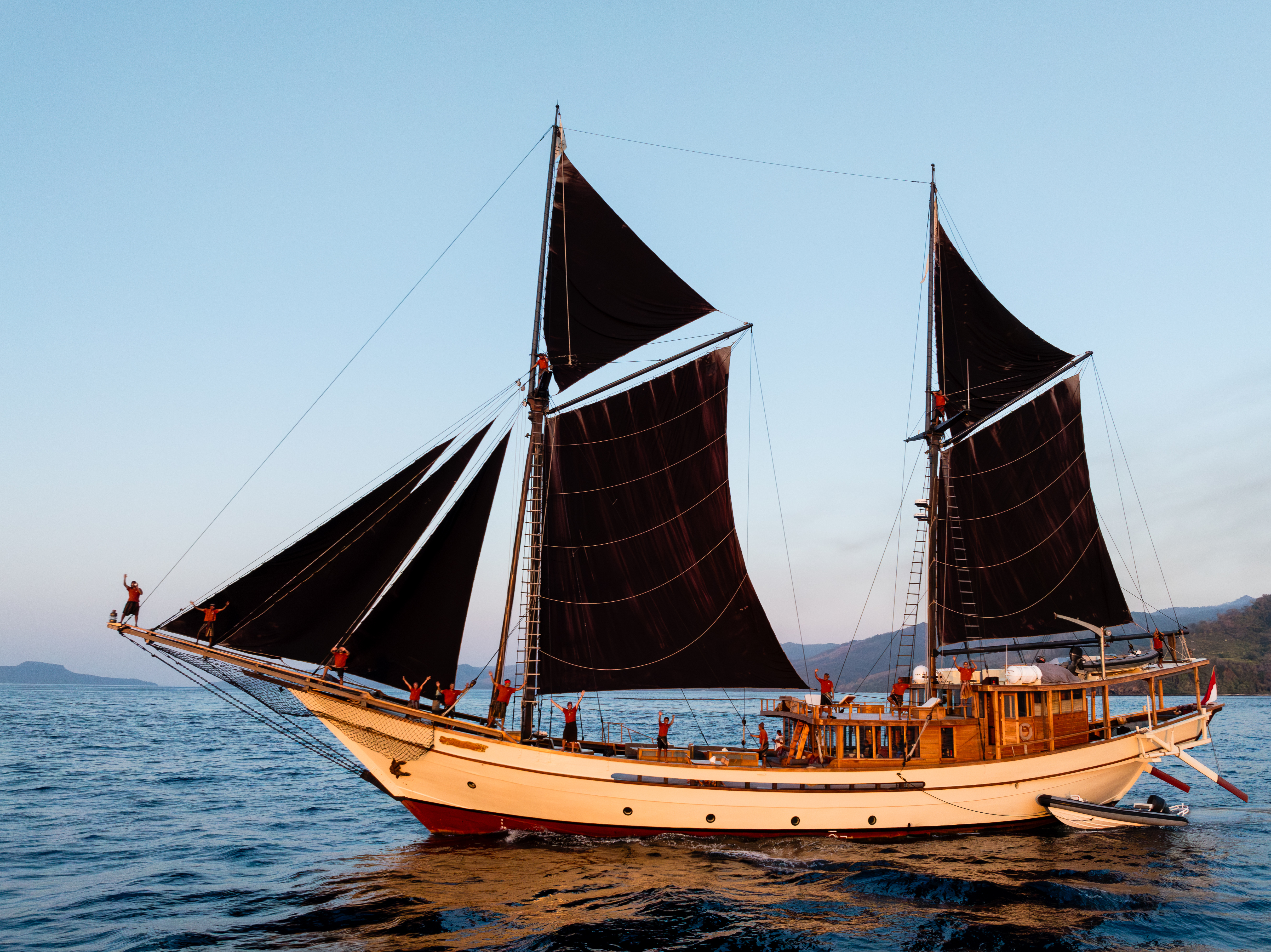
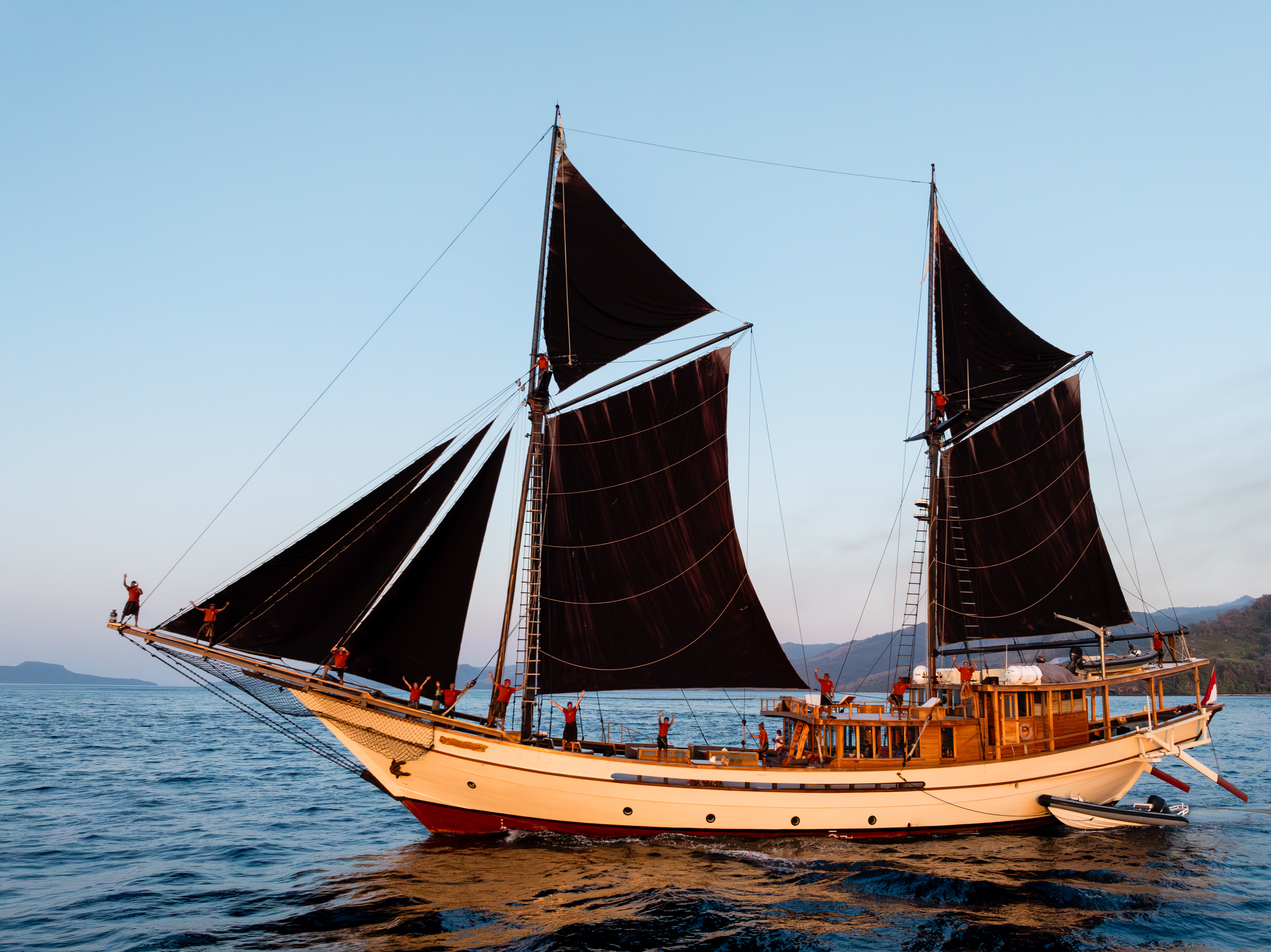
What enforcement actually looks like
The reserve is protected by the Misool Ranger Patrol, an eighteen-person unit drawn entirely from the local area, some of whom have been with the Foundation since 2005. The rangers move between three stations using five dedicated patrol boats and now conduct more than a thousand patrols a year, every day of the year, backed by radar and drone surveillance and supported by the Indonesian Marine Police. They intercept roughly sixty illegal fishing boats annually, and between patrols they protect sea turtle nests and clear plastic from local beaches.1 This is the least photogenic entry in the ledger and the most important. A no-take zone is only a line on a chart until someone is on the water at three in the morning making it real, and that person has to be paid whether or not a guest is aboard that week. Recurring, unglamorous funding is precisely what keeps a patrol from lapsing, and it is the part of conservation that charter brochures almost never mention.
The numbers the patrols produced
Because the Foundation has run scientific surveys at fixed sites since 2007, the reserve can show its work. Average fish biomass inside the no-take zones increased by 248 percent between 2007 and 2021, and at some sites the gain has reached far higher.1,3 Baited underwater video surveys show shark numbers inside the reserve up 190 percent since 2012, and an earlier study found roughly twenty-five times more sharks inside the protected water than outside it.1,4 The manta population has climbed steadily over the same period, with oceanic manta sightings rising sharply across the 2010s. In 2019 the reserve earned the Blue Park programme’s highest honour, a platinum-level award, and its management plan was updated in 2024 to keep the approach science-based and long-term.3
These are not projections. They are before-and-after counts, which is what makes them worth citing. A reef that was being stripped for fins now holds some of the highest reef fish biomass recorded anywhere in Raja Ampat, and the recovery is legible precisely because someone kept measuring it while someone else kept funding the measuring.
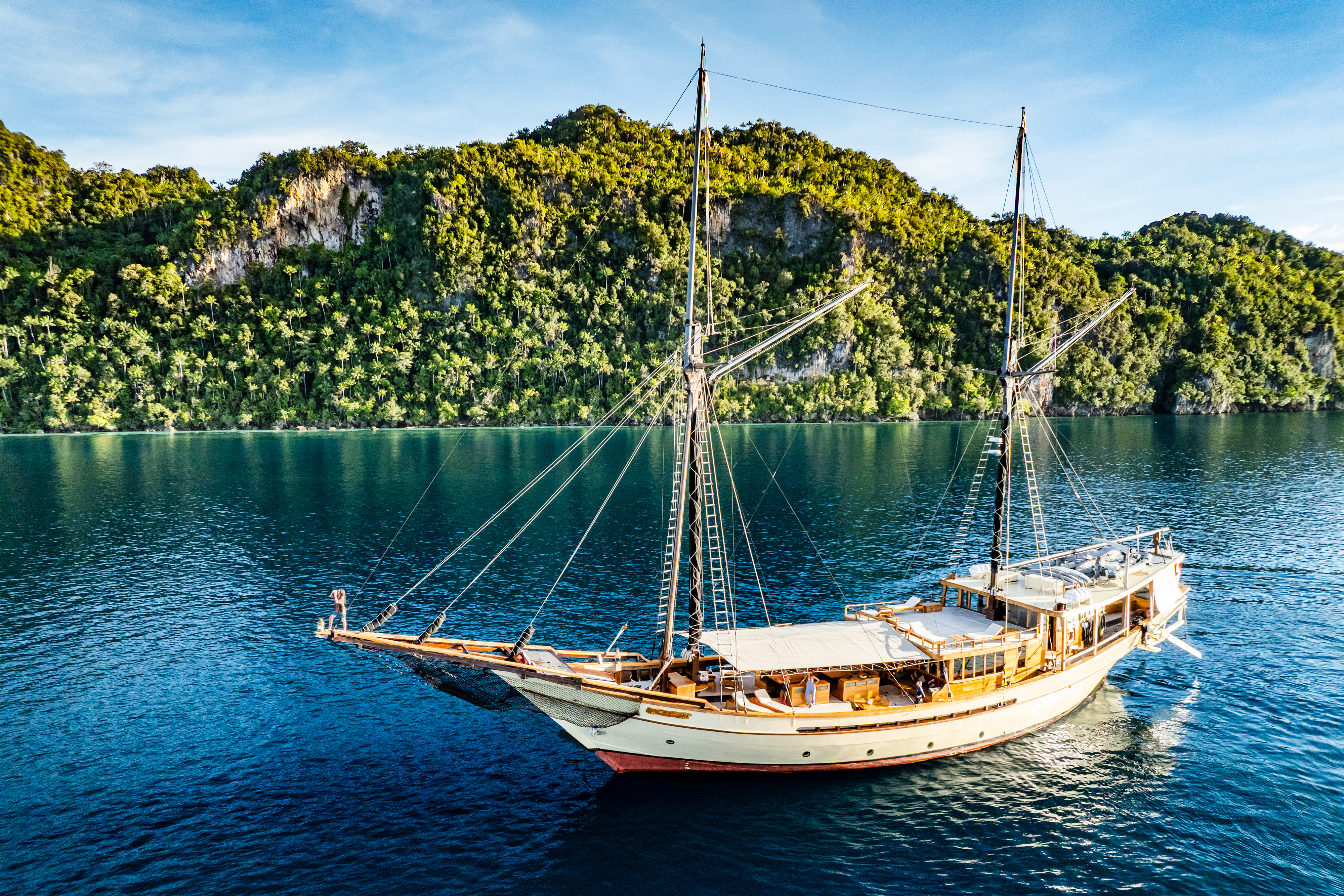
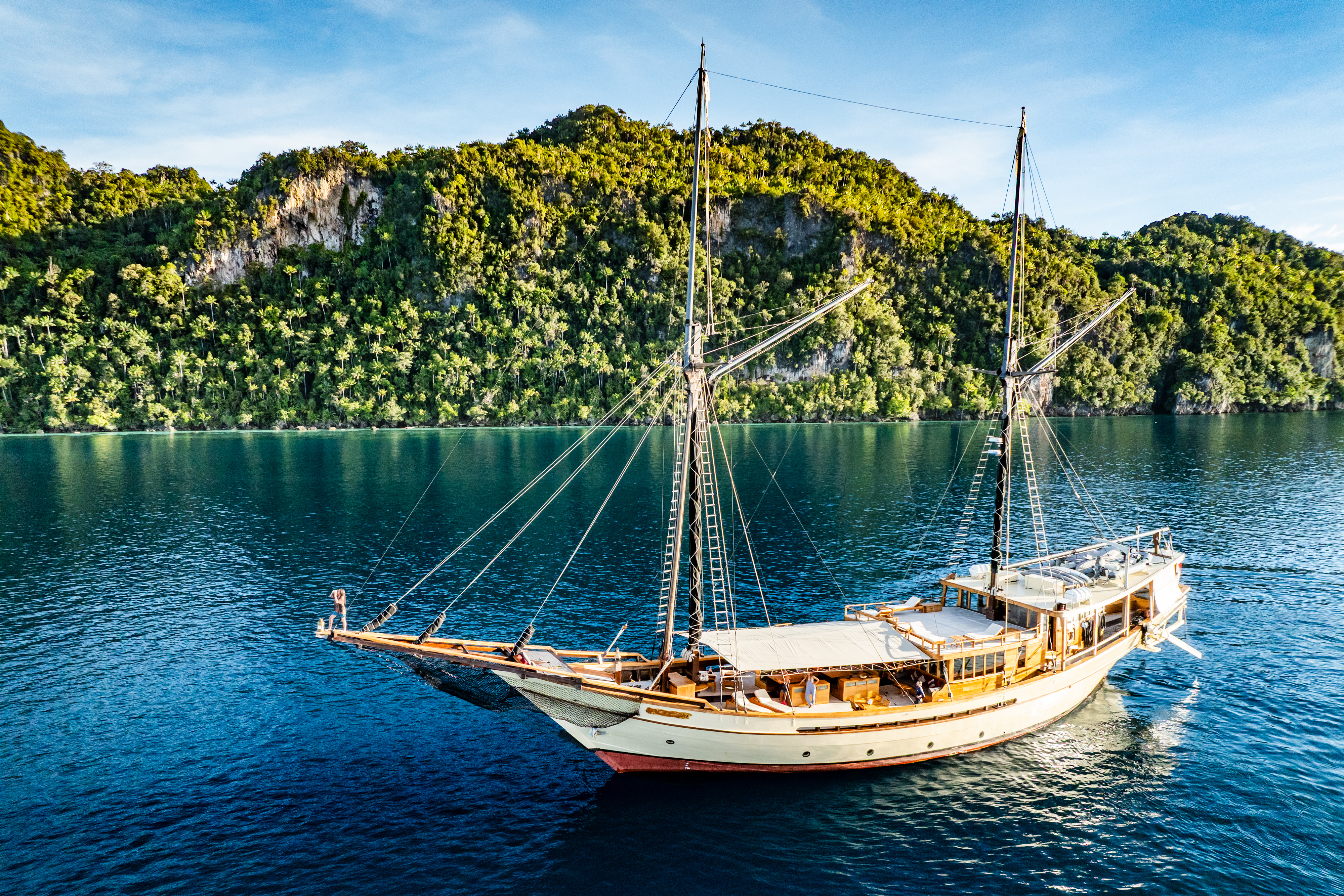
Where Silolona fits, stated plainly
Silolona Sojourns provides annual financial support to the Misool Foundation toward the protection of this reserve. That is the honest shape of the contribution: not a headline-grabbing one-season sponsorship, but a recurring commitment that has run alongside the reserve’s own two decades of work. Silolona does not claim the reserve’s recovery as its own achievement; the ranger patrol, the community leases, and the surveys are the Foundation’s. What a long-tenured funder provides is continuity, the assurance that the enforcement budget does not depend on a good year, and it is continuity, more than any single large gift, that marine protection actually runs on.
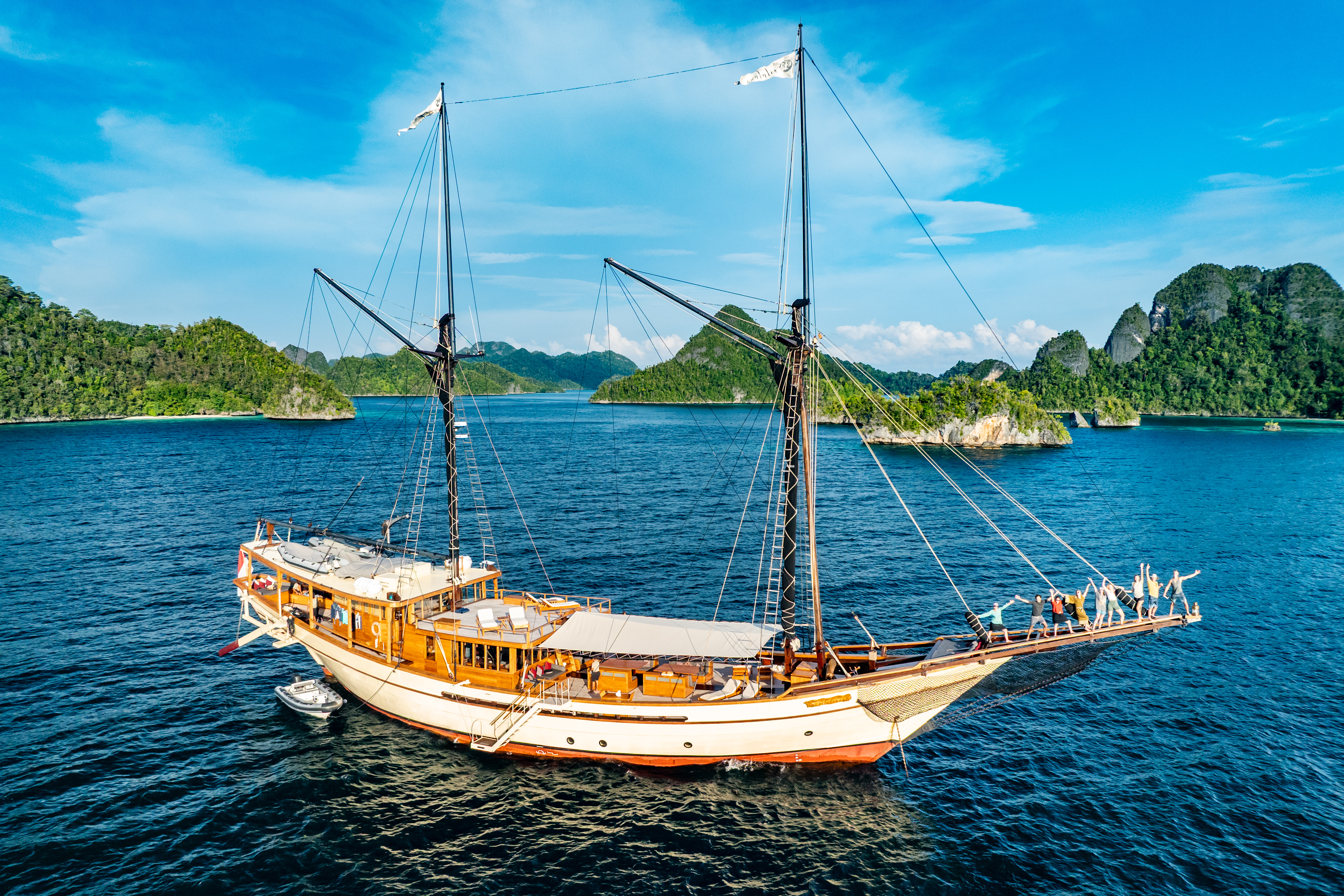
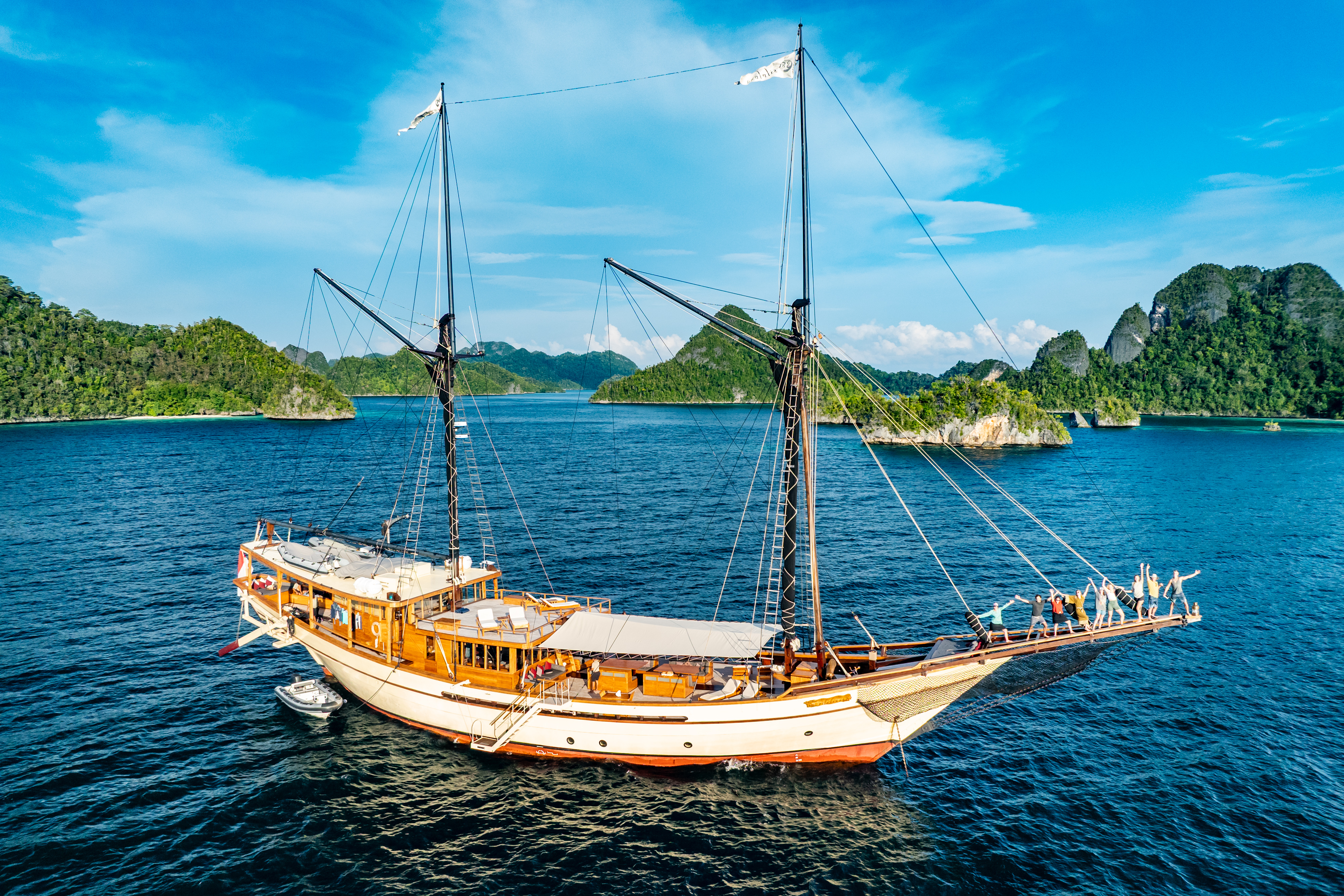
It matters, too, that Silolona sails these exact waters. The reserve is not an abstraction on the far side of the world from the product; it is the southern Raja Ampat reef system that a Silolona guest dives, snorkels, and anchors beside. The arithmetic is direct. A charter through Misool helps fund the patrols that keep Misool worth chartering through.
The part most brochures leave out
Honesty requires naming what this support does not fix. When Silolona anchors off a village in remote Raja Ampat, there is no waste facility waiting on shore, no municipal collection, no engineered landfill. The boat carries its rubbish back to the nearest city, where it enters a system that sorts it poorly if at all. Silolona separates and reduces what it can, but the last mile of waste in remote Indonesia is still largely broken, and no operator sailing these seas has genuinely solved it. Marine plastic accumulates in the Coral Triangle at rates driven by regional rivers and currents that dwarf any single vessel’s footprint,5 and the peer-reviewed record is blunt about the scale. Carrying rubbish back to the cities is the responsible floor, not a solution. Funding the Misool patrols does not offset that; it simply sits beside it as the other half of what is true.
With Silolona Sojourns, the conservation record is meant to be read, not admired from a distance. If you sail Raja Ampat with us, you are underwriting the Misool ranger patrols as a matter of arithmetic rather than sentiment, aboard Silolona and Si Datu Bua. When you are ready to see the ledger up close, enquire, and we will show you exactly where the money goes, reef, ranger, and waste problem and all.
References
- Misool Foundation. Misool Marine Reserve. Available from: https://www.misoolfoundation.org/misool-marine-reserve
- Veron JEN, Devantier LM, Turak E, et al. Delineating the Coral Triangle. Galaxea, J Coral Reef Stud. 2009;11(2):91-100. doi:10.3755/galaxea.11.91.
- Marine Conservation Institute. Misool Marine Reserve, Blue Parks Five-Year Review. Available from: https://marine-conservation.org/on-the-tide/enduring-blue-parks-misool-marine-reserve/
- Sea Around Us. Real MPA or paper park? Misool Marine Reserve. Available from: https://www.seaaroundus.org/real-mpa-paper-park-misool-marine-reserve/
- Lebreton L, Andrady A. Future scenarios of global plastic waste generation and disposal. Palgrave Commun. 2019;5:6. doi:10.1057/s41599-018-0212-7.